Category: Developing employees

  • What Top Performers Do Differently with AI—and Why They See the Biggest Benefits

    What Top Performers Do Differently with AI—and Why They See the Biggest Benefits

    Harvard Business Review Logo

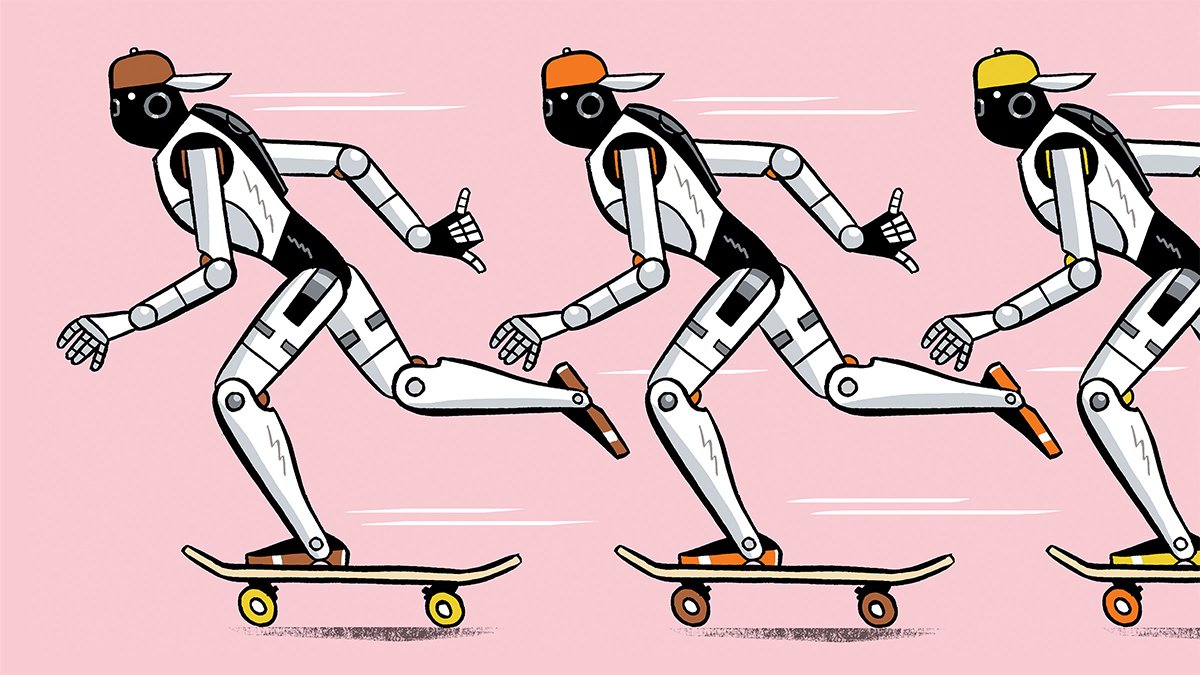
    Illustration by Jason Ford

    AI isn’t simply replacing sales work or automatically equalizing sales performance; it’s providing disproportionate lift to individuals and organizations that can build systems around

    Generative AI has produced two competing views about which workers will benefit most. One view is that AI will narrow performance gaps by giving lower performers templates, answers, and coaching directly in their workflow. The other is that AI will widen those gaps by eliminating routine but necessary work, which will allow top performers to spend more time on higher-value activities where they already have an advantage. At the individual task level, high and low performers may both benefit, but the more important question is which effect dominates on net in real jobs, where workers perform bundles of activities. The answer matters for how firms hire, train, organize teams, and adjust practices built for their current talent mix.


  • The 6 Essential Skills Your Workforce Needs to Keep Pace with AI

    The 6 Essential Skills Your Workforce Needs to Keep Pace with AI

    CV Viverito

    is a senior director analyst in the Gartner HR practice. They support CHROs and HR leaders to understand and prepare for AI’s impact on the workforce and shape work for the human-AI era. CV engages with clients and speaks on topics including AI’s impact on headcount and roles, AI’s impact on skills, AI literacy, building AI-readiness across the workforce, and the intersection of inclusion and AI.

  • Why Companies Should Support Crisis Volunteer Work

    Why Companies Should Support Crisis Volunteer Work

    Harvard Business Review Logo

    TOUFIC RMEITI/Getty Images

    Employees who volunteer during a crisis bring more back to work than a sense of having helped: They can also become more resilient, adaptive, and innovative. Research across multiple crises in the

    In the fall of 2017, as Hurricane Harvey’s floodwaters receded across Houston, employees from a local construction firm joined volunteer crews helping homeowners gut waterlogged walls and begin the long road to rebuilding—during regular work hours and while still receiving company pay. The company knew this was a moment for the organization to support its community, but what they didn’t anticipate was what these employees would bring back. One volunteer described the experience to us this way: “Seeing the resilience of those people we were helping, and the impact we were having on them—[that] truly builds my resilience as well.” Across the group, employees who had come to Houston’s aid shared that the experience had changed them, giving them greater confidence in navigating uncertainty and stronger capabilities to adapt and develop creative solutions in their daily work. Further evidence from managers we interviewed supports the idea that crisis volunteering can indeed help employees develop some of the skills most critical to today’s workplaces.

  • Research: How Speech Patterns Shape Opportunity at Work

    Research: How Speech Patterns Shape Opportunity at Work

    Harvard Business Review Logo

    Tatiana Maksimova/Getty Images

    Summary.   

    Employees’ speech patterns can shape their careers, not because speech reliably predicts ability, but because managers often mistake familiarity for social skill. A new study, which draws on

    This article was produced by Harvard Business School Working Knowledge and features the insights of faculty member Kadeem Noray.