Category: Research Blog

  • Simulating student learning for better AI tutoring

    Simulating student learning for better AI tutoring

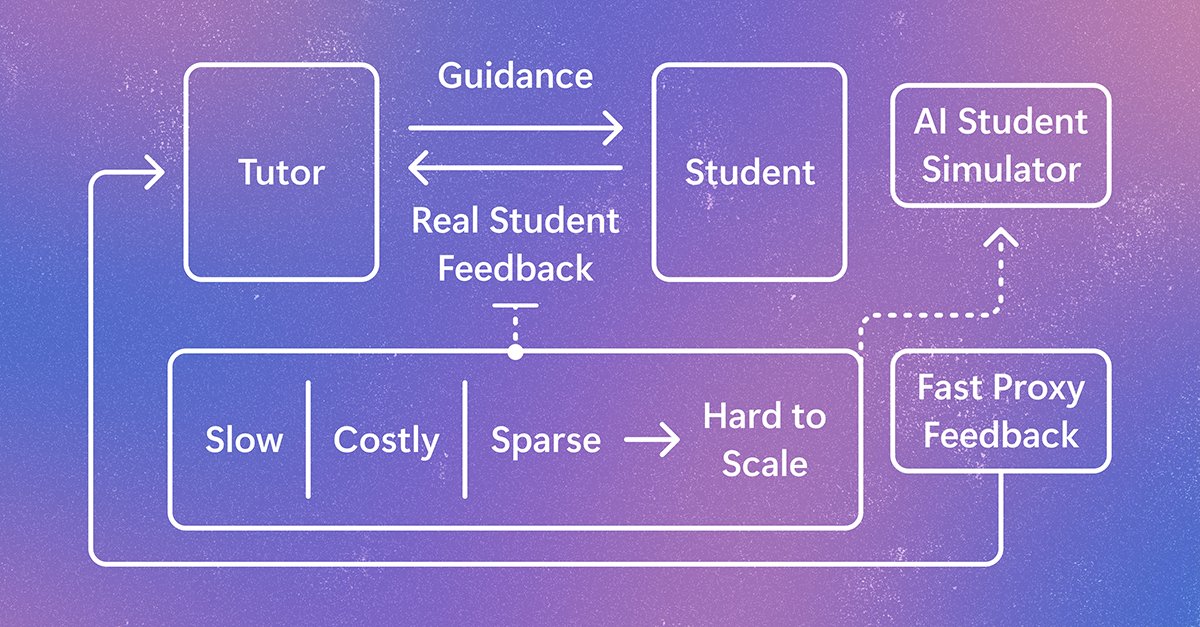
    A conceptual diagram of the feedback loop required to improve an AI tutor. The middle part of the figure shows that a human teacher gives guidance to a real student and receives the student’s feedback, but this feedback is slow, costly, sparse, and hard to scale. On the right panel of the figure, an AI student simulator is trained from real student feedback and serves as a fast proxy for the student during tutor development.

    At a glance

    • StudentSim is a research system for evaluating and improving AI tutors before they are tested with real learners; it is not a product, is not deployed in classrooms, and is not intended to replace teachers
    • AI tutoring tools need feedback from students to improve, but collecting that feedback through human studies is slow, costly, and difficult to scale 
    • StudentSim trains personalized AI student simulators from publicly available, de-identified learner records, with one simulator adapted to each student 
    • The work evaluates simulators along two education-grounded dimensions: whether they respond like a specific student, and whether they update after tutor guidance 
    • Across chess, second-language English writing, and mathematics, StudentSim outperforms leading baselines and provides a useful feedback signal for training an AI tutor 

    In research settings, teams are exploring how AI-powered tutoring systems can help explain a math problem, suggest an edit to a writing assignment, or guide a learner through a chess position. Yet the quality of teaching cannot be measured only from the tutor’s answer. A tutor needs to know what happens after the guidance reaches a student. Did the student correct the original mistake? Did the hint help them reason toward the answer, or did it give away too much? Would a different student need a different kind of support? In today’s AI tutor research, answering these questions often requires real learner studies. Those studies are valuable, but they are slow and costly to run, which makes it hard to use student feedback during fast model iteration.

    StudentSim is an AI system that creates personalized simulators of individual students, modeling how they answer questions and how their answers change after receiving a tutor’s guidance. The goal is to make student feedback more available during AI tutor development. This research also introduces StudentSimEval, a benchmark and evaluation protocol spanning chess, second-language English writing, and mathematics. 

    Importantly, the goal is not to replace teachers or classroom learning. Instead, StudentSim helps researchers evaluate and improve AI tutoring systems during the research and development process before testing them with real learners. The research uses only publicly available learner datasets released for research use with de-identified records; no personally identifying information is used at any stage. 

    **Alt text:** A conceptual diagram of the feedback loop required to improve an AI tutor. The middle part of the figure shows that a human teacher gives guidance to a real student and receives the student’s feedback, but this feedback is slow, costly, sparse, and hard to scale. On the right panel of the figure, an AI student simulator is trained from real student feedback and serves as a fast proxy for the student during tutor development.
    Figure 1: AI tutors need feedback from students to improve. Student simulators can approximate part of that feedback during research-stage training and evaluation. They provide an early-stage research signal, not a replacement for testing with real learners.

    Measuring what a student simulator needs to do

    A simple way to build a student simulator is to ask a large language model to role-play a learner. For example, a prompt might say, “You are an elementary-school student who struggles with math.” The model can change its tone and express uncertainty. The harder part is preserving the learner’s actual ability boundary. A model may speak in a young student’s voice while still relying on knowledge and reasoning far beyond that student’s level. For training an AI tutor, this can produce misleading feedback: the tutor may appear effective because the simulated student is too capable.

    Traditional student modeling approaches face a different limitation. Knowledge tracing and behavior prediction models are grounded in real learning records and can estimate a student’s current knowledge, skills, and learning habits. Many of these models, however, were not designed to take natural-language tutor guidance as input. They can help describe what a student has done, but they do not always tell us how a student would respond to a particular explanation, hint, or Socratic question.

    StudentSim defines the target through two dimensions inspired by education research. Educators often distinguish what a learner can do independently from what they can do with support. Vygotsky’s zone of proximal development captures this gap between current independent performance and performance with guidance. StudentSim turns this idea into two evaluation goals. Behavioral fidelity measures whether a simulator matches a specific student’s recorded responses on held-out problems. Guidance responsiveness measures whether the simulator updates its response after reading tutor guidance.

      **Alt text:** Diagram defining the two evaluation criteria used for student simulators. The upper portion shows a problem, “minus 7.3 times 5 equals what.” The lower portion compares a real student and an AI simulator. Both initially answer 36.5, then receive guidance and revise their answer to negative 36.5. Asking whether a simulator’s responses match the recorded student answers is behavioral fidelity. Matching the guidance-induced change is guidance responsiveness.
    Figure 2: StudentSimEval evaluates whether a simulator matches a student’s independent behavior and whether it responds to guidance. 

    These two goals are complementary. A simulator that only matches past student behavior may be useful for prediction, but it does not show whether a teaching intervention helped. A simulator that always follows the tutor may respond fluently, but it may fail to represent a particular student’s strengths, weaknesses, and likely mistakes. AI tutor training needs both signals: the learner’s starting point and how guidance affects the learner’s performance. 

    Training personalized simulators from sparse student records

    StudentSimEval is built entirely from publicly available learner datasets that are released for research use with de-identified records. The records carry no personally identifying information, and each personalized simulator is trained only on the de-identified records of the student it represents.

    Real student data is often sparse at the individual level. A learner may contribute only a small number of essays, answers, or interactions. Training a separate simulator from scratch for each student would risk overfitting and would require each model to relearn common patterns in the domain.  

    StudentSim uses a two-stage training pipeline. In the first stage, the model trains on records pooled across many students in the same domain. This stage learns common response formats, common errors, and common ways students revise after guidance. In the second stage, the model is specialized on one student’s own records, producing a personalized simulator for that student. 

     **Alt text:** A two-stage pipeline for training personalized StudentSim models from sparse student records. At the top, several students each have limited examples of question-answer interactions and answer revisions following tutor guidance. In the middle, stage one training, records from all students are pooled to learn shared behavioral patterns, including the space of possible responses, common mistakes, and typical revisions after guidance. At the bottom, stage two training, the model is adapted separately to each student’s records, producing one personalized simulator per student.
    Figure 3: StudentSim first learns shared student behavior from pooled records, then adapts to each student’s own data. 

    The evaluation covers three domains with different response types. In chess, the simulator predicts a player’s next move and how that player may revise after coaching. In second-language English writing, it generates essays with error patterns matching a learner and predicts corrections after teacher feedback. In mathematics, it predicts a student’s multiple-choice answer and whether the student updates after an explanation. Across these domains, StudentSimEval uses the same principle: compare all methods on the same per-student training records and the same held-out evaluation records. 

    StudentSim outperforms leading baselines across the three domains. In chess, for example, StudentSim reaches behavioral fidelity of 0.5150 and guidance responsiveness of 0.9067. GPT-5.4 reaches 0.2316 and 0.7186, respectively. Maia2, a chess-specific human move prediction model, reaches 0.4535 and 0.2721. The comparison illustrates the difference between the baseline families: GPT-5.4 can respond to guidance but does not reliably match a specific student’s behavior, while Maia2 predicts human chess moves more closely but lacks a natural-language guidance pathway.

     **Alt text:** Scatter plot comparing three student simulation approaches on behavioral fidelity, shown on the horizontal axis, and guidance responsiveness, shown on the vertical axis. StudentSim is positioned in the upper-right at approximately 0.51 fidelity and 0.91 responsiveness. A prompted GPT-5.4 model has lower fidelity, approximately 0.23, and moderate responsiveness, approximately 0.72. Maia2, a state-tracking model, has moderate fidelity, approximately 0.45, but low responsiveness, approximately 0.27. The plot shows that StudentSim performs strongly on both criteria.
    Figure 4: In chess, StudentSim improves both behavioral fidelity and guidance responsiveness compared with leading baselines.

    Using simulated feedback to improve AI tutors

    The research also tests whether a trained student simulator can provide feedback for tutor optimization. In a chess tutor reinforcement learning study, the tutor receives a position and a real student’s previous wrong move, then generates guidance. The student simulator’s own parameters are held fixed during this process, and it reads the guidance and produces a revised move. The reward is based on the improvement in move quality from the student’s previous move to the simulator’s revised move, using Stockfish as an independent chess engine signal.  

      **Alt text:** Diagram of reinforcement learning for an AI chess tutor using StudentSim as the feedback source. Each episode begins with a real student’s chess position and previous incorrect move. The AI tutor receives this context and generates guidance describing what and how to teach. A frozen, personalized AI student simulator reads the guidance and produces a revised move. The reward equals the improvement in chess evaluation from the student’s original move to the revised move, and this reward updates the AI tutor policy while the simulator remains fixed.
    Figure 5: StudentSim can provide feedback during AI tutor reinforcement learning by estimating how a student response changes after guidance.

    The study compares three conditions: a supervised fine-tuned tutor with no reinforcement learning, a tutor trained with GPT-5.4 as the simulated student reward source, and a tutor trained with StudentSim as the reward source. All conditions use the same tutor policy, supervised starting point, and reinforcement learning setup. Human chess experts then evaluate the tutor responses blind to condition. 

    The StudentSim reward produces the highest-rated tutor on all reported dimensions. The tutor trained with StudentSim reaches 90.5% accuracy, compared with 75.7% for the no-RL baseline and 71.6% for the GPT-5.4 reward condition. It also receives higher ratings for guidance quality and personalization. The result is a proof of concept that student simulators trained on real learner data can provide useful feedback for improving AI tutors. 

    Looking ahead

    StudentSim does not remove the need for real learners in education research. Human studies remain essential for measuring learning outcomes, safety, usability, and classroom fit. The role of student simulators is earlier in the development process: they can help researchers test tutor strategies, compare models, and refine training signals before moving to more expensive studies with real students. 

    The broader direction is to build AI tutor systems that learn from student reactions, not only from expert-written explanations or static correctness labels. StudentSim shows one path: use real learning records to train personalized simulators, evaluate those simulators on both independent behavior and response to guidance, and use them as scalable feedback sources for tutor training. Future work can extend this approach to longer learning trajectories, additional subjects, richer student profiles, and studies that connect simulated feedback with real learning outcomes. 

    The paper and the StudentSim training and evaluation code, including the StudentSimEval protocol, are publicly available.
    Sources

  • Agent Lightning v1.0: A 3,500-Line Lightweight Agentic RL Framework for Training Agents with Real Harnesses

    Agent Lightning v1.0: A 3,500-Line Lightweight Agentic RL Framework for Training Agents with Real Harnesses

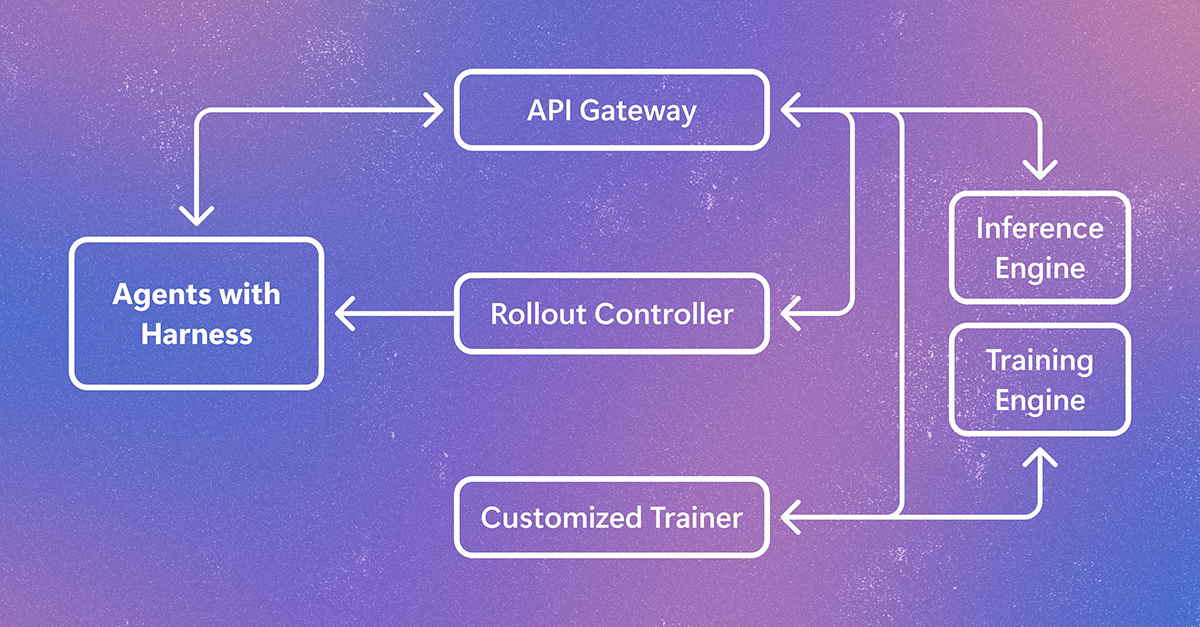
    System architecture diagram. On the left, agents with harnesses — mini-SWE-agent, OpenHands, and OpenClaw — run on a Kubernetes cluster. They connect to three components: an API Gateway containing a Rollout API and an LLM API Proxy, a Rollout Controller containing a local reconciler and a Kubernetes reconciler, and a Customized Trainer containing a sample adapter and monitoring. These connect in turn to an inference engine and a training engine holding the model.

    At a glance

    • Harnessed Agentic RL: Microsoft Research Asia introduces a training paradigm in which the same agent harness used in deployment participates directly in reinforcement learning, removing the need to reimplement the agent inside the training framework.
    • Lightweight by design: Agent Lightning v1.0 delivers a complete agent RL control plane in roughly 3,500 lines of code.
    • Native Kubernetes support: agents run as standard Kubernetes jobs on self-managed clusters, cloud Kubernetes, or local infrastructure, with no dependency on paid commercial sandbox services.
    • Data-efficient training recipe: an end-to-end coding agent pipeline raised Qwen3.5-9B from 41.8% to 56.4% Pass@1 on SWE-bench Verified, a 14.6 percentage point gain, using only about 6,000 training samples based on open sourced dataset.

    AI agents have evolved from single models to complex full-stack systems built from models, tools, and execution environments. Their capabilities increasingly depend on the agent harness that coordinates them from outside the model. Reinforcement learning (RL) is an approach where AI systems learn through trial and error, guided by rewards and penalties for their actions. RL can make those agents better, but most agent RL systems require developers to reimplement the agent inside the training framework. That is costly, and it means the agent being trained is not quite the agent that gets deployed.

    To address this, researchers at Microsoft Research Asia have introduced the Harnessed Agentic RL training paradigm and open-sourced a fully rebuilt Agent Lightning v1.0 (opens in new tab). Compared with the original, Agent Lightning, v1.0 puts more emphasis on staying lightweight, on integrating with real harnesses, and on a complete, reproducible agent RL training pipeline.

    Agent Lightning v1.0 was rebuilt around Harnessed Agentic RL, with key improvements:

    • Lightweight: the entire framework is about 3,500 lines of code. Agent Lightning v1.0 implements a complete Harnessed Agentic RL system in a codebase that is small and clear enough to understand, modify, and extend.
    • Training on a real agent harness: agents reach the model through the large language model (LLM) proxy in Agent Lightning v1.0, leaving existing harness code unchanged.
    • Native Kubernetes support: agents run directly as Kubernetes jobs, without external commercial sandbox services. Self-managed clusters and local infrastructure alike can support rollouts at scale.
    • A complete coding agent training example: an end-to-end pipeline built on Qwen3.5-9B raised Pass@1 on SWE-bench Verified from 41.8% to 56.4%, an absolute gain of 14.6 percentage points, using only about 6,000 training samples.

    The limits of traditional agentic RL

    Traditional agentic RL assumes the training framework owns the interaction loop with the environment. In a ReAct-style loop, the model generates an action, the environment returns an observation, the observation is appended to the context, and the model generates the next action, so the whole rollout maps onto one continuous token trajectory. Early RL systems such as verl, AReaL, and slime were built this way, which meant training an agent required rebuilding its loop inside the RL framework.

    Real harnesses have outgrown that assumption. Coding agents such as mini-SWE-agent, OpenHands, OpenCode, Claude Code, and Codex each bring their own context management, tool protocols, execution logic, and dependencies, as do general-purpose agent systems. Rebuilding one for training is expensive, and the rebuilt agent may no longer behave in the same way as the deployed agent.

    Agent Lightning takes a different route. It places an LLM proxy between the agent and the model. The agent continues to run as before: simply point the endpoint that previously called the model API at Agent Lightning, and the training framework can observe and record its model calls. In v1.0, the researchers go further and formally define this paradigm as Harnessed Agentic RL: whichever agent harness is used in deployment is the harness that takes part directly in reinforcement learning during training (Figure 1).

    Figure 1: Side-by-side comparison of two training loops. In Agentic RL, the environment exchanges actions and observations with a tokenizer, which passes action and observation tokens to the policy model. In Harnessed Agentic RL, an agent harness handling context and orchestration sits between the environment and an OpenAI-like API, which exchanges input and output tokens with the policy model.
    Figure 1. Traditional agentic RL compared with Harnessed Agentic RL. In traditional agentic RL, the training framework manages the environment and the agent loop. In Harnessed Agentic RL, the harness manages both.

    Four challenges in training with real harnesses

    A core difference between Harnessed Agentic RL and traditional agentic RL is that the environment interaction loop is handled by the agent harness rather than the training framework. The training system can only observe a series of LLM request and response pairs, so a single rollout may be split into a variable number of training samples. This brings four key challenges:

    • Retokenization and sample merging: Harnesses keep context as text, but RL training needs the token IDs sampled during the rollout. Passing text through the chat template and tokenizer again can shift token boundaries, so adjacent calls cannot always be merged into one sample.
    • Advantage calculation: Retokenization, subagents and context summarization can split one rollout into several samples. Computing baselines and advantages directly at the sample level causes rollouts that produce more samples to be counted repeatedly, which alters the original statistical relationships at the rollout level.
    • Loss normalization: Averaging loss by sample count gives more weight to rollouts that produce more samples. Since sample count is often just a product of harness behavior, loss normalization must also avoid being distorted by it.
    • Training backend scheduling: Sample count and length are known only after the harness finishes, while GPU counts and data/tensor parallel configurations are usually fixed. The backend has to map a variable workload into fixed resources.

    PODCAST SERIES

    New Future of Work 2026 | Jaime Teevan, Jenna Butler, Jake Hofman, Rebecca Janssen

    Ideas

    Listen as members of the research community at Microsoft discuss the beliefs that animate their research, the experiences and thinkers that inform it, and the positive human impact it targets.

    Building a complete agent RL control plane in 3,500 lines of code

    In system design, Agent Lightning v1.0 treats simplicity as its first principle. The entire framework is about 3,500 lines of code, with three core components: the API Gateway, the Rollout Controller, and the Customized Trainer (Figure 2).

    The API gateway stores rollouts, models, and events, and serves as an OpenAI-compatible LLM proxy. It links every model call from the harness to its rollout and records the prompts, responses, and log probabilities that training needs. The rollout controller starts and manages agent execution, either as local processes or as standard Kubernetes jobs, keeping agent execution separate from the trainer. The customized trainer, built on verl, creates rollouts, waits for them to finish, collects samples, and assembles the final training samples through a sample adapter. As a result, for an existing agent harness, simply pointing the model endpoint at the Agent Lightning proxy is usually enough to connect quickly to RL training.

    Figure 2: System architecture diagram. On the left, agents with harnesses — mini-SWE-agent, OpenHands, and OpenClaw — run on a Kubernetes cluster. They connect to three components: an API Gateway containing a Rollout API and an LLM API Proxy, a Rollout Controller containing a local reconciler and a Kubernetes reconciler, and a Customized Trainer containing a sample adapter and monitoring. These connect in turn to an inference engine and a training engine holding the model.
    Figure 2. The Agent Lightning v1.0 system architecture showing the API gateway, rollout controller, and customized trainer.

    Collocated async RL

    Rollout times vary widely across agents. Synchronous RL waits for the slowest agent in a batch and leaves GPUs idle, while fully asynchronous RL raises utilization but needs separate GPU pools for rollout and training. In response, Agent Lightning v1.0 introduces Collocated Async RL, which lets rollout and model updates share the same set of GPUs.

    Once the system has collected enough rollouts, the update begins: the API Gateway pauses accepting new requests and waits for requests already in progress to finish, and rollout resumes after the update completes. The entire state transition is transparent to the external agent harness. In experiments, this approach achieved about a 2x end-to-end speedup over synchronous RL while using fewer GPUs than conventional asynchronous RL (Figure 3).

    Figure 3: Three GPU scheduling timelines. Synchronous RL uses four GPUs at low efficiency, with long idle gaps before a single update block. Collocated Async RL uses the same four GPUs at high efficiency, interleaving full and partial rollouts with update blocks. Asynchronous RL reaches high efficiency but requires eight GPUs. Bars are colored for full rollout, partial rollout, and update.
    Figure 3. Synchronous RL, asynchronous RL, and Collocated Async RL compared. Collocated Async RL raises utilization while occupying fewer GPUs.

    Running agents on Kubernetes

    Collecting enough rollouts means running many agents at once, which consumes substantial CPU, memory, and compute resources. Other Harnessed Agentic RL frameworks often host those agents on commercial sandbox services such as Modal Sandbox or E2B, where cost climbs quickly with scale. Instead, Agent Lightning v1.0 runs them as standard Kubernetes jobs, reusing existing self-managed clusters, cloud Kubernetes, or local infrastructure (Figure 4). Existing compute resources are used more efficiently, large rollouts cost less, and the whole pipeline stays open source and reproducible.

    Figure 4: Flow diagram. An API Gateway holds three rollouts, two queueing and one running. The Rollout Controller polls the gateway and uses a Kubernetes reconciler to create jobs on a Kubernetes cluster, and a local reconciler to watch and list local processes. Status updates flow back to the gateway.
    Figure 4. The Rollout Controller in Agent Lightning v1.0 provides native Kubernetes support, running agents directly as standard Kubernetes jobs.

    6,000 training samples, a 14.6-point performance gain

    To test the approach, researchers built a full pipeline on SWE-smith, mini-SWE-agent, and Qwen3.5-9B, covering data cleaning, environment construction, reward-hacking safeguards, and RL training. The training set holds about 6,000 samples and needs no large-scale compute. RL training alone raised Qwen3.5-9B from 41.8% to 56.4% on SWE-bench Verified, a gain of 14.6 percentage points.

    The coding agent experiments further confirm the earlier analysis of two challenges: advantage calculation and loss normalization. Compared with sample-level handling, rollout-level advantage combined with rollout-level normalization achieves a higher validation reward and keeps policy entropy more stable during training (Figure 5).

    Figure 5: Two line charts plotting 200 training steps. On the left, validation reward: rollout-level advantage combined with rollout-level normalization reaches the highest reward at about 0.37, above rollout-level advantage alone and sample-level advantage. On the right, policy entropy: rollout-level advantage alone climbs steeply to about 0.65, while the combined method stays lower and steadier.
    Figure 5. Pass rate and policy entropy for Qwen3.5-9B on the SWE-smith validation set.

  • Forecasting space weather risks on power grids

    Forecasting space weather risks on power grids

    GridSFM diagram depicting the workflow

    At a glance

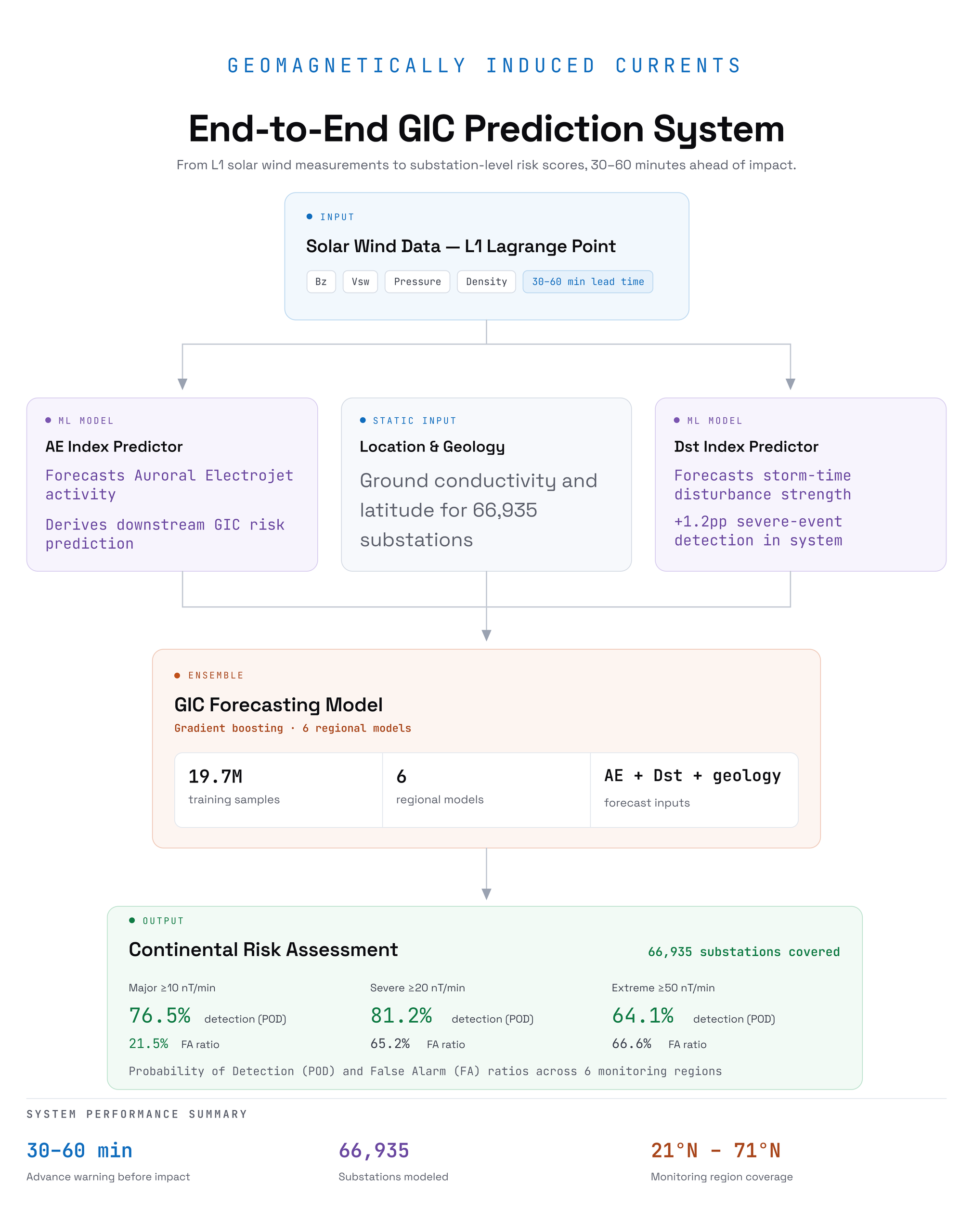
    • End-to-end forecasting: A machine learning pipeline uses forecast-time solar-wind information to generate location-specific risk estimates for 66,935 substations in the continental United States. 
    • Physics and place: The system combines Auroral Electrojet (AE) and Disturbance Storm Time (Dst) forecasts with local latitude, geology, and ground conductivity. 
    • Advance warning: The pipeline detected nearly 80% of major space-weather events during the evaluation period and can warn grid operators 30 to 60 minutes before a specific risk appears. 

    Forecasting a threat to critical infrastructure

    During the May 2024 geomagnetic storm, utilities across North America prepared for possible impacts as auroras extended far beyond their usual range. The storm would degrade GPS accuracy and satellite operations, impacting farm operations in North America and Europe. Modern society depends on reliable electric power, yet extreme space-weather events can induce currents in transmission networks that damage equipment and increase operational risk. The challenge is not only knowing that a storm is approaching, but estimating when and where its effects could be most severe with enough warning for grid operators to respond.

    During my summer internship at Microsoft Research, I developed a machine learning system that forecasts space-weather risk across 66,935 substations in the continental United States. The system measures how the sun’s activity can affect the earth’s magnetic field and, ultimately, the power grid.  It combines solar-wind observations, forecasts of the Auroral Electrojet (AE) and Disturbance Storm Time (Dst) indices, physics-informed constraints, local geological conductivity, and grid-infrastructure data to produce location-specific risk estimates 30-60 minutes ahead of potential impact. 

    Building an end-to-end prediction pipeline

    Space-weather prediction is difficult because it spans several coupled systems. The solar wind changes rapidly, its interaction with Earth’s magnetosphere is irregular, and the resulting ground effects depend on local conditions. Regions with resistive bedrock can experience stronger geomagnetically induced currents (GICs) than regions with more conductive geology. Transmission-line orientation, latitude, and other power-system characteristics further influence the exposure of individual assets.

    Microsoft Research at BUILD 2026 | abstract pattern on a purple background

    Microsoft Research at BUILD 2026

    Giving developers a hands-on look at some of the many AI-based models and tools they can use to accelerate innovation, enhance their capabilities, and quickly transform ideas into prototypes.

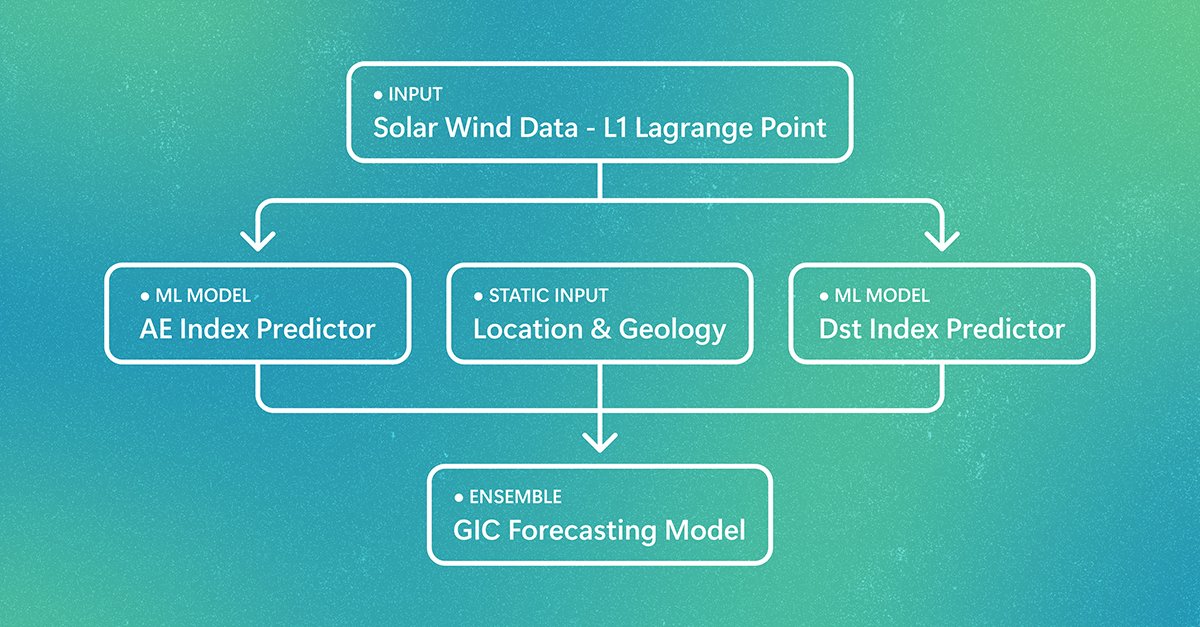
    The pipeline addresses this complexity in three stages, shown in Figure 1. First, solar-wind measurements from the L1 Lagrange point are used to generate forecasts of the AE and Dst indices, while geological conductivity and location features are assembled for each substation. Second, a gradient-boosting model combines these forecasted and location-specific inputs to estimate dB/dt, the rate of magnetic-field change associated with GIC risk. Finally, the resulting predictions are converted into location-specific risk estimates and aggregated into a continental risk assessment.  A system of 50 AI agents helped explore features, validation strategies, and model configurations across the pipeline. Only public data sources were used, included NASA OMNI and NASA-aggregated Kyoto World Data Center data, INTERMAGNET and U.S. Geological Survey magnetometer observations, and GridSFM-derived grid data. 

    End-to-end forecasting pipeline from L1 solar-wind measurements to location-specific risk estimates across 66,935 U.S. substations.
    Figure 1. End-to-end forecasting pipeline from L1 solar-wind measurements to location-specific risk estimates across 66,935 U.S. substations.

    Evaluating geomagnetic forecasts and infrastructure risk

    The AE predictor was designed to forecast rare, high-intensity geomagnetic activity that drives infrastructure risk. In the 2020-2026 evaluation period, the model produced forecasts spanning nearly the full observed range of AE activity and outperformed several empirical solar-wind-based approaches. The Dst predictor provided an additional signal describing large-scale geomagnetic storm strength. During the most geomagnetically active periods of the 2020-2026 evaluation period, the machine-learning model outperformed the Burton equation on 62.2% of individual hours. The model also produced a substantially wider prediction range than Burton-style approaches and improved severe-event detection in the end-to-end forecasting system by 1.2 percentage points when combined with AE forecasts.

    Predictor Result Baseline comparison Impact
    AE 410.2 nT RMSE Lower RMSE than empirical and solar-wind-only baselines Captures extreme-event activity used by the GIC forecasting system
    Dst 7.2 nT RMSE Outperformed Burton on 62.2% of peak-activity hours and provided wider prediction range +1.2pp severe storm detection when integrated into final GIC system

    The GIC risk stage was evaluated differently. There is no equivalent widely deployed operational system that provides a direct industry benchmark for this calculation, so the machine learning model was compared with simple linear regression. As Figure 2 shows, the system achieved detection rates of 76.5% for major events (≥10 nT/min), 81.2% for severe events (≥20 nT/min), and 64.1% for extreme events (≥50 nT/min). False-alarm rates increased with storm severity, reflecting the trade-off between missed events and cautious alerts. Performance varied by latitude, with the highest detection rates at northern stations where geomagnetic activity is strongest.

    chart, bar chart
    Figure 2. Detection rates across storm-severity thresholds for regionally different substations, with a comparison between the average POD for each severity tier.

    Translating predictions into continental risk assessments

    The final stage translates predicted geomagnetic activity into location-specific estimates of dB/dt, the rate of magnetic-field change associated with GIC exposure. Rather than issuing a single alert for the continental United States, the system combines storm conditions with each substation’s latitude and geological factor. This produces continuous risk estimates that can distinguish lower-risk locations from areas where resistive geology can amplify ground-level effects.

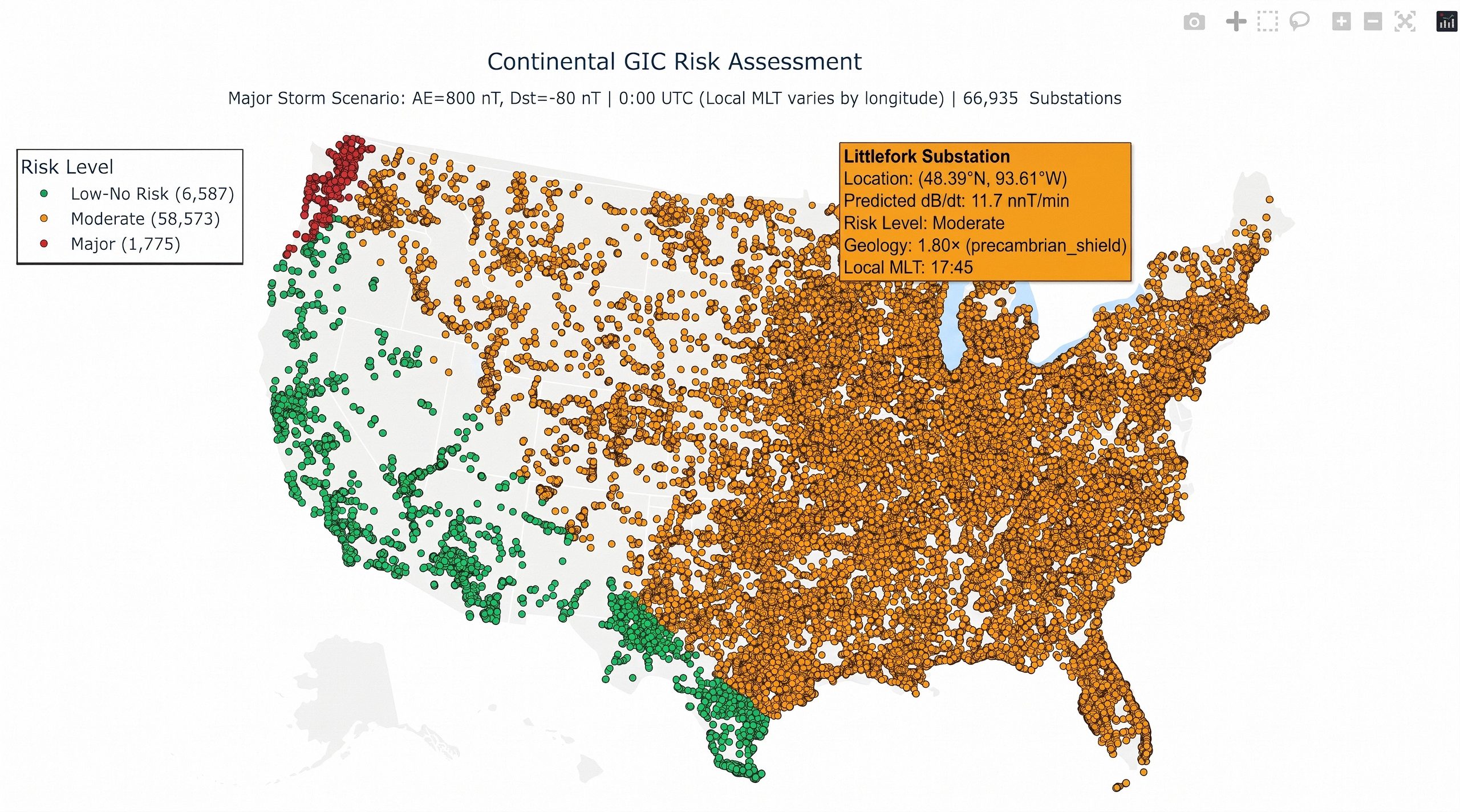
    Figure 3 illustrates the output for a representative major-storm scenario. The map is a demonstration of the model’s continental-scale output, not a record of a live operational event. It shows how a grid operator or planner could move from a broad space-weather warning toward a more targeted view of which locations may warrant closer analysis. The current pipeline produced estimates for all 66,935 substations in approximately 333 milliseconds during measured inference, allowing many scenarios to be evaluated quickly.

    map, scatter chart
    Figure 3. Demonstration of a continental GIC risk assessment under a representative major-storm scenario. Colors indicate modeled risk levels across 66,935 substations.

    Implications and looking forward

    This work demonstrates how physics-grounded machine learning could support more specific and timely assessment of space-weather exposure. Earlier, location-specific information could help utilities prioritize engineering review and consider targeted protective actions, such as adjusting reactive-power reserves or temporarily reconfiguring parts of the network. Further validation with utilities and operational data would be needed before the system could be used in grid operations.

    The project also connects with broader Microsoft Research work on AI for power systems. The open grid-data pipeline provided realistic U.S. transmission models, while GridSFM applies deep learning to AC optimal power flow for fast scenario analysis. Together, these efforts point toward richer planning and resilience workflows that combine hazard forecasts, grid topology, and power-flow analysis.

    • Extend forecast horizons: Explore temporal-transformer approaches that capture longer-range patterns in solar-wind data and move beyond the current 30-60-minute window.
    • Scale internationally: Adapt the system to additional regions while accounting for different geological conditions and grid topologies.
    • Integrate with grid operations: Evaluate how forecasts could support existing decision-making and engineering-review workflows before considering higher levels of automation.
    • Provide transformer-level risk: Add asset-specific characteristics to move from substation-level estimates toward more granular assessments of critical equipment.

    Acknowledgements

    Special thanks to my mentors Weiwei Yang and Spencer Fowers for their guidance throughout this project, and to Amber Hoak, Weishung Liu, and Andrea Britto for their editorial and technical feedback.

  • Introducing Quine: An AI research system designed for the complexity of biology

    Introducing Quine: An AI research system designed for the complexity of biology

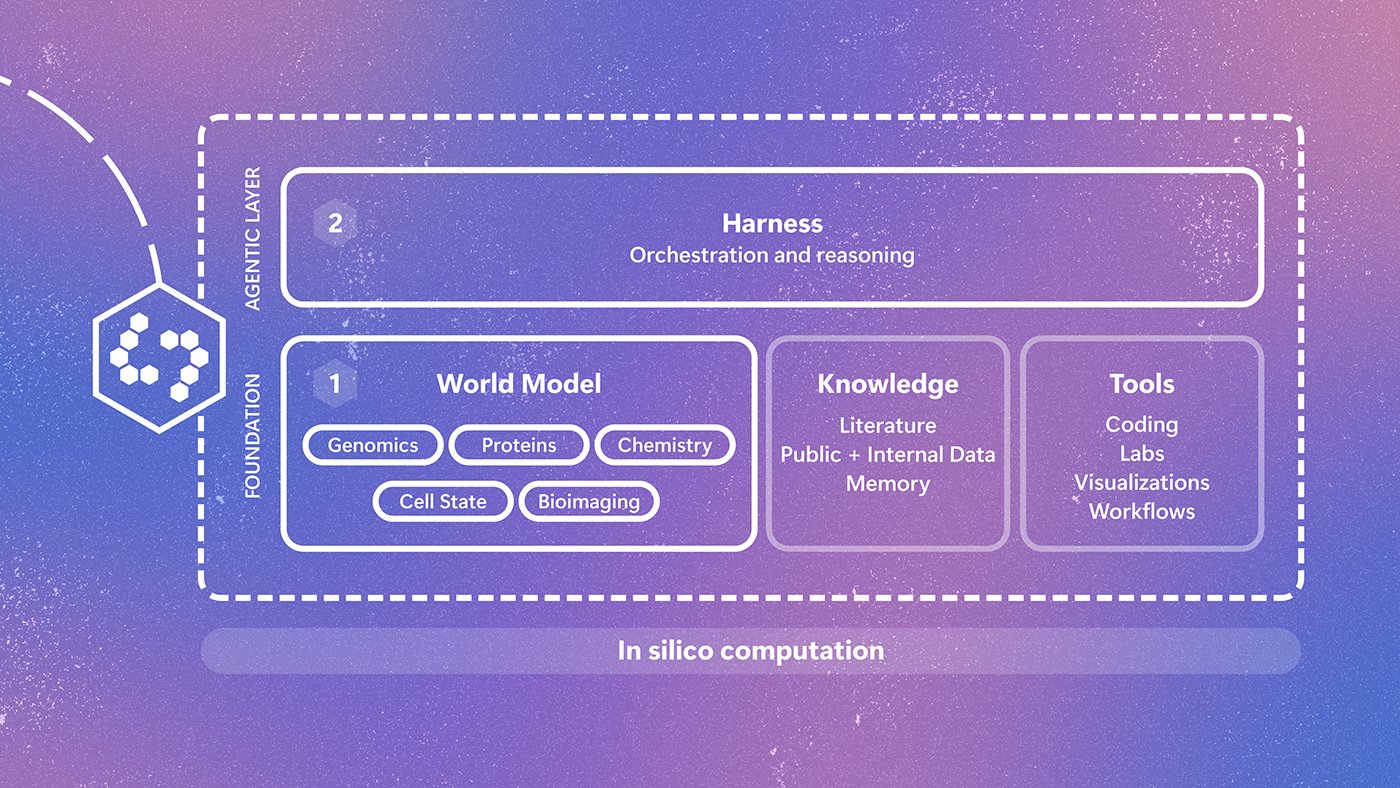
    Diagram of Project Quine’s closed-loop approach to biological research. A scientist asks questions that are passed to Quine for in silico computation. Quine combines a world model of biology, spanning genomics, proteins, chemistry, cell state, and bioimaging, with a harness for orchestration and reasoning, supported by knowledge and tools. Quine generates proposals that are tested through real-world wet-lab experiments. Experimental measurements return to the scientist and inform the next question, creating an iterative loop between computational modeling and real-world experimentation.

    At a glance

    • Quine (opens in new tab) is a research effort to create a multimodal world model of biology and an interactive harness connecting models, scientific tools, literature, and researchers. 
    • In collaboration with researchers at the Broad Institute of Harvard and MIT, we have used this system to prioritize compounds predicted to drive therapeutic tumor-state shifts and validated several top-ranked candidates across multiple wet-lab assays. 
    • The Quine Fellows program (opens in new tab) will give a cohort of scientists access to the system and an opportunity to accelerate their own research and provide scientific feedback.  
    • Quine is experimental research technology intended only for research, not clinical or medical use, and its outputs may be incomplete or inaccurate and require review by qualified researchers and appropriate scientific and experimental validation. As the technology matures, we expect to expand access through products like Microsoft Discovery (opens in new tab).

    For more than two decades, Microsoft Research has worked at the intersection of computation and biology. Our research has spanned immunology, virology, genomics, biomedical imaging, cell biology, and protein engineering. That work has produced foundational methods, new science, and technology that reached the clinic, from rare and infectious disease diagnosis to cancer biomarker detection.

    Across that work, one lesson has become increasingly clear: biology does not divide itself into the neat boundaries our models and tools often do. Genes influence proteins; proteins interact within cells; cells organize into tissues; and experiments continually reshape what scientists know and what they choose to ask next. Making progress on the hardest biological questions therefore requires more than increasingly capable models of individual datasets or tasks. It requires systems that can connect knowledge across scale and modalities, reason about experiments and evidence, and participate in the iterative process through which science advances. 

    Today, Microsoft Research is introducing Quine (opens in new tab), a research effort designed to work across those boundaries, reflecting our long-term vision for a discovery system that evolves through scientific use. Quine brings together a world model of biology with a harness that connects scientific tools, literature, the wet lab, and the researchers using them.

    The limits of experimentation

    Even as experimental techniques have improved and wet-lab throughput has increased, biology remains fundamentally constrained by time and complexity. Nature cannot be rushed, nor can it be derived from first principles. Experiments are slow, iteration cycles are long, and many of the most important questions involve interactions, combinatorial design spaces, and downstream effects that are simply too large to explore experimentally alone.

    At the same time, advances in large-scale machine learning, particularly the emergence of general-purpose foundation models and reasoning models that can iteratively work through problems, suggest a new possibility. These systems are beginning to demonstrate capabilities beyond pattern recognition: integrating information across domains, reasoning over abstractions, and supporting iterative problem-solving. Just as importantly, many of the techniques developed for human language have proven remarkably adaptable to aspects of biology, enabling models to learn representations of biological systems across diverse data types and scales.

    This raised a provocative question for us: what would it take to build a world model for biology? By world model, we mean a system that can represent the state of a biological system, predict how that state will evolve in response to interventions, and reason over the consequences of those interventions multiple steps into the future. Such a system would not replace experimentation. Rather, it would allow us to use computation to explore, propose, rank, and prioritize potential paths forward before committing scarce laboratory resources. Our north star is a future in which scientists, models, and experiments operate in a continuously accelerating loop.  

    What we’ve built

    Quine is our first step toward that vision. It includes both a world model of biology and a harness that connects the model to orchestration and reasoning models, scientific tools, the literature, and the teams of scientists using them.  

    Figure 1: Quine’s two frontier components — a world model of biology and an interactive harness — sit inside a loop that begins and ends with the scientist. A question becomes a set of proposals, proposals become designs worth testing, and the experiment returns measurements that sharpen both the scientist’s next question and the model itself. 

    Core to this effort is the world model, which learns shared representations across biological modalities and scales, including sequence, structure, function, cellular state, and imaging data. By training across these modalities jointly, Quine can use evidence from one modality to inform predictions in another, capturing relationships that would otherwise remain siloed or lost when separate single-domain specialist models are orchestrated by the system. This multimodal design reflects the reality of biology: understanding any one level requires context from the others. Rather than diluting performance, we find that learning across these connected representations strengthens it, enabling the model to generalize more effectively and to support a broader range of biological reasoning tasks.

     Figure 2: Biology is multiscale and multimodal. (A) Biological evidence stacks from molecules to cells to tissues to patients, with scientific language running underneath all of it. (B) The modalities Project Quine trains on — genomics, proteins, chemistry, RNA and cell state, bioimaging — each observe a different span of that range, and they overlap. Reading down is the causal path from genotype to phenotype; reading across is physical scale. Because the model learns these representations jointly rather than orchestrating separate specialists, evidence at one level can inform predictions at another. 

    By integrating this model in a unified system that facilitates computational experimentation and learns from iteration, researchers can generate predictions across modalities and reason about the consequences of biological interventions before they are tested in the lab. Critically, the world model doesn’t need to be perfect—indeed, it will never perfectly model biology—it simply needs to usefully inform experimental design. 

    What this looks like in cancer biology

    A concrete example comes from our work on pancreatic ductal adenocarcinoma (PDAC), the most common form of pancreatic cancer and one of the most challenging to treat. In collaboration with researchers at the Broad Institute of MIT and Harvard, we have spent years developing and applying patient-derived ex vivo models to investigate a longstanding hypothesis: that tumor behavior and drug response depend not only on genetics, but also on transcriptional cell state. In PDAC, tumor cells can occupy different cellular states associated with how they respond to treatment.  

    With Quine, we have now put that hypothesis into practice, exploring whether non-genetic features of cancer, particularly cellular state, can serve as actionable therapeutic targets. We used Quine to predict and prioritize thousands of compounds based on their potential to shift tumor cells between therapeutically relevant states. In wet-lab studies focused on the transition from classical to basal cell states, Quine’s highest-ranked compounds produced the largest intended shifts across experimental assays. The entire process—from rapidly narrowing the compound search space to prioritizing a handful of promising candidates to be validated in the lab—took just one weekend, potentially saving months of experimental work and significant research costs. Notably, some of the strongest effects came from compounds with unexpected mechanisms of action, offering early evidence that AI can uncover new opportunities for drug repurposing and discovery. 

    While the reverse state transition proved more difficult (from basal to classical cell states), Quine predicted that available compounds would have this weaker effect. More notably, the experiments revealed something we did not fully anticipate: Quine predicted that several compounds would consistently move cells toward a distinct third phenotype—an observation borne out in the lab—suggesting that the pancreatic cancer cell-state landscape is richer than a simple classical-basal axis. The experiments not only tested the model’s hypotheses but also generated new ones. 

    Figure 3: Quine-guided exploration of pancreatic cancer cell states. In pancreatic ductaladenocarcinoma (PDAC) cell lines, top-ranked compounds produced the largest classical-to-basal transcriptional shifts as validated by wet lab experiments. Weaker reverse shifts and unexpected movement toward an additional phenotype were also consistent with Quine’s predictions.

    Our continued work here will use newly integrated RNA datasets and tasks to represent this richer landscape, strengthen state-transition predictions, and provide calibrated confidence estimates that help scientists prioritize the most promising hypotheses for wet-lab testing. And this is exactly the feedback loop Quine was built to support. Each round of experimentation improves our understanding of biology, and each new insight can become training signal for the next generation of the system.  

    Learning through discovery – an invitation

    We created Quine to improve how we do science ourselves. As the system evolved, we embedded it in our ongoing scientific programs. Every research question, experimental result, and unexpected finding became an opportunity to refine the models, improve the workflows, and better understand where AI could meaningfully accelerate our research. Over time, the system became central to how we approached discovery across multiple domains, including in cancer biology, protein engineering, genomics, and bioimaging.

    We’d like to continue building on that foundation by introducing Quine at this early stage. Quine grew out of our own research, but we don’t want its continued development to happen in isolation. Many of the questions that will determine where it goes next are not ones we can answer alone; they require the expertise, creativity, and perspectives of the broader scientific community. For this reason, we’re opening the Quine Fellows program to put the system directly into the hands of scientists working at the frontier of biology and medicine.

    Building responsibly will always come first. We believe progress in AI and biology must go hand in hand with safety, security, and responsible stewardship. We are taking a deliberate, phased approach to Quine’s development and access, with initial availability limited to the Quine Fellows program and select research collaborations. Ongoing internal review and built-in safeguards will help us maintain appropriate oversight as the system evolves. As the technology matures, we expect to expand access through products like Microsoft Discovery (opens in new tab).

    It’s tempting to frame progress in AI for biology around benchmarks and leaderboards. Those matter, but the real test of Quine is what happens when it encounters science as it’s actually practiced. Can it be useful when evidence is incomplete? When facing questions genuinely never asked before? Can it help make the path from questions to discovery shorter?

    Ultimately that’s the standard we care about. The ambition is for Quine to recede into the background of scientific practice, while the science moves faster in the foreground. The protagonists are not the model or the platform. They are the scientists, the experiments, and the discoveries that follow. 

  • One year in: How Microsoft Research Asia – Singapore is advancing research, partnership and talent for real-world impact

    One year in: How Microsoft Research Asia – Singapore is advancing research, partnership and talent for real-world impact

    Illustrated Singapore skyline at dusk featuring Marina Bay Sands and Gardens by the Bay, with colorful fireworks and confetti overhead. Blue and orange graphic waves frame the scene, with a Merlion outline in the lower left and open space on the left for text.

    On July 24, 2025, Microsoft Research Asia – Singapore (MSRA – Singapore) opened its doors as Microsoft’s first research lab in Southeast Asia. The launch built on more than two decades of collaboration between Microsoft Research Asia and Singapore’s universities, research institutes, and government agencies. It marked a shift to a closer, more integrated relationship aimed at supporting Singapore’s innovation ecosystem and advancing the development and beneficial use of AI.

    “When we established Microsoft Research Asia — Singapore one year ago, our vision was not simply to open another research lab. It was to build a bridge connecting Microsoft’s frontier AI research with Singapore’s world-class universities, forward-thinking government agencies, and dynamic industry ecosystem. One year in, what gives me the greatest confidence is not just the research we have produced, but the depth of partnership we have built. That is the foundation on which lasting impact is built.”

    — Dr. Lidong Zhou, corporate vice president at Microsoft and managing director of Microsoft Research Asia

    Established in 1998, MSRA has a presence in Beijing, Shanghai, Vancouver, and Tokyo, along with Singapore. The Singapore lab strengthens the collaboration with local partners and extends the scientific and societal impact of Microsoft’s global research community. 

    Over the past year, the Singapore lab has grown its team, deepened partnerships, and explored how frontier AI research can create real-world value. Guided by its mission to advance frontier AI for humanity, its work spans four pillars: next-generation AI models and agentic systems, domain-specific AI for real-world impact, AI-native research practices, and ecosystem and talent development.

    From frontier research to real-world impact – and back

    Research has its greatest impact when it moves beyond the laboratory into practice: in health and medicine, enterprises, and the daily operations of organizations solving real problems. MSRA – Singapore aims to do just that through a two-way exchange: partners bring domain expertise, real-world data, and operational challenges, while the lab contributes frontier research and engineering capabilities. Together, they translate fundamental advances into practical solutions, while surfacing new questions that feed back into research in a kind of research-to-impact flywheel. Advances in AI foundations enable more capable models and agentic systems that can reason, plan, use tools, and collaborate with people. These capabilities create new opportunities for AI-native innovation. In turn, real-world applications reveal limitations and generate new questions, feeding insights back into foundational research and sustaining a continuous cycle of discovery, application, and learning.

    Healthcare offers an early example of the lab’s research-to-impact model. Research on multimodal healthcare AI and self-evolving diagnostic agents is deployed and extended through partnerships across Singapore’s healthcare ecosystem. The lab is collaborating on multimodal and agentic AI approaches to support clinical decision-making, unlock insights from complex medical data, and advance research in disease diagnosis, risk assessment, and personalized care, with the longer-term goal of enabling meaningful real-world use.

    Beyond healthcare, the lab is working with organizations across financial services, education, and technology to explore how frontier AI can address sector-specific needs and operational challenges.

    “Over the past year, the lab has become an integral part of both Microsoft’s local ecosystem and Singapore’s broader innovation community. Its progress demonstrates the value of establishing a sustained research presence in Singapore.”

    — Wee Luen Chia, managing director, Microsoft Singapore

    Singapore has made AI a national priority through its National AI Strategy 2.0 (opens in new tab), which focuses on deploying industry-transforming AI, advancing frontier research in AI foundations, and developing responsible, socially beneficial applications. These priorities span areas including healthcare, education, finance, and Smart Nation (opens in new tab) services. MSRA – Singapore’s research portfolio aligns with these priorities, with a particular focus on building AI systems that are reliable and trustworthy across Southeast Asian contexts. 

    The Singapore Economic Development Board (EDB) has been a foundational partner. It supported the lab’s establishment and continues to support joint PhD training through the Industrial Postgraduate Programme (IPP). The relationship has since grown into strategic collaboration. In February 2026, EDB co-hosted an Executive Roundtable on AI in Logistics and Transportation, bringing together more than ten regional industry leaders to explore sectoral challenges.

    “Singapore is building deep research capabilities to push the boundaries of AI and other frontier technologies. Microsoft Research Asia – Singapore is an important partner in this effort. Since its launch in 2025, the lab has brought Microsoft’s global research expertise closer to our ecosystem, partnering academia, industry, and government to advance frontier AI research and translate it into real-world applications in areas such as healthcare. MSRA is also developing the next generation of AI research talent who can create meaningful impact for our economy and society.”

    — Low Jin Yong, senior vice president and co-head, Digital Industry Singapore

    Government engagement extends beyond EDB. In July 2025, IMDA (opens in new tab) co-hosted Microsoft Research Asia Singapore Day (opens in new tab) — Advancing Industrial AI, a full-day event spanning healthcare AI, interactive world simulators, AI agents, and societal AI. MSRA – Singapore has also engaged with the Ministry of Trade and Industry and the Ministry of Health. 

    In addition to its deep ties with government agencies, MSRA has built strong connections with Singapore’s academic community, supporting more than 75 research projects with Singapore institutions since 2004. The opening of the Singapore lab has brought new engagements, with nine new projects in its first year with National University of Singapore (NUS) and Nanyang Technological University, Singapore (NTU) across healthcare AI, robotics, AI systems, and multi-agent systems. 

    A landmark example is the five-year Framework Research Agreement (opens in new tab) with NUS, announced in 2025, which provides a platform for joint AI research, talent development, and academic exchange. It defines shared research priorities in healthcare, societal AI, spatial intelligence, and data-intensive computing alongside an annual NUS–MSRA Academic Symposium that brings researchers from both organizations together to shape the collaboration agenda. 

    “This partnership creates new opportunities for frontier research, talent development, and knowledge exchange, strengthening connections across academia, industry, and the broader innovation ecosystem.”

    — Professor Liu Bin, deputy president (Research and Technology), National University of Singapore

    The collaboration is already producing concrete research across several frontier areas. NUS Assistant Professor Mike Shou and MSRA’s Xinxing Xu are developing unified multimodal AI for healthcare. NUS assistant professor Yang You and MSRA distinguished scientist Furu Wei are studying systems foundations for diffusion-based language models. NUS assistant professor Jialin Li is working with MSRA on rigorous distributed agreement in multi-agent systems and verifiable machine learning systems.

    “Whether during my visit to the Systems Research Group in Beijing or through our ongoing collaborations, I have been impressed by how deeply MSRA researchers engage with difficult problems and how openly they exchange ideas. For young faculty and students, it is a rare environment to explore ambitious ideas.“

    — Jialin Li, Sung Kah Kay Assistant Professor, School of Computing, National University of Singapore, MSRA StarTrack Scholar

    The NUS–Microsoft Research Asia AI Summer School has reached more than 300 students since its launch in 2025, attracting participants from Singapore, Southeast Asia, and beyond. Through three days of lectures, hands-on workshops, and small-group discussions, the program creates a forum for researchers and students to engage with emerging AI questions and scholars shaping the field. The 2025 program featured a keynote by Doug Burger, technical fellow and corporate vice president of Microsoft, on the AI revolution. Ahead of the 2026 Summer School, Lidong Zhou delivered a lecture on system intelligence, helping frame the conversations that followed. 

    “I have seen the NUS–MSRA partnership grow through sustained collaboration in AI research and talent development. What makes this partnership especially meaningful is the opportunity to bring together researchers and students from both communities to learn from one another, pursue new ideas, and create lasting impact together.”

    — Tulika Mitra, dean, NUS School of Computing

    Beyond NUS, Microsoft Research Asia — Singapore has built connections across Singapore’s research community, including with NTU, Singapore Management University (SMU) (opens in new tab), Agency for Science, Technology and Research (A*STAR), and other institutions. Research arising from these partnerships has already been published at leading venues, including the International Conference on Learning Representations (opens in new tab) (ICLR) and the Conference on Language Modeling (opens in new tab) (COLM). 

    From early exposure to research leadership: Cultivating Singapore’s next generation of AI talent

    For Microsoft Research Asia, talent development is not a standalone program but a long-term investment in Singapore’s research and innovation capacity, supporting a comprehensive talent pipeline spanning internships, joint PhD supervision, visiting scholar programs, and fellowship initiatives. Through these opportunities, students and early-career researchers gain access to world-class mentorship, a curiosity-driven culture, frontier research challenges, and a global network connecting academia, industry, and real-world applications.

    What makes this model distinctive is its continuity. Students may engage with Microsoft Research Asia through workshops or summer schools, gain hands-on experience through its flagship research initiative, Microsoft Research Asia Stars of Tomorrow Internship Program, or pursue doctoral research through joint PhD programs. Some participants later return as faculty collaborators, mentors, or research leaders. Together, these programs form a connected pathway that supports researchers at successive stages of development. 

    The IPP represents a sustained form of collaboration, enabling PhD students to conduct long-term research under joint mentorship from academia and industry. Qiming Huang, the first IPP student at MSRA — Singapore, is co-supervised by NUS professor Mike Shou and MSRA researcher Xinxing Xu. Through the program, Huang worked closely with researchers from both institutions, gaining exposure to academic rigor and industry-driven research. At CVPR 2026 (opens in new tab), one of the world’s leading conferences in AI and computer vision, Qiming Huang’s paper on RobotSeg – a foundation model for robot segmentation in image and video – was selected for an oral presentation.  

    “Working alongside researchers from both Microsoft Research Asia and NUS changed how I approach AI research. Beyond technical guidance, I learned to frame ambitious questions, collaborate across disciplines, and think about the real-world impact of research

    — Qiming Huang, IPP student from National University of Singapore

    NTU assistant professor Jianfei Yang, embodies the continuous collaborative opportunities enabled by Microsoft Research Asia. As a student, Yang’s team won the Beauty of Programming competition, an experience that inspired him to pursue a PhD and begin an academic career. Over the years, he watched many of his classmates and close friends grow into outstanding researchers through MSRA programs. Today, he collaborates with MSRA researchers in robotics and jointly supervises students through the IPP, creating for the next generation the same opportunities that inspired his own journey.

    “Although I never interned at Microsoft Research Asia myself, it always felt close. Having the opportunity to work alongside a research lab that inspired so many researchers of my generation, and now to co-mentor students together, is both meaningful and rewarding.”

    — Jianfei Yang, assistant professor, director of Multimodal embodied AI and Robotic Systems (MARS) Lab, Nanyang Technological University

    NTU associate professor Ziwei Liu, himself a former MSRA intern, recently saw one of his students become the only Asia-based recipient of the Microsoft Research global Fellowship award for 2025–2026. 

    “As a former intern, I have seen how an environment that brings together world-class researchers, open scientific exchange, and ambitious young talent can shape the next generation of researchers. It is especially meaningful to see my own students now benefit from these opportunities.”

    — Ziwei Liu, associate professor, College of Computing and Data Science, Nanyang Technological University

    The Stars of Tomorrow Internship Program has engaged more than 90 students from Singapore-based institutions over the years. For many students, these internships serve as a gateway to frontier research and help bridge the gap between academic study and real-world innovation.

    For exceptional doctoral students, the Microsoft Research Asia Fellowship provides another pathway for growth, recognition, mentorship, and access to Microsoft’s global research community. Since the program began, 13 students from Singapore-based universities have received the fellowship, many of whom have gone on to become professors, industry research leaders, and technology entrepreneurs around the world.

    The next phase: Scaling what works

    As Microsoft Research Asia — Singapore enters its second year, the focus is shifting from building foundations to scaling the strongest models of collaboration and demonstrating their impact more broadly.

    One year ago, the lab opened with a mission to advance frontier AI in close partnership with the ecosystem around it. That mission is already taking shape through joint research, talent development, and the first partnerships connecting lab work to real-world challenges.

    The year ahead is about scaling what works. By deepening these connections, Microsoft Research Asia — Singapore can bring more frontier research into practice and create meaningful value for Singapore, the wider region, industry, and society. 

  • Offloaded inference for real-world physical AI robotics

    Offloaded inference for real-world physical AI robotics

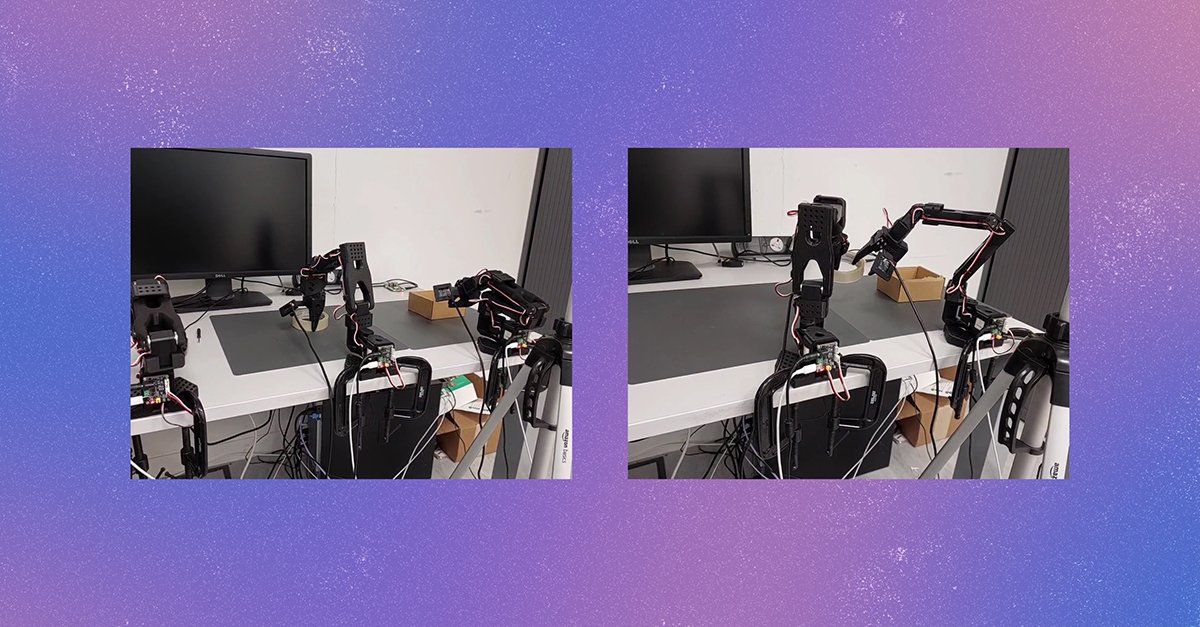
     Two images showing the robot performing the same task of handing over a tape from one robot arm to another. The videos show that while the task succeeds when the inference latency is low, the handover fails with high inference latency as is the case with onboard robot GPUs.

    At a glance

    • Challenges a core assumption in robotics AI: Our research shows that running physical AI inference exclusively on onboard GPUs can limit robot performance, battery life, and scalability, and that offloading inference to edge or cloud GPUs can offer significant advantages.
    • Demonstrates measurable benefits of inference offloading: Across representative mobile manipulation workloads, offloading improved task success rates, enabled larger AI models, and helped robots respond more effectively in dynamic, real-world environments.
    • Extends robot operating time: Replacing power-hungry onboard AI compute with lightweight onboard hardware and remote inference can substantially improve battery life, enabling robots to operate longer between charges.
    • Introduces a new capability in the Physical AI Toolchain: Developers can now containerize, deploy, and orchestrate robotics AI workloads across robots, edge infrastructure, and the cloud using Kubernetes-based tooling for distributed inference.

    Readily-available physical AI, with robotics assisting users in manufacturing, home, and warehouses scenarios, holds immense potential to improve safety, productivity, and assistance across a wide range of tasks. In many ways, AI for the physical world represents a major frontier for AI . Physical AI must operate in open, unpredictable environments, interact with both other robots and people, and work with a diversity of embodiments. Realizing this vision requires advances along three dimensions: robot hardware, embodied AI models, and systems infrastructure for training and inference. While robot hardware and the AI models have advanced rapidly in recent years, we turn our focus on a relatively under-addressed aspect: inference infrastructure of physical AI. Enabling robots to effectively and safely operate in the physical world will require sophisticated systems to handle large volumes of distributed inference compute.

    Today, the prevailing approach to physical AI is to provision a GPU onboard the robot, e.g., by wiring a GPU to the robot. In this model, the robot’s inference will be confined to the onboard GPU, and provide the robot with the necessary chunks and sequence of actions for the execution of its tasks. While higher-level planning may be performed in the cloud, task execution typically remains tied to the robot itself. We challenge this assumption.  As physical AI models grow in size and sophistication, the constraints of onboard compute become increasingly apparent. GPUs consume significant power, reduce battery life, add cost and weight, and can limit the ability to run the latest generation of AI models. 

    To better understand the systems implications of physical AI, we conducted the first systematic study of robotics workloads. We focused on mobile robotic manipulation, with the canonical task such as “check for rubbish in the kitchen and put it in the trash.” Such a task involves planning the path to the kitchen, perceiving the environment to find rubbish, navigating to the rubbish, picking up the rubbish, and navigating back to the trash can for disposal. We evaluated representative models across three core capabilities: semantic mapping and planning, navigation, and manipulation, as summarized in Figure 2. 

    Mobile robotic manipulation involves the components of semantic mapping & planning, manipulation, and safe navigation. The table above lists the state-of-the-art models used for each of these components in our measurement study.
    Figure 2: Details of the models used for the different components of mobile manipulation.

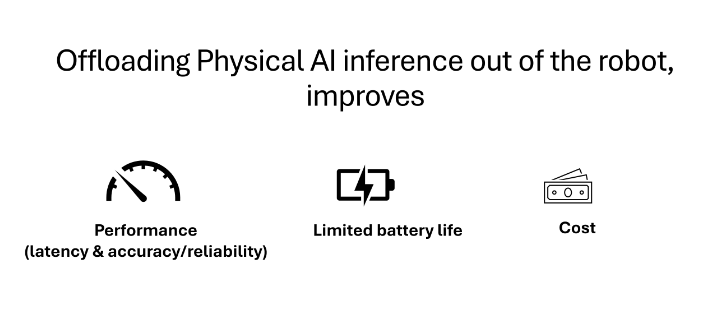
    Offloading physical AI inference out of the robot improved its response time and accuracy, along with battery lifetime and cost. We evaluated the inference models across a range of onboard, edge, and cloud compute configurations. Details of the specific test hardware are available in our technical report. 

    Diagram showing that offloading Physical AI inference from robots improves performance, battery efficiency, and cost.

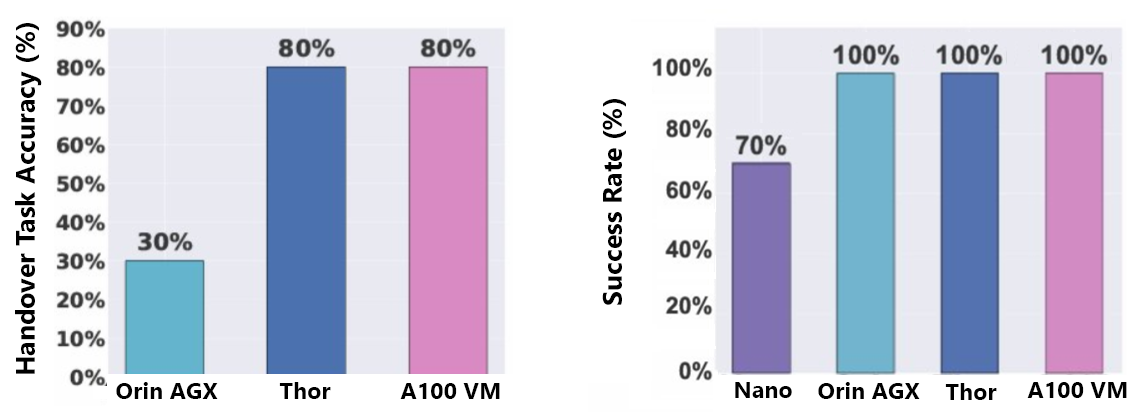
    Benefits in task performance: Our evaluation shows offloading inference can significantly improve robot performance across mapping, planning, navigation, and manipulation workloads. Some smaller GPUs could not accommodate the mobile manipulation stack. On GPUs with sufficient memory, mapping and planning slowed by up to 383% compared to an A100, thus limiting the robot’s abilities in dynamic spaces. Navigation showed a 30% drop in its timely detection of obstacles with lighter GPUs. While the VLA models did not dramatically slow down with smaller GPUs, the slowdown was still sufficient to drop their accuracies by 50%. In other words, onboard GPUs limited the performance of the robots while offloading their inference to an on-premise or cloud GPU boosts their operations, as shown in the videos below and quantified in the graphs. As physical AI models continue to grow in size and complexity, the benefits of offloading are likely to become even more pronounced.

    Figure 3a: The video shows the handover task with onboard GPUs.

    Figure 3b: The video shows the handover task when the inference is offloaded.

    Robots can support GPUs such as Jetson Nano and Orin AGX onboard. The graphs above show that the success rate of object handover and navigation are low with onboard GPUs, but increase substantially with beefier GPUs when offloaded such as Jetson Thor and A100.
    Figure 4: Success rates of robot arms handing over objects to each other when inference is performed with different GPUs (some onboard, and some offloaded). Offloading improves success rates.

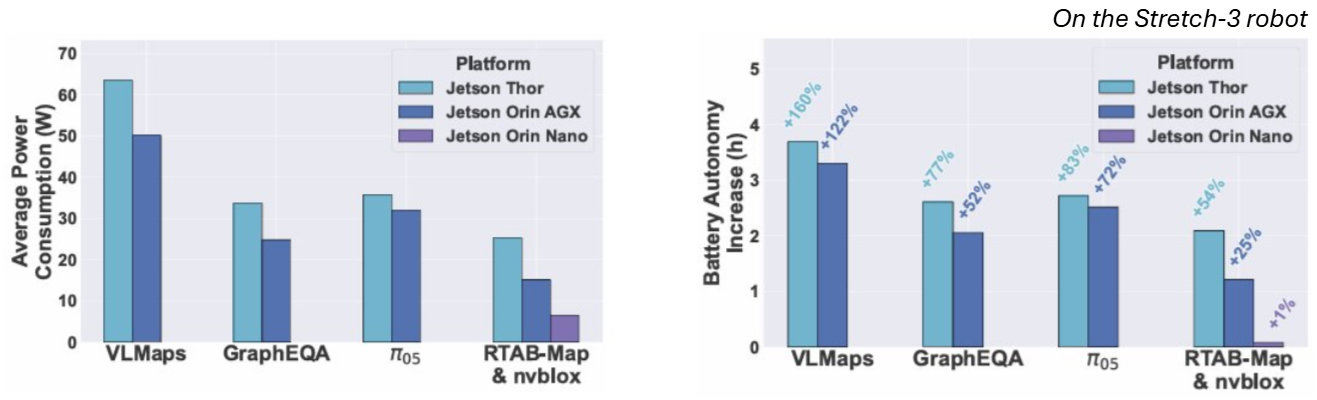
    Benefits in battery lifetime: Beyond performance, onboard GPUs also significantly drained the battery life of the robot. We compared the increase in battery lifetime by replacing an onboard GPU with a Raspberry Pi-5 board and shipping all the data to the offloaded GPU. The larger onboard GPUs, such as Jetson Thor, drained robot batteries by up to 160% (or a few hours) for even the larger robots.

    Battery lifetime of the Stretch-3 robot can improve by over 100% when their GPU inference is offloaded out of the robot.
    Figure 5: Impact of offloading GPU inference on the battery life of the robots; the above numbers are for the Stretch-3 robot.

    The above results show that offloading GPU inference out of the robot is critical for functioning in the open world with large models and long battery lifetimes. Nonetheless, offloading inference out of the robot involves a complex tradeoff involving performance, network latency and bandwidth, and available GPU resources. We believe that our measurement study will inform the design of physical AI inference systems.

    Spotlight: Event Series

    Research Forum | abstract background with colorful hexagons

    Microsoft Research Forum

    Join us for a continuous exchange of ideas about research in the era of general AI. Watch the latest episodes on demand.

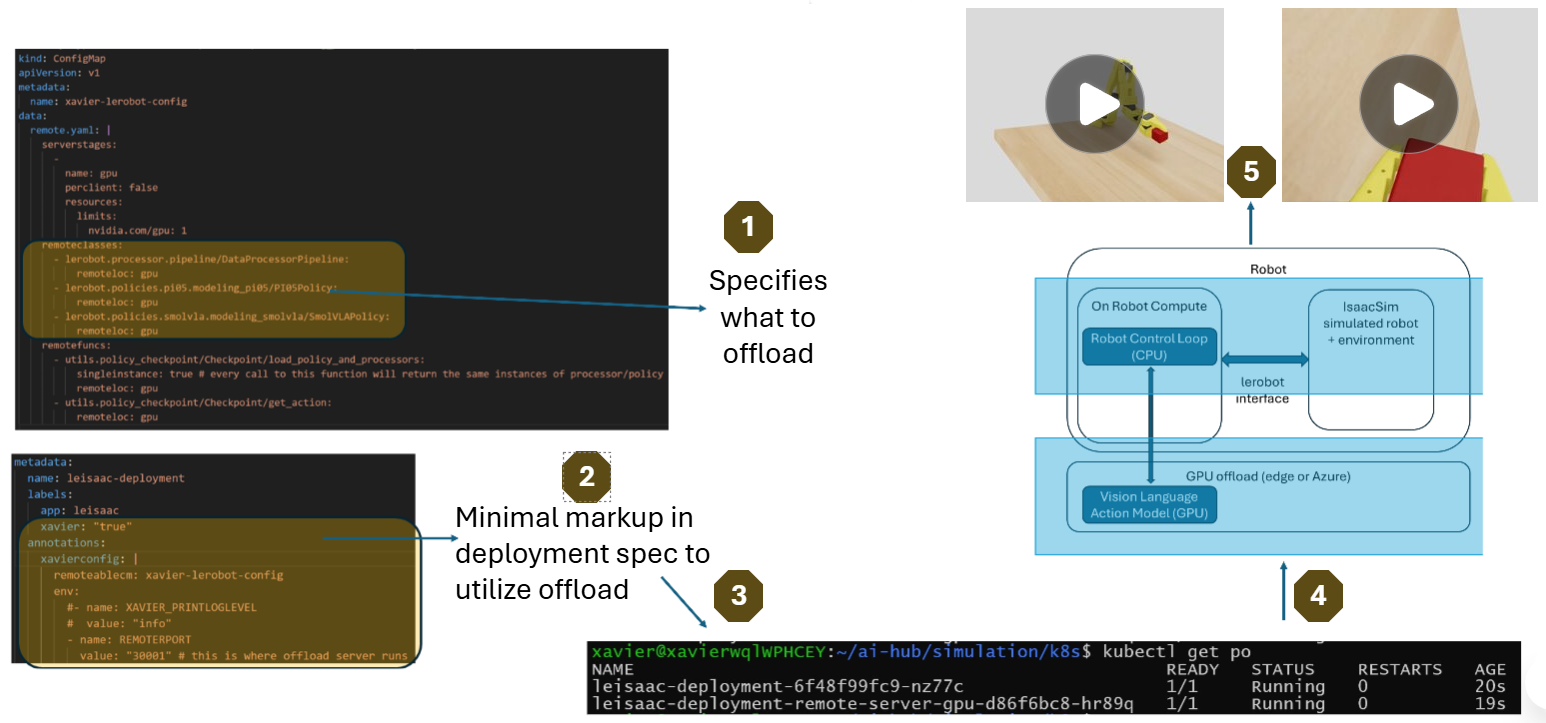
    We have built a toolset for easy inference offloading out of the robot and distributing inference between the edge GPU and cloud. Kubernetes is a natural platform to provide a uniform abstraction to distribute robotic AI between the robot’s compute, edge GPU, and overflowing to the cloud. The toolset allows automatic containerization and offloading of robotics workloads using declarative specifications, distributes physical AI containers with smart policies using Kubernetes, and integrates with robotic simulators, LeRobot, and ROS2 for easy development. The sequence of steps below shows how the toolset can be prompted with what to offload, and how it creates a separate container for GPU inference and offloads the same.

    Toolset to make offloading of physical AI inference easy by automatically generating a container for GPU inference and deploying it using Kubernetes to the machine with GPU.
    Figure 6: Steps in the offloading toolset with containerization and deployment.

    Microsoft has recently released the Physical AI Toolchain (opens in new tab) for operationalizing physical intelligence at scale. Physical AI Toolchain is an open-source, production-ready framework that integrates Microsoft Azure (opens in new tab) cloud services with NVIDIA’s (opens in new tab) physical AI stack, accelerating robotics and physical AI developers to automate and scale data curation, augmentation, and evaluation across perception, mobility, imitation learning, and reinforcement learning pipelines. We are announcing the addition of an industry-first capability for offloaded physical AI inference for robots as part of the Physical AI Toolchain. This release includes example projects for offloading inference of a SO-101 and a UR10e. The videos below show the offloading of the inference of Microsoft’s Rho model, targeted at dual-arm robots, to a Jetson Thor GPU, which controls the actions of the Mobile Aloha robot (opens in new tab).  

    Figure 7a: Offloading of GPU inference of Microsoft’s Rho model controlling the Mobile Aloha robot for interactions with the BusyBox to press the blue button.

    Figure 7b: Offloading of GPU inference of Microsoft’s Rho model controlling the Mobile Aloha robot for interactions with the BusyBox to turn the knob to position 4.

    Check out the inference offload feature, look into the source code, and let us know your feedback. We have already tested it with many real-world use cases, and look forward to hearing about your deployment experiences.

  • Improving synthesis prediction of small molecules at scale with RetroChimera

    Improving synthesis prediction of small molecules at scale with RetroChimera

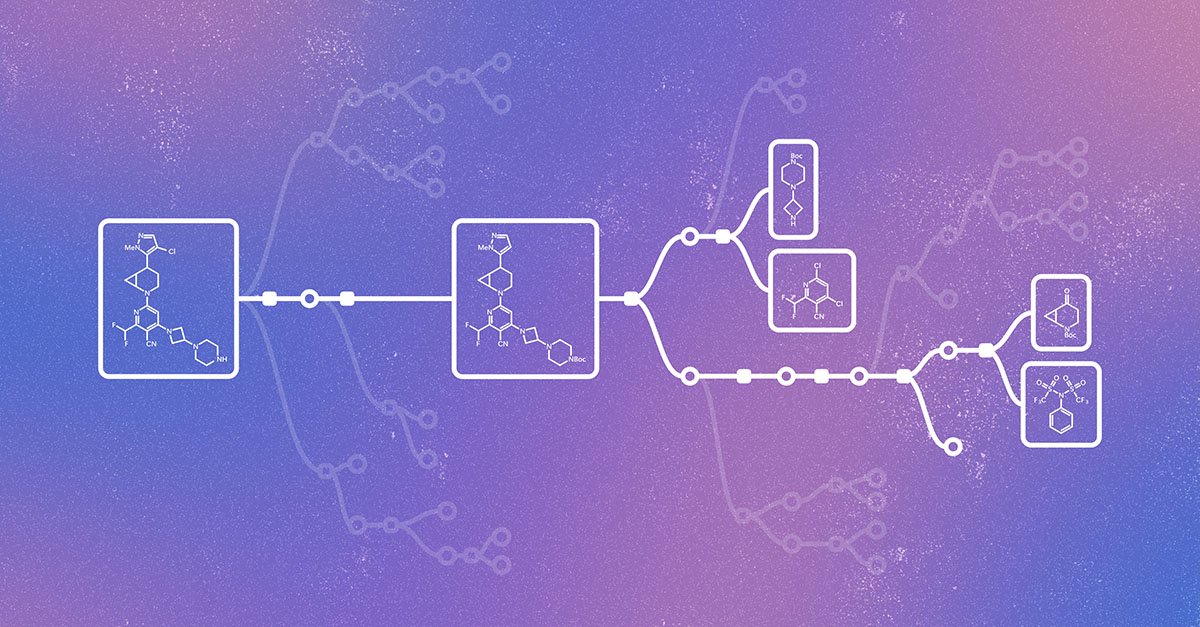
    Example of a retrosynthesis tree. For a single target molecule, many disconnections are possible, which introduces a high branching factor. The figure shows many incomplete routes in pale colors that contrast a completed route, which connects all the way from the target molecule to purchasable building blocks.

    At a glance

    • We report on the recent publication of our retrosynthesis model RetroChimera in the journal Nature (opens in new tab).
    • The paper describes the model’s architecture as well as extensive validation studies, including the model’s ability to recall rare reaction types, and successful zero-shot transfer and fine-tuning on proprietary datasets.
    • We open-source RetroChimera’s implementation and weights in the hope that it will enable researchers to accelerate development of new medicinally relevant molecules and advanced materials. 

    Developing new medicines and materials requires making new molecules but planning how to make them is still largely manual, time-consuming, and costly. RetroChimera automatically proposes high-quality synthesis routes. The model combines two strong models with complementary strengths, learning how to rank their proposals to produce better predictions than either alone. In blind tests, PhD-level chemists prefer RetroChimera’s individual reaction predictions over preceding models and recorded literature reactions. 

    Custom-made molecules are unlocking advances in modern medicine, smart materials, and sustainable agriculture. Yet, progress is slowed by chemical synthesis—the time-consuming process of making new molecules from simpler building blocks in the lab. In addition, synthesis is a significant driver of drug development costs. So even as computational methods make it possible to explore large numbers of novel molecules, finding practical ways to synthesize them remains a critical challenge. 

    Figure 1:   Example of a retrosynthesis tree. For a single target molecule, many disconnections are possible, which introduces a high branching factor. The figure shows many incomplete routes in pale colors that contrast a completed route, which connects all the way from the target molecule to purchasable building blocks.
    Figure 1: Planning a synthesis by working backward. Retrosynthesis starts with a target molecule and proposes successive disconnections into simpler precursors until purchasable building blocks are reached. The highlighted path shows a complete synthesis route; pale branches illustrate alternatives explored along the way. Circles represent molecules and squares represent reactions. For clarity, only a few branches are illustrated, with chemical structures shown for the target, one intermediate, and selected building blocks. 

    Retrosynthesis approaches this problem by working backwards from a target molecule, breaking it down step by step into simpler precursors (Figure 1). This process is comparable to playing strategic board games like chess and Go. It involves contemplating a wide range of possible immediate moves, or individual disconnections, while also requiring high-level strategic thinking to reach the end-to-end synthesis plan. However, the number of possible moves in retrosynthesis is much larger than in board games, and it is not obvious which moves would be available for a given molecule. Existing systems face major challenges, including recalling rare but strategically important reactions, robustness beyond the training distribution, and aligning with chemists’ expectations. As a result, retrosynthesis often requires highly specialized expertise, which hinders scaling and automation of scientific discovery.

    Figure 2:   Outline of the RetroChimera workflow. RetroChimera takes a single target molecule, its sub-models give predictions for a disconnection, and learned voting gives a ranked output.
    Figure 2: Our framework for ensemble-based retrosynthesis with learned re-ranking which underpins RetroChimera. The ensemble receives a target molecule as the input, which is then processed by the sub-models. The model outputs are aggregated using a learning-to-rank strategy. While in this work we only investigate deep learning models as prediction sources (solid boxes), it is possible to add additional sources, for example calls to reaction databases or human-in-the-loop queries (dashed box). 

    In a paper recently published in the journal Nature (opens in new tab), we present RetroChimera (opens in new tab), a new framework for retrosynthesis prediction. It is built around two models (Figure 2). R-SMILES 2, a Transformer-based de-novo model, predicts precursor molecules directly from the input molecule. This gives it the flexibility to learn reaction patterns directly from data. However, its unconstrained generation can also make it prone to hallucination.

    NeuralLoc, in contrast, is a graph neural network- (GNN) based model that encodes both the target molecule and reaction templates as graphs. It selects reaction templates and predicts where they should be applied to the target molecule. Its predictions are grounded in reaction patterns extracted from the training data, so it tends to produce more accurate and reliable outputs. But it’s more constrained when encountering reactions not covered by the template library. 

    These differences actually turn out to be a strength. Rather than making the same kinds of predictions, the two models capture complementary patterns in chemistry and specialize in different reaction types. R-SMILES 2 performs particularly well on reactions that involve large changes over the course of the reaction, while NeuralLoc excels in reactions of low precedence and those involving more localized changes.

    RetroChimera combines the ranked predictions of both sub-models using a learned ensembling strategy. Each model assigns a learned, rank-dependent vote to each predicted reactant set, and votes are added when both models propose the same reaction. By learning how much to trust each model at different ranks, RetroChimera can leverage their complementary strengths, approximately matching the better-performing sub-model across reaction classes.

    Figure 3:    Outputs of RetroChimera and other models were ranked by PhD-level expert chemists. Retrosynthetic disconnections predicted by RetroChimera had the highest acceptance rate (left). A single incorrect prediction already invalidates an entire synthesis route. As a result, routes suggested by RetroChimera had 90% acceptance rate by experts, while only 20-50% of those predicted by its sub-models or a baseline were deemed acceptable by chemists (right).
    Figure 3: Expert assessment of multistep synthesis routes. Left: Ratings of individual reaction steps. Right: Complete routes accepted or rejected for ten challenging targets. RetroChimera succeeded on nine targets, versus five for the de novo model, four for the editing model, and two for NeuralSym, a strong baseline model. 

    As a result, RetroChimera performs strongly across both common and rare reaction classes and produces retrosynthesis predictions that better align with chemists’ judgment (Figure 3). In blind tests, expert chemists preferred disconnections of complex molecules suggested by RetroChimera over those obtained from its constituent sub-models, as well as those from more established approaches, and even from the test set itself.

    We believe RetroChimera could help researchers identify promising synthesis route more efficiently, supporting faster design-make-test cycle across molecular science applications, including drug discovery and design of smart materials. RetroChimera could enable chemists to assess more—and more complex—candidate molecules at large scale. Paired with increasing levels of laboratory automation, we expect further acceleration toward closed-loop, self-improving systems for synthesis planning and execution.  

    RetroChimera is available on GitHub (opens in new tab) (MIT license) and accessible via Microsoft Foundry (opens in new tab). For instructions on how to access the checkpoint, we refer to the GitHub repository.

    We invite the broader chemistry community to experiment with RetroChimera, helping us identify its strengths and shortcomings so we can enhance it in the future. We are looking forward to hearing how it performs on various targets you care about!

    For a deeper look at the findings, including evaluation experiments with our external research collaborators, see the full Nature publication (opens in new tab) and the accompanying Microsoft Source article (opens in new tab). 

  • GigaPath-Flash and GigaTIME-Flash: Toward population-scale discovery with efficient pathology foundation models

    GigaPath-Flash and GigaTIME-Flash: Toward population-scale discovery with efficient pathology foundation models

    Overview of the GigaPath/GigaTIME model family. GigaPath-Flash provides efficient tile and slide encoders at 22M parameters. GigaTIME-Flash predicts spatial proteomics from H&E, replacing the CNN backbone with the distilled ViT-S encoder.

    At a glance

    • The Flash family extends GigaPath and GigaTIME with dramatically improved efficiency, making large-scale pathology research more accessible and practical.
    • A distilled pathology foundation model backbone reduces computational requirements without sacrificing performance, enabling repeated analyses across larger patient cohorts.
    • These open models support population-scale discovery, helping researchers investigate disease biology, biomarkers, and clinical outcomes across diverse cancer datasets.

    GigaPath (opens in new tab) and GigaTIME (opens in new tab) demonstrated how foundation models can support whole-slide analysis and tumor microenvironment modeling from routinely collected pathology data. GigaPath-Flash and GigaTIME-Flash make these capabilities substantially more efficient, enabling researchers to analyze larger cohorts, run more experiments, and move toward population-scale discovery. GigaPath-Flash and GigaTIME-Flash are research models. They are not intended or validated for clinical use, including diagnosis, prognosis, treatment selection, or other patient-care decisions. Performance may vary across datasets, scanners, institutions, populations, and use cases.

    The scale opportunity in computational pathology

    Histopathology is among the richest and most widely available sources of information in cancer research. Every tissue biopsy produces a whole-slide image that captures cellular morphology at subcellular resolution — and hospitals generate millions of these slides each year. This data contains information relevant to diagnosis, prognosis, treatment selection, and the biology of the tumor microenvironment.

    Foundation models have begun to unlock this information at scale. But whole-slide images are large — often exceeding a gigapixel — and applying a foundation model to even a single slide requires processing thousands of image tiles. When a research question involves tens of thousands of patients, the computational cost grows quickly. And population-scale discovery is not a single model run: it requires repeated cycles of feature extraction, statistical analysis, hypothesis testing, and validation across patient subgroups, biomarkers, and clinical endpoints. 

    Computational cost limits the number of patients, datasets, tasks, and hypotheses that researchers can study. To realize the full potential of pathology foundation models, we need models that can be applied repeatedly and affordably across large patient populations.

    From GigaPath and GigaTIME to the -Flash family

    GigaPath (Nature, 2024) (opens in new tab) is a whole-slide foundation model pretrained on large-scale real-world histopathology data from Providence. Unlike models that operate only at the tile level, GigaPath learns contextualized representations of entire slides, capturing both local cellular patterns and global tissue architecture.

    GigaTIME (Cell, 2026) (opens in new tab) extends this line of work to tumor microenvironments. Trained on 40 million cells with paired H&E and multiplex immunofluorescence (mIF) data, GigaTIME translates routine H&E images into virtual spatial proteomics maps across 21 protein channels. Applied to over 14,000 cancer patients, it generated a virtual population that uncovered more than 1,200 statistically significant associations between immune cell states and clinical biomarkers.

    GigaPath and GigaTIME addressed the scale of pathology data and biological discovery. And now, the Flash family of models addresses scale of experimentation.

    Figure 1: Overview of the GigaPath/GigaTIME model family. GigaPath-Flash provides efficient tile and slide encoders at 22M parameters. GigaTIME-Flash predicts spatial proteomics from H&E, replacing the CNN backbone with the distilled ViT-S encoder.
    Figure 1: Overview of the GigaPath/GigaTIME model family. GigaPath-Flash provides efficient tile and slide encoders at 22M parameters. GigaTIME-Flash predicts spatial proteomics from H&E, replacing the CNN backbone with the distilled ViT-S encoder.

    The Flash family shares a core design goal: preserving useful pathology representations while substantially reducing the computational resources required to generate and use them. Both models are built on a common efficient backbone — a compact ViT-S tile encoder distilled from the original billion-parameter GigaPath encoder — and both are released under the Apache 2.0 license. 

    GigaPath-Flash

    GigaPath-Flash is an efficient foundation model for whole-slide representation learning. It combines a 22M-parameter ViT-S tile encoder with a 21M-parameter LongNet slide encoder. The tile encoder is distilled from the original GigaPath ViT-g teacher, transferring the representational capacity of a billion-parameter model into a backbone that is an order of magnitude smaller. The slide encoder contextualizes all tile embeddings via dilated attention, scaling linearly with the number of tiles.

    On slide-level classification benchmarks (PANDA prostate grading and EBRAINS brain tumor subtyping), GigaPath-Flash achieves the lowest inference cost among whole-slide pretrained models while retaining competitive performance — scoring within 3% of the original GigaPath at roughly 50 times less compute.

    Figure 2: Efficiency–performance trade-off on whole-slide benchmarks. GigaPath-Flash (red, top-left) achieves competitive performance at substantially lower computational cost than other whole-slide pretrained models.
    Figure 2: Efficiency–performance trade-off on whole-slide benchmarks. GigaPath-Flash (red, top-left) achieves competitive performance at substantially lower computational cost than other whole-slide pretrained models.

    GigaTIME-Flash

    GigaTIME-Flash replaces the CNN backbone of the original GigaTIME with the GigaPath-Flash ViT-S encoder, paired with a lightweight convolutional decoder for H&E-to-mIF translation. The model is fine-tuned using LoRA adapters, keeping the pretrained encoder weights largely frozen.

    On both in-distribution and out-of-distribution cohorts spanning brain, breast, colon, and lung cancers, GigaTIME-Flash matches or improves upon the original GigaTIME in spatial protein prediction quality. The gains are particularly notable on out-of-distribution data, suggesting that the foundation model backbone improves generalization to previously unseen tissue types.

    Figure 3: Mean windowed Pearson correlation for GigaTIME and GigaTIME-Flash on the GigaTIME test set and four out-of-distribution Prov-TMA cohorts. GigaTIME-Flash matches or improves upon the original across all cohorts.
    Figure 3: Mean windowed Pearson correlation for GigaTIME and GigaTIME-Flash on the GigaTIME test set and four out-of-distribution Prov-TMA cohorts. GigaTIME-Flash matches or improves upon the original across all cohorts.

    Efficiency without giving up the foundation

    The efficiency gains of the Flash models are substantial:

    Model Type Efficiency gain
    GigaPath-Flash Whole-slide Foundation Model ~50× less compute, 97% of predictive performance compared to GigaPath
    GigaTIME-Flash Spatial Proteomics ~6× faster, ~8× less memory, better predictive performance compared to GigaTIME

    For a single slide, these differences reduce runtime and hardware requirements. Across tens of thousands of slides, they can determine whether an experiment is practical at all. To illustrate, we estimate the wall-clock time for generating virtual mIF across cohorts of different sizes on a single A100 GPU, assuming approximately 10,000 tiles per slide:

    Model 1,000 slides 100K slides 1M slides
    GigaTIME-Flash ~2 GPU-hours ~7 GPU-days ~70 GPU-days
    GigaTIME ~7 GPU-hours ~30 GPU-days ~300 GPU-days
    Estimates assume ~10,000 tiles per slide, batch size 128, single NVIDIA A100 GPU. Actual runtime depends on slide size, tiling resolution, and hardware.
    Figure 4: GigaTIME efficiency scaling. Left: throughput (tiles/sec) vs. batch size. Right: peak GPU memory (GB) vs. batch size. GigaTIME-Flash scales to over 1,600 tiles/sec while using a fraction of the memory.
    Figure 4: GigaTIME efficiency scaling. Left: throughput (tiles/sec) vs. batch size. Right: peak GPU memory (GB) vs. batch size. GigaTIME-Flash scales to over 1,600 tiles/sec while using a fraction of the memory.

    An open model release

    Both GigaPath-Flash and GigaTIME-Flash are released as open-weight models under the Apache 2.0 license. Model weights and code are available on HuggingFace:

    This is an early research release. Our current evaluations cover a limited set of benchmarks and cohorts, and broader validation across tasks, scanners, and patient populations is still needed. We expect the most valuable applications of these models to include scientific questions, cohorts, and use cases beyond those in our initial experiments. We welcome community evaluation, and we are equally interested in reports of where these models work well and where they fall short.

    Downstream clinical applications will require additional multi-institutional and prospective validation.

    Spotlight: Event Series

    Research Forum | abstract background with colorful hexagons

    Microsoft Research Forum

    Join us for a continuous exchange of ideas about research in the era of general AI. Watch the latest episodes on demand.

    Efficiency as an enabler of discovery

    GigaPath and GigaTIME demonstrated what pathology foundation models can learn from whole slides and tumor tissue. GigaPath-Flash and GigaTIME-Flash are a step toward making those capabilities usable across larger populations, more experiments, and a broader research community.

    By making pathology foundation models more efficient, we hope to expand the scale of the scientific questions researchers can ask.

    Acknowledgements

    GigaPath-Flash and GigaTIME-Flash are joint work across Microsoft Research, the University of Washington, and Providence. For technical details, see the paper.

    Paper co-authors: Naoto Usuyama, Jeya Maria Jose Valanarasu, Sicong Yao, Hanwen Xu, Jaspreet Bagga, Guanghui Qin, Robert E. Kramer, Cliff Wong, Soohee Lee, Hao Qiu, Theodore Zhengde Zhao, Racheli Ben Shimol, Angela Crabtree, Kevin Matlock, Eduardo Alejandro Lozano Garcia, Naiteek Sangani, Alberto Santamaria-Pang, Maximilian Rokuss, Yashna Hasija, Naisargi Manishkumar Patel, Jason Entenmann, Alexandra Q. Bartlett, Bill J. Wright, Bernard A. Fox, Brian Piening, Sheng Zhang, Sheng Wang, Tristan Naumann, Carlo Bifulco, Hoifung Poon

  • Broadening access to Skala creates a faster path to predictive DFT 

    Broadening access to Skala creates a faster path to predictive DFT 

    Schematic of the Skala architecture, showing how meta-GGA electronic features are transformed through point-wise processing and non-local atomic interactions to predict density functional theory energies.

    At a glance

    • Skala 1.1 demonstrates the continuously improving nature of Microsoft Research’s deep-learning DFT approach: trained on 2.5× more data than its predecessor, it delivers substantially higher accuracy across key molecular simulation challenges, including thermochemistry, reaction kinetics, and molecular structure prediction.
    • Skala is now available in CP2K and is being integrated into Psi4, FHI-aims, ORCA and VASP, bringing next-generation DFT accuracy closer to the communities that rely on these codes every day.
    • Microsoft Research is also introducing a living benchmark that will track the computational performance of successive, increasingly optimized Skala releases to help the community measure and accelerate progress toward ever greater accuracy and efficiency.
    • Together, these developments mark another milestone toward a future in which computational chemistry simulations are both predictive and integrated in all relevant scientific and industrial workflows.

    Bringing density functional theory (DFT) to predictive accuracy is a journey, not a single breakthrough. Since introducing Skala, our deep-learning exchange-correlation functional, we have continued to advance along two complementary fronts: improving accuracy and expanding accessibility across the computational chemistry ecosystem.

    Fig. 1: Table of errors for Skala-1.1 and competing density functionals on the 55 subsets of GMTKN55. Skala-1.1 delivers the lowest error on 32 subsets, indicating broad and consistent accuracy across a wide range of chemical properties and reaction types.
    Figure 1: Accuracy of Skala-1.1 for thermochemistry, kinetics, and non-covalent interactions. At the computational cost of a meta-GGA functional, Skala 1.1 outperforms the best, most expensive global hybrid functionals, ranking first (earning gold medals) in 32 of the 55 categories of the widely used GMTKN55 benchmark, which spans a broad range of chemical problems.

    On the accuracy front, the release of Skala-1.1 (opens in new tab) provides the first demonstration of the continuous-improvement paradigm underlying Skala. Trained on 2.5x more data than the first public version of Skala, the updated  model delivers substantially improved performance across key challenges in molecular simulation, including main-group thermochemistry, reaction kinetics, and molecular structure prediction.

    But accuracy alone is not enough. DFT is the computational engine behind a vast range of scientific and industrial workflows, spanning chemistry, materials science, catalysis, energy technologies, and drug discovery. To have real-world impact, advanced functionals must be accessible where scientists already perform their calculations. That is why we are also expanding the Skala ecosystem through collaborations with leading electronic-structure software developers.

    Today, we are announcing that Skala is available in CP2K and is being integrated into Psi4, FHI-aims, ORCA and VASP,  bringing next-generation DFT accuracy closer to the communities that rely on these codes every day. Alongside these integration efforts, we are introducing a living benchmark that tracks the computational performance of successive, increasingly optimized Skala releases. By providing a transparent and continuously updated reference for implementations across software packages and hardware platforms, this resource will help the community measure and accelerate progress toward ever greater accuracy and efficiency. 

    Together, these developments mark another milestone toward a future in which computational chemistry simulations are both predictive and accessible across a broader range of relevant scientific and industrial workflows.

    Want to learn more about Skala and why DFT plays such an important role in in-silico discovery? Read also our first blog post (opens in new tab).

    Skala as a continuously improving functional

    Unlike the traditional “functional zoo”, where new functionals accumulate without replacing older ones, Skala follows a different philosophy: each release is designed to supersede the previous one. As new data, model architectures, and training strategies become available, the model improves while maintaining the same practical computational cost.

    Skala-1.1 is the latest demonstration of this approach. It achieves a weighted average error of 2.8 kcal/mol on GMTKN55, a widely used benchmark suite comprising 55 categories of chemistry, including thermochemistry, reaction barriers, and noncovalent interactions. This level of accuracy surpasses today’s leading global (range-separated) hybrid functionals while retaining the efficiency of a semi-local functional. Beyond energies, Skala-1.1 also provides highly accurate electron densities, dipole moments, and molecular geometries.

    These advances were enabled by major expansions of the Microsoft Research Accurate Chemistry Collection (opens in new tab) (MSR-ACC), our large-scale collection of high-accuracy quantum-chemistry reference data generated with expensive wavefunction methods. For Skala-1.1, we added new categories, including electron affinities and noncovalent clusters, increasing both the size and, crucially, the diversity of the training data. This data-driven approach allows Skala to improve systematically with each generation, moving us closer to a truly scalable and predictive DFT framework.

    Available where scientists work

    To fully realize the potential of Skala’s continuously evolving approach to DFT, we need dedicated infrastructure that allows new releases to be rapidly and seamlessly integrated into the major software packages used by scientists in industry and academia. In turn, this will establish the fast feedback loop essential for accelerating Skala’s ongoing development.

    We first made Skala available through our open-source community release (opens in new tab), built on (GPU4)PySCF (opens in new tab) and integrated with ASE (opens in new tab). This enables researchers to evaluate and apply Skala with minimal effort while benefiting from highly optimized CPU and GPU performance.

    But no single software package can meet the needs of every application or research community. Computational chemistry and materials science rely on a rich ecosystem of electronic-structure codes, each shaped over decades to tackle specific scientific and industrial challenges. Bringing Skala to this broader ecosystem has therefore been a major focus of the past year. We are fortunate to build on the remarkable foundations created by the DFT community and grateful to the many researchers and developers who are helping to make Skala available within the software platforms that scientists use every day.

    Spotlight: Event Series

    Research Forum | abstract background with colorful hexagons

    Microsoft Research Forum

    Join us for a continuous exchange of ideas about research in the era of general AI. Watch the latest episodes on demand.

    In collaboration with the team of Prof. Thomas D. Kühne at the Center for Advanced Systems Understanding (CASUS) (opens in new tab), Skala has been successfully integrated into the open-source CP2K (opens in new tab) package. With more than 25 years of development, CP2K is a powerhouse for DFT simulations, particularly for large-scale systems and long-timescale molecular dynamics, while also providing a rich portfolio of high-accuracy electronic-structure methods. Skala expands the frontiers of what is possible within CP2K, delivering a step change in DFT accuracy while preserving the computational efficiency needed for simulations at scale. We are excited to see how CP2K’s scale and versatility, combined with Skala’s continuously improving accuracy, will enable new scientific applications and discoveries in the years ahead.

    There is more to come. Together with its vibrant developer’s community , we are actively integrating Skala into the open-source Psi4 (opens in new tab) package, an essential platform for molecular electronic-structure research. Combined with the PySCF-based Skala Community Edition, this will make Skala available in three widely used open-source quantum chemistry packages.

    Beyond open-source software, we are working closely with leading developers behind FHI-aims (opens in new tab), ORCA (opens in new tab), and VASP (opens in new tab), with the goal of making Skala broadly accessible across the major software platforms used in computational chemistry and materials science.

    Validating accuracy across implementations: CP2K as case study

    Thorough testing is essential for any new implementation. We want to ensure that Skala delivers consistent accuracy across different codes and computational settings. Together with the CP2K team, we developed a comprehensive suite of integration tests to verify that Skala produces numerically correct and reliable results. We are particularly grateful to the CASUS team, whose deep expertise in the numerical verification of computational methods was instrumental in designing and validating this testing framework.

    Fig. 2: Plot comparing signed errors for Skala-1.1 using the CP2K and PySCF implementations on a representative subset of GMTKN55. The two implementations show nearly identical results, agreeing within 0.04 kcal/mol and confirming that the CP2K integration reproduces the accuracy of the community release.
    Figure 2: Signed errors relative to high-accuracy reference values for a representative subset of GMTKN55, comparing the CP2K and PySCF implementations of Skala-1.1 using as closely matched numerical settings as possible. The two implementations agree to within 0.1 kcal/mol MAD across the entire subset.

    A detailed discussion of the implementation, validation strategy, and testing infrastructure for Skala in CP2K can be found in our joint paper with the CASUS team: “Molecular Implementation of the Machine-Learned Skala Exchange-Correlation Functional in CP2K through GauXC.”

    A living performance report for Skala

    Accuracy and broad availability only translate into scientific impact if Skala is also fast. Today, Skala can deliver performance comparable to semi-local meta-GGAs on both CPU’s (with an overhead that disappears for molecules with more than 20-30 atoms) and GPUs, and we are committed to preserving that efficiency as it is integrated across the electronic-structure software ecosystem.

    But performance is not a fixed property. New Skala releases, improvements in libraries such as GauXC, and hardware-specific optimizations continuously improve efficiency and reveal new opportunities for further gains. Capturing this progress requires more than a single benchmark snapshot.

    To provide a transparent and up-to-date view of Skala’s performance, we are publishing a benchmarking harness together with a living performance report (opens in new tab) that will be updated as new optimizations become available. This report tracks performance across a range of tasks and hardware platforms, while the harness enables package developers to benchmark, validate, and improve their own Skala implementations.

    Fig. 3 (figure attached): Benchmark of the computational cost of Skala-1.1 relative to r2SCAN, B3LYP, and M06-2X on GPUs and CPUs. Skala-1.1 achieves performance comparable to r2SCAN on GPUs and approaches semilocal-functional cost on CPUs for larger systems, while remaining significantly less expensive than hybrid functionals.
    Figure 3: Computational cost of Skala on GPU and CPU, compared with a popular metaGGA functional (r2SCAN) and two hybrid functionals (B3LYP and M06-2X). On GPU, Skala 1.1 has the same cost as r2SCAN, and the hybrid functionals become more expensive for systems with more than ~1000 orbitals. On CPU, Skala has an overhead with respect to the other functionals for smaller systems, that disappears for systems with more than ~300 orbitals.

    Acknowledgments

    Skala is the product of a truly collaborative effort across AI for Science, and we thank our engineering, project management, and business operations teams for making this work possible. We also thank MSR Accelerator for their partnership in advancing data generation efforts and accelerating software integrations that help bring Skala to the broader scientific community.

  • MindTopo reveals VLMs’ spatial reasoning abilities

    MindTopo reveals VLMs’ spatial reasoning abilities

    Benchmark overview showing ten spatial reasoning and planning tasks grouped into two rows. The top row, labeled “Reasoning,” includes Maze, Assembly, Bead, Sheep, and Knot. The bottom row, labeled “Planning,” includes Pipe, One Stroke, Swap, Chat Noir, and Untangle. The MindTopo logo and title are centered between the two categories.
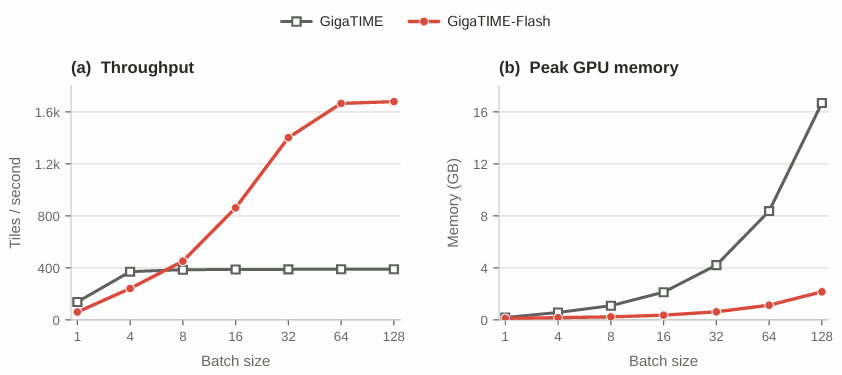
    At a glance

    • MindTopo is a new benchmark for testing topological reasoning in AI, evaluating whether multimodal models can understand concepts such as connectivity, enclosure, order, separation, and knots.
    • The benchmark measures both reasoning and planning, testing not only whether models can recognize topological relationships in static images but also whether they can preserve and manipulate those relationships through a sequence of actions.
    • Current multimodal models perform much better on static recognition than interactive tasks, suggesting they struggle to maintain a consistent understanding of topology over time.
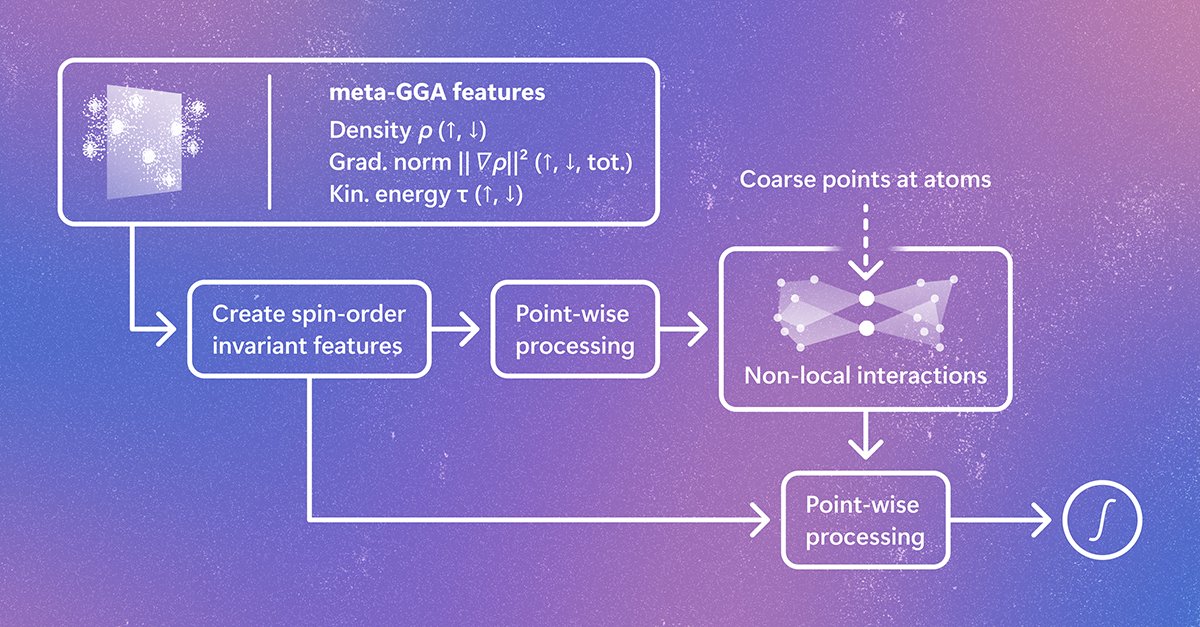
    • Failures often emerge during planning rather than perception, with models losing track of structural relationships as scenes change or proposing actions that violate physical constraints.
    • The findings highlight an important opportunity to advance AI systems for robotics and interactive environments, where understanding what stays connected, enclosed, ordered, or knotted is essential for reliable decision-making.

    Can AI determine whether two rooms remain connected after a wall is added? Can it recognize whether an animal is inside a fence, distinguish a true knot from a tangled loop, or rearrange several ropes without allowing them to pass through one another?

    These questions concern 3D topology, a form of spatial understanding based not on exact distances, angles, or shapes, but on structural relationships that persist as objects bend, stretch, or deform. Connectivity, enclosure, ordering, and knottedness are examples of topological properties. These properties are a foundational layer of human spatial understanding in Cognitive Science, yet they remain largely absent from how multimodal AI systems are evaluated.

    In a new research study, we introduce MindTopo (opens in new tab), a benchmark designed to evaluate whether multimodal large language models possess this kind of topological intuition. Our findings reveal a substantial gap between recognizing topology in a static image and maintaining an innate understanding of that topology while planning and acting. Current models can sometimes identify a connected path, enclosed region, or knot in a single scene, but that understanding often breaks down once the model must manipulate the scene through a sequence of actions.

    How MindTopo defines topological space

    Most spatial evaluations for multimodal models focus on Euclidean properties such as distance, direction, size, and relative position. Inspired by Piaget and other cognitive literature’s classification of topological ability, MindTopo organizes its tasks around the following five categories:

    • Continuity asks whether a path or object remains unbroken.
    • Separation asks whether nearby elements form one structure or distinct parts.
    • Order tracks how elements are arranged along a path or through a transformation.
    • Enclosure tests whether a boundary creates an inside and an outside.
    • Knots tests whether ropes are truly knotted or linked rather than merely tangled in appearance.

    Each category is evaluated at two cognitive levels. In reasoning tasks, a model examines one or more rendered scenes and answers a question about their topological structure: whether two points in a maze are connected, whether the sheep are inside the fence, whether a rope is truly knotted. In planning tasks, the model interacts with a simulated environment and selects actions that must create, preserve, or remove a particular relation, such as rotating pipe segments, drawing a separating path, rearranging blocks, trapping a moving agent, or untangling ropes. The environments enforce legal actions, so a model cannot solve a rope puzzle by passing one strand through another.

    This figure provides an overview of MINDTOPO, a benchmark for evaluating topological reasoning in multimodal large language models. The figure illustrates two evaluation settings: reasoning, where models answer visual questions about rendered scenes, and planning, where models interact with environments to transform an initial state into a goal state. The benchmark spans five topological properties—continuity, separation, order, enclosure, and knots—with representative tasks including Maze and Pipe, IKEA and One Stroke, Bead and Swap, Sheep and Chat Noir, and Knot and Untangle. A radar chart on the right summarizes model performance across these categories and shows that current models still struggle, particularly on topological spatial reasoning that requires planning and maintaining invariants across actions.
    Figure 1. MindTopo pairs questions about static scenes with interactive tasks that require models to preserve or change the same topological relations. 

    All scenes are generated from controlled simulators, which provide exact ground truth and adjustable difficulty. That control makes it possible to separate two failure modes that otherwise look alike: a model that fails because a scene is visually complex, and a model that fails because it cannot maintain the underlying relationship as objects move.

     This figure provides an overview of the 13 MINDTOPO tasks organized by five topological properties and two cognitive levels. Continuity includes 2D Maze and 3D Maze reasoning tasks and the Pipe planning environment; Separation includes IKEA reasoning and One Stroke planning; Order includes Bead and Origami Point reasoning and Swap planning; Enclosure includes Sheep and Hole reasoning and Chat Noir planning; and Knots includes Knot reasoning and Untangle planning. Reasoning tasks pair rendered scenes with visual questions and example answers, while planning tasks, labeled “Gym Env,” show representative initial, intermediate, and final or goal states of interactive environments.
    Figure 2. MindTopo maps reasoning and planning tasks to continuity, separation, order, enclosure, and knots. 

    Seeing topology is not the same as acting on it

    Across a broad set of proprietary and open-weight models, performance was consistently stronger on static reasoning than on interactive planning, and both remained well below human performance. The contrast was especially clear when success depended on preserving a relationship across many actions.

    The error patterns help locate the problem. Static mistakes usually began with perception, such as missing a wall, opening, or crossing. Planning mistakes appeared after the scene had been understood. Models followed a locally plausible move without tracking its later consequences, lost the task over multiple turns, or proposed an action that violated the environment’s dynamics.

    Spotlight: Microsoft research newsletter

    Microsoft Research Newsletter

    Stay connected to the research community at Microsoft.

    We also tested whether image and video generation could help models maintain an understanding of topological relationships. Image generation sometimes helped when the relevant relation was visible in a single frame, but it remained unreliable across a sequence of crossings or moves. Video rollouts frequently altered topology or violated task dynamics. Visual simulation appeared useful only to the extent that it preserved structural constraints over time.

    Building agents that preserve structure

    MindTopo is intended as a controlled diagnostic for this gap. Robots, accessibility tools, and interactive assistants must understand not only where objects are, but also what remains connected, enclosed, ordered, or knotted as actions unfold. Closing that gap may require models that carry an explicit topological state, or world models whose predictions preserve topology by construction.