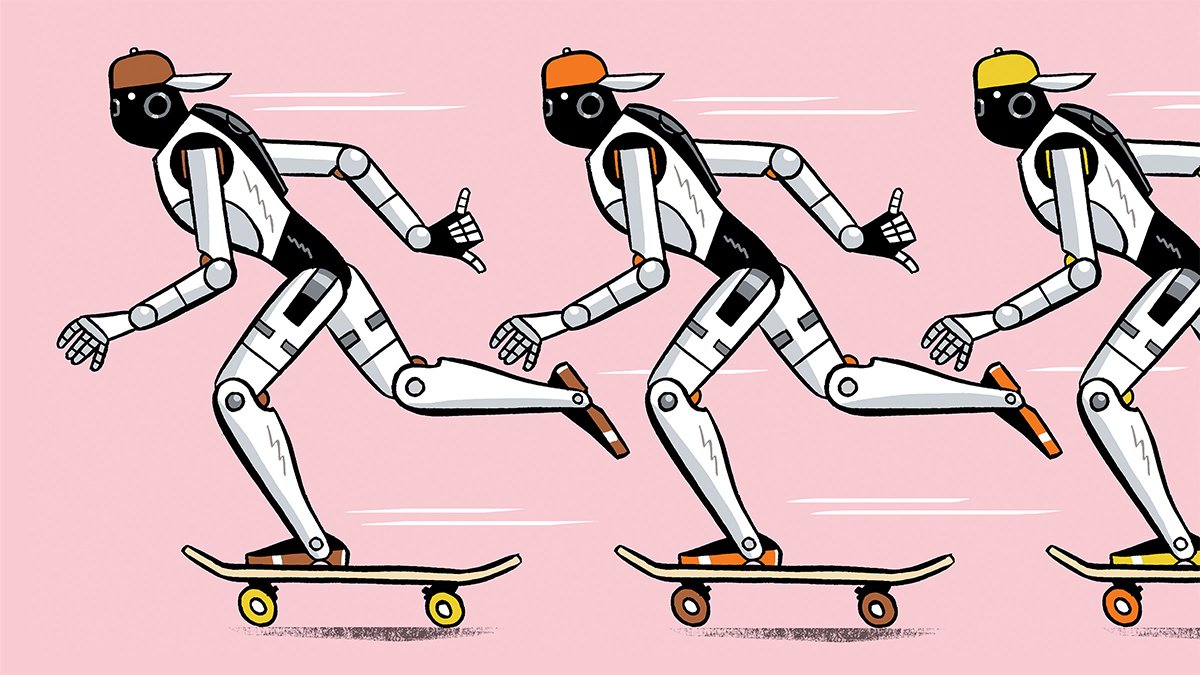
AI agents are changing the nature of customer relationships by taking on more of the discovery, comparison, negotiation, and purchasing decisions that companies once controlled through their own
On September 8, 2026, Meta launched Muse, a personal AI agent designed to act on a user’s behalf: filling out forms, negotiating, booking travel, and making purchases. Twelve days later, Amazon blocked Muse from shopping on its site, arguing that third-party agents should identify themselves and obtain a retailer’s permission before transacting on behalf of its customers.
HBR Executive delivers trusted insights and actionable strategies to guide leaders through consequential decisions. Practical tools, and forward-looking perspectives cut through the noise to equip you to navigate uncertainty, stay ahead of emerging trends, and plan for a stable future.
Exclusive Benefits
Playbooks
Concrete strategies, tactics, and solutions to real challenges from your peers and other experts. Published every 2 weeks. All Playbooks (Opens a new page)
Masterclasses
Agenda
A weekly newsletter of timely insights that interpret today’s business climate and help you chart a path to what’s next. All Agenda (Opens a new page)
AI isn’t simply replacing sales work or automatically equalizing sales performance; it’s providing disproportionate lift to individuals and organizations that can build systems around
Generative AI has produced two competing views about which workers will benefit most. One view is that AI will narrow performance gaps by giving lower performers templates, answers, and coaching directly in their workflow. The other is that AI will widen those gaps by eliminating routine but necessary work, which will allow top performers to spend more time on higher-value activities where they already have an advantage. At the individual task level, high and low performers may both benefit, but the more important question is which effect dominates on net in real jobs, where workers perform bundles of activities. The answer matters for how firms hire, train, organize teams, and adjust practices built for their current talent mix.
Corporate sustainability may have fallen out of favor in some executive and political circles, but the business case remains strong: Companies continue to invest because sustainability
Corporate sustainability appears to be in a bit of a slump. ESG has become a political liability, sustainability teams are shrinking, and many executives have shifted their attention to AI, economic uncertainty, and regulatory fragmentation.
is a senior director analyst in the Gartner HR practice. They support CHROs and HR leaders to understand and prepare for AI’s impact on the workforce and shape work for the human-AI era. CV engages with clients and speaks on topics including AI’s impact on headcount and roles, AI’s impact on skills, AI literacy, building AI-readiness across the workforce, and the intersection of inclusion and AI.
Sleep deprivation remains widespread among leaders, and many leaders underestimate how much fatigue affects their performance. A new survey of 1,009 U.S. managers and executives suggests that the
At 8:40 a.m. on a Friday, a leadership team gathers to make the biggest call of its quarter. The CEO hasn’t had enough sleep all week, but nobody knows that, because she arrived energized, with a coffee in her hand, performing alertness the way many senior leaders learn to do. She’s far from the only one in the room performing alertness, though. Many of the others in the room are hiding their own sleep deprivation—which means the decision they’re all about to make may be shaped as much by the sleep they’ve lost this week as by the analysis in front of them.
Today, more than 80% of employers offer some form of variable pay. From performance bonuses to tipped service jobs to demand-based gig work, more and more workers are taking home paychecks that
According to a recent Payscale report, more than 80% of companies currently use some form of variable pay to compensate their workers. From performance bonuses in sales and commission-based roles to tipped service jobs, demand-based scheduling in retail and construction, and algorithmically-priced gig work, a growing proportion of workers take home paychecks that vary substantially from week to week or month to month. Variable pay is also prevalent among professions often associated with a stable income including public school teachers, police officers, and medical doctors.
Organizations today need to simultaneously perform (run the business reliably for today) and transforming (change the business for tomorrow). The challenge is that most organizations are much
HBR Executive delivers trusted insights and actionable strategies to guide leaders through consequential decisions. Practical tools, and forward-looking perspectives cut through the noise to equip you to navigate uncertainty, stay ahead of emerging trends, and plan for a stable future.
Exclusive Benefits
Playbooks
Concrete strategies, tactics, and solutions to real challenges from your peers and other experts. Published every 2 weeks. All Playbooks (Opens a new page)
Masterclasses
Agenda
A weekly newsletter of timely insights that interpret today’s business climate and help you chart a path to what’s next. All Agenda (Opens a new page)