Category: Talent management

  • What Top Performers Do Differently with AI—and Why They See the Biggest Benefits

    What Top Performers Do Differently with AI—and Why They See the Biggest Benefits

    Harvard Business Review Logo

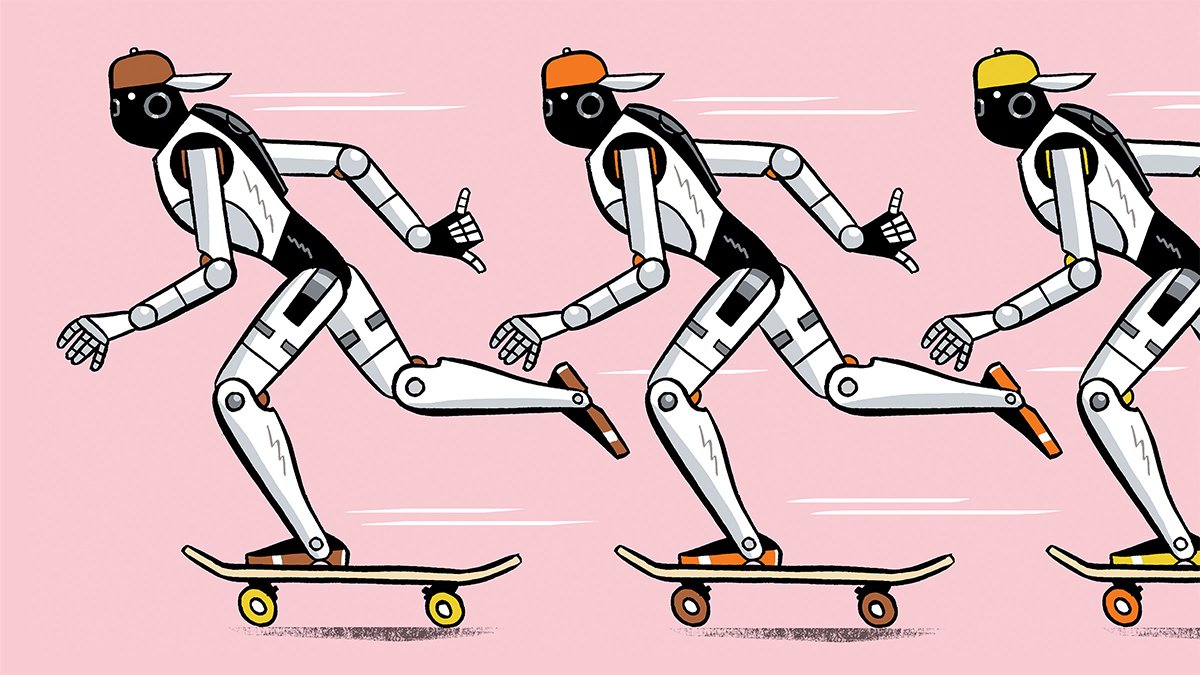
    Illustration by Jason Ford

    AI isn’t simply replacing sales work or automatically equalizing sales performance; it’s providing disproportionate lift to individuals and organizations that can build systems around

    Generative AI has produced two competing views about which workers will benefit most. One view is that AI will narrow performance gaps by giving lower performers templates, answers, and coaching directly in their workflow. The other is that AI will widen those gaps by eliminating routine but necessary work, which will allow top performers to spend more time on higher-value activities where they already have an advantage. At the individual task level, high and low performers may both benefit, but the more important question is which effect dominates on net in real jobs, where workers perform bundles of activities. The answer matters for how firms hire, train, organize teams, and adjust practices built for their current talent mix.

  • Why Companies Should Support Crisis Volunteer Work

    Why Companies Should Support Crisis Volunteer Work

    Harvard Business Review Logo

    TOUFIC RMEITI/Getty Images

    Employees who volunteer during a crisis bring more back to work than a sense of having helped: They can also become more resilient, adaptive, and innovative. Research across multiple crises in the

    In the fall of 2017, as Hurricane Harvey’s floodwaters receded across Houston, employees from a local construction firm joined volunteer crews helping homeowners gut waterlogged walls and begin the long road to rebuilding—during regular work hours and while still receiving company pay. The company knew this was a moment for the organization to support its community, but what they didn’t anticipate was what these employees would bring back. One volunteer described the experience to us this way: “Seeing the resilience of those people we were helping, and the impact we were having on them—[that] truly builds my resilience as well.” Across the group, employees who had come to Houston’s aid shared that the experience had changed them, giving them greater confidence in navigating uncertainty and stronger capabilities to adapt and develop creative solutions in their daily work. Further evidence from managers we interviewed supports the idea that crisis volunteering can indeed help employees develop some of the skills most critical to today’s workplaces.

  • What Actually Sets High Achievers Apart?

    What Actually Sets High Achievers Apart?

    Harvard Business Review Logo

    David Muir/Getty Images

    While many high achievers rely on positive internal attributes, including intelligence, passion, and perseverance, research shows that external factors also play a big role in their success. In

    What sets high achievers apart from everyone else?  This is the question that University of Pennsylvania professor Angela Duckworth has spent years trying to answer. While others might have focused on innate intelligence or talent, her research pointed her to grit: a combination of passion and perseverance that allows those who have it—or build it—to thrive.  Her first book outlined how all of us can become more gritty.

  • A Collection of HBR’s Most Insightful Research on AI at Work

    A Collection of HBR’s Most Insightful Research on AI at Work

    Illustration by Minjo Jung

    Summary.   

    Research on AI in the workplace can show us how the technology is really being used and what it does to the way we work. Recent studies offer lessons for leaders on how employees are actually

    There’s no shortage of assertions and predictions about AI’s impact on work. But what does the research say about what’s actually happening inside organizations—and how can you use it to make better decisions about how AI is implemented at your company?

  • Research: How Speech Patterns Shape Opportunity at Work

    Research: How Speech Patterns Shape Opportunity at Work

    Harvard Business Review Logo

    Tatiana Maksimova/Getty Images

    Summary.   

    Employees’ speech patterns can shape their careers, not because speech reliably predicts ability, but because managers often mistake familiarity for social skill. A new study, which draws on

    This article was produced by Harvard Business School Working Knowledge and features the insights of faculty member Kadeem Noray.

  • What to Do When There’s Too Much Work

    What to Do When There’s Too Much Work

    Summary.   

    In this week’s The Insider newsletter, managing editor Gretchen Gavett explores a common problem for leaders: your team is overloaded, but you can’t take on the extra work yourself.

    Sometimes there’s just too much to do. In our Insider Insights surveys over the past year, HBR subscribers have consistently reported a common pain point: The sheer volume of work you and your teams are juggling. Whether the cause is AI, layoffs, a budget crisis, all of the above—or something else entirely—everything can feel futile when it’s impossible to make progress.

  • How AI Is Changing Talent, Not Just Tasks: Rethinking Where Human Judgment Matters Most

    How AI Is Changing Talent, Not Just Tasks: Rethinking Where Human Judgment Matters Most

    September 17, 2026

    The decisions leaders must make about AI today go far beyond what platforms to invest in: AI is changing organizational culture and leadership for good. In episode 1 of a special four-part series on how AI is changing leadership, we look at how the technology is changing how people interact at work, the new culture it is creating, and how leaders can get smart about talent management and strategy in this rapidly advancing world. Paula Goldman, Salesforce’s chief ethical and humane use officer, argues there’s currently a big opportunity to redesign work around the complementary strengths of humans and AI. She explains how AI could reshape entry-level jobs and the development of future leaders, why companies need to rethink internal mobility and talent development, and how executives can prepare their organizations for an AI-powered workforce without sacrificing accountability, creativity, or trust. Goldman is the author of Manage the Machine: How to Harness Human-AI Collaboration at Work.

    Plus:

    • Why “human in the loop” is an outdated model for managing AI—and what it means to put humans “at the helm.”
    • How leaders can determine which tasks to delegate to AI and where human judgment matters most
    • Why treating AI primarily as a cost-cutting tool could mean missing its bigger potential
    • How companies can redesign jobs and develop talent as AI takes over more routine tasks
    • Why leaders need to think differently about entry-level hiring and the development of future executives
    • How organizations can use AI to improve management, internal mobility, and employee development
  • The Hidden Costs of Monitoring Employees with AI

    The Hidden Costs of Monitoring Employees with AI

    Harvard Business Review Logo

    Colin Anderson/Stocksy

    AI is making employee monitoring cheaper, more granular, and continuous—but lower costs can encourage companies to overuse controls without considering their broader consequences. Research

    Linus Arauz operates 10 points of sale across two large airports and has responsibilities that extend to nearly 100 food and non-food retail locations across several airport programs. Some of those locations have no staff at all. Travelers simply walk up and take whatever they want off the shelf—a sandwich, a bottle of water. They’re supposed to pay, but no one is there to ensure that they do.