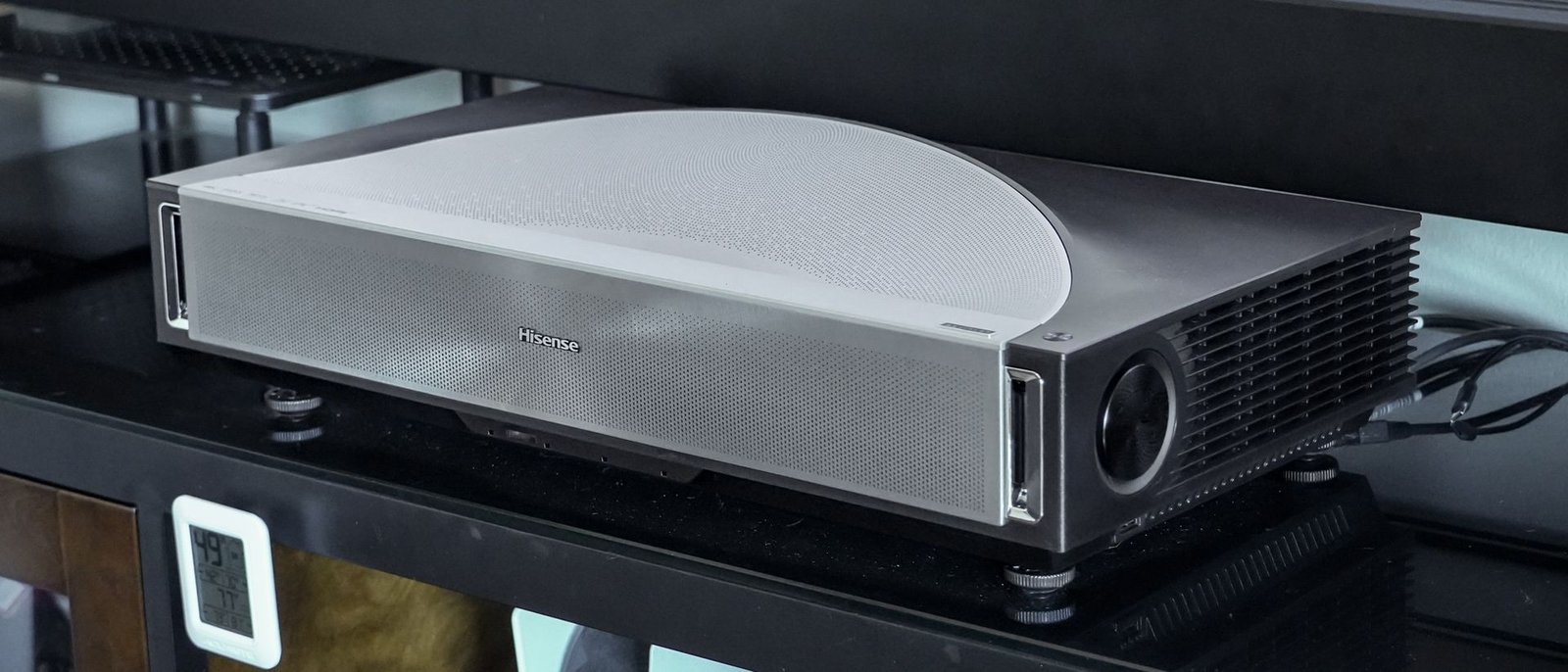
Tom’s Guide Verdict
The Hisense PX4 Pro offers gorgeous projection, gaming chops, and impressive audio from a projector, but its software and some firm picture settings keep it from reaching the heights it might have otherwise.
Reasons to buy
- +
Strong brightness, contrast, and color are wondrous
- +
240Hz VRR gaming is glorious
- +
Surprisingly wide soundstage
Reasons to avoid
- –
“Scenario Enhancement” spoils the full potential
- –
VidaaOS isn’t as complete as Google TV
- –
Remote lacks backlighting
Why you can trust Tom’s Guide Our writers and editors spend hours analyzing and reviewing products, services, and apps to help find what’s best for you. Find out more about how we test, analyze, and rate.
Hisense PX4 Pro: Specs
Price: $4499
Resolution: 4K
Lumens: 3500 ANSI
Audio: 4.0.2-channel, 66W Light: RGB Laser
Projection: 0.47″ DLP
Screen size: 80-200 inches
HDR: HDR10+, HLG, Dolby Vision
Refresh Rate: 60Hz/240Hz VRR
Ports: 2x HDMI 2.1, 2x HDMI 2.0, USB 3.0, USB 2.0, Optical Audio, Gigabit Ethernet
Smart TV Software: Vidaa OS
Size: 5.6 x 21.3 x 11.3 inches
Weight: 18.3 lbs
Lifespan: 25000 hours
The Hisense PX4 Pro looks like a simple year-on-year upgrade for the family of UST (ultra-short throw) laser projectors, but it makes a lot of interesting moves and not all of them are a net positive. It’s still the compact powerhouse that prior generations were, offering impressively bright and stunningly colorful visuals from its RGB laser light source while only needing a couple inches between it and your screen to cast a massive picture. Plus, it adds VRR support and an optical iris to enhance contrast. These extra inclusions come with a raised price tag, though. And, a few of Hisense’s choices hinder its performance in certain conditions and hold it back against some of the best projectors and rivals like the Awolvision Aetherion lineup.
Hisense PX4 Pro review: Pricing and availability
The Hisense PX4 Pro launched at the beginning of September in 2026, so it’s very new. It comes with a retail price tag of $4,499, but it’s seen early discounts drop it by $500. I suspect that’ll last briefly but become a common discount during big sales events.
Hisense PX4 Pro review: Design
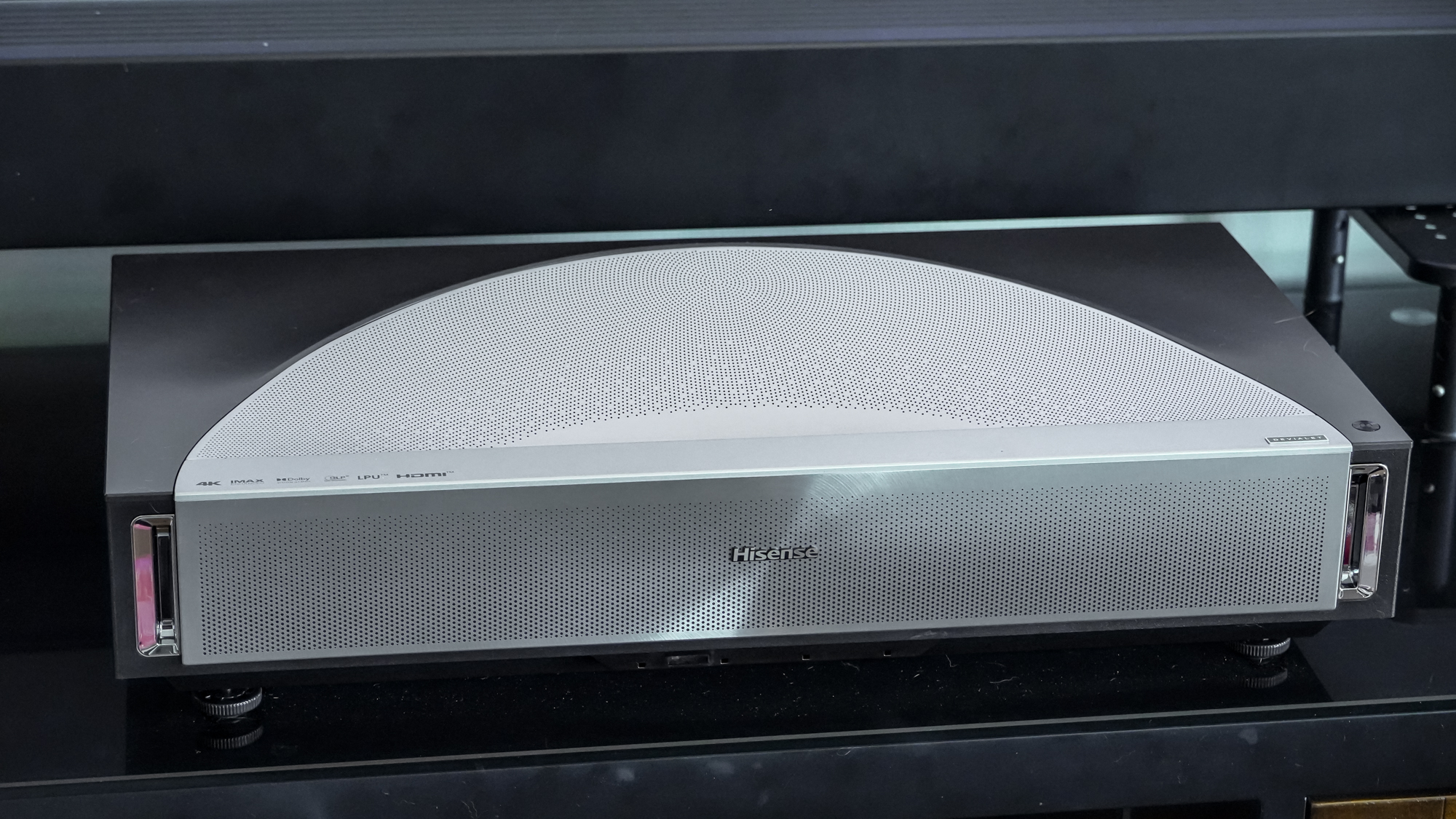
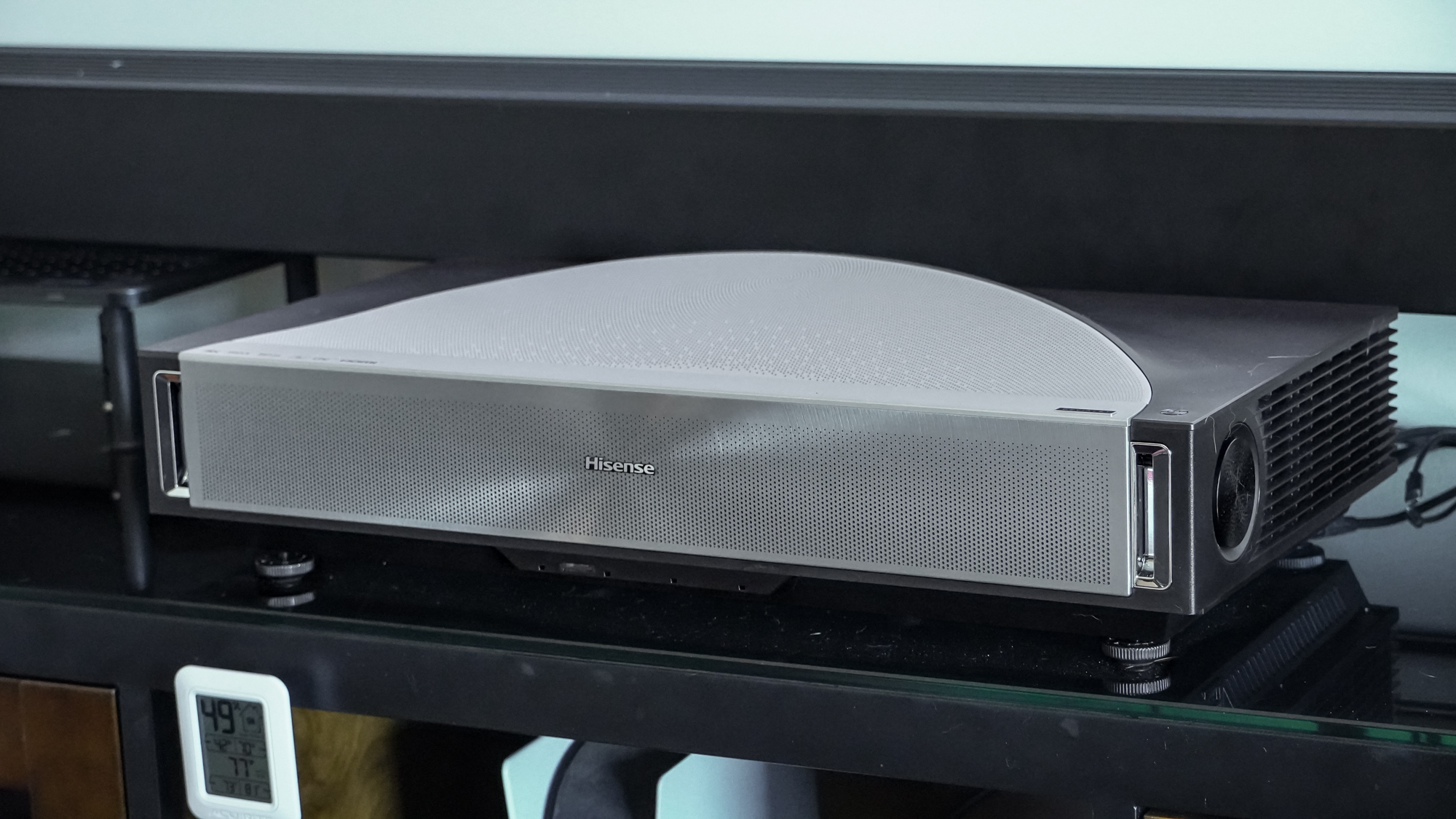
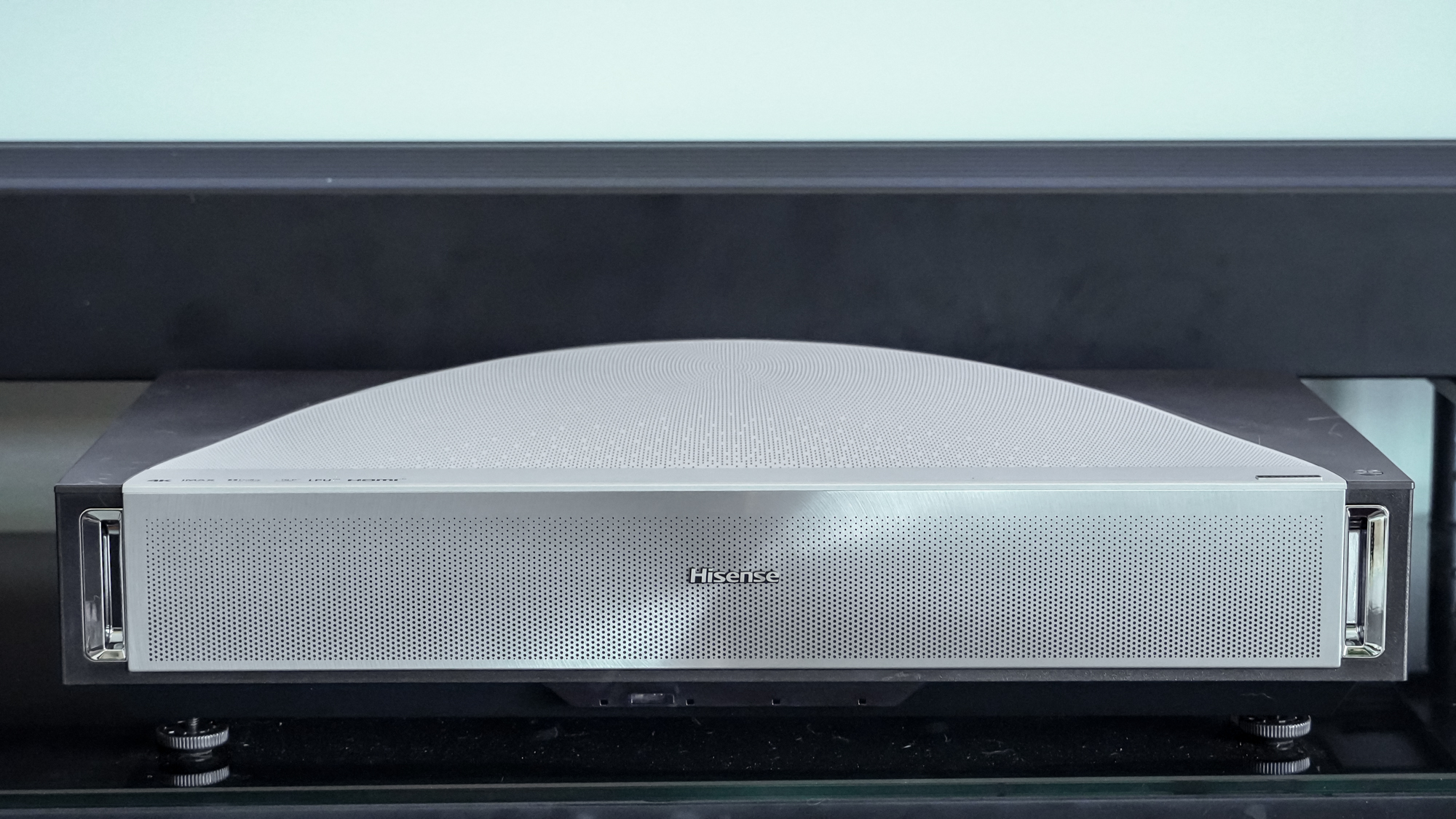
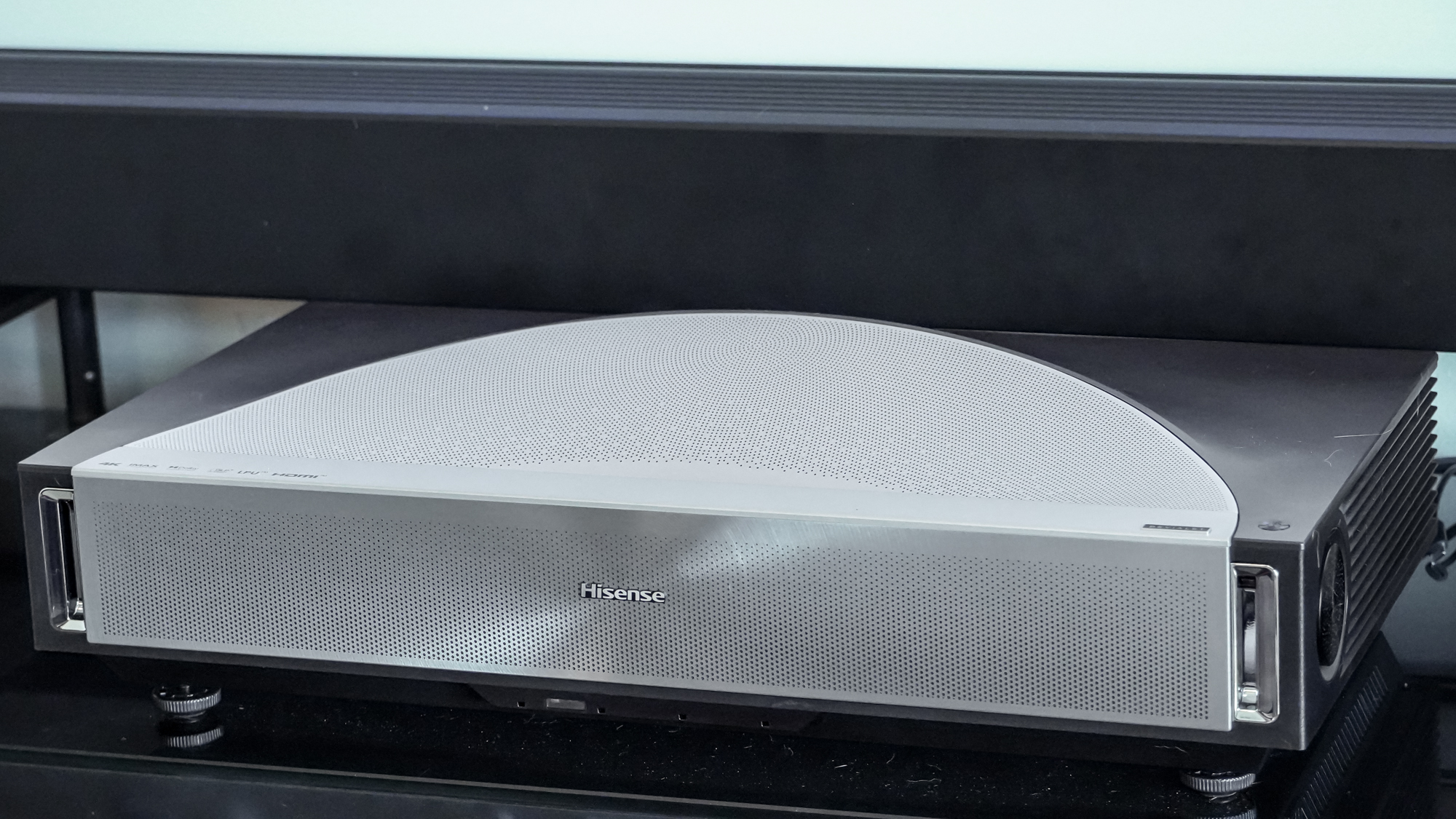
The Hisense PX4 Pro borrows the new design language of the top-tier Hisense L9Q, but shrinks it down into a smaller package and trades bronze accents for silver. It winds up looking a little more elegant than the PX3-Pro. It’s still a box with various speaker and ventilation grilles around the front and back, but it has a curved top to fit in extra up-firing speakers.
Latest Videos FromTom’s Guide
The PX4 Pro sits at just 21.3 x 11.3 x 5.6 inches and weighs just a little under 18.3 pounds, making it quite easy to move around compared to the TVs it’s trying to replace. The short 0.2:1 throw ratio lets you squeeze it up to the wall and still enjoy a big image. UST projectors beam up at a severe angle, and this makes getting the projected image squared away a little more difficult.
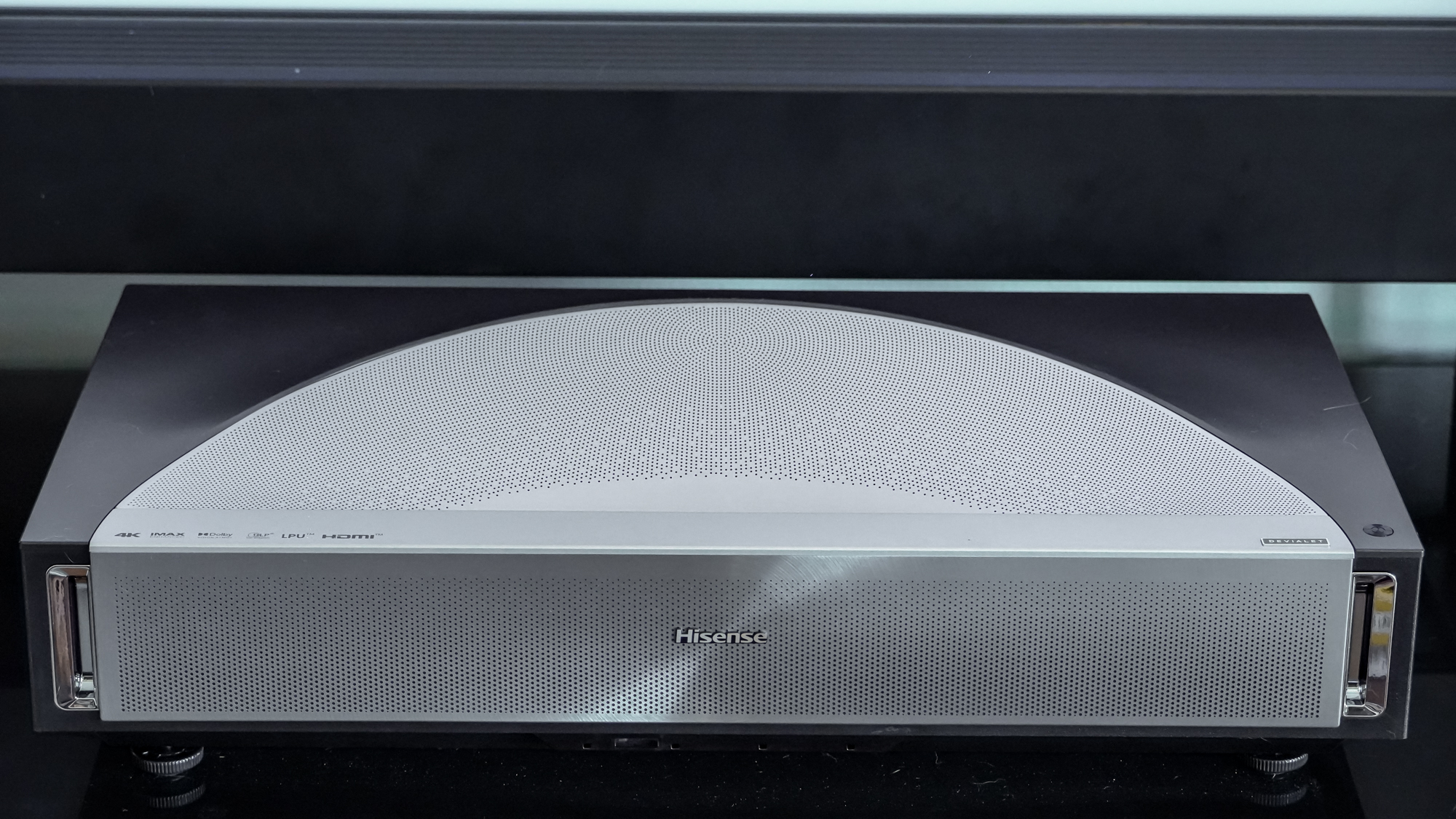
Every little mistake in alignment is on the screen, so a tiny nudge to one side can distort the picture big time. The PX4 Pro sits on adjustable feet to help level it and avoid a trapezoidal image, but you’ll want to make sure you have a flat wall or a projection screen, because the extreme projection angle also emphasizes every imperfection on the wall.
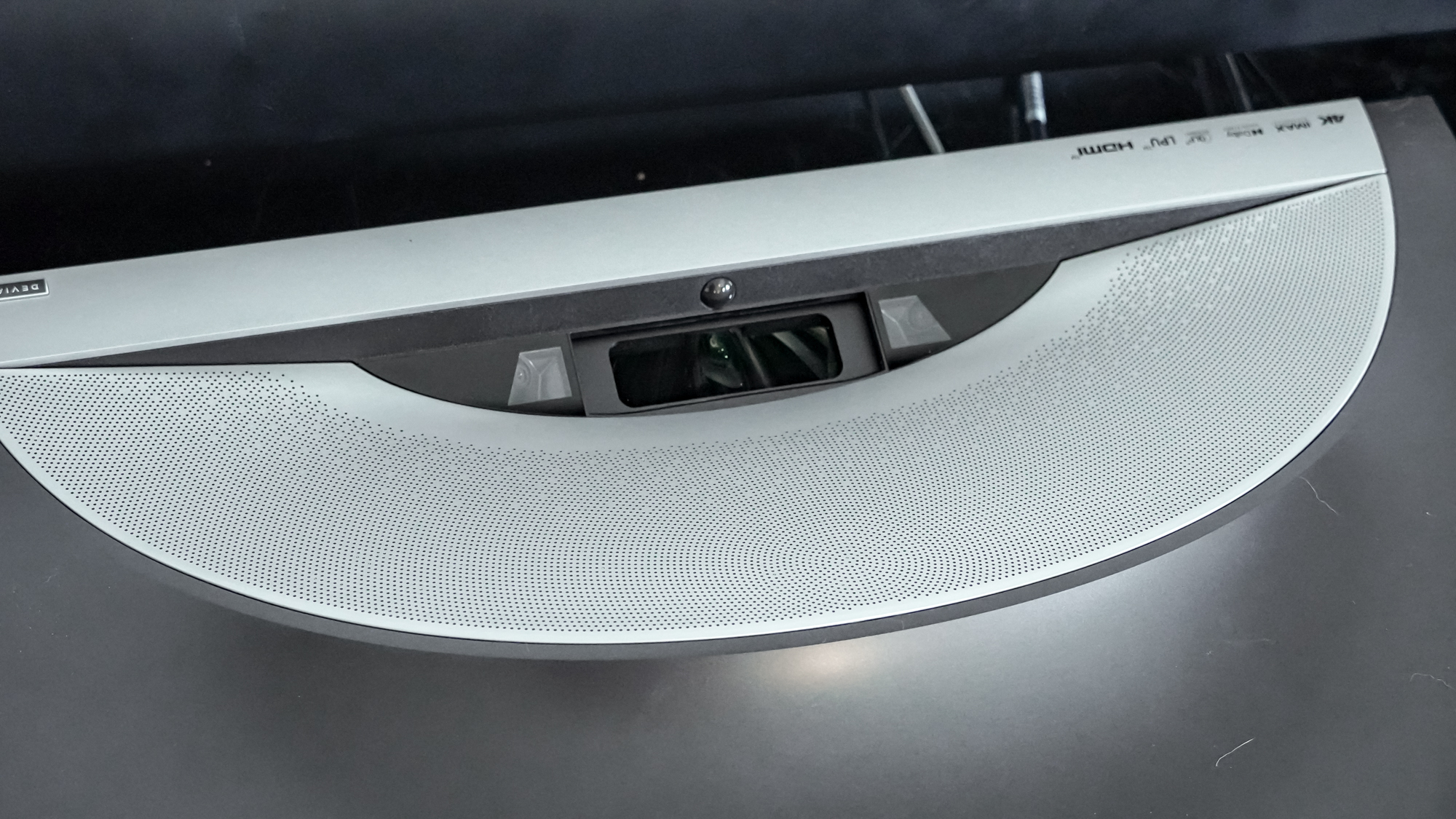
The PX4 Pro can use keystone correction to digitally fix some basic alignment issues, but it’s better to get proper alignment for full image quality. Focus adjustments are all done manually, but that’s it for optical adjustments. You won’t find zoom or lens shift on the PX4 Pro, though you won’t find those on most UST projectors.
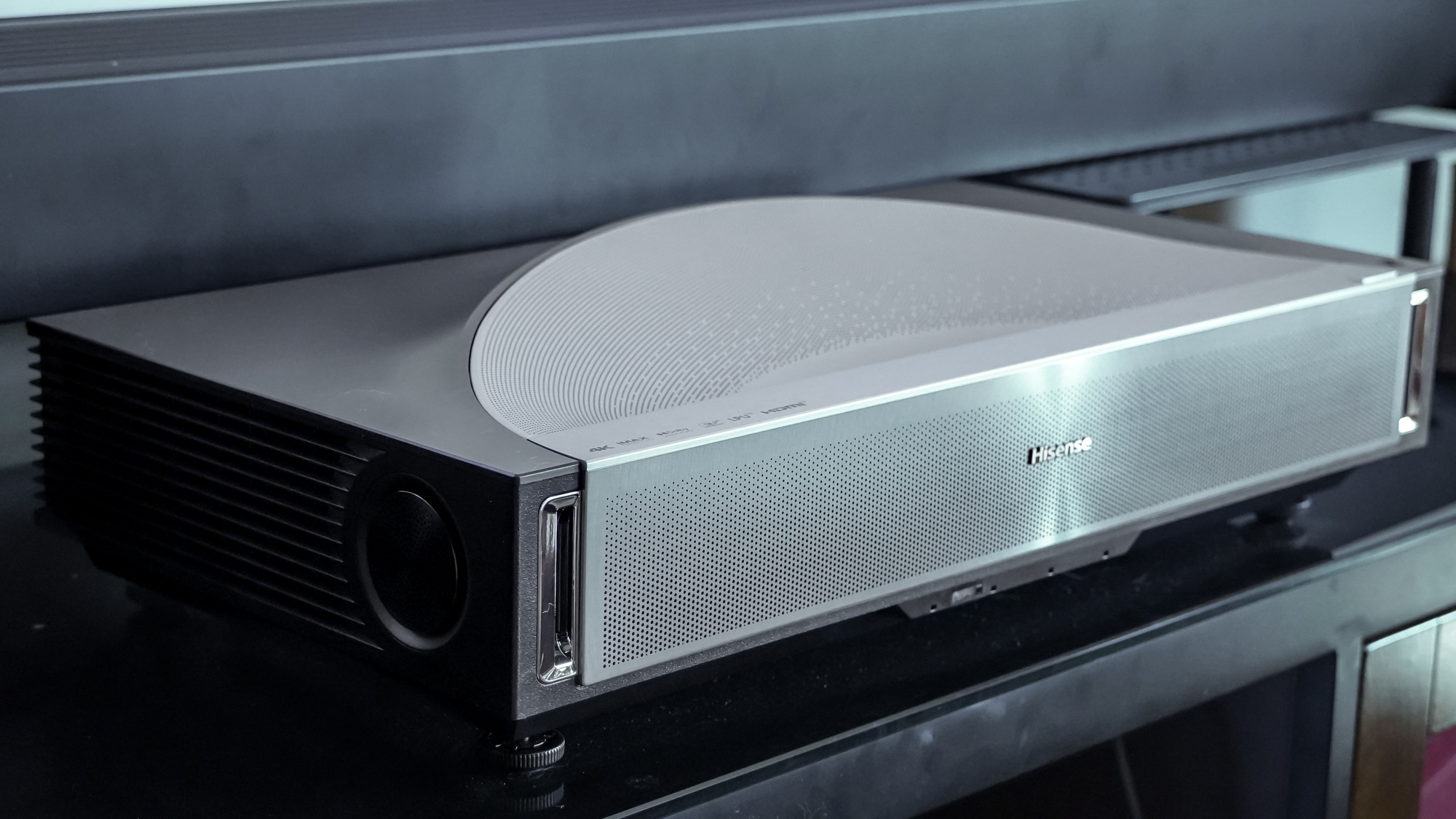
The shrunken dimensions of the PX4 Pro versus the L9Q does mean fewer speakers, but the PX4 Pro still isn’t skimping. It squeezes in a quad-speaker setup for the main audio and includes two up-firing speakers for height channels.
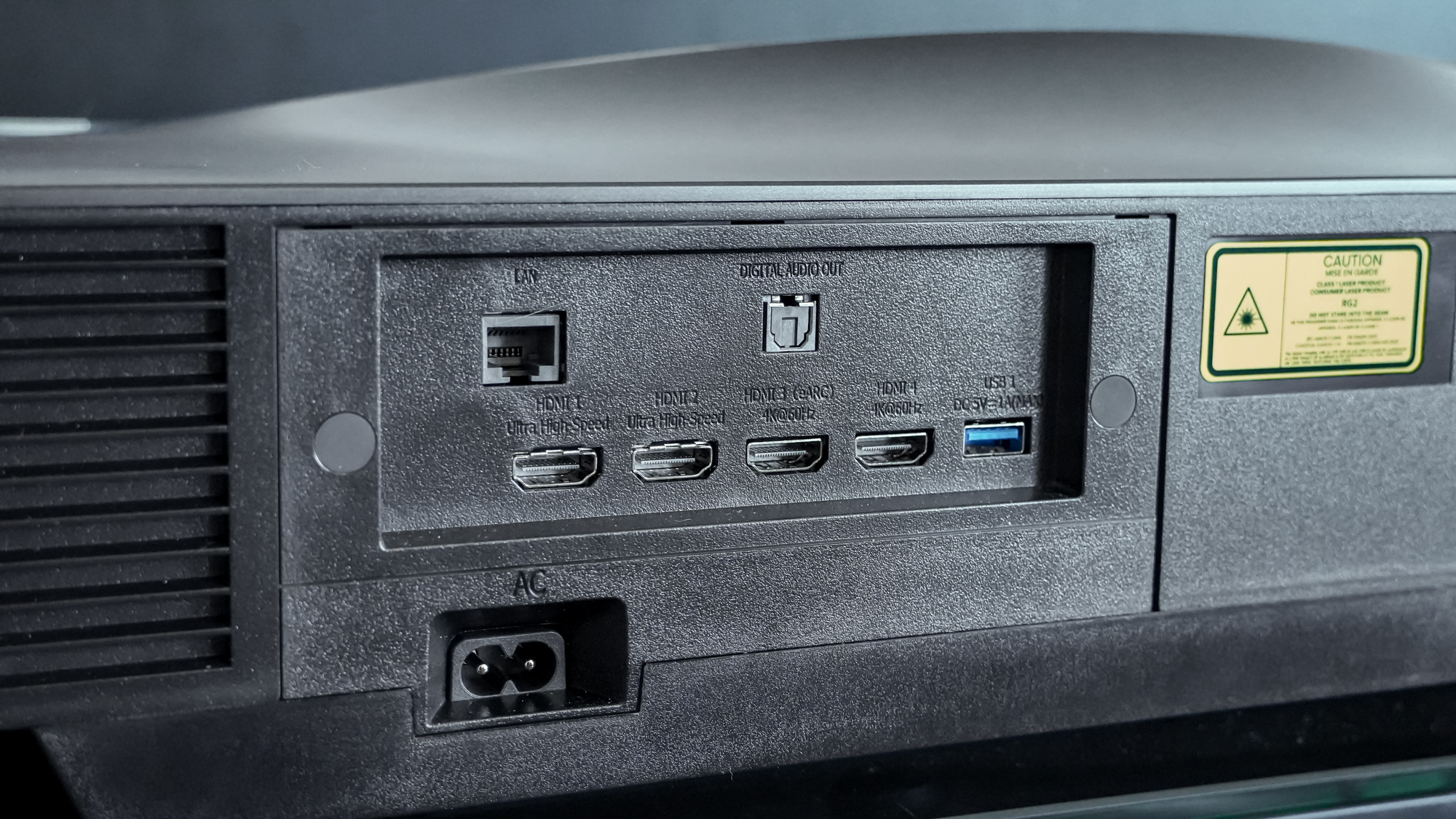
You can connect a good bit to the PX4 Pro. It offers four HDMI ports, including two with HDMI 2.1 bandwidth and ALLM and one with eARC support. Optical audio output is also available. A USB 3.0 port on the back can also handle local media while a second USB 2.0 port on the right side offers another option, albeit a slower one. Even the internet connectivity is solid with both Gigabit ethernet and Wi-Fi 7. I found the Wi-Fi reliable, though it sometimes needed a few seconds after boot to fully connect.
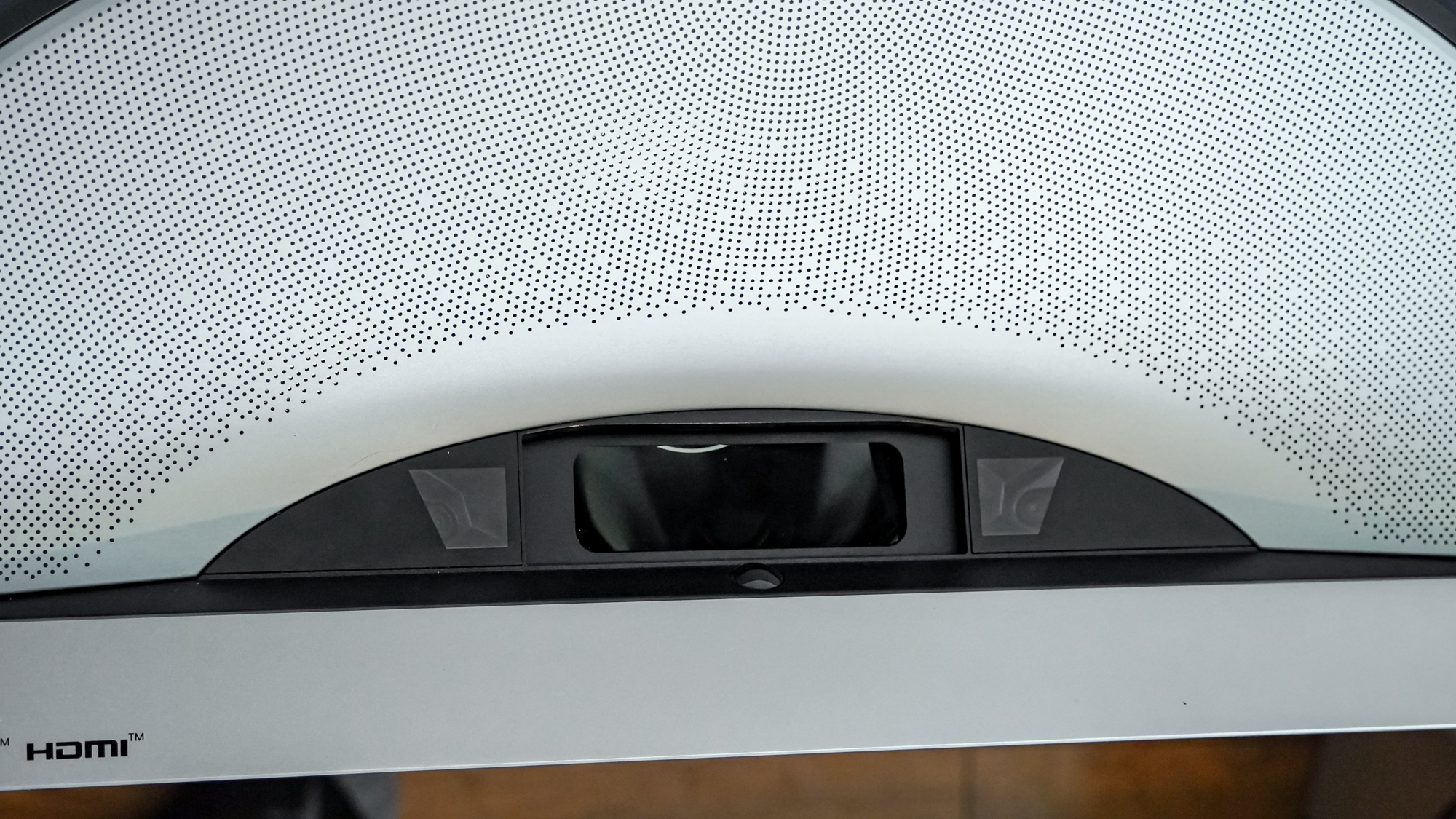
One thing the PX4 Pro lacks that I’d have loved to see is a lens cover. When not in use, the top glass can continue to gather dust, and a bit of dust or a stray hair will show up in the projection, with the former casting a white haze on the projection and the latter casting a shadows and rainbow-like light diffraction onto the picture.
Even with its considerable size compared to some small home projectors and the extra space for cooling hardware this allows, there’s noticeable fan noise. It’s easy to hear in a quiet room, though also easily drowned out by audio.
Hisense PX4 Pro review: Performance
Hisense has a solid track record of delivering excellence with its PX line-up of projectors, and the PX4 Pro brings some exciting new upgrades to the family that go well beyond a simple brightness boost. In fact, the boost that comes with this generation is quite the opposite.
The PX4 Pro introduces a physical aperture that can bump up contrast, albeit while lowering the overall light output. You can leave it wide open during the day in rooms without light control so you get as much light as possible, or you can clamp it down in dim and dark rooms to enjoy the deepest black levels that the projector can muster.

Those black levels are deep for a projector. I’ve found that in all but the darkest scenes, black levels effectively appear perfectly dark. Letterboxing around non-16:9 content is just barely there in dark scenes, like the arrival of the sky people at the beginning “Avatar: The Way of Water,” and it almost vanishes with most content.
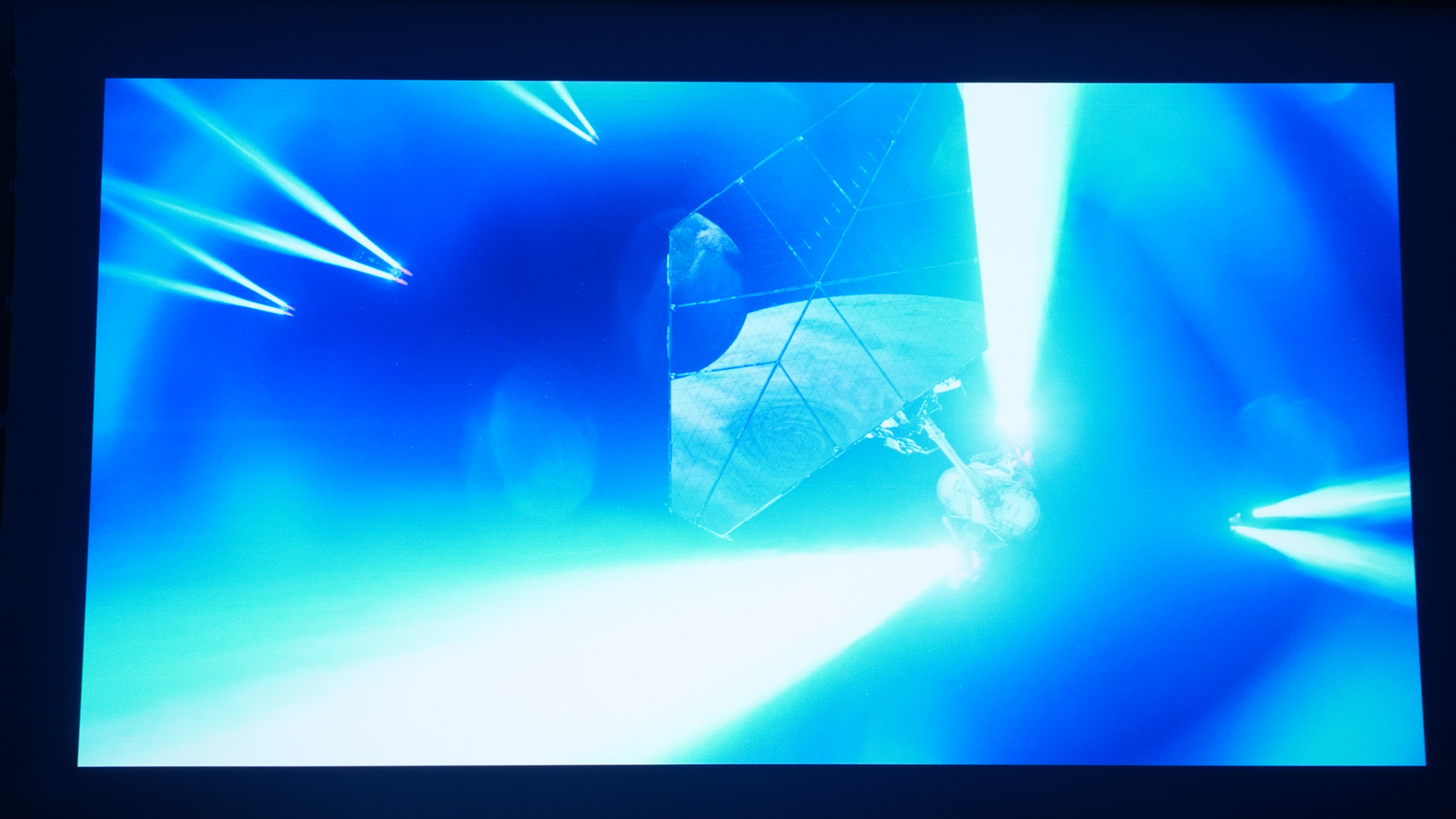
When the projector needs to go bright, you can open the aperture right up and enjoy the full potential of the PX4 Pro. During that same arrival of the Sky People sequence in “Avatar,” the lighting can be simply eye-searing. Still, you won’t want to use the PX4 Pro in a bright room for anything but bright cartoons, news and the like. I tried watching “The Thunderbolts*” with all of my living room lighting on, and it was watchable but rough in dark scenes.
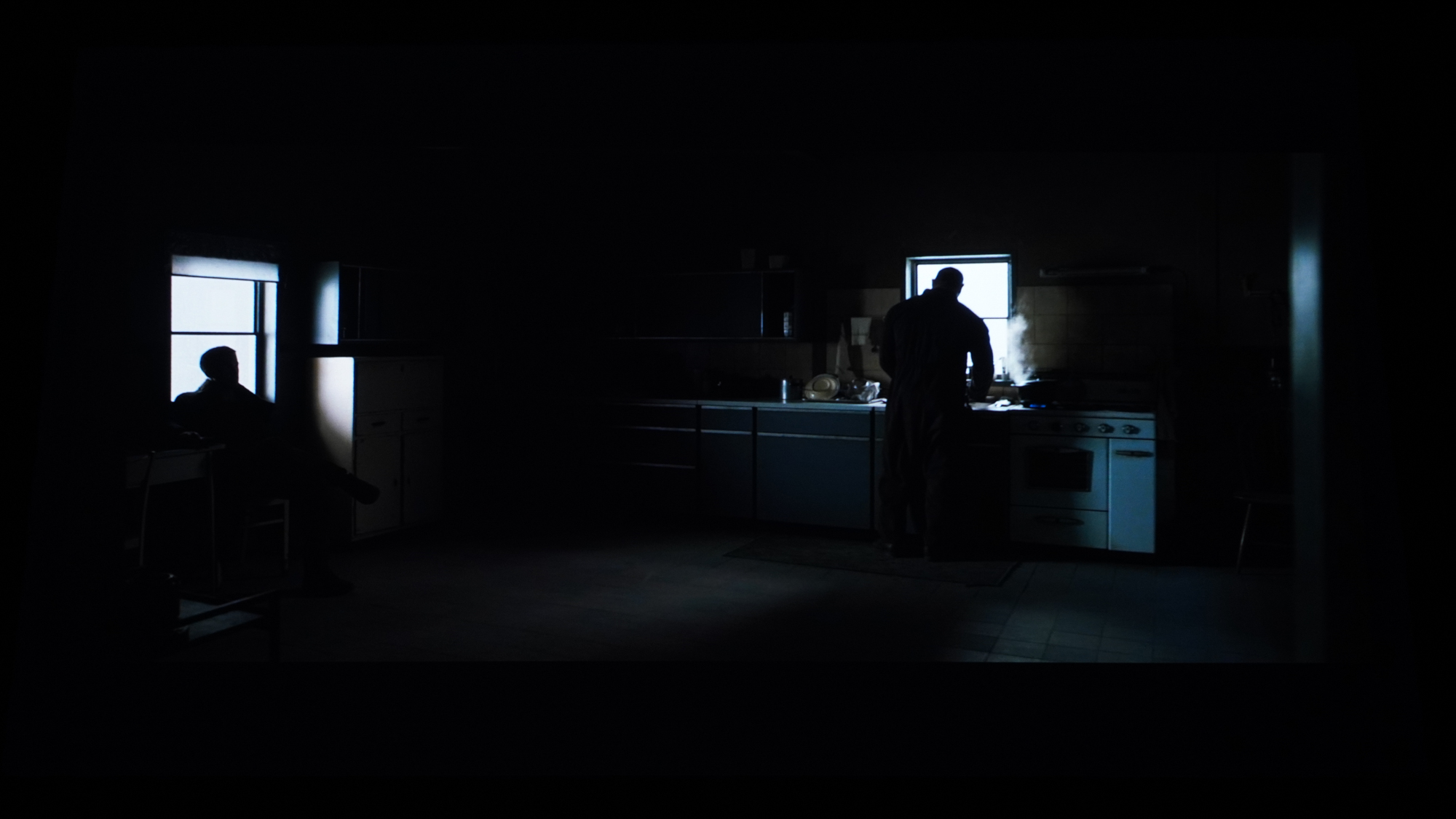
There’s plenty of light coming out of the projector for movies if you can dim the lights, though. Even with two lights on in my living room, not directly shining on the wall, I find I can still comfortably enjoy most content while still being able to see my way around the room. This may not be the perfect home theater setup, but when you just want to casually watch content, having the option to do this is good.

Just like almost every other projector out there, the PX4 Pro uses heavy motion smoothing by default. It makes panning shots look good generally but introduces visual artifacts elsewhere. The hand-to-hand fight scene near the opening of “The Gray Man” is the exact sort of case where artifacts are prevalent to the point of being problematic. Disabling or limiting this motion is simple and makes for a more pleasant viewing experience.
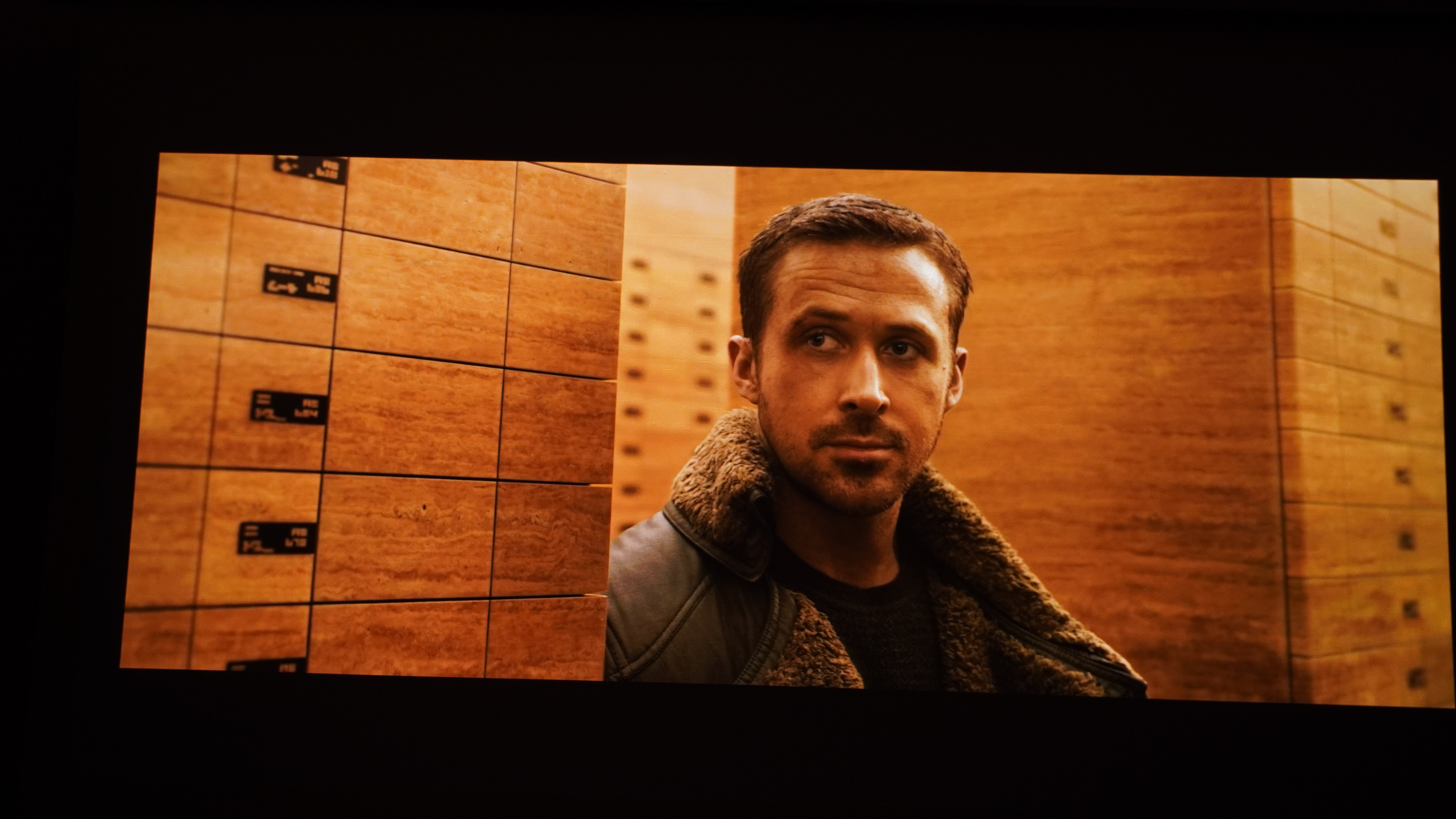
Unfortunately, some of the projector’s worse inclinations aren’t so readily remedied. It has a setting buried in the picture settings called Scenario Enhancement that modifies the picture automatically, but in its attempts to adapt to different scenes, it can suddenly flicker with some big swings in color and color temperature. This behavior was not constant, but was unavoidable. Sometimes it also came with a sudden black-out when content cut between shots.

It would be no big deal if it could simply be turned off, but Hisense has set it up so that it’s force-enabled when the iris is used, effectively ruining the quality that the iris can otherwise deliver. Annoyingly, even when disabling this setting is permitted, the projector will often re-enable itself whenever starting up new content, even when just autoplaying the next episode of a show.
Hisense PX4 Pro review: Test Results
Swipe to scroll horizontally
| Row 0 – Cell 0 |
Hisense PX4 Pro |
JMGO N3 Ultimate |
Hisense XR10 |
Xgimi Horizon 20 Pro |
Anker Nebula X1 |
Hisense C2 Ultra |
|
Brightness (ANSI lumens): |
3612 |
5215 |
6842 |
3540 |
3491 |
3231 |
|
Contrast (FOFO): |
12417:1 |
2271:1 |
2432:1 |
1257:1 |
1311:1 |
1330:1 |
|
Contrast (checkerboard): |
68:1 |
115:1 |
95:1 |
71:1 |
45:1 |
82:1 |
|
sRGB coverage: |
100% |
99.80% |
100% |
100% |
100% |
100% |
|
DCI-P3 coverage: |
98% |
94% |
92% |
92% |
92% |
96% |
|
Input lag (default): |
51ms |
126ms |
23ms |
100ms |
154ms |
50ms |
|
Input lag (gaming mode): |
23ms (0ms at 1080p/240Hz) |
51ms |
24ms |
49ms |
50ms |
51ms |
|
Lifespan: |
25000 hours |
n/a |
25,000 hours |
n/a |
30000 hours |
25000 hours |
|
MSRP: |
$4,499 |
$2,999 |
$6,999 |
$2,499 |
$2,999 |
$2,999 |
|
Street price: |
$3,999 |
$2,399 |
$5,499 |
$1,619 |
$2,199 |
$2,299 |
The PX4 Pro performed wonderfully in measured testing. Using a lux meter, I measured its brightness using the ANSI lumen approach, taking nine readings across the screen, averaging those and multiplying them by the size (in square meters) of the screen. At full brightness, it hit 3,612 lumens, slightly exceeding its rated 3,500 lumens.

Contrast is also respectable. Between a full white screen and a full black screen (FOFO or full-on, full off contrast), the PX4 Pro hit a 12,417:1 contrast ratio. FOFO contrast is a helpful metric as it demonstrates some extremes, but ultimately it’s not indicative of most real-world performance. For this reason, I’ll be slowly phasing it out of testing in favor of a few more realistic contrast measurements: a fullscreen checkerboard and a pair of white boxes in each corner of an otherwise all-black image. The former test helps demonstrate something of a worst-case scenario, as the projector can’t really rely on any dimming to try lowering its black levels and the white light reflecting around the room can further raise the black levels.

The latter test I conduct in phases. I measure and average the brightness of the white corners, and then compare that to the black level at the center of the picture to get an idea of how good contrast can get in an uncontrolled room. I then run the corner test again (using the narrowest aperture setting if available), but I block the projection with a black velvet board, only letting a small square of light through the center. This gives a reading of the actual black level coming out of the projector that has virtually eliminated any room reflection to simulate an almost perfectly light-controlled room.

On the checkerboard test, the PX4 Pro offered a 68:1 contrast ratio. In the corner contrast test with no velvet blocking, the contrast shot up to 683:1. Dialing down the aperture to its smallest level can boost that still further to 900:1. With the black velvet in place to simulate idealized conditions, the PX4 Pro rockets to a 4,426:1 contrast ratio with its aperture open and 6193:1 contrast ratio with its aperture closed.
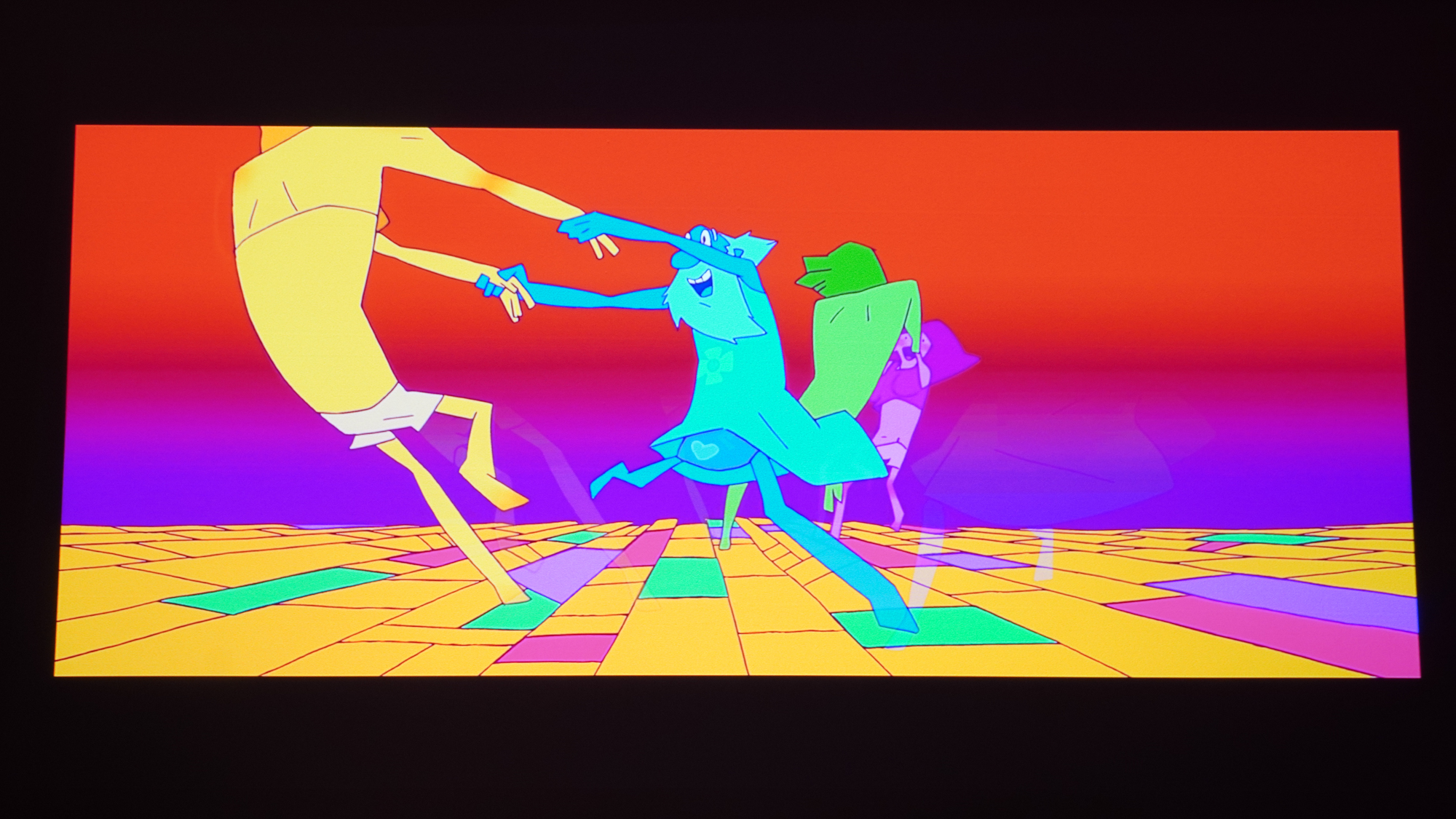
The PX4 Pro offers strong color performance as well. I measured its gamut using a SpyderX Pro colorimeter placed one foot in front of a 1.1-gain matte projection screen. The colorimeter read 100% sRGB, 98% DCI-P3, and 96% BT.2020 color space coverage.
Hisense PX4 Pro review: Audio
For a projector, the PX4 Pro has excellent speakers. Combining front, side, and top speakers for a 4.0.2 setup has its benefits. The side speakers offer a fun trick, providing wider stereo sound than you might expect from such a small box. A car alarm going off in “Iron Man” sounded out so far to the right that I thought it was an actual car alarm going off outside my window. The wider soundstage also makes the center clearer for dialogue.
The speakers pump out a ton of sound, that I generally didn’t need to dial the volume up past 12. At 25, they were already pushing the limits of what I could comfortably play in a sub-200-square-foot room. Bass depth is lacking, though. It really comes through in action sequences, where there just isn’t the thump you’d expect. Some of the louder sound effects in the NYC invasion scene of “The Avengers” also exhibited obvious loudness reduction.

The height channels aren’t really doing much that’s easily perceived. In Andor’s S1E5 “The Axe Forgets,” a TIE fighter flies over the protagonists, but I couldn’t catch any of that height audio.
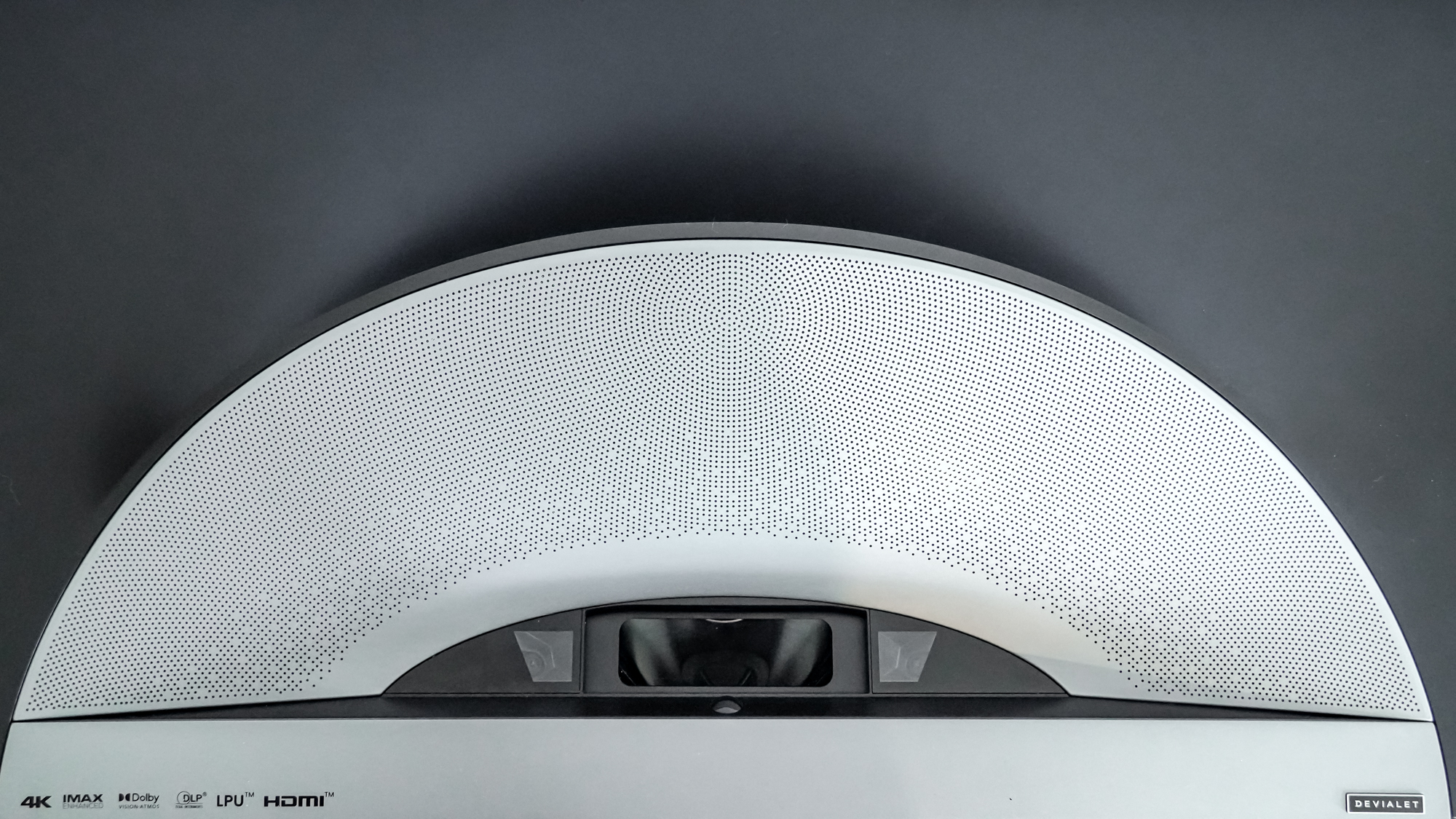
The speakers on the PX4 Pro can do for basic listening, and they’ll prove a lot better than most projectors, but you’ll still want dedicated speakers and a subwoofer or one of the best soundbars for a potent home theater setup.
Hisense PX4 Pro review: Gaming
The Hisense PX4 Pro is about as good for games as it is for movies. It has very low input lag, making it responsive for games even while putting its gorgeous visuals to good use. I played through a section of Assassin’s Creed Shadows and easily kept up with the flow of combat while enjoying the colorful recreation of Japan. Getting to use VRR helps avoid the kind of screen tearing that can really mess with the visuals while panning the camera around in a game like that. Tapping into the 240Hz mode at 1080p, I was also able to keep up with the even more hectic flow of combat in Hades 2.
To see just how responsive the projector is and measure input lag, I display a millisecond timecode on a 120Hz OLED display and mirror the display to the projector, and then I take a high-speed photo. Comparing the timecode on the projection against the OLED display offers up the amount of latency the projector introduces. At 4K without gaming mode enabled, the PX4 Pro had a very respectable 51ms of latency. That dropped to just 23ms when enabling gaming mode. After I switched to 1080p/240Hz and enabled VRR, the timecode displayed on the projector matched that on my laptop monitor for 0ms of added latency.

Since the PX4 Pro includes Xbox Game Pass cloud streaming as a highlight feature, I gave it a go, and suffice to say I wasn’t impressed. Even with a strong Wi-Fi 6 signal and fast fiber internet, the graphical quality was poor with awful aliasing and compression artifacts that are all the more apparent on a massive projector. This was with an Xbox Game Pass Ultimate subscription as well, so low-tier streaming shouldn’t have been the cause.
Hisense PX4 Pro review: Smart TV Interface
Hisense has previously been torn between Google TV and its own VidaaOS for its projectors. Earlier PX models got Google TV, while its long-throw projectors got VidaaOS. This year, the PX4 Pro comes with VidaaOS. I’d previously been fairly satisfied with VidaaOS for its performance, and it works pretty quickly on the PX4 Pro, making it easy to get into apps, start streaming, and navigate settings.
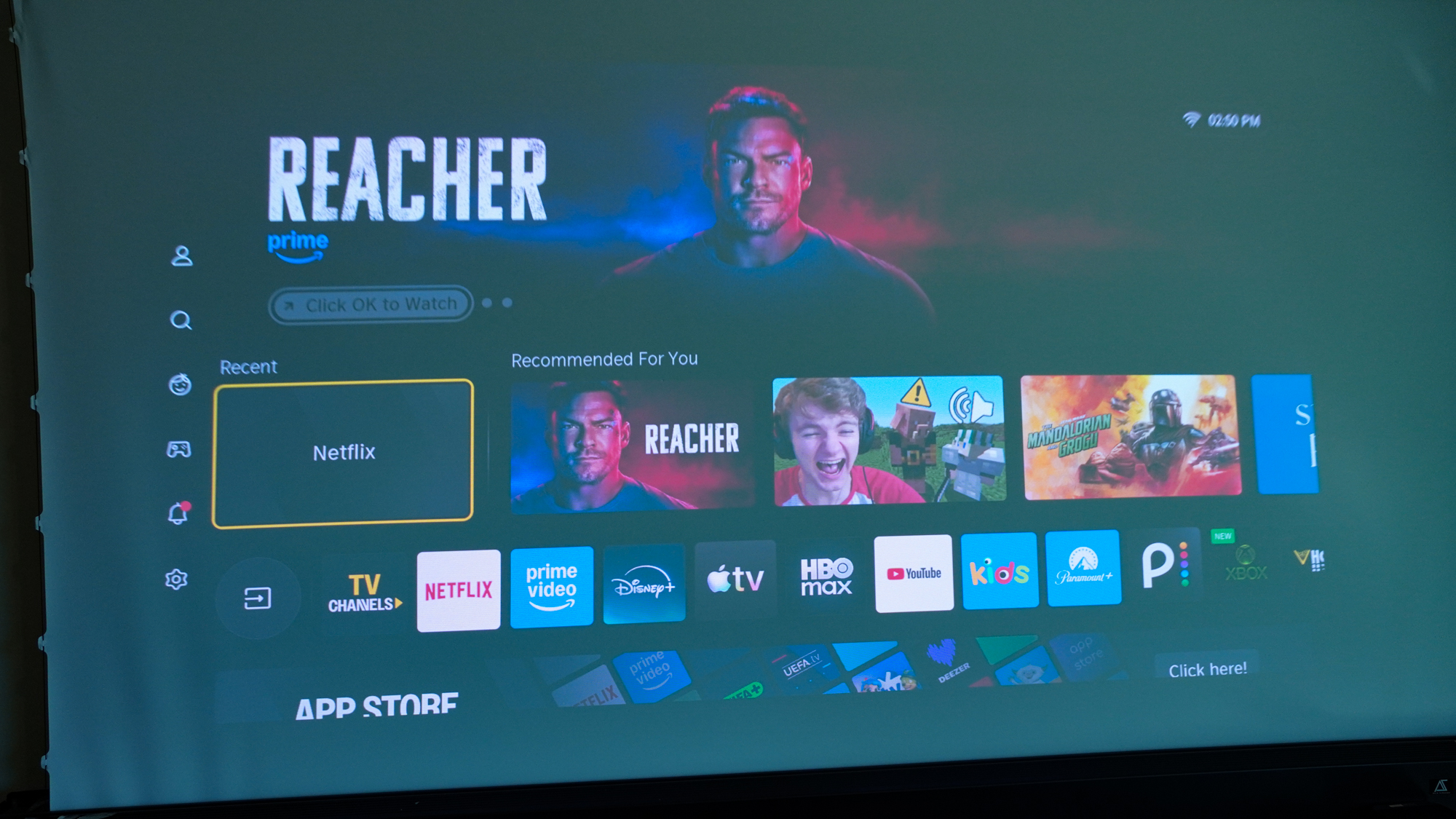
VidaaOS isn’t the best, though. For one, it comes pre-loaded with way too many apps, many of whichI’ve never even heard of. It also serves up massive ads on the home page that get in the way of the user experience. The app store is also not as complete as Google TVs. Many of the most popular apps will still be there, but if you’re after something more niche, it probably won’t be. For what it’s worth, Hulu isn’t there. The PX4 Pro included an Xbox app for easy game streaming, so I thought I’d see if Nvidia GeForce Now or Amazon Luna were also available, and they weren’t.
While navigating settings is quick, actually managing settings can be a bit more annoying. Many settings don’t have clear descriptions, and even more get grayed out with no clear explanation for what dependencies are enabling or disabling customization of them. This was the exact problem that led to my headache with the “Scenario Enhancement” that spoils the aperture feature. Most settings adjustments you make will stick, but for whatever reason, Scenario Enhancement often re-enables itself.
All this makes VidaaOS a bit of a letdown this go-around.
Hisense PX4 Pro review: Remote
Prior models in this series have used virtually identical silver remotes with just a few changes to the buttons and shortcuts. The PX4 Pro shifts things around a bit. It opts for a similar shape, albeit elongated to include additional controls and a solar charging panel.
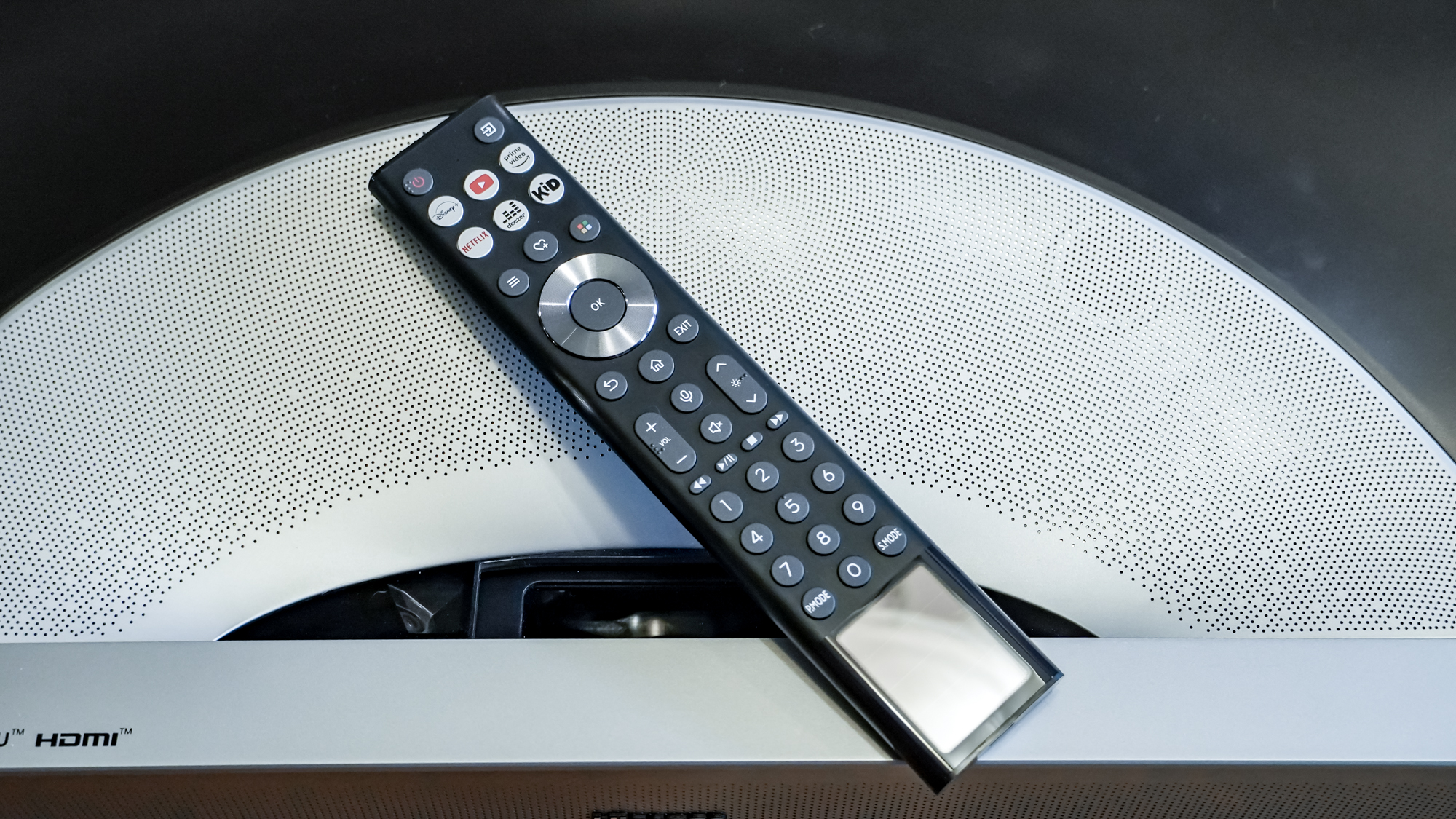
The remote still has the standard controls you’d find on a Google TV device, even though this one is running Vidaa. It has shortcuts to six streaming services, an input selection button, and a favorite button you can set up to specific apps, inputs, or a few different settings.
Below the standard controls, you’ll find volume, mute, voice input, and a brightness dial. Beyond that, there are dedicated playback controls, a number pad, and shortcuts to picture and audio settings. An unfortunate omission here is that the remote isn’t backlit, so seeing the buttons in the dark of a home theater will be difficult.
One great feature of the remote is its built-in speaker, which can help with locating it when it slips into the crack of the couch. Tapping the power button on the PX4 Pro itself brings up a menu that subsequent taps will cycle through. Near the bottom of this menu is a remote finder feature, and a second after highlighting that tool, the remote will start beeping quite loudly.
My review period wasn’t long enough to see whether the solar panel on the remote is enough to keep it running indefinitely, but you don’t need batteries either way, because the remote has a USB-C rechargeable internal battery.
Hisense PX4 Pro review: Verdict
You get a lot from the Hisense PX4 Pro, but perhaps not all that you’re bargaining for. It takes some steps forward but a few backwards, as well, and that makes the increased price tag a little more sour to swallow. The PX4 Pro’s brightness makes it a powerhouse when completely blacking out your home theater isn’t an option, and the iris could have made it a beast in dark rooms, too, but Hisense’s software choices limit it to just good in the dark instead of great.
The gaming chops the PX4 Pro offers also make it a more versatile platform for different types of media. If you don’t need the VRR upgrade, I’d say the PX3 Pro makes a lot more sense, since it offers very similar performance and its lack of an iris means little while the PX4 Pro’s software bungles small-aperture visuals. The PX4 Pro is still a good option, but its performance leaves room for the Awolvision Aetherion Max to stand out, and the Xgimi Titan Noir Pro is the better choice if you have your own sound system, streaming stick, and don’t require an UST projector.

Over the last several years, Mark has been tasked as a writer, an editor, and a manager, interacting with published content from all angles. He is intimately familiar with the editorial process from the inception of an article idea, through the iterative process, past publishing, and down the road into performance analysis.
Next Badge:
More Comments/Likes Until Your Next Badge
” data-join-the-conversation-text=”Join the Conversation”>
You must confirm your public display name before commenting
Please logout and then login again, you will then be prompted to enter your display name.