Fall is officially here, and there’s no better time to give your wardrobe a seasonal refresh. From cozy layers to cold-weather essentials, REI is kicking off autumn with some seriously impressive deals to help you gear up for the months ahead.
The retailer is offering discounts of up to 50% on some of our favorite outdoor apparel brands, including Patagonia, Vuori, Arc’teryx, and The North Face. Planning a fall getaway or weekend adventure? You’ll want to check out REI’s camping essentials section with up to 30% off items like tents, backpacks, sleeping bags and more.
There’s plenty more deals where that came from! Below, I’ve rounded up my favorite REI styles. Keep scrolling to check out the deals that are actually worth shopping for fall.
Get instant access to breaking news, the hottest reviews, great deals and helpful tips.
Olivia is a Deals Writer at Tom’s Guide. She loves all things lifestyle, shopping, and sourcing the best deals from some of the top brands, retailers, and websites around. From fashion and beauty to smart home and tech, she has an eye for finding practical, stylish, and reasonably-priced items that help make life simpler (and a little more aesthetically-pleasing). Olivia has over five years of experience writing lifestyle, commerce, and branded content for Patch.com. In her free time, she enjoys trying out new exercise classes, binge-watching the latest viral TV shows, cooking, spending time with family, and taking long walks with her dog, Gus.
I’ve run 17 marathons, and one thing I’ve learned you can’t mess around with is your nutrition. As the mileage grows in marathon training, so does the importance of fueling correctly during runs and supporting your recovery.
Most of this can certainly be done with your regular diet, and I think it’s important not to overuse supplements, but I do use them when fueling my longest and hardest workouts, especially during my peak mileage weeks in marathon training.
Over the past month of training for the Frankfurt Marathon, I’ve been running around 80 miles a week, which is my highest consistent mileage, and I’ve been relying on supplements more than usual to help me keep going.
There are three main categories of sports nutrition products I use — energy drinks and gels for fueling my runs directly, a recovery drink to get key nutrition in after hard workouts, and electrolytes for hydration before/after very long, sweaty runs.
This is just my direct fueling for runs, and it comes on top of trying to eat as healthy a diet as possible with lots of vegetables and carbs, and popping a Costco multivitamin in the morning too.
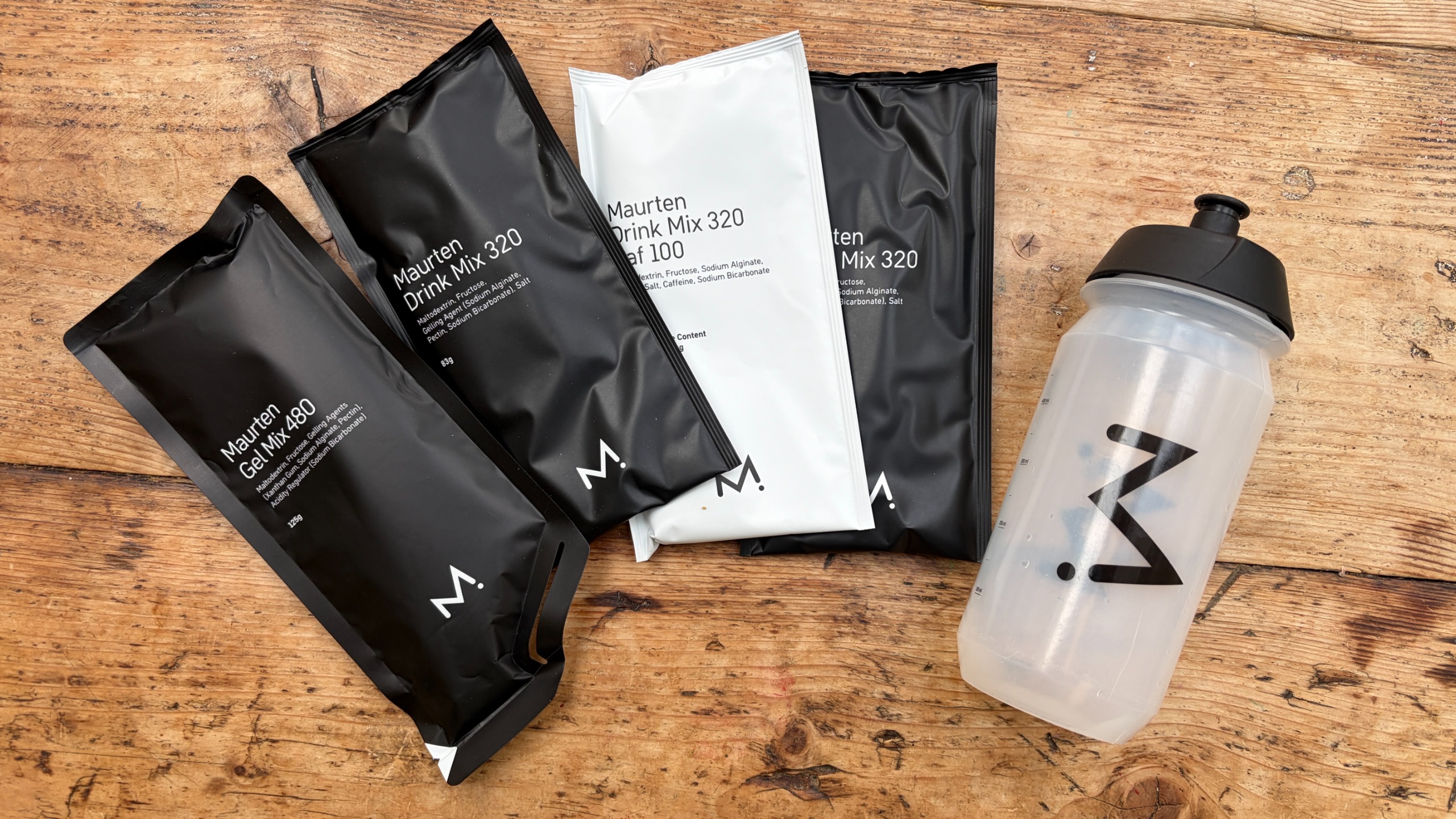
Energy — Maurten Drink Mix 320 and Gel Mix 480
(Image credit: Future)
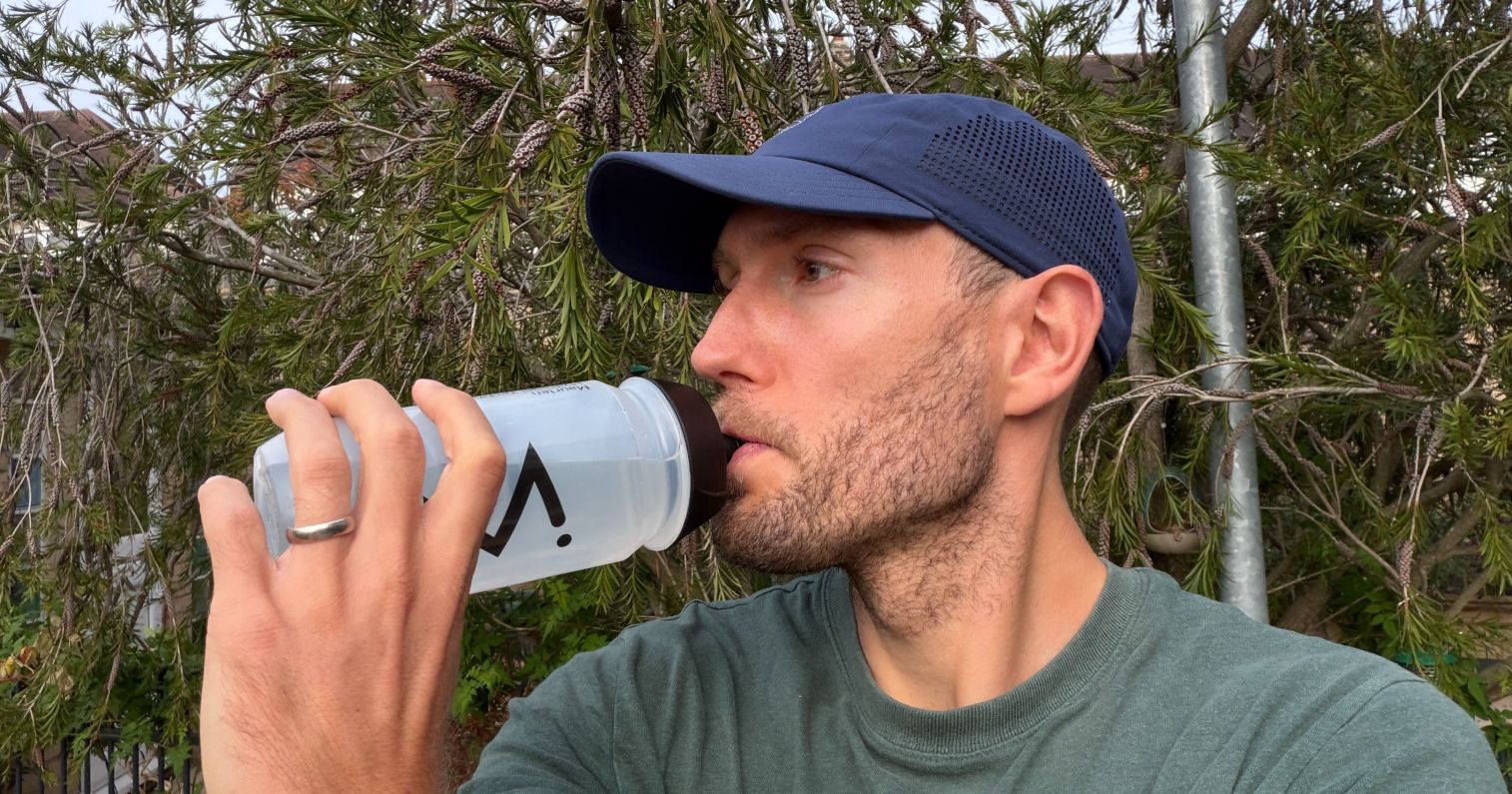
Carb drinks and gels are the products I use most regularly in training, fueling before and during long, hard workouts, and I’ve found Maurten’s products to be the best for me.
That’s because they don’t give me any stomach problems, which I don’t find is always the case with other gels and drinks.
Get instant access to breaking news, the hottest reviews, great deals and helpful tips.
Maurten’s Drink Mix 320 contains 80g of carbs in a 500ml drink and has long been my go-to before a long workout and during marathons. I’ve used it a lot in training for Frankfurt.
However, on race day I plan to try the relatively new Maurten Gel Mix 480, which packs 120g of carbs into a 350ml soft flask, so I’ve practised with this in my long runs.
The Gel Mix has a texture between a gel and a drink, and makes following a high-carb strategy during runs a bit easier than carrying lots of gels or drinks.
Maurten’s products are very expensive, so sometimes I’ll use cheaper options during training, but when it comes to my key workouts and race day, Maurten has been my go-to for years now.
My toothpaste use also goes up during marathon training, by the way, because when you’re consuming high amounts of what is essentially pure sugar, you’ve got to look after your teeth.
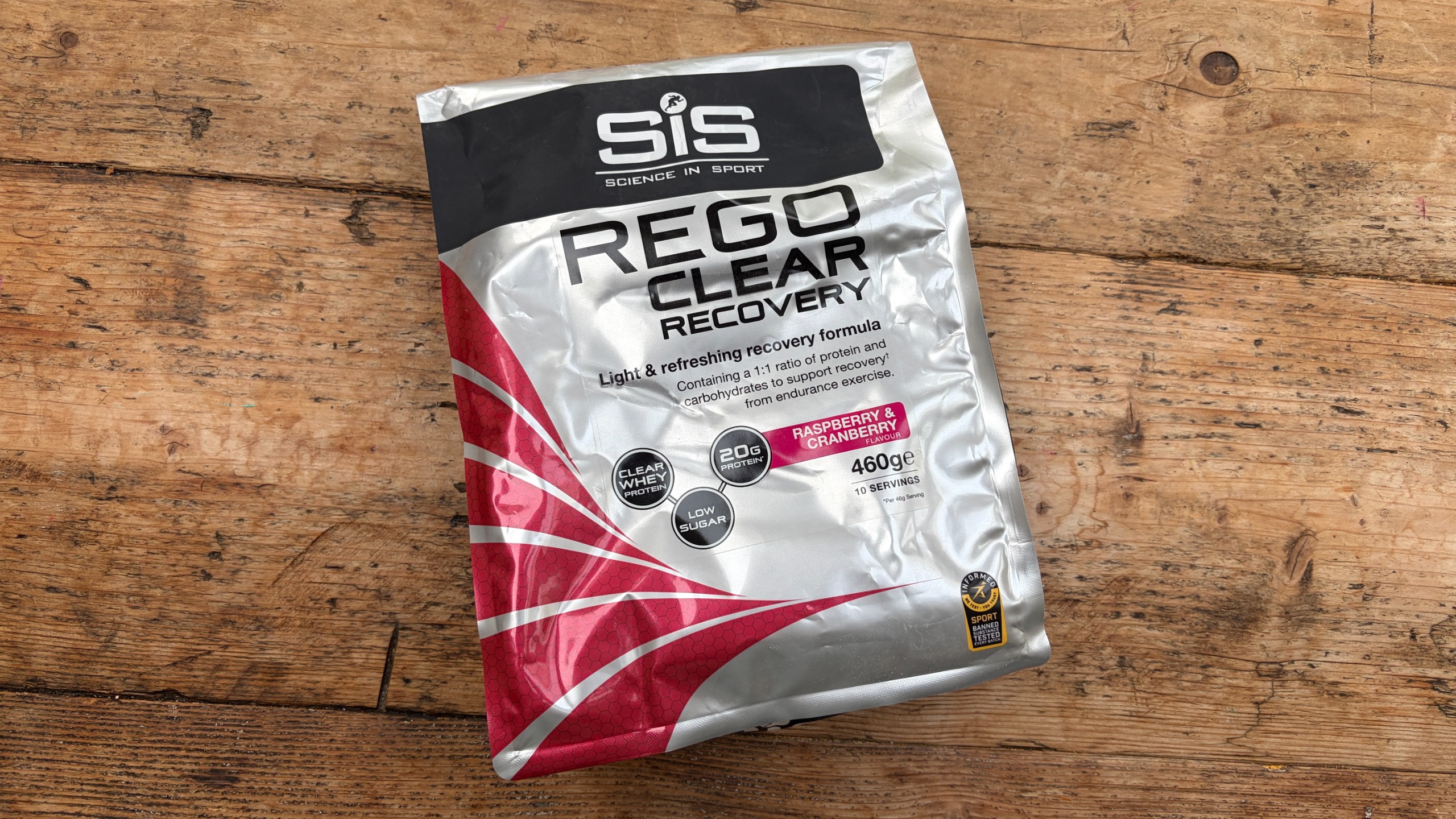
Recovery — SiS REGO Clear Recovery
(Image credit: Future)
For most of my marathon training weeks, I don’t use a dedicated recovery product; instead, I just make sure I eat a good meal containing lots of protein, carbs and vegetables, but when doing double workout days or 20+-mile runs, I like to use the SiS REGO Clear Recovery powder.
It contains 20g of protein and 21g of carbohydrates and mixes with 500ml of water into a clear shake that’s quite refreshing to drink, especially compared with thicker protein powders.
While it’s not as essential as the carbs I have during workouts, I feel it helps to kickstart my recovery after sessions, so I’m ready to run the next day, or even later that day.
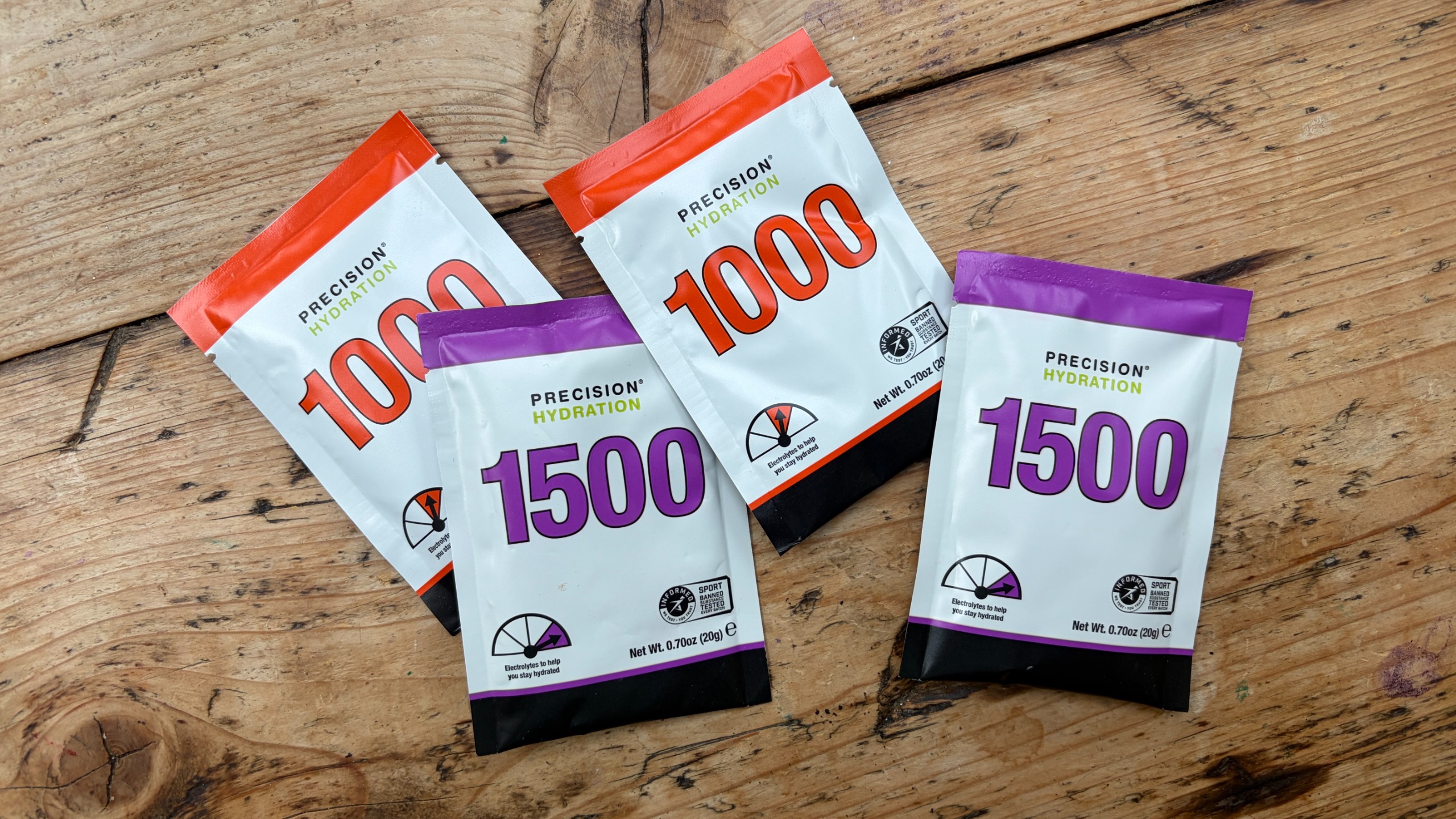
I live and run in London, so electrolytes aren’t as essential for me as they are for those in hotter climates, so I don’t use them all that often, but when I do, I like to use the Precision Fuelling & Hydration 1000 Electrolyte sachets or tablets.
I’ll dissolve one sachet in 500ml of water ahead of my longest runs and sometimes afterwards as well, which helps replace the sodium lost in sweat. For anything under 90 minutes, I don’t tend to use electrolytes, though.
There are a lot of electrolyte options out there now, and mostly I find just going with one that tastes good is a solid approach, but I like the PF&H products for their especially high sodium content and clear nutritional info.
Nick Harris-Fry is an experienced health and fitness journalist, writing professionally since 2012. He spent nine years working on the Coach magazine and website before moving to the fitness team at Tom’s Guide in 2024. Nick is a keen runner and also the founder of YouTube channel The Run Testers, which specialises in reviewing running shoes, watches, headphones and other gear.
Nick ran his first marathon in 2016 and became obsessed with the sport. He now has PBs of 2hr 25min for the marathon and 15min 30sec for 5K. Nick is also a qualified Run Leader in the UK.
Many people feel like they don’t achieve enough of a burn during bodyweight workouts, but I can promise you that’s down to poor programming. You can use the art of calisthenics (working with your bodyweight) to your advantage by choosing the right exercises and workout format for your goals. It’s about intensity.
Recently, a 40-year-old friend DM’d me and asked if I could design a short bodyweight routine she could do when she works from home. And this is exactly what I sent her. Just remember, this routine was designed with someone in mind. If you experience pain or feel unwell, stop immediately and seek medical advice as soon as possible.
Watch: 20-minute bodyweight workout
If you’re working with an injury or health condition, I recommend seeking advice before starting this routine.
Triceps dips: Use a sofa or bench and place your hands flat roughly shoulder-width apart. Extend your legs away from you. Keeping your back straight, bend your elbows and lower your butt toward the ground. Pause, then press upwards.
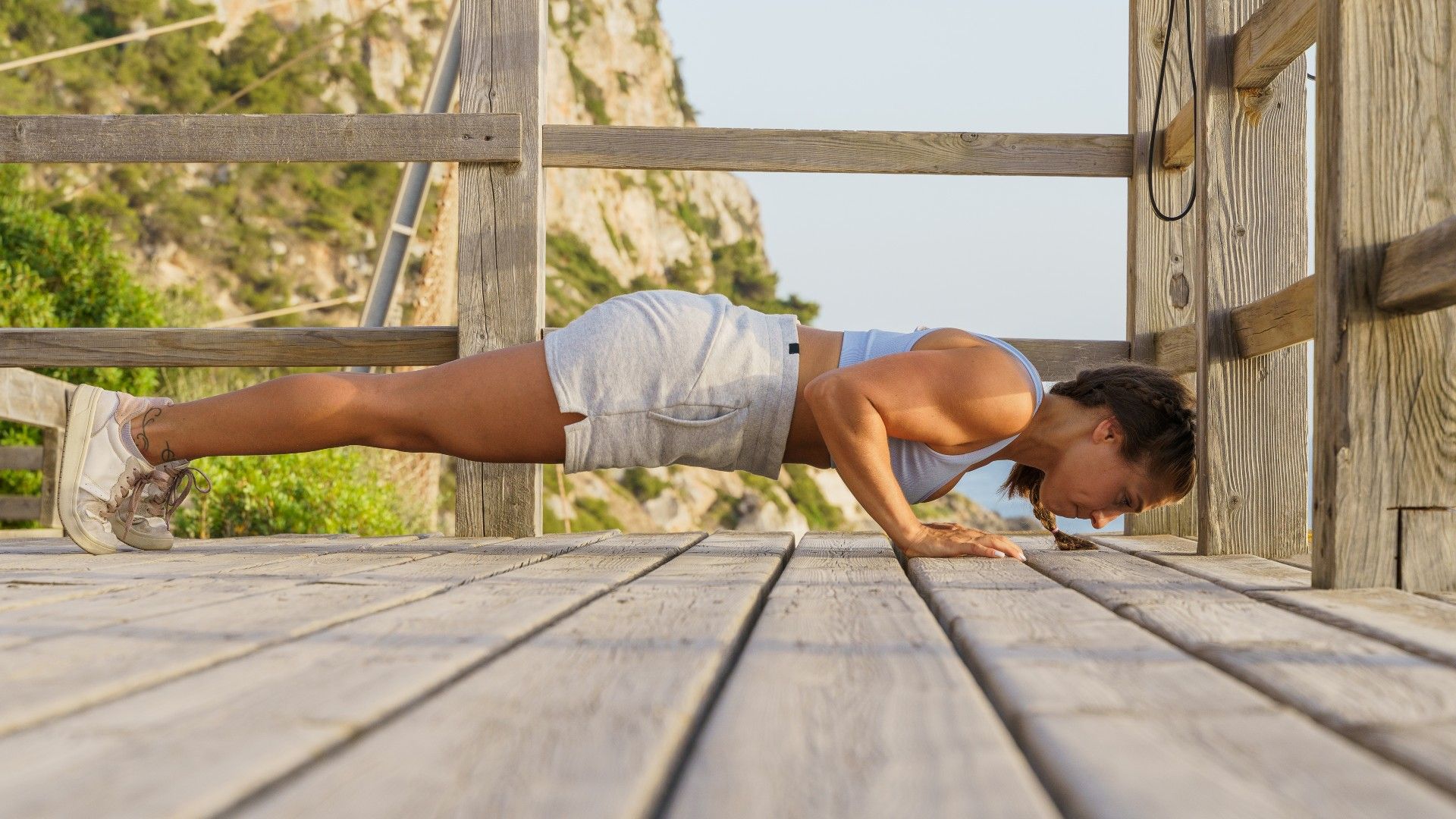
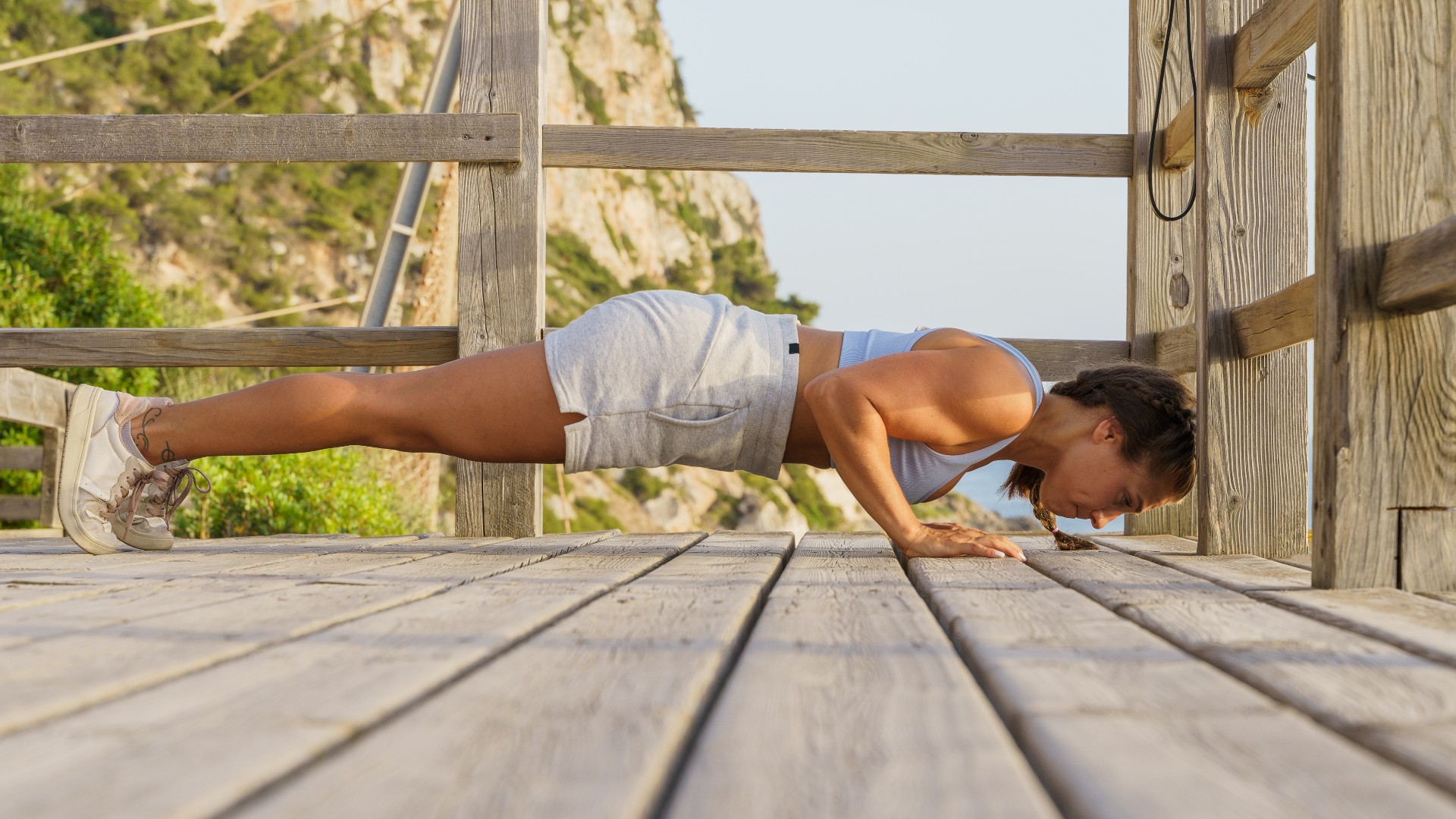
Deficit push-ups: Start in a push-up position with your core engaged and hands elevated on bars, blocks, or books. Bend your elbows and lower your chest toward the ground between the blocks, pause at the bottom, then drive upward. Avoid letting your hips sag and try to move your torso as a unit.
Spiderman plank: Start in a plank position with your shoulders stacked over your wrists and your butt aligned with your shoulders. Brace your stomach. Bend your right knee and draw it forward with control to tap your right elbow. Return to plank, then repeat on your left side.
Sprawls: Start in a plank position as above. Jump your feet to land just outside your hands, drop your butt, and lift your chest and hands, as if sitting in a low squat. Return your hands to the ground, then jump both feet back into a plank.
What are the benefits?
Many people assume bodyweight workouts can’t get you any real gains.
Many people assume bodyweight workouts can’t get you any real gains. Actually, bodyweight exercises are functional and will help you build a base level of strength and muscle, especially at the beginning stages of working out.
But also remember, gymnasts and calisthenics masters are some of the strongest, most powerful, and athletic people on the planet; they predominantly work with their bodyweight, and while they might not have the same maximal strength as, say, powerlifters, they are strong compared to their weight and size, called relative strength.
If you haven’t quite got to a bench press yet, start with push-ups. If you can’t squat with a barbell, squat with your bodyweight. Focus on form, control and depth, and take your time with the movements; this will turn any bodyweight workout into a more challenging and rewarding experience.
Now, what’s the workout?
Get instant access to breaking news, the hottest reviews, great deals and helpful tips.
The workout:
It’s very simple: start with 20 reps of your four bodyweight exercises back-to-back, then take a brief reset. Drop by 2 reps to 18, then to 16, and so on, until you either hit the 20-minute timer or get to 2 reps per move.
As I mentioned, slow the tempo of each move down to increase overall intensity. Try adding small pauses in the non-moving part of the exercise, called holding an isometric contraction, which means you create tension without moving the muscles through their full range of motion.
If the dips feel like too much, bend your knees; if the deficit push-ups are too challenging, take away the blocks or use your knees. You can also perform Spiderman planks on your elbows if you have issues with your wrists. And most importantly, good luck…
Sam Hopes is a level 3 qualified trainer, a level 2 Reiki practitioner and fitness editor at Tom’s Guide. She is also currently undertaking her Yoga For Athletes training course.
Sam has written for various fitness brands and websites over the years and has experience across brands at Future, such as Live Science, Fit&Well, Coach, and T3.
Having coached at fitness studios like F45 and Virgin Active and taken on both 1:1 and group, Sam now primarily teaches outdoor bootcamps, bodyweight, and kettlebells.
She also coaches mobility and flexibility classes several times a week.
Sam has completed two mixed doubles Hyrox competitions in London and the Netherlands and finished her first doubles attempt in 1:11.
Temperatures aren’t getting any warmer for the rest of the year! You’ll probably need some new outerwear to get you through this season safe and dry. Luckily, a bunch of jackets from brands like Columbia, The North Face and Carhartt are dropping in price right now.
I’ve searched Amazon’s sale with up to 55% off jackets, so just keep scrolling and pick your favorite. From rain jackets to cozy hoodies and fleeces, there’s something for everyone here.
Note: Prices may vary depending on the size and color you select. Check out any different color options available in your size to find the best deals.
Get instant access to breaking news, the hottest reviews, great deals and helpful tips.
Millie is a Deals Editor at Tom’s Guide specializing in deals content. She also covers the latest tech news and and creates how-to articles about everything from phones, streaming devices, and headphones to apps and video games. In her spare time, she enjoys reading, gaming on her Nintendo Switch and creating digital art.
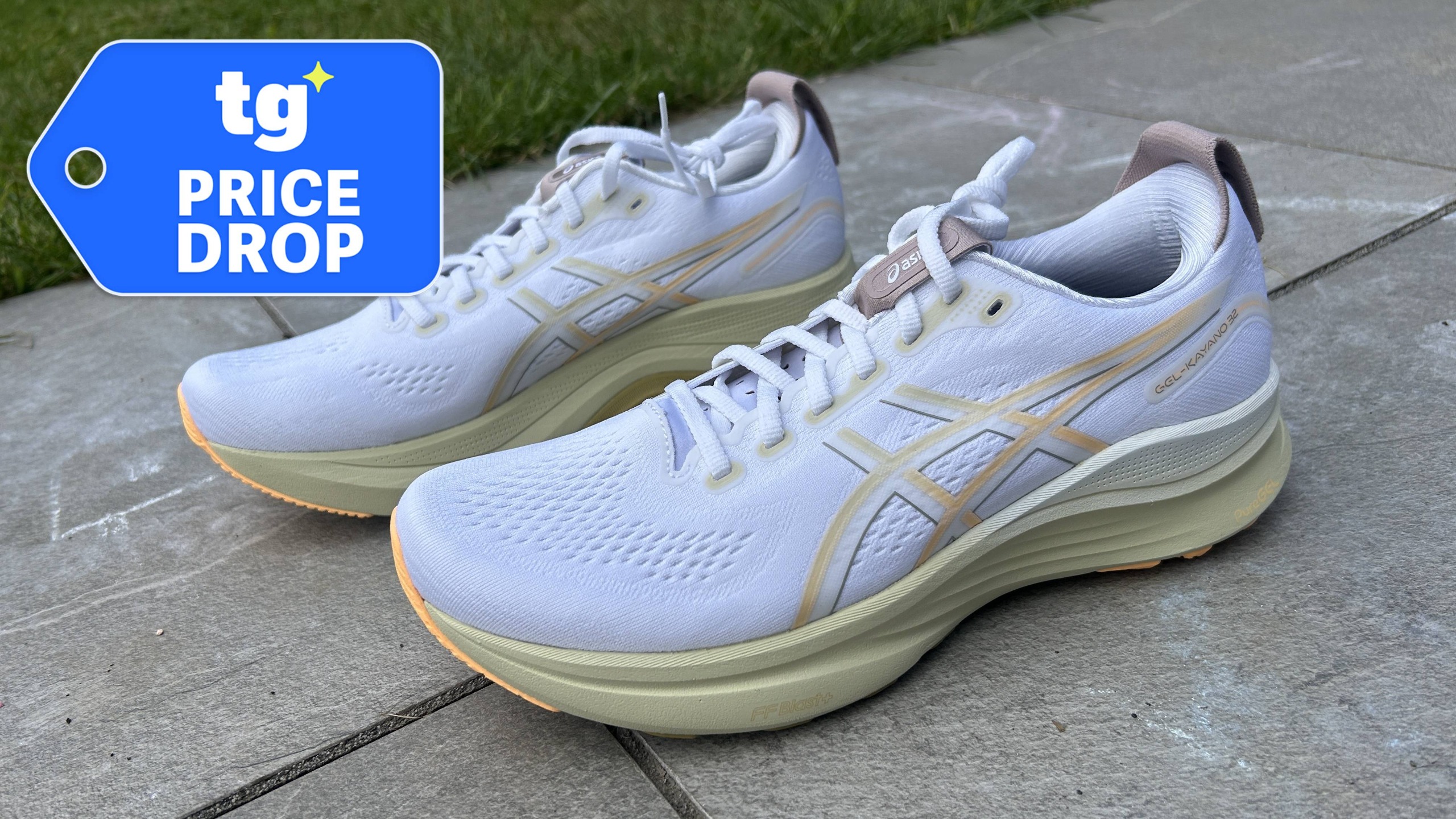
We’re just off the back of Amazon’s October sale, Prime Big Deal Days. But if you missed out, don’t worry — there are still plenty of Asics running shoe deals that are absolutely worth shopping.
You’ll find some massive discounts on certain models — like the Asics Gel-Kayano 30 for $69 (56% off.) Sure, it’s an older shoe, but it still offers great support, especially if you tend to overpronate.
Note: Prices can vary depending on the size and color you choose — check out any different color options in your size to find the best deals.
Get instant access to breaking news, the hottest reviews, great deals and helpful tips.
Millie is a Deals Editor at Tom’s Guide specializing in deals content. She also covers the latest tech news and and creates how-to articles about everything from phones, streaming devices, and headphones to apps and video games. In her spare time, she enjoys reading, gaming on her Nintendo Switch and creating digital art.
I wish all my clients would ask me how to build strong hips that feel open and free because the answer isn’t necessarily what you might think.
Years ago, the gold standard was stretching. But now, the tide is turning in favor of weighted mobility routines, dynamic stretching and more controlled weight training. If you can, loading your mobility warm-ups will help you build strength, control and stability that carries over to all exercise.
It’s hard to convince people to stick to a consistent mobility routine, but I’m hoping these quick tips will convince you to make more space in your week for low-impact movement.
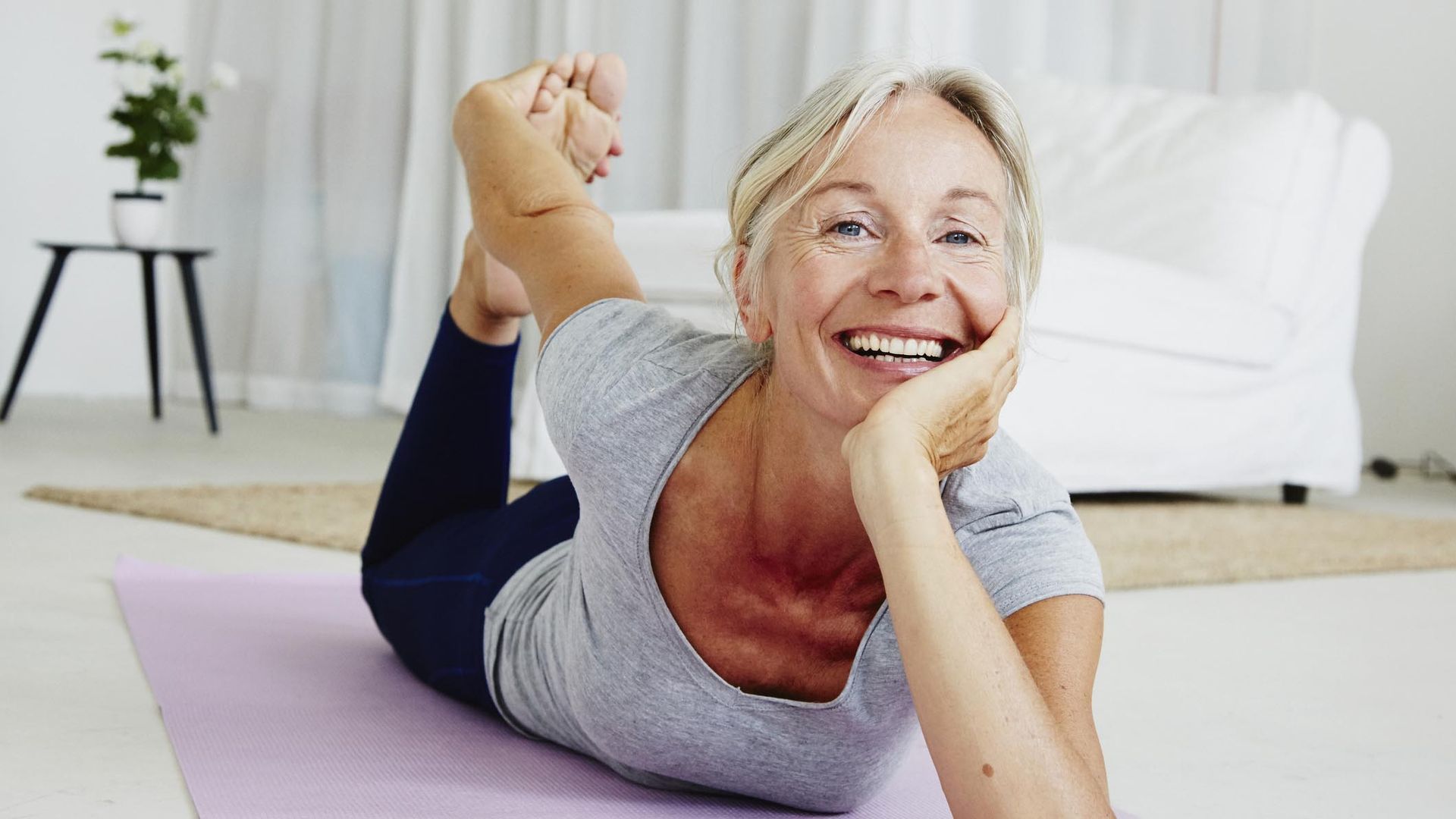
Recently, a 60-year-old client asked me for strong hips, and I gave her this advice. Just remember, this routine was designed with my client in mind. Seek medical advice personalized to you before starting a new regimen.
My 60-year-old client asked me how to get stronger hips, so I recommended two things straight away
I recommend thinking about two things in particular for strong hips.
1. Planes of motion
(Image credit: Shutterstock)
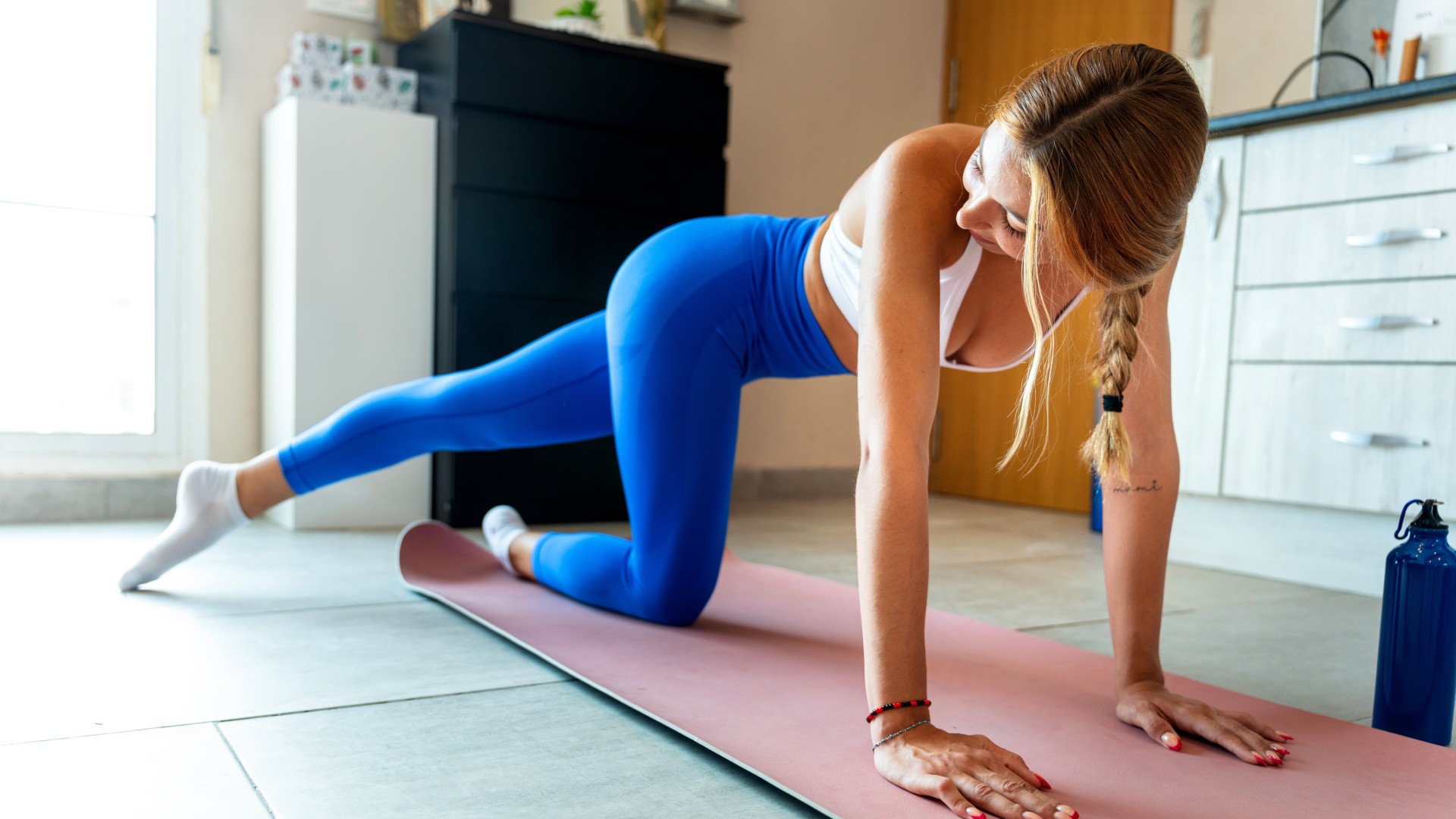
The planes of motion refer to sagittal, frontal and rotational movement, which means movements front-back, side-to-side, and rotation. To keep your hips truly strong and healthy, you must target as many of them as possible, which means moving in all directions.
I’ve included a short video below to show you some examples of movements you can try, but as a general rule of thumb, think about lifting and lowering your legs (the job of the hip flexors), internally and externally rotating your hip joints, abducting your hips, which means moving your leg away from your midline, plus adducting, which means bringing the limbs closer.
2. Loading the hips and force production
(Image credit: Shutterstock)
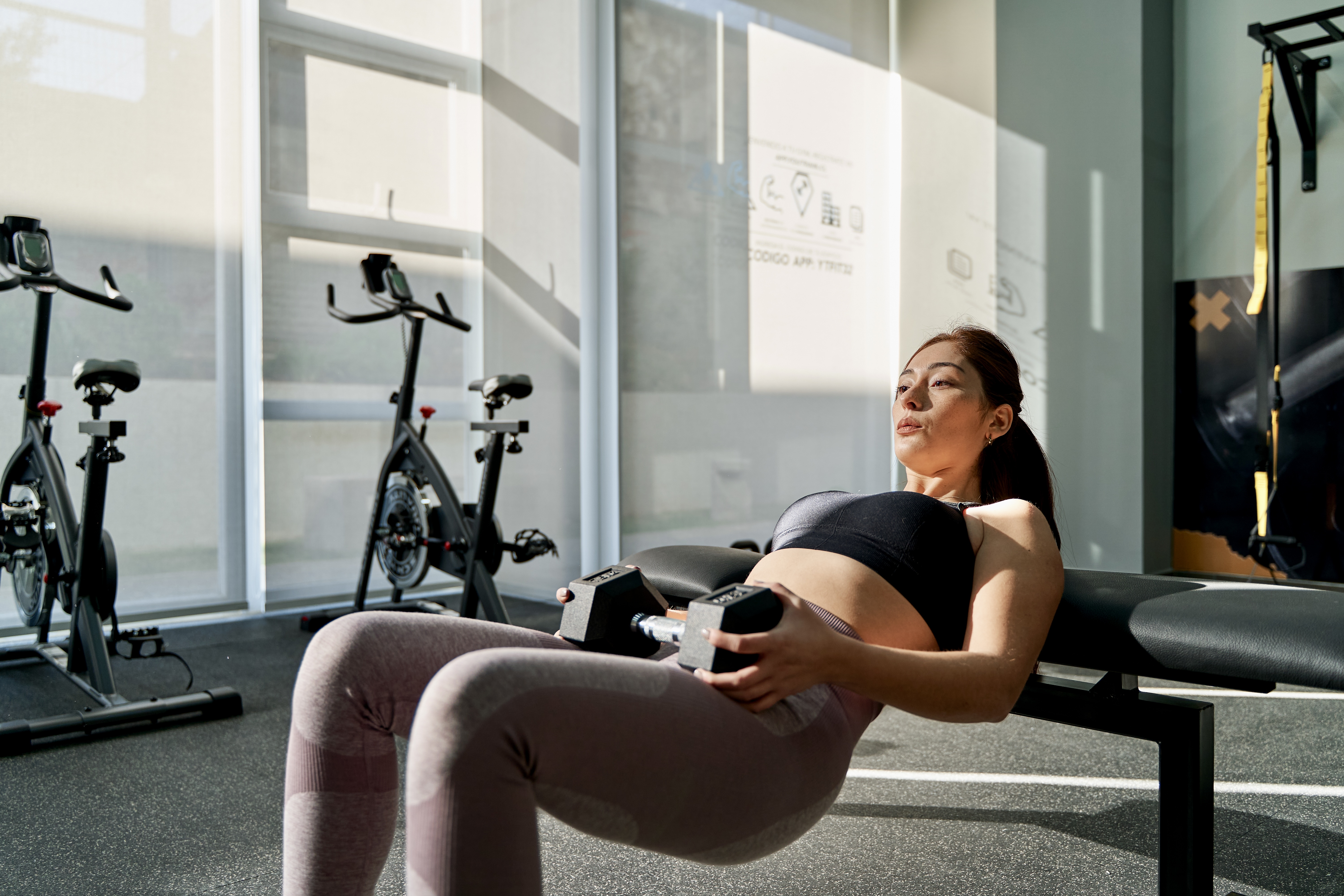
Loading your movements with resistance bands, kettlebells, dumbbells, loop bands, barbells and props like Pilates balls will increase the intensity and resistance your joints and muscles work through, but the exercises themselves should remain low-impact.
Get instant access to breaking news, the hottest reviews, great deals and helpful tips.
Think about longevity and the ability of your hips to withstand impact. That is your key to injury prevention. You don’t need heavy weights, either; you just need to move slowly and with control, using rep ranges between 6-10 and sets between 2-4.
Sometimes, you can feel an exercise more with a lighter weight, full control and range of motion. It doesn’t take away from the movement when the quality improves. I’ve included a short warm-up example below that you can use with just a loop band.
I recently spoke with a bone loading expert (our chat will be published in the next few days, at the time of writing), who told me that the best way to build strong bones, ligaments, muscles and tendons is to produce high force using low-impact movement.
That includes pushing hard against a stationary object or holding positions using heavy loads. Consider this the next time you turn to a HIIT routine!
Avoid “just” stretching
(Image credit: Shutterstock)
Your hips help you raise your knees. But they need to rotate, adduct, abduct, stabilize, protect, control and help produce force, too. So just sitting in a stretch for a few minutes, while beneficial for short-term flexibility, isn’t going to cut it if you want to build truly strong, mobile hips.
Think about how long many of us sit during the day; our hips respond really well to movement, so when you take a break from your desk, use that opportunity wisely. I’m not saying don’t stretch at all, just don’t depend on it to fix all niggles and tightness. Staying stationary can cause weaknesses and underactive muscles, which in areas like the hips can lead to back pain.
Also, much of the existing research on the stretch reflex indicates we need to sit in stretches for much longer than we realize to allow muscles to feel safe enough to relax. While your reflex prevents any sudden force or overstretching by inhibiting it, stretching for over 30 seconds gently signals to your muscles and nervous system that your body is safe, allowing you to benefit from the stretch properly and relax into it.
So, if you do plan to stretch, give yourself enough time to settle into it. I recommend Yin yoga, which is a slow, static form of yoga that encompasses this.
Verdict
Overall, it really is as simple as choosing 3-6 low-impact exercises you enjoy, performing 6-10 reps and 2-4 sets of them, and loading them appropriately using equipment you like using. Use as much range of motion and slow, controlled movement as you can, and focus on producing force against resistance without high-impact joint work.
Over time, progress movements accordingly or switch them out. Move your hips in all directions, and try to focus on the ones you don’t like or aren’t good at, as this is a sign your hips need it!
Follow Tom’s Guide fitness on Instagram for more workouts, routines, tips, and tricks.
Sam Hopes is a level 3 qualified trainer, a level 2 Reiki practitioner and fitness editor at Tom’s Guide. She is also currently undertaking her Yoga For Athletes training course.
Sam has written for various fitness brands and websites over the years and has experience across brands at Future, such as Live Science, Fit&Well, Coach, and T3.
Having coached at fitness studios like F45 and Virgin Active and taken on both 1:1 and group, Sam now primarily teaches outdoor bootcamps, bodyweight, and kettlebells.
She also coaches mobility and flexibility classes several times a week.
Sam has completed two mixed doubles Hyrox competitions in London and the Netherlands and finished her first doubles attempt in 1:11.
Adding load to mobility exercises is a brilliant way to supercharge them; more resistance, more work, more control…more gains.
This exercise opens your hips and stretches your glutes, making it one of the better hip mobility exercises I’ve used over time with various clients. I highly recommend one of the best kettlebells, but not anything too clunky, as that will limit range of motion.
Intrigued? Here’s the move, plus the benefits. And all you need is a weight and a bench or something similar.
How to do the kettlebell figure-4 deadlift
I see this move butchered, and sadly, it will put strain on your shoulders and back, so we need to maximize glute activation, engage the core muscles and hinge at the hips. Shoulders must be pulled back, and your back should stay straight throughout, just like you would during a standard deadlift.
My best advice is to add load gradually, adjust your reps, or play around with a slower tempo to get the most out of this kettlebell exercise. The payoff is more protection for your back, better hip strength, range of motion and stability, and active glutes.
I see this move butchered often…
Here’s how to do the kettlebell figure-4 deadlift properly.
Stand with a box, bench, or similar to your left side.
Position the outer side of your right foot on the top edge of the box and draw your right knee down, squaring off your hips to create a figure-4 shape.
Hold a kettlebell by the handle using both hands.
Hinge forward at your hips, send your butt back and lower the weight through the gap in your legs, as if performing a deadlift. Your back should be straight and shoulders drawn back, core active.
Lower as far as you can until you feel a deep stretch in your glutes, hips and hamstrings, then drive upward to stand.
3-4 sets, 6-8 reps per side.
Common mistakes include:
Hunching: I often see people hunching just to lower the weight further. Think about keeping a straight line from neck to lower back and imagine you’re shutting a car door or cupboard door behind you with your butt.
Rotating: It’s easy to start rotating to one side if one side of your body feels tighter than the other. Keep your hips square and chest forward and proud.
Forcing the knee: If you find it difficult to open your hip and draw your knee down, this is due to limited mobility and tightness. Over time, and with practice, this should improve. Don’t force your knees; just meet your body where it is.
Over time, add load to make the exercise more challenging. You can still perform this move if your knee doesn’t align with your foot, but be careful not to move through pain. If the exercise hurts, stop, and consult a relevant medical professional.
Get instant access to breaking news, the hottest reviews, great deals and helpful tips.
You want all that action in your hips, glutes, core and hamstrings. Think about tucking everything in and drawing your navel toward your spine. As you exhale, that’s your time to lift the weight; as you inhale, that’s the time to lower the weight between your legs. Use that breath. Think about lowering down slowly, then driving up powerfully.
Follow Tom’s Guide fitness on Instagram for more workouts, routines, tips, and tricks.
If you, like me, struggle to engage your glutes during leg day workouts, or you find that one side fires up better than the other, working one side of your body at a time like this will help you learn about any imbalances or areas you may be neglecting.
Sam Hopes is a level 3 qualified trainer, a level 2 Reiki practitioner and fitness editor at Tom’s Guide. She is also currently undertaking her Yoga For Athletes training course.
Sam has written for various fitness brands and websites over the years and has experience across brands at Future, such as Live Science, Fit&Well, Coach, and T3.
Having coached at fitness studios like F45 and Virgin Active and taken on both 1:1 and group, Sam now primarily teaches outdoor bootcamps, bodyweight, and kettlebells.
She also coaches mobility and flexibility classes several times a week.
Sam has completed two mixed doubles Hyrox competitions in London and the Netherlands and finished her first doubles attempt in 1:11.