
Summary.
In the September 7 edition of The Insider newsletter, managing editor Gretchen Gavett shares HBR’s plans for covering AI over the next month, new insights from the creators of blue ocean
What’s actually happening with AI?

In the September 7 edition of The Insider newsletter, managing editor Gretchen Gavett shares HBR’s plans for covering AI over the next month, new insights from the creators of blue ocean
What’s actually happening with AI?
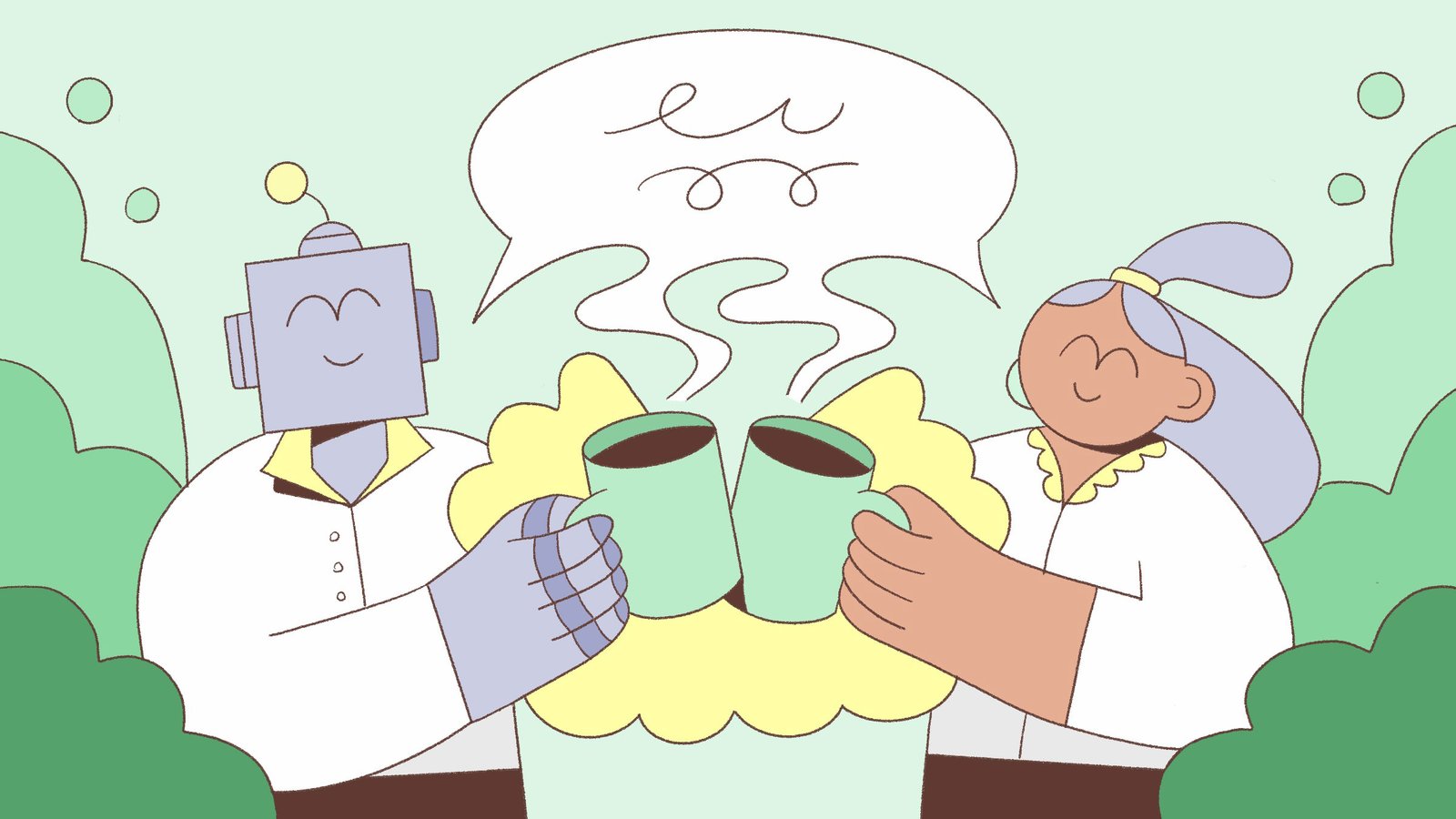
Intentionally incorporating AI before, during, and after meetings leads to better group outcomes, according to a new analysis. by Gabriele Rosani and Elisa Farri
September 7, 2026

Illustration by Anna Micheloni
AI adoption is accelerating, but most organizations overlook where much of their work happens: in teams. Managers routinely use AI for individual tasks, yet rarely bring
At a recent Town Hall meeting with 200 senior managers and executives from a leading energy company, we asked three simple questions.
Read more on Generative AI or related topics AI and machine learning, Teams, Collaboration and teams and Meeting management
Read more on Generative AI or related topics AI and machine learning, Teams, Collaboration and teams and Meeting management


Artur Debat/Getty Images
Agentic AI is blurring the traditional boundaries between marketing and sales, even as most companies continue to deploy the technology separately within each function. That approach misses an
For years, aligning marketing and sales has been one of the most persistent priorities in commercial leadership—and one of the hardest to achieve. Agentic AI is changing that.


Yaroslav Danylchenko/Stocksy
A senior leader could be forgiven for seeing generative AI as the answer to one of marketing’s most stubborn problems: creative work is expensive, slow, and hard to scale. With the right prompts, a team can now generate concepts, scripts, images, and even video spots in a fraction of the time it once took. The output often looks polished, on-brand, and real. But even looking real enough to make consumers believe they’re seeing human-designed ads is not the same as working well.


Pardina Studio x Katya D/Stocksy
In late 2025, Perplexity’s Comet browser began logging into shoppers’ Amazon accounts and buying on their behalf. Amazon treated it as an intruder. It blocked the agent and when Perplexity slipped past the block within a day, Amazon took the dispute to federal court. WeChat drew the line differently. After shutting out ByteDance’s Doubao assistant, which used system-level access to navigate WeChat without permission, Tencent later opened what it describes as an agent-to-agent channel to selected assistants from Huawei, Xiaomi, and others to send messages and place calls. Under this arrangement, an external agent translates a user’s request into a structured instruction and passes it through a Tencent-controlled interface to WeChat, which executes the action inside its own environment. Tencent controls which agents can connect, which functions they can invoke, and what data and execution remain inside WeChat. In other words, one platform shut the door to AI agents outright; the other unlocked it on its own terms.

Illustration by Sandra Rilova
The most common failure point in generative AI is not the boardroom, the vendor shortlist, or the training portal. It is the layer of managers who must turn executive ambition into everyday behavior. That is why Gen AI adoption keeps stalling even in organizations where senior leaders have approved the budget, picked the platform, and announced the mandate. Middle managers decide whether AI becomes a workflow, a side experiment, a compliance headache, or a quiet casualty of organizational avoidance.


Marcos Osorio/Stocksy
Precisely how AI will impact the workforce in the short to medium term is unclear. Many layoff announcements are better understood as AI-washing: ordinary restructuring initiatives packaged in AI language to reassure investors that leaders have a grip on the coming technological change. Goldman Sachs estimates that AI reduced monthly U.S. payroll growth by only around 16,000 jobs over the past year, adding roughly 0.1 percentage points to the unemployment rate—a drag that includes slowed hiring as well as outright job elimination. These numbers may well increase, but for now, we are much earlier in the process than the prevailing narrative suggests.