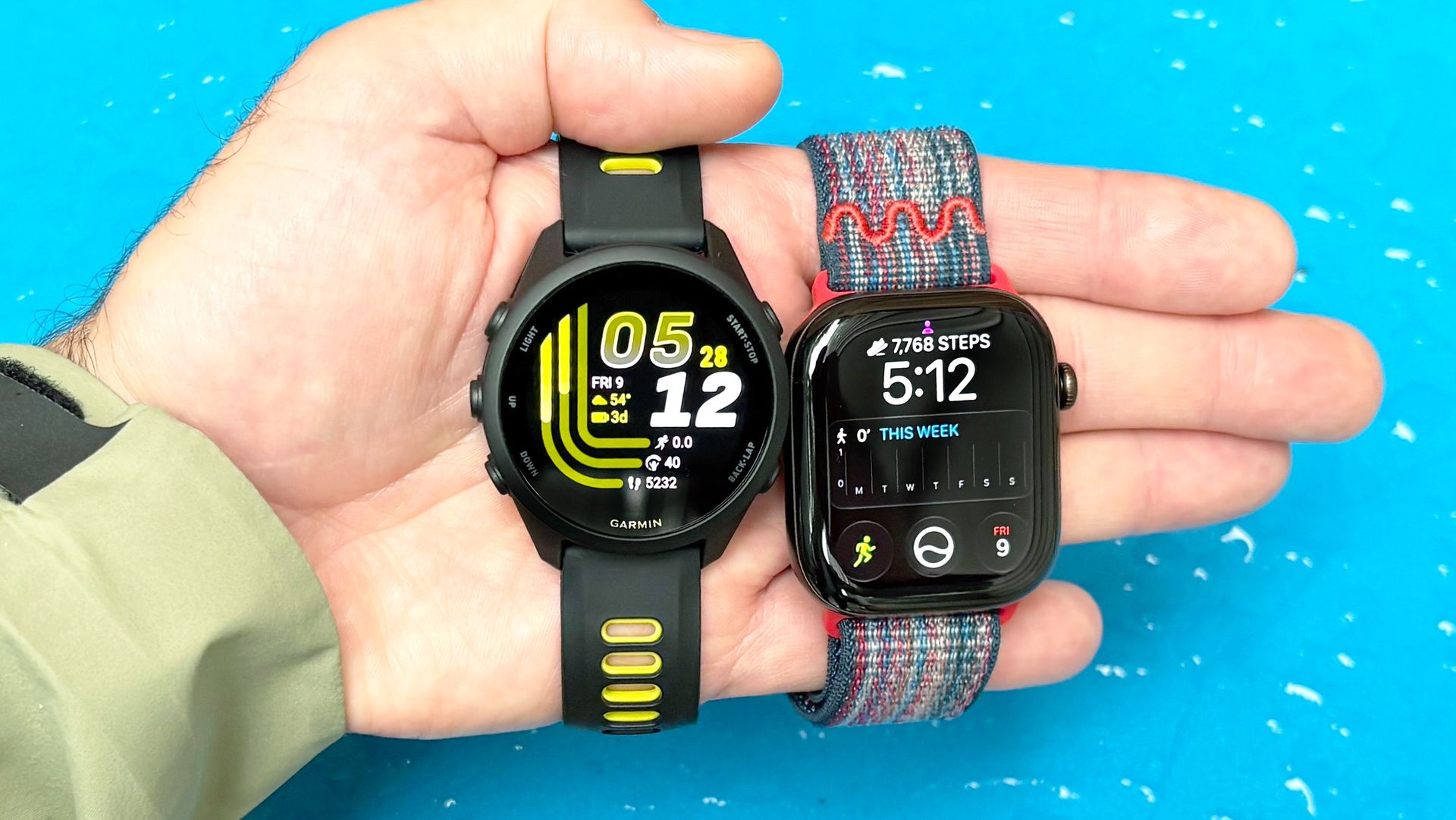
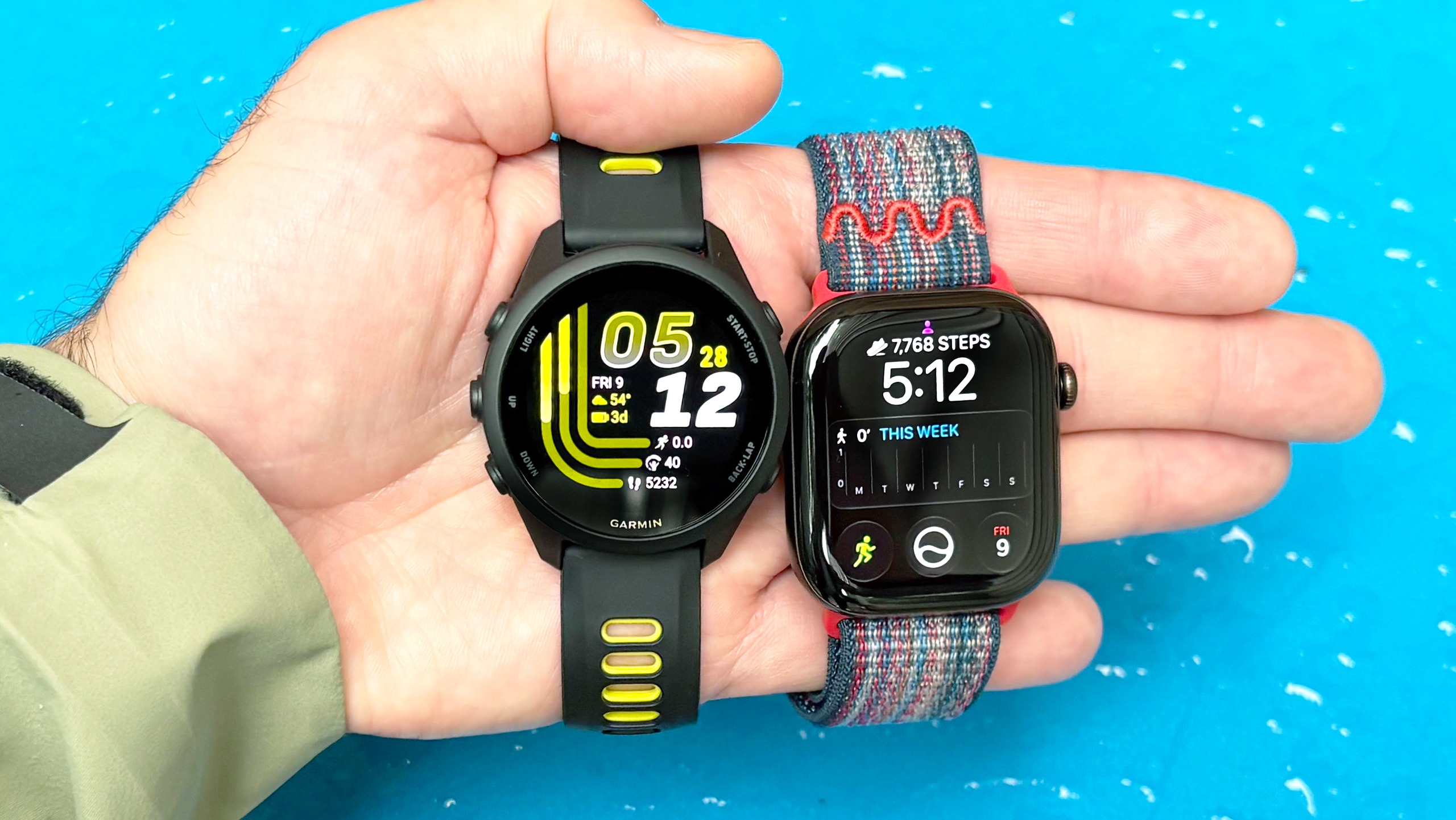
I logged a 5,000-step walking workout with the Apple Watch Series 12 on my left wrist and the Garmin Forerunner 170 on my right wrist to find out which of these new smartwatches is the better fitness tracker.
The Apple Watch Series 12 is one of the best full-featured smartwatches of 2026, and the Garmin Forerunner 170 is one of the best budget-friendly running watches.
However, cost-wise, the Garmin is $349. The Apple Watch 12, meanwhile, starts at $399 and goes up to $549.
Apple Watch 12 vs Garmin Forerunner 170
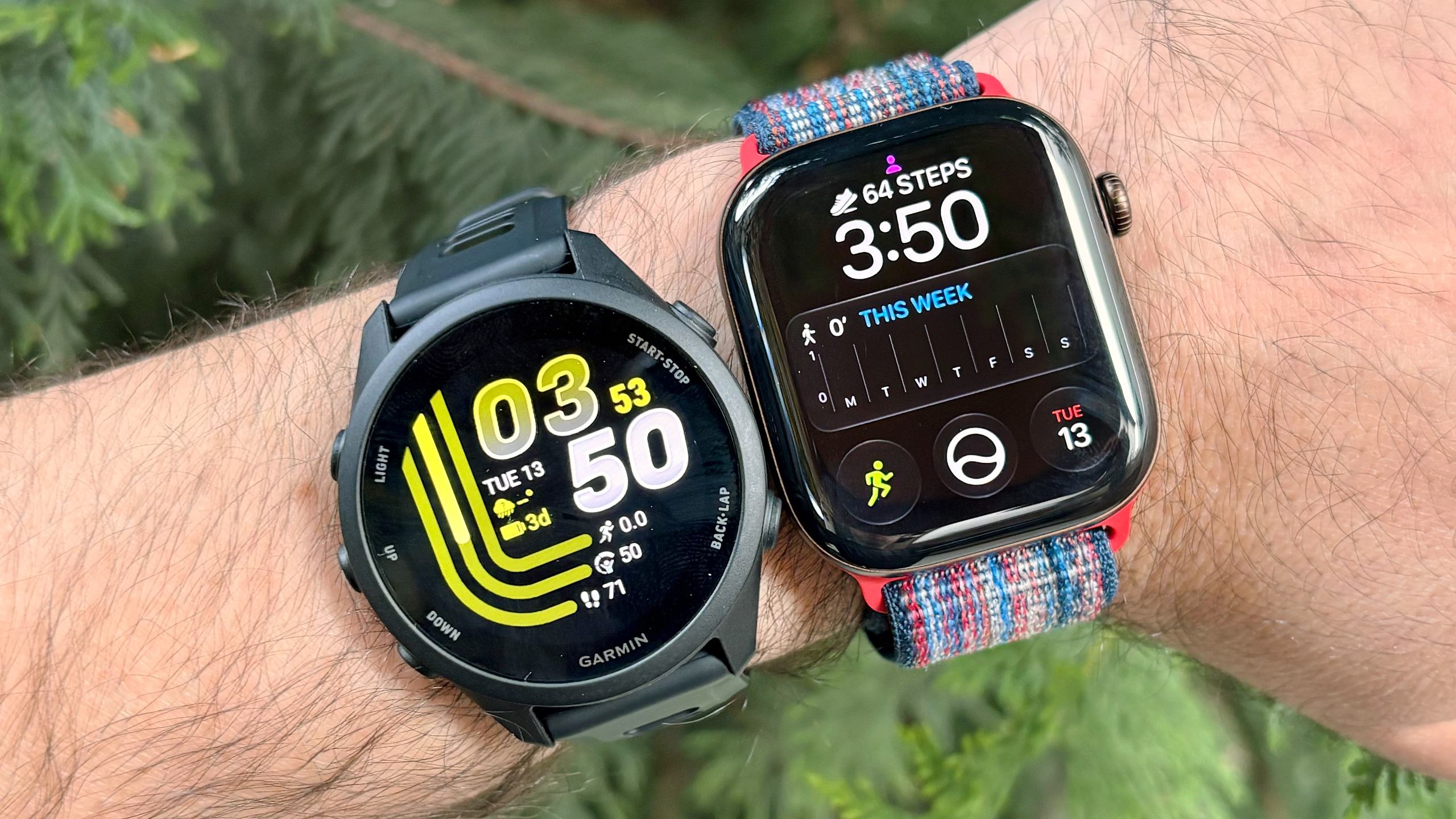
Both smartwatches offer comparable onboard heart rate, location (GPS), and elevation tracking (altimeter) tech, plus bright, touch-sensitive displays and sleek cases. Safety- and wellness-focused features are plentiful too. But the Apple Watch supports way more apps and smart features, while the Forerunner has better training and recovery tools for runners.
Design-wise, the Forerunner 170 Music comes in a wider range of colorful, sporty options, but features a plastic case. The Series 12, by comparison, boasts an aluminum case. That said, it also weighs more. The 46mm Apple Watch 12 case is roughly 39 g compared to 26 g for the Forerunner 170 Music case.
I already tested the Apple Watch Series 12 versus the Garmin Venu 4, a higher-end ($549) sibling of the Forerunner 170. In that showdown, both devices impressed across the board, but the Venu 4 proved slightly more accurate. Will Garmin pull a repeat win? There’s only one way to know.
I walked 5,000 steps with the Apple Watch 12 vs Garmin Forerunner 170
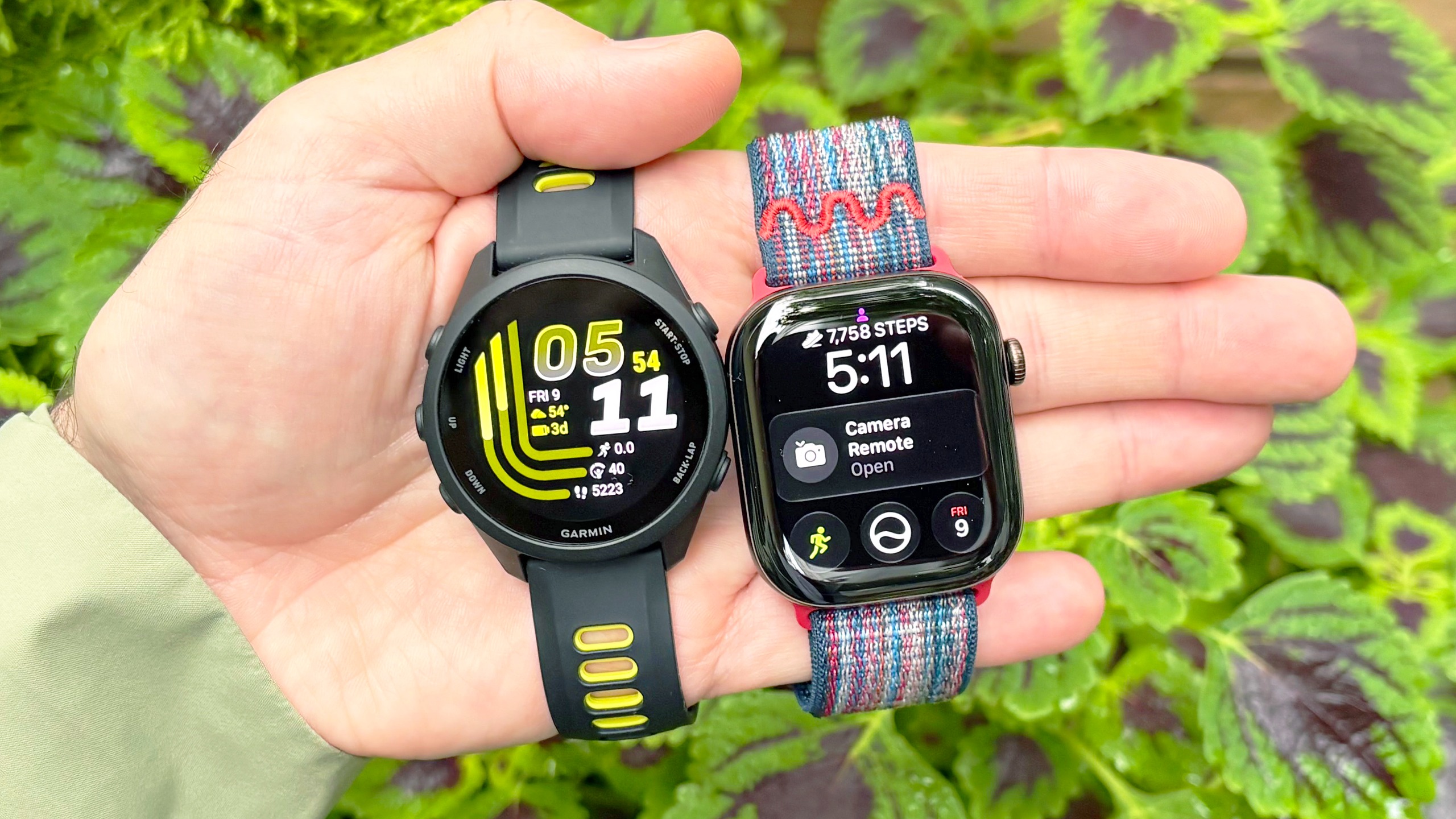
As a primary control, I manually counted all 5,014 steps, using a tally counter to record every hundred. As a control for distance, climb, and pace, I turned to ol’ reliable, the Strava app.
Find the results of my Apple Watch 12 vs. Garmin Forerunner 170 Music walk test below, along with the five biggest takeaways from the data.
Swipe to scroll horizontally
| Header Cell – Column 0 |
Apple Watch Series 12 |
Garmin Forerunner 170 |
Control |
|---|---|---|---|
|
Steps |
5,0003 steps |
5,020 steps |
5,014 steps (manual count) |
|
Distance |
2.56 miles |
2.56 miles |
2.64 miles (Strava) |
|
Climb |
399 feet |
371 feet |
377 feet (Strava) |
|
Average elapsed pace |
19 mins 19 secs per mile |
19 mins 35 secs per mile |
18 mins 20 secs per mile (Strava) |
|
Average heart rate |
129 bpm |
129 bpm |
n/a |
|
Max heart rate |
162 bpm |
162 bpm |
n/a |
|
Calories burned |
354 total calories |
297 total calories |
n/a |
|
Battery usage |
4% |
5% |
n/a |
1. Both watches came remarkably close to my actual step count total
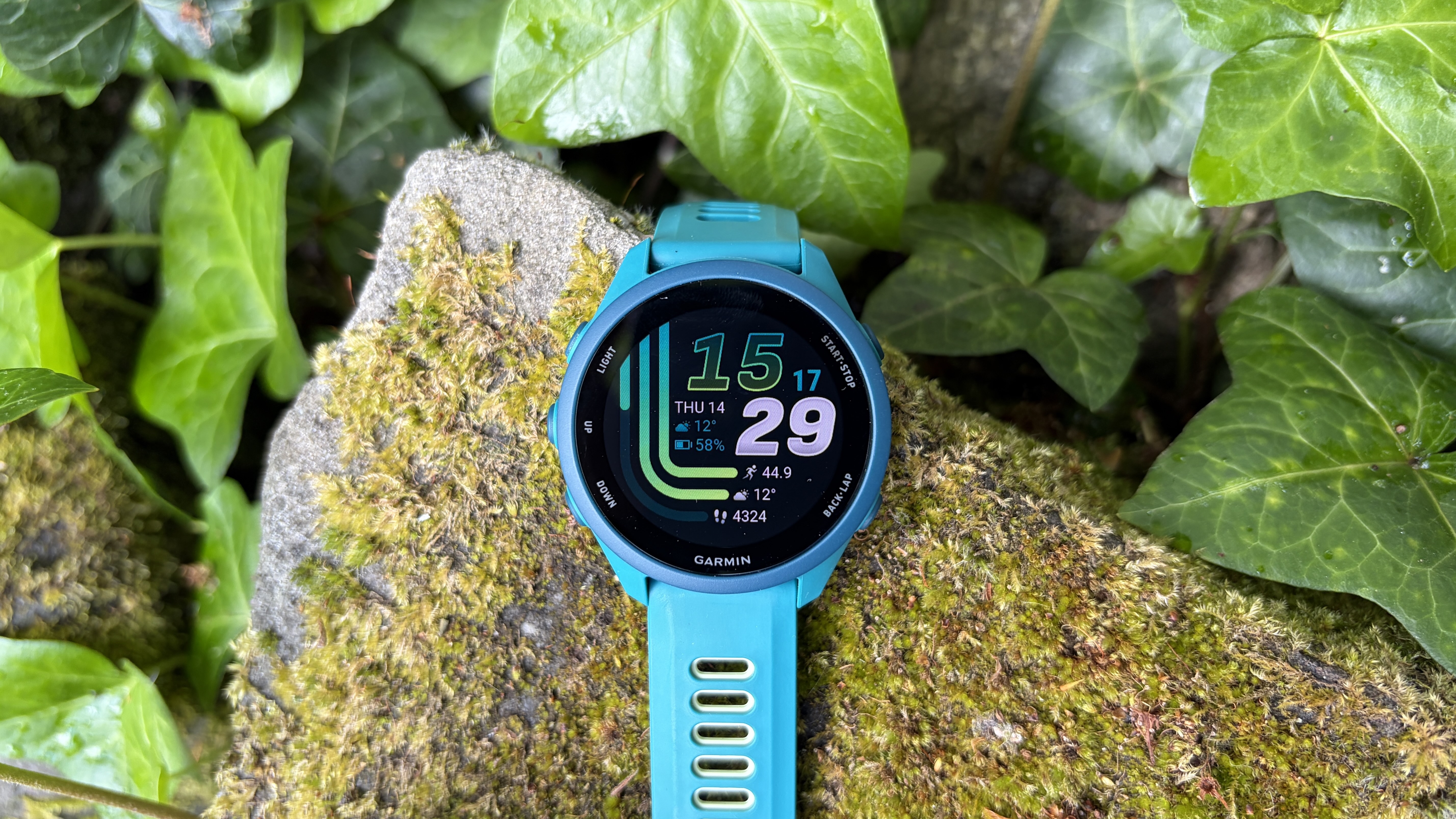
I’ve done dozens of these smartwatch walk tests, and my general rule of thumb is that any step count total within 100 steps of my actual tally is considered a solid result and within an acceptable margin of error. With that in mind, the Apple Watch 12 and Garmin Forerunner 170 each performed exceptionally well here.
The Series 12 undercounted by a mere 11 steps, while the Forerunner 170 was over by just six steps. Meanwhile, the Apple Watch and Garmin noted exactly the same amount of distance covered. More importantly, the tallies are also less than a tenth of a mile off from the control.
2. Garmin’s climb data is slightly closer to the control
In my experience, even the best Apple Watch models sometimes inflate elevation gain data during outdoor workouts by a noticeable, albeit not outrageous, margin. That’s again the case here.
The Apple Watch Series 12 noted 28 additional feet of climb compared to the control. The Forerunner 170, meanwhile, was off by just six feet, an impressive result.
3. Apple doesn’t provide an average moving pace metric
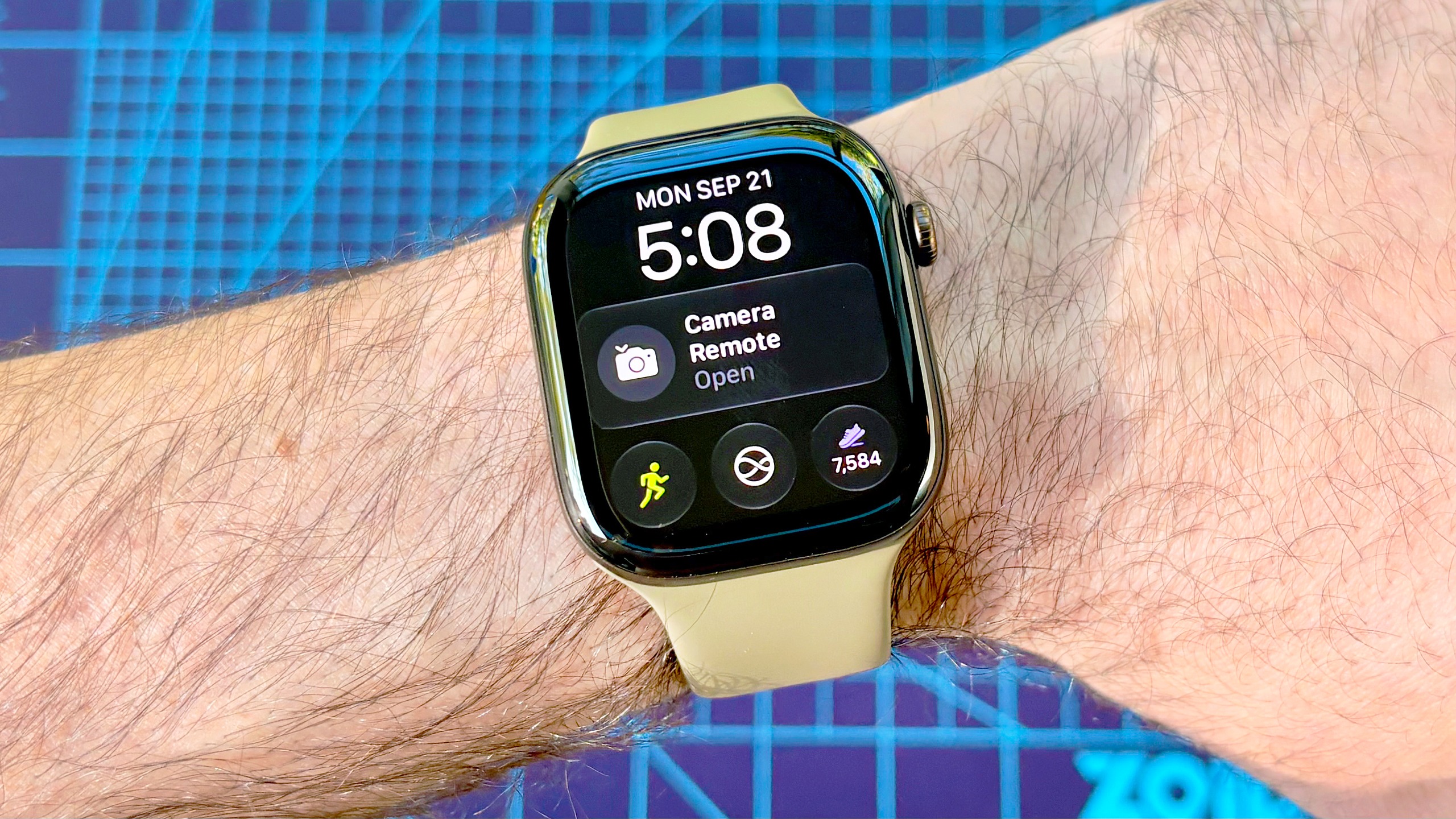
Both the Strava app and Garmin provide average moving and elapsed pace metrics for outdoor workouts, like walks. Of the two, the former tends to be the more useful, as it more accurately reflects your overall speed.
Apple only provides one post-workout pace metric, and it’s almost certainly elapsed pace, which is what I’ve recorded in the table above. That being said, Apple’s average elapsed pace metric is closer to the control than Garmin’s.
Meanwhile, Strava noted a moving pace of 18:07 per mile compared to 18:39 per mile for the Garmin.
4. Apple and Garmin’s heart rate data is a perfect match
Both Apple and Garmin allow users to specify which wrist their smartwatch is on via the companion app. So, assuming those details are correctly entered, there should be zero difference in heart rate tracking accuracy between your right and left wrists. But is that actually the case?
The results of this walk test suggest that the answer is yes, seeing as both wearables noted identical average and max heart rates for my ~50-minute walk.
5. Garmin burned through more battery, but overall, proved more accurate
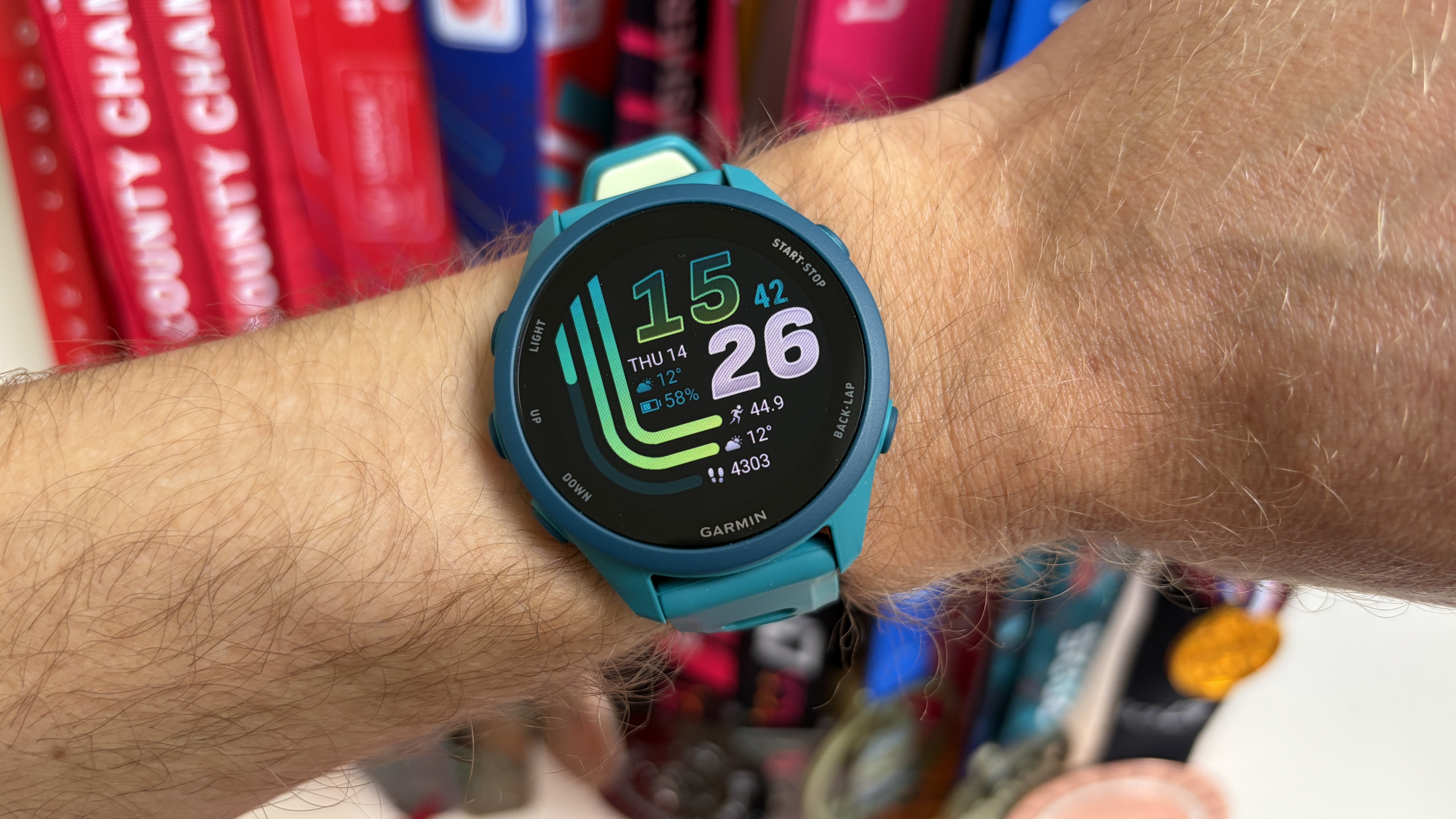
One might assume Garmin smartwatches always beat Apple Watches when it comes to battery performance, but this showdown proves that isn’t always true. While the Garmin Forerunner 170 Music can far outlast the Apple Watch Series 12 in standard smartwatch mode, when using continuous GPS and heart rate tracking, the Apple Watch Series 12 actually has the advantage.
That said, when it comes to comparing the fitness tracking performance of the Apple Watch Series 12 vs. the Garmin Forerunner 170 Music, the latter slightly outperforms the former… in this test, at least. The Forerunner 170 produced an ever-so-slightly more accurate step count and climb total, while the Series 12 was closer in terms of pace.
Which of these two smartwatches would you rather use to keep tabs on your health and fitness? Let me know in the poll below.

Follow Tom’s Guide on Google News and add us as a preferred source to get our up-to-date news, analysis, and reviews in your feeds.
More from Tom’s Guide
Next Badge:
More Comments/Likes Until Your Next Badge