Tag: AI and machine learning

  • How Leaders Talk About AI Predicts Adoption

    How Leaders Talk About AI Predicts Adoption

    Harvard Business Review Logo

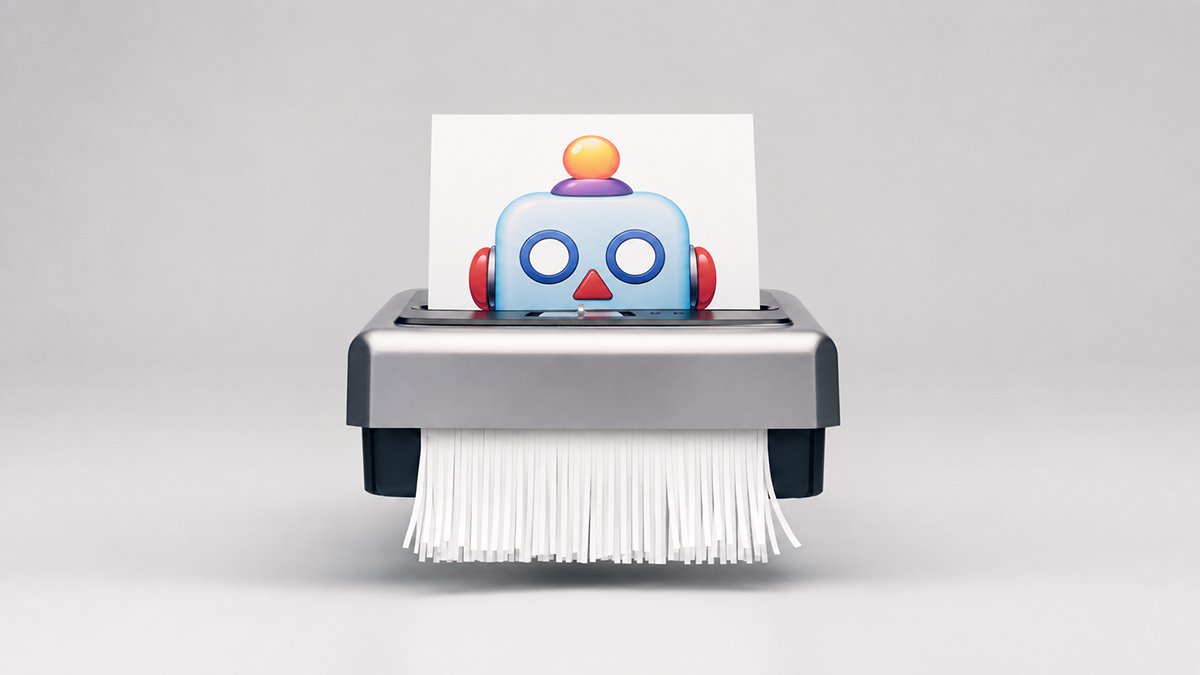
    Illustration by Ana Moreno

    New research from BCG finds that how a company talks about AI is a material predictor of adoption results. The companies where leaders’ stories provide clarity, hope, and growth are seeing

    Stories are one way that leaders cement their legacy, inspire action, and define an era. The stories they tell about where a company is going can foreshadow opportunity or foment fear—sometimes unwittingly. Today, leaders are telling employees the story of what AI will mean for them. “No one knows,” some say, leaning into the 2010s-era virtue of transparency. “AI is coming for your job, but it’s coming for mine, too,” say others, in apprehensive solidarity. Still others position AI as a personal superpower, or the dawn of a heroic unknown. Each of these narratives is a choice. Each choice has consequences.

  • Leading with Resilient Optimism

    Leading with Resilient Optimism

    September 29, 2026

    Summary.   

    In this week’s Insider newsletter, managing editor Gretchen Gavett shares an early release article from the upcoming November-December 2026 issue of HBR on what psychology researcher

    The Insider is a weekly, subscriber-only newsletter, where our managing editor curates HBR stories, research, and ideas that senior leaders shouldn’t miss.

  • A Collection of HBR’s Most Insightful Research on AI at Work

    A Collection of HBR’s Most Insightful Research on AI at Work

    Illustration by Minjo Jung

    Summary.   

    Research on AI in the workplace can show us how the technology is really being used and what it does to the way we work. Recent studies offer lessons for leaders on how employees are actually

    There’s no shortage of assertions and predictions about AI’s impact on work. But what does the research say about what’s actually happening inside organizations—and how can you use it to make better decisions about how AI is implemented at your company?

  • Building a Competitive Advantage in the Healthcare AI Market

    Building a Competitive Advantage in the Healthcare AI Market

    Harvard Business Review Logo

    Pepino de Mar Studio/Stocksy

    Summary.   

    As advanced AI becomes widely accessible, healthcare companies can no longer rely on superior technology alone for lasting advantage. Instead, they need a coherent AI strategy built around five

    In a development that is impacting or soon will affect many industries, having the most advanced AI technology is not enough to win in the rapidly evolving healthcare AI market.

  • Why Your Employees Override AI

    Why Your Employees Override AI

    HBR Executive delivers trusted insights and actionable strategies to guide leaders through consequential decisions. Practical tools, and forward-looking perspectives cut through the noise to equip you to navigate uncertainty, stay ahead of emerging trends, and plan for a stable future.

    Exclusive Benefits

    • Playbooks

      Concrete strategies, tactics, and solutions to real challenges from your peers and other experts. Published every 2 weeks. All Playbooks (Opens a new page)

    • Masterclasses
    • Agenda

      A weekly newsletter of timely insights that interpret today’s business climate and help you chart a path to what’s next. All Agenda (Opens a new page)

    • Live
    • The Strategy Lab
  • How AI Is Changing Communication: Weighing Efficiency with Efficacy

    How AI Is Changing Communication: Weighing Efficiency with Efficacy

    September 24, 2026

    AI is rapidly changing how top leaders communicate with employees, customers, boards, and each other. In episode 2 of a special four-part series on how AI is changing leadership, we explore how executives can use AI to improve communication without outsourcing the thinking, judgment, and empathy that make it effective. Stanford professor Matt Abrahams and Zapier CEO Wade Foster discuss how leaders are using AI to synthesize information, structure ideas, prepare for difficult conversations, and rehearse for high-stakes moments. They also explain why leaders should be wary of letting AI write everything for them, how overreliance on AI can create a “comprehension gap,” and why preserving a distinctive human voice may become even more important as AI-generated communication becomes ubiquitous. Abrahams is the author of Think Faster, Talk Smarter and host of the podcast Think Fast, Talk Smart. Foster is the cofounder and CEO of Zapier, a software automation company.

    Plus:

    • Why we need clear rules for when and how AI should be used in workplace communication
    • Why AI could make spontaneous, unscripted communication more valuable
    • Why you should use AI to challenge your assumptions, not just confirm them
    • How leaders can hold on to accountability and authenticity

  • Closing the Gap Between AI Investment and Financial Return

    Closing the Gap Between AI Investment and Financial Return

    Harvard Business Review Logo

    Jorg Greuel/Getty Images

    Summary.   

    Companies today often use AI to pursue low-value opportunities: adding a new feature that doesn’t truly matter to the customer or giving employees tools that save them time but don’t

    Large companies today are abuzz with AI. Leaders have funded pilots, trained their people, upgraded data platforms, and chased the latest models. But when speaking to CFOs about financial impact, the conversation can turn awkward. Firms have invested eagerly in AI, but the returns have been difficult to quantify.

  • The More Accessible Information Is, the Less Employees Remember

    The More Accessible Information Is, the Less Employees Remember

    Harvard Business Review Logo

    MirageC/Getty Images

    Greater connectivity can make employees better at finding knowledge while leaving them less likely to retain it. Across five experiments involving more than 1,000 people, participants who formed

    Your organization has invested heavily in collaboration. Employees communicate through Slack and Microsoft Teams. Knowledge is stored in shared drives. AI assistants retrieve policies, summarize meetings, and answer questions instantly. Internal social platforms make it easier than ever to identify who has expertise across the organization. The assumption behind these investments is simple: Greater connectivity leads to better learning. If employees can reach more people and access more information, they should become more knowledgeable. But that assumption deserves a closer look.

  • What to Do When There’s Too Much Work

    What to Do When There’s Too Much Work

    Summary.   

    In this week’s The Insider newsletter, managing editor Gretchen Gavett explores a common problem for leaders: your team is overloaded, but you can’t take on the extra work yourself.

    Sometimes there’s just too much to do. In our Insider Insights surveys over the past year, HBR subscribers have consistently reported a common pain point: The sheer volume of work you and your teams are juggling. Whether the cause is AI, layoffs, a budget crisis, all of the above—or something else entirely—everything can feel futile when it’s impossible to make progress.

  • When Is It Time to Step Down?

    When Is It Time to Step Down?

    HBR Executive delivers trusted insights and actionable strategies to guide leaders through consequential decisions. Practical tools, and forward-looking perspectives cut through the noise to equip you to navigate uncertainty, stay ahead of emerging trends, and plan for a stable future.

    Exclusive Benefits

    • Playbooks

      Concrete strategies, tactics, and solutions to real challenges from your peers and other experts. Published every 2 weeks. All Playbooks (Opens a new page)

    • Masterclasses
    • Agenda

      A weekly newsletter of timely insights that interpret today’s business climate and help you chart a path to what’s next. All Agenda (Opens a new page)

    • Live
    • The Strategy Lab