Building trust in proprietary model benchmarks using cryptographically secure environments
Imagine a student is set to take a high-stakes exam. If they accidentally peek at the test questions in advance, achieving a perfect score is influenced by this knowledge, making it a meaningless accomplishment. To truly measure what they know, they must have no visibility of the test questions until it’s time to take the exam. That is the exact challenge the industry faces when evaluating advanced AI models. If a model has already seen the test questions – a problem known as benchmark contamination – the results can only be trusted to an extent.
Today, we’re introducing the world’s first double-blind evaluation of a proprietary, frontier class AI model, which keeps external evaluations confined to a cryptographic “box” where they can’t be used by models later to optimize performance ahead of testing. We’re partnering with the Singapore AI Safety Institute, OpenMined, AVERI, and MLCommons, to test a Gemini Flash Lite model against confidential benchmarks in a privacy-preserving environment, increasing evaluation integrity.
At Google, we assess our AI systems using a broad spectrum of evaluations throughout model development and deployment, but we don’t rely on internal testing alone. To identify potential blindspots, we work with a diverse group of external partners, including specialized research labs, civil society and national AI Safety and Security Institutes (AISIs), using their unique expertise to stress-test our models.
As AI models become more capable, ensuring the model has not seen the test questions or prompts in advance is critical, as this can skew the results. Policymakers, researchers, and enterprises need to trust that AI benchmarks accurately reflect a model’s true capabilities and safety, but if models are able to “peek” at the evaluation questions in advance, it can artificially inflate scores and undermine this trust.
Although zero-logging protocols and rigorous contractual safeguards have long kept external test prompts confidential, incorporating technical and cryptographic safeguards marks a major step forward in secure model evaluation.
Our latest speech-to-text model designed for precise and intelligent real-time transcription.
Diego Melendo Casado
Senior Director, Engineering, Gemini Audio
Luke Leonhard
Chief of Staff, Gemini Audio, on behalf of Gemini Audio Team
Listen to article
[[duration]] minutes
This content is generated by Google AI. Generative AI is experimental
Today, we’re introducing Gemini 3.5 Transcribe, our most precise speech-to-text model yet, designed for intelligent voice interactions. Unlike conventional speech recognition models that struggle with background noise, complex jargon, and disfluency cleanup, Gemini 3.5 Transcribe converts raw audio directly into accurate, polished, formatted text.
Across our products like the Gemini app and on Android, we’ve seen consumers already benefiting from this transcription model with new voice capabilities like Rambler on Android and in the Gemini app on macOS. Now, developers can build similar capabilities with Gemini 3.5 Transcribe in the Gemini API in Google AI Studio and Gemini Enterprise Agent Platform.
We’ve built 3.5 Transcribe to plug seamlessly into your developer workflows, whether you’re building voice agents, real-time captioning tools, or post-call analytics pipelines. The model is available across two separate APIs:
Real-time streaming: Delivers continuous, bidirectional streaming with sub-second latency for interactive voice apps via the Live API using gemini-3.5-transcribe-live.
Pre-recorded audio processing: Transcribes recorded audio, meetings, call logs, and more with speaker attribution and word-level timestamps via the Interactions API using gemini-3.5-transcribe.
Get more precise and intelligent transcription
Gemini 3.5 Transcribe is designed to capture your natural speaking style to better understand your intent and recognize custom vocabulary, so you can execute tasks with your voice.
Smart transcription: Seamlessly handles self-corrections (like “let’s meet Tuesday—no, Wednesday”), removes filler words (“ums” and ‘“ahs”), auto-formats your text.
Function calling: The model can delegate complex tasks (such as image generation and file analysis) to other Gemini models via function calls. Currently available in the Gemini macOS app.
More precise transcription: As measured by Artificial Analysis, achieves an average Word Error Rate (WER) of 4.0% for streaming and 2.6% for non-streaming use-cases. It shows strong performance across noisy, real-world environments, accurately capturing alphanumeric entities like postal codes and order IDs.
Custom vocabulary: Recognizes specialized jargon and unique spellings by seamlessly adapting transcriptions to your provided custom vocabulary.
Global language support: Automatically detects and transcribes over 85 languages, seamlessly handling regional accents and diverse dialects.
Multi-speaker identification: Accurately attributes speech in pre-recorded audio with timestamps for up to three speakers (support for 3+ speakers is experimental).
Gemini 3.5 Transcribe’s performance represents a major advancement from our previous transcription model, Chirp 3, offering new capabilities, improved word error rates, and significantly better latency. As measured by Artificial Analysis, time to final transcription, for example, improves by 70%. On the FLEURS benchmark across a set of top languages and locales, the model delivers precise multilingual performance, improving over Chirp 3, and achieving a 5.50% WER in streaming mode and 5.04% WER in non-streaming use-cases.
Experience smart transcription and advanced dictation
In addition to the Gemini API in the Google AI Studio and Gemini Enterprise Agent Platform, 3.5 Transcribe goes further than standard speech-to-text to make working across Google feel more natural and intuitive. By bringing context-aware understanding directly into everyday surfaces like Gboard, Antigravity, the Gemini app, and Chrome, it captures nuances, intent, and inline edits with ease.
On Gboard on Android, through the new Rambler feature, 3.5 Transcribe transforms spoken thoughts into well-formatted text, filtering out filler words. You can also use your voice to make edits, correct misspellings, and change the writing style.
On Google Antigravity, 3.5 Transcribe pairs screen context and chat history, with your permission, to ensure pinpoint transcription accuracy across file names, agent thoughts, and active documents.
In Google AI Studio, you can access 3.5 Transcribe in Build mode to vibe code apps with your voice on the fly.
In the Gemini app on macOS, 3.5 Transcribe not only transcribes your free natural speech into clean formatted text, but also enables voice commands that can pair seamlessly with screen context to power complex workflows. By calling on other Gemini models in the background to handle the heavy lifting, the model makes it effortless to summarize local files, repurpose text across apps, or generate images right at your cursor—using just your voice.
Coming soon to Chrome, you’ll be able to talk to type in any web field — making it effortless to dictate replies, draft posts, or prompt Gemini in Chrome more naturally and easily with your voice.
Read the early reviews
By leveraging the Gemini Live API, developer platforms such as Agora, Fishjam, LangChain, LiveKit, Pipecat, Vercel, and Vision Agents enable developers to build and deploy high-performance voice-driven interfaces with ease. These platforms manage complex real-time media streaming infrastructure behind the scenes, allowing developers to focus entirely on crafting the user experience.
Companies like vivo, Intellitek Health, and Lingopal have also shared positive feedback on 3.5 Transcribe, highlighting its impressive latency, accuracy, and expansive language support.
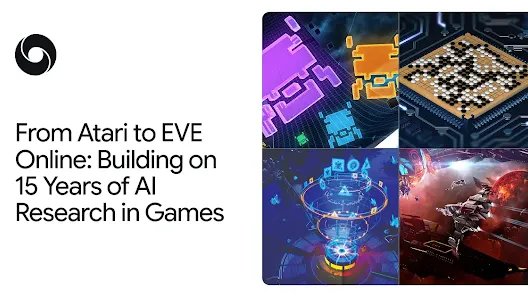
From Atari to Go to StarCraft, games have driven some of the biggest breakthroughs in AI. Now, we’re partnering with game developers to prototype new gameplay experiences that push the frontiers of both gaming and AI.
Since DeepMind’s foundation in 2010, the constrained yet rich worlds of games have played a critical role in understanding intelligence. They have driven some of our biggest AI breakthroughs, from mastering Atari to helping solve protein structure prediction – and they are still at the heart of what we do.
Gaming is in GDM’s DNA. Demis Hassabis, one of Google DeepMind’s founders, is himself a former game developer, as are many of us in the GDM team. Together, we have decades of hands-on experience in game development and a deep respect for the craft of making games.
Our journey began when a small team trained a deep neural network to play Atari 2600 games directly from raw pixels. The Deep Q-Network (DQN) learned to play 49 different games — from Pong to Breakout to Space Invaders — without any game-specific engineering. The 2015 Nature paper on DQN helped catalyze the modern era of deep reinforcement learning.
From there, we attempted to master more complex games, with each milestone producing more capable and general systems. AlphaGo defeated world champion Go player Lee Sae Dol in 2016 — a feat many experts thought was still a decade away. AlphaGo Zero surpassed every previous version by learning entirely from self-play, with no human data at all. AlphaZero generalized this approach to master chess, shogi, and Go with one algorithm, while MuZero learned to play without even knowing the rules. In 2019, AlphaStar reached Grandmaster level in StarCraft II, navigating real-time complexity and imperfect information.
For each game, AI enriched the playing experience. AlphaGo’s famous Move 37 was a play so unexpected that professional commentators initially thought it was a mistake, overturning centuries of received wisdom in Go and inspiring experts to explore new strategies. AlphaZero similarly inspired entirely new lines of play in chess. Crucially, the spirit of exploration that succeeded in games had profound impacts for other AI systems: AlphaFold applied these foundations to help solve the 50-year grand challenge of protein structure prediction, a breakthrough which was recognized with the 2024 Nobel Prize in Chemistry.
From mastering games to understanding them
Our earlier work demonstrated that AI could master any game given a clear objective and enough training. But the real world doesn’t come with scores and rule books — which led us to ask a fundamentally different question: can AI understand and interact with any game world the way a person would?
This is the challenge behind SIMA, our Scalable Instructable Multiworld Agent. Rather than optimizing for a high score, SIMA is a generalist agent that ‘sees’ what a player would see on screen, understands natural language instructions, and acts through ordinary keyboard and mouse controls — requiring no APIs or source code access.
Powered by Gemini, our frontier AI models, SIMA 2 acts as an interactive companion capable of real-time reasoning and conversation. It achieves human-like play across complex 3D research environments and video games including No Man’s Sky, Valheim, Hydroneer, and more.
For game developers, a truly general gaming agent would unlock AI capabilities that work with existing games — no modifications to the game code required. This could power entirely new gameplay, from AI companions that genuinely understand the game world to Non-Player Characters (NPCs) that adapt and respond in ways that scripted systems never could.
A general gaming agent could also transform how games are made. During development, when the game changes with every commit, such agents could enable truly robust QA testing. Post-launch, when new content is introduced or players behave unpredictably, they could adapt in real time — generalising to new situations without needing to be re-scripted.
To develop SIMA agents safely and responsibly, we’ve partnered with acclaimed game studios and we are building a growing portfolio of games for AI research. This allows us to challenge our agents with ever more complex tasks that may one day transfer to solving problems in the real world.
Exploring new frontiers of AI and games research, in partnership with game developers
Game studios bring expert craft, extraordinary game worlds, and deep knowledge of their players. We bring frontier AI — from Gemini to research in generative interactive environments and embodied agents — research expertise, and our team’s unique game development background and years of experience building AI for interactive environments. Together, we focus on discovering breakthrough experiences — never-before-seen gameplay that wouldn’t be possible without AI.
It’s not about the tech, it’s about fun experiences. So we take a ‘show, don’t tell’ approach with our partners. Our team works hand in hand with game developers, exploring new ideas and building playable prototypes to find the fun.
Our latest research partnership with Fenris Creations, the independent studio behind the EVE Universe, represents a new chapter in our history of AI research in games.
Fenris Creations has spent more than two decades building one of the most extraordinary persistent worlds in gaming. EVE Online, launched in 2003, is a massively multiplayer space simulation where thousands of players share a single universe that has evolved continuously for more than 20 years. Its player-driven economy features real supply-and-demand dynamics and trade networks spanning thousands of star systems. Its landscape — shaped by alliances, conflicts and diplomacy — is driven by human interaction.
For AI research, this is a golden opportunity. It’s a living, evolving world that demands precisely the capabilities we believe are essential for frontier AI:
Continual learning: Acquiring new skills without forgetting what came before, in a constantly changing world.
Memory: Accumulating and retrieving knowledge across timescales that extend far beyond today’s model context windows.
Long-horizon planning: Reasoning over weeks, months, or even years.
Complex multi-agent dynamics: Navigating cooperation, competition, negotiation, economics, and emergent social behavior at scale.
These challenges sit at the core of our broader research initiative to create systems that learn continuously from experience, with the rate of learning accelerating over time. We believe these frontier capabilities could unlock new gameplay experiences in the future.
Our research partnership extends across Fenris Creations’ expanding universe, offering distinct environments for AI development. While EVE Online offers a large-scale single-shard persistent universe, EVE Vanguard is played from a first-person perspective, bringing ground-level, fast-paced tactical decision-making to the broader persistent world. This creates opportunities to study agents operating across multiple levels of abstraction, from twitch-level tactics to galaxy-spanning strategy.
Furthermore, EVE Frontier — with its programmable “Smart Assemblies” and its open, extensible architecture — offers an open-ended environment where the very rules of the world can change, demanding agents that adapt to entirely new game mechanics.
A “show, don’t tell” session during a workshop with Google DeepMind and Fenris Creations where our teams share playable prototypes, feedback and discuss ideas for new gameplay experiences
Our collaboration has already delivered real player value: the Aura Guidance system uses Gemini to deliver player-generated knowledge, based on real Rookie Help questions and answers, to help new pilots.
Our longer-term research program begins with an offline instance of EVE Online, which is a safe sandbox, separate from live players. It then progresses through EVE Frontier as a space to study how humans and agents can coexist in a persistent and open-ended world. Only when capabilities are mature would we consider bringing them to EVE Online and EVE Vanguard with the aim of enriching human play.
The road ahead
Games have always been a mirror for intelligence. As they become more complex, more persistent, and more open-ended, so do the AI systems we build to navigate them.
We are aiming for the same ultimate goal we always have: AI as a catalyst, not a replacement. Our long-term ambition is to unlock breakthrough gameplay experiences, make games more accessible and more personalized, and — as we’ve seen from AlphaGo to AlphaFold — apply what we learn in games to problems in the real-world and to advance scientific discovery.
We’re grateful to all of our game partners on this journey, and to Fenris Creations for joining us on this next chapter. We can’t wait to share what we discover.
Acknowledgements
We’d like to recognize the many teams across Google DeepMind for their contributions over the years to advancing AI research safely and responsibly in games.
Special thanks to all of the game developers who partnered with us: Coffee Stain (Valheim, Satisfactory, Goat Simulator 3), Fenris Creations (EVE Online, EVE Vanguard, EVE Frontier), Foulball Hangover (Hydroneer), Hello Games (No Man’s Sky), Keen Software House (Space Engineers), RubberbandGames (Wobbly Life), Strange Loop Games (Eco), Thunderful Games (ASKA, The Gunk, Steamworld Build), Digixart (Road 96), and Tuxedo Labs & Saber Interactive (Teardown).
SIMA 2: An Agent that Plays, Reasons, and Learns With You in Virtual 3D Worlds
Skala 1.1 demonstrates the continuously improving nature of Microsoft Research’s deep-learning DFT approach: trained on 2.5× more data than its predecessor, it delivers substantially higher accuracy across key molecular simulation challenges, including thermochemistry, reaction kinetics, and molecular structure prediction.
Skala is now available in CP2K and is being integrated into Psi4, FHI-aims, ORCA and VASP, bringing next-generation DFT accuracy closer to the communities that rely on these codes every day.
Microsoft Research is also introducing a living benchmark that will track the computational performance of successive, increasingly optimized Skala releases to help the community measure and accelerate progress toward ever greater accuracy and efficiency.
Together, these developments mark another milestone toward a future in which computational chemistry simulations are both predictive and integrated in all relevant scientific and industrial workflows.
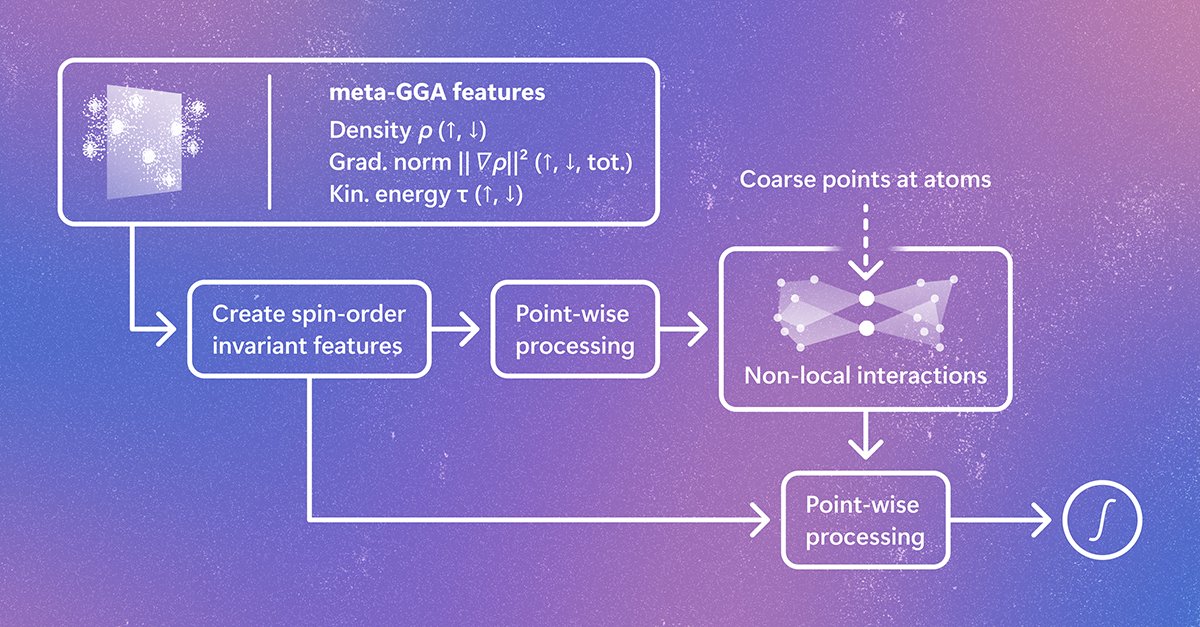
Bringing density functional theory (DFT) to predictive accuracy is a journey, not a single breakthrough. Since introducing Skala, our deep-learning exchange-correlation functional, we have continued to advance along two complementary fronts: improving accuracy and expanding accessibility across the computational chemistry ecosystem.
Figure 1: Accuracy of Skala-1.1 for thermochemistry, kinetics, and non-covalent interactions. At the computational cost of a meta-GGA functional, Skala 1.1 outperforms the best, most expensive global hybrid functionals, ranking first (earning gold medals) in 32 of the 55 categories of the widely used GMTKN55 benchmark, which spans a broad range of chemical problems.
On the accuracy front, the release of Skala-1.1 (opens in new tab) provides the first demonstration of the continuous-improvement paradigm underlying Skala. Trained on 2.5x more data than the first public version of Skala, the updated model delivers substantially improved performance across key challenges in molecular simulation, including main-group thermochemistry, reaction kinetics, and molecular structure prediction.
But accuracy alone is not enough. DFT is the computational engine behind a vast range of scientific and industrial workflows, spanning chemistry, materials science, catalysis, energy technologies, and drug discovery. To have real-world impact, advanced functionals must be accessible where scientists already perform their calculations. That is why we are also expanding the Skala ecosystem through collaborations with leading electronic-structure software developers.
Today, we are announcing that Skala is available in CP2K and is being integrated into Psi4, FHI-aims, ORCA and VASP, bringing next-generation DFT accuracy closer to the communities that rely on these codes every day. Alongside these integration efforts, we are introducing a living benchmark that tracks the computational performance of successive, increasingly optimized Skala releases. By providing a transparent and continuously updated reference for implementations across software packages and hardware platforms, this resource will help the community measure and accelerate progress toward ever greater accuracy and efficiency.
Together, these developments mark another milestone toward a future in which computational chemistry simulations are both predictive and accessible across a broader range of relevant scientific and industrial workflows.
Unlike the traditional “functional zoo”, where new functionals accumulate without replacing older ones, Skala follows a different philosophy: each release is designed to supersede the previous one. As new data, model architectures, and training strategies become available, the model improves while maintaining the same practical computational cost.
Skala-1.1 is the latest demonstration of this approach. It achieves a weighted average error of 2.8 kcal/mol on GMTKN55, a widely used benchmark suite comprising 55 categories of chemistry, including thermochemistry, reaction barriers, and noncovalent interactions. This level of accuracy surpasses today’s leading global (range-separated) hybrid functionals while retaining the efficiency of a semi-local functional. Beyond energies, Skala-1.1 also provides highly accurate electron densities, dipole moments, and molecular geometries.
These advances were enabled by major expansions of the Microsoft Research Accurate Chemistry Collection (opens in new tab) (MSR-ACC), our large-scale collection of high-accuracy quantum-chemistry reference data generated with expensive wavefunction methods. For Skala-1.1, we added new categories, including electron affinities and noncovalent clusters, increasing both the size and, crucially, the diversity of the training data. This data-driven approach allows Skala to improve systematically with each generation, moving us closer to a truly scalable and predictive DFT framework.
Available where scientists work
To fully realize the potential of Skala’s continuously evolving approach to DFT, we need dedicated infrastructure that allows new releases to be rapidly and seamlessly integrated into the major software packages used by scientists in industry and academia. In turn, this will establish the fast feedback loop essential for accelerating Skala’s ongoing development.
But no single software package can meet the needs of every application or research community. Computational chemistry and materials science rely on a rich ecosystem of electronic-structure codes, each shaped over decades to tackle specific scientific and industrial challenges. Bringing Skala to this broader ecosystem has therefore been a major focus of the past year. We are fortunate to build on the remarkable foundations created by the DFT community and grateful to the many researchers and developers who are helping to make Skala available within the software platforms that scientists use every day.
Spotlight: Event Series
Microsoft Research Forum
Join us for a continuous exchange of ideas about research in the era of general AI. Watch the latest episodes on demand.
In collaboration with the team of Prof. Thomas D. Kühne at the Center for Advanced Systems Understanding (CASUS) (opens in new tab), Skala has been successfully integrated into the open-source CP2K (opens in new tab) package. With more than 25 years of development, CP2K is a powerhouse for DFT simulations, particularly for large-scale systems and long-timescale molecular dynamics, while also providing a rich portfolio of high-accuracy electronic-structure methods. Skala expands the frontiers of what is possible within CP2K, delivering a step change in DFT accuracy while preserving the computational efficiency needed for simulations at scale. We are excited to see how CP2K’s scale and versatility, combined with Skala’s continuously improving accuracy, will enable new scientific applications and discoveries in the years ahead.
There is more to come. Together with its vibrant developer’s community , we are actively integrating Skala into the open-source Psi4 (opens in new tab) package, an essential platform for molecular electronic-structure research. Combined with the PySCF-based Skala Community Edition, this will make Skala available in three widely used open-source quantum chemistry packages.
Beyond open-source software, we are working closely with leading developers behind FHI-aims (opens in new tab), ORCA (opens in new tab), and VASP (opens in new tab), with the goal of making Skala broadly accessible across the major software platforms used in computational chemistry and materials science.
Validating accuracy across implementations: CP2K as case study
Thorough testing is essential for any new implementation. We want to ensure that Skala delivers consistent accuracy across different codes and computational settings. Together with the CP2K team, we developed a comprehensive suite of integration tests to verify that Skala produces numerically correct and reliable results. We are particularly grateful to the CASUS team, whose deep expertise in the numerical verification of computational methods was instrumental in designing and validating this testing framework.
Figure 2: Signed errors relative to high-accuracy reference values for a representative subset of GMTKN55, comparing the CP2K and PySCF implementations of Skala-1.1 using as closely matched numerical settings as possible. The two implementations agree to within 0.1 kcal/mol MAD across the entire subset.
Accuracy and broad availability only translate into scientific impact if Skala is also fast. Today, Skala can deliver performance comparable to semi-local meta-GGAs on both CPU’s (with an overhead that disappears for molecules with more than 20-30 atoms) and GPUs, and we are committed to preserving that efficiency as it is integrated across the electronic-structure software ecosystem.
But performance is not a fixed property. New Skala releases, improvements in libraries such as GauXC, and hardware-specific optimizations continuously improve efficiency and reveal new opportunities for further gains. Capturing this progress requires more than a single benchmark snapshot.
To provide a transparent and up-to-date view of Skala’s performance, we are publishing a benchmarking harness together with a living performance report (opens in new tab) that will be updated as new optimizations become available. This report tracks performance across a range of tasks and hardware platforms, while the harness enables package developers to benchmark, validate, and improve their own Skala implementations.
Figure 3: Computational cost of Skala on GPU and CPU, compared with a popular metaGGA functional (r2SCAN) and two hybrid functionals (B3LYP and M06-2X). On GPU, Skala 1.1 has the same cost as r2SCAN, and the hybrid functionals become more expensive for systems with more than ~1000 orbitals. On CPU, Skala has an overhead with respect to the other functionals for smaller systems, that disappears for systems with more than ~300 orbitals.
Acknowledgments
Skala is the product of a truly collaborative effort across AI for Science, and we thank our engineering, project management, and business operations teams for making this work possible. We also thank MSR Accelerator for their partnership in advancing data generation efforts and accelerating software integrations that help bring Skala to the broader scientific community.
Our most intelligent workhorse model yet for coding and agents.
Listen to article
[[duration]] minutes
This content is generated by Google AI. Generative AI is experimental
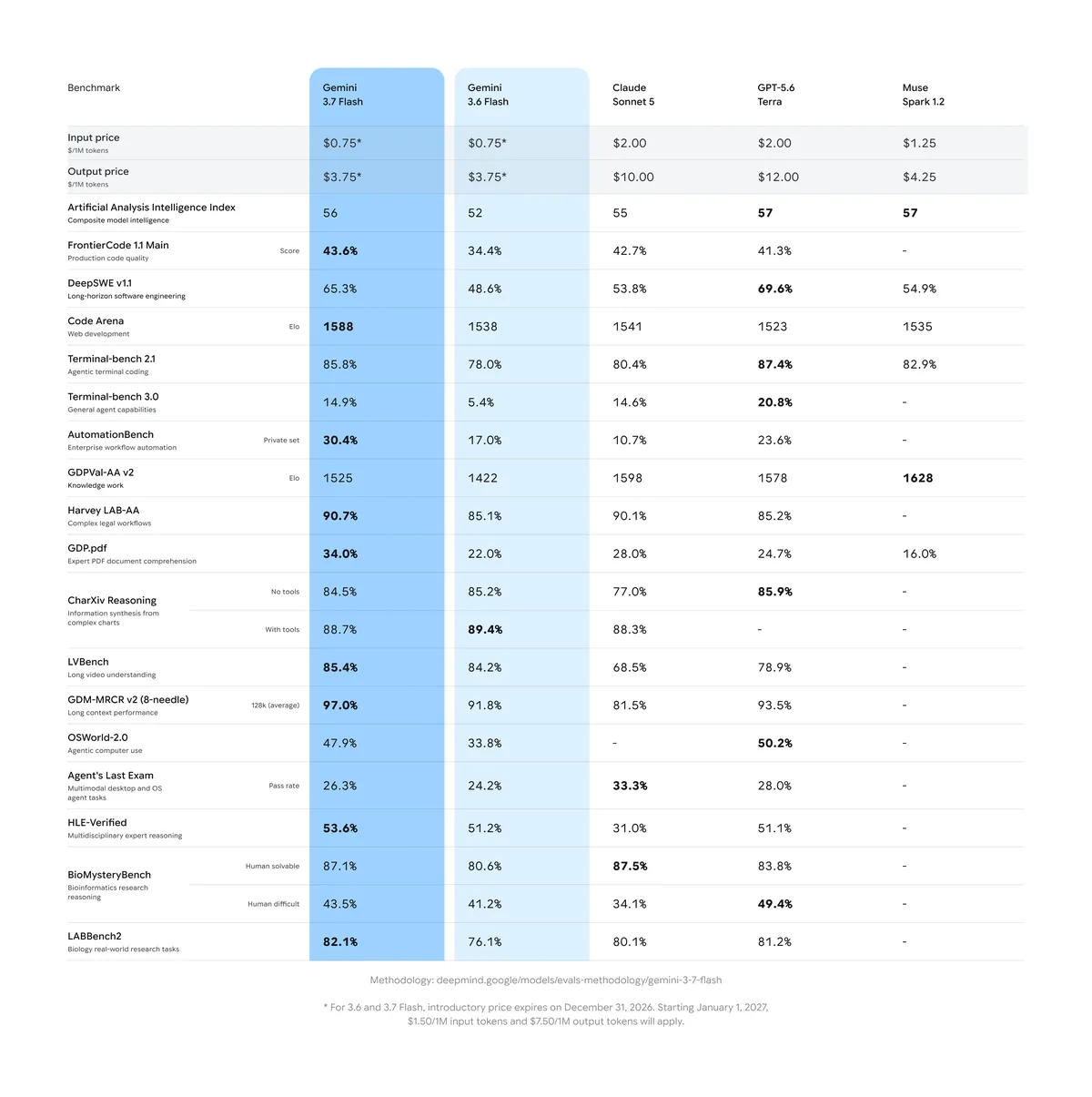
Today, we’re building on the progress of our widely used Flash series by introducing Gemini 3.7 Flash, our most intelligent workhorse model yet for coding and agents.
This release comes just three weeks after Gemini 3.6 Flash, and is a direct result of developer feedback and algorithmic innovations that we look forward to bringing to future models. 3.7 Flash delivers substantial improvements across software engineering, knowledge work, and web development workflows — with an introductory price of half the original 3.6 Flash cost per million tokens.
Better intelligence for complex workflows
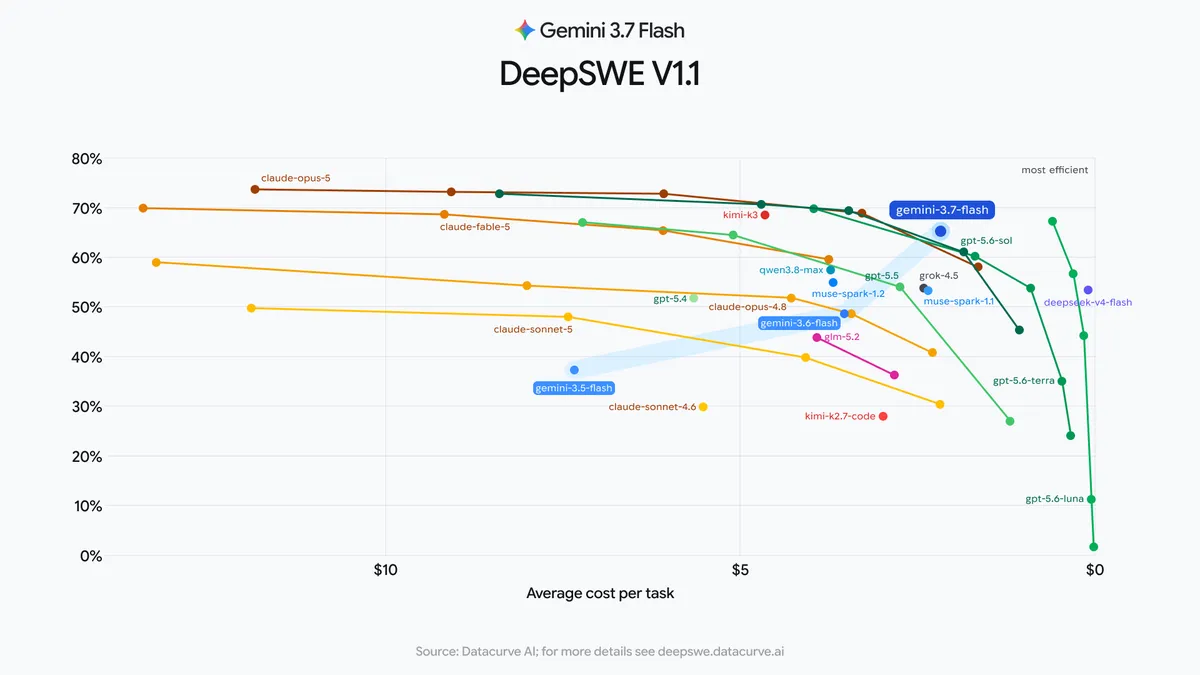
3.7 Flash shows strong gains over 3.6 Flash in coding tasks like debugging and issue resolution. It also achieves higher first-pass code accuracy and has improved performance in generating production-ready code as seen in FrontierCode 1.1 Main (43.6% vs 34.4%) and DeepSWE v1.1 (65.3% vs 49.0%).
In web development, 3.7 Flash generates more functional layouts and feature-complete apps in fewer prompts. For UI generation, the model shows high design adherence and parity based on a reference input, whether it’s a screenshot, an image, or a full design system. It outperforms 3.6 Flash on Arena.ai’s WebDev Arena with an Elo score of 1588 vs 1538.
For knowledge-dense fields like finance, law, and biosciences, 3.7 Flash delivers improved reasoning and accuracy. It significantly outperforms 3.6 Flash on the GDP.pdf benchmark (34.0% vs 22.0%), an eval for testing a model’s ability to process complex documents. It also surpasses 3.6 Flash in AutomationBench, demonstrating it can more effectively complete real-world business workflows (30.4% vs 17.0%).
Better developer experience and price
Gemini 3.7 Flash delivers a noticeably improved developer experience over 3.6 Flash. It better adapts to roadblocks, clarifies intent when needed, and follows instructions with greater fidelity. It thinks more diligently, putting in more effort into multi-step planning and tool calls. A more disciplined execution means less manual oversight and fewer retries across engineering workflows.
3.7 Flash is available through the end of the year at an introductory price 1 of $0.75/1M input tokens and $3.75/1M output tokens. This price combined with the enhanced model performance enables developers and customers to scale production-ready agents cost effectively.
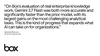
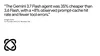
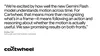
Early customer feedback is highlighting 3.7 Flash’s performance and precision, achieving results that are significantly better than 3.6 Flash at a low cost.
Improving Gemini Spark with 3.7 Flash
Gemini Spark, available to Google AI Pro and Ultra subscribers in over 160 countries, will be using Gemini 3.7 Flash starting today. We launched Spark at I/O as your personal AI agent that runs 24/7, taking action on your behalf while under your direction. This model update makes Spark more efficient for knowledge work with improved tool use for Google Workspace apps, delivering improved accuracy and output quality for complex, multi-skill workflows.
With 3.7 Flash, Gemini Spark can turn ideas into action more efficiently by consolidating files, drafting emails, and updating status documents.
Built with safety in mind
We continually work to improve the coverage and robustness of Frontier Safety safeguards. Gemini 3.7 Flash is shipping with updated safeguards against misuse in the domains of Chemical, Biological, Radiological, and Nuclear (CBRN) and cyber offense, while enabling beneficial use cases, in accordance with our approach to bioresilience and our cyber program.
For more information, see the 3.7 Flash model card.
MindTopo is a new benchmark for testing topological reasoning in AI, evaluating whether multimodal models can understand concepts such as connectivity, enclosure, order, separation, and knots.
The benchmark measures both reasoning and planning, testing not only whether models can recognize topological relationships in static images but also whether they can preserve and manipulate those relationships through a sequence of actions.
Current multimodal models perform much better on static recognition than interactive tasks, suggesting they struggle to maintain a consistent understanding of topology over time.
Failures often emerge during planning rather than perception, with models losing track of structural relationships as scenes change or proposing actions that violate physical constraints.
The findings highlight an important opportunity to advance AI systems for robotics and interactive environments, where understanding what stays connected, enclosed, ordered, or knotted is essential for reliable decision-making.
Can AI determine whether two rooms remain connected after a wall is added? Can it recognize whether an animal is inside a fence, distinguish a true knot from a tangled loop, or rearrange several ropes without allowing them to pass through one another?
These questions concern 3D topology, a form of spatial understanding based not on exact distances, angles, or shapes, but on structural relationships that persist as objects bend, stretch, or deform. Connectivity, enclosure, ordering, and knottedness are examples of topological properties. These properties are a foundational layer of human spatial understanding in Cognitive Science, yet they remain largely absent from how multimodal AI systems are evaluated.
In a new research study, we introduce MindTopo (opens in new tab), a benchmark designed to evaluate whether multimodal large language models possess this kind of topological intuition. Our findings reveal a substantial gap between recognizing topology in a static image and maintaining an innate understanding of that topology while planning and acting. Current models can sometimes identify a connected path, enclosed region, or knot in a single scene, but that understanding often breaks down once the model must manipulate the scene through a sequence of actions.
How MindTopo defines topological space
Most spatial evaluations for multimodal models focus on Euclidean properties such as distance, direction, size, and relative position. Inspired by Piaget and other cognitive literature’s classification of topological ability, MindTopo organizes its tasks around the following five categories:
Continuity asks whether a path or object remains unbroken.
Separation asks whether nearby elements form one structure or distinct parts.
Order tracks how elements are arranged along a path or through a transformation.
Enclosure tests whether a boundary creates an inside and an outside.
Knots tests whether ropes are truly knotted or linked rather than merely tangled in appearance.
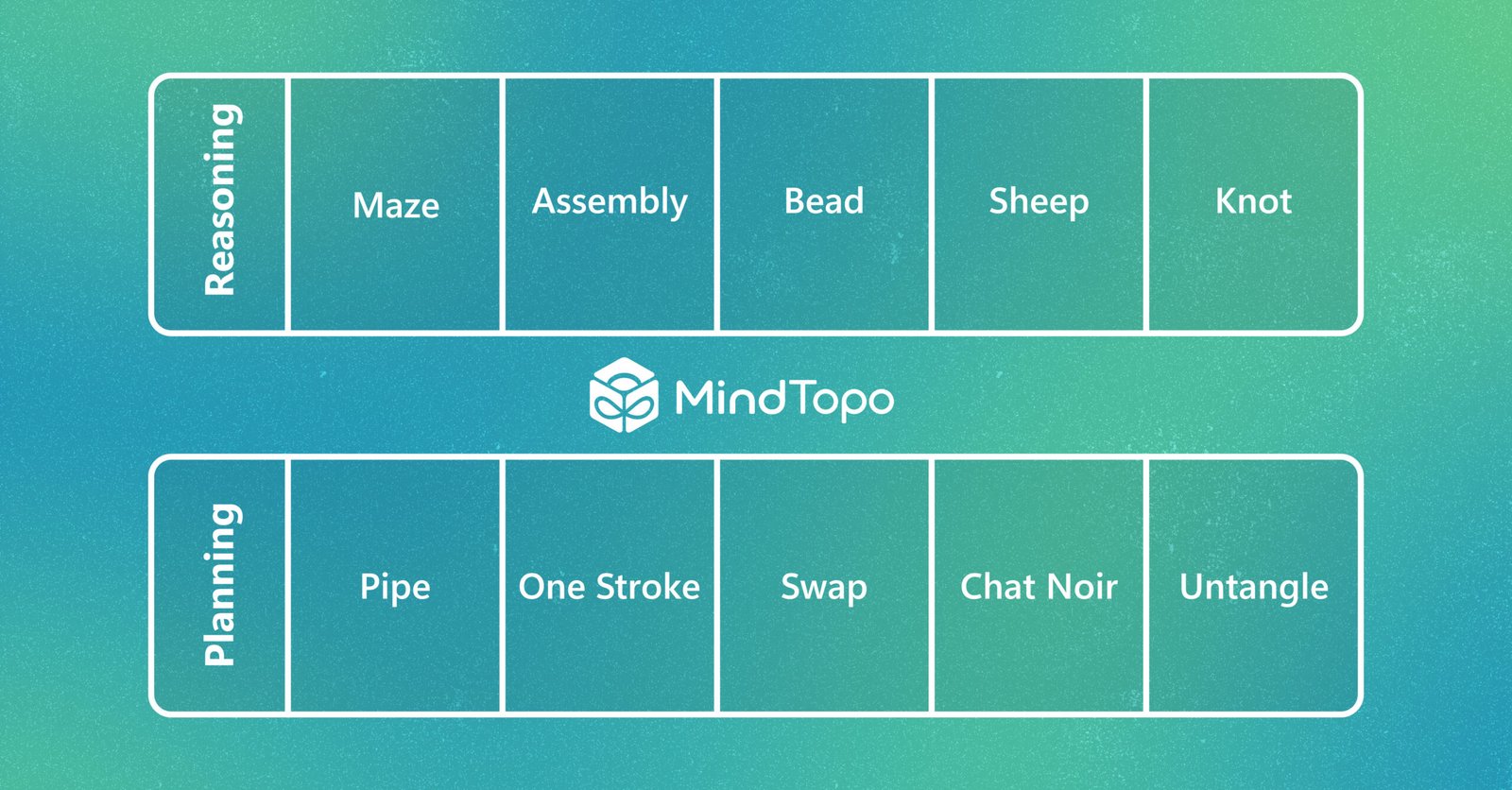
Each category is evaluated at two cognitive levels. In reasoning tasks, a model examines one or more rendered scenes and answers a question about their topological structure: whether two points in a maze are connected, whether the sheep are inside the fence, whether a rope is truly knotted. In planning tasks, the model interacts with a simulated environment and selects actions that must create, preserve, or remove a particular relation, such as rotating pipe segments, drawing a separating path, rearranging blocks, trapping a moving agent, or untangling ropes. The environments enforce legal actions, so a model cannot solve a rope puzzle by passing one strand through another.
Figure 1. MindTopo pairs questions about static scenes with interactive tasks that require models to preserve or change the same topological relations.
All scenes are generated from controlled simulators, which provide exact ground truth and adjustable difficulty. That control makes it possible to separate two failure modes that otherwise look alike: a model that fails because a scene is visually complex, and a model that fails because it cannot maintain the underlying relationship as objects move.
Figure 2. MindTopo maps reasoning and planning tasks to continuity, separation, order, enclosure, and knots.
Seeing topology is not the same as acting on it
Across a broad set of proprietary and open-weight models, performance was consistently stronger on static reasoning than on interactive planning, and both remained well below human performance. The contrast was especially clear when success depended on preserving a relationship across many actions.
The error patterns help locate the problem. Static mistakes usually began with perception, such as missing a wall, opening, or crossing. Planning mistakes appeared after the scene had been understood. Models followed a locally plausible move without tracking its later consequences, lost the task over multiple turns, or proposed an action that violated the environment’s dynamics.
Spotlight: Microsoft research newsletter
Microsoft Research Newsletter
Stay connected to the research community at Microsoft.
We also tested whether image and video generation could help models maintain an understanding of topological relationships. Image generation sometimes helped when the relevant relation was visible in a single frame, but it remained unreliable across a sequence of crossings or moves. Video rollouts frequently altered topology or violated task dynamics. Visual simulation appeared useful only to the extent that it preserved structural constraints over time.
Building agents that preserve structure
MindTopo is intended as a controlled diagnostic for this gap. Robots, accessibility tools, and interactive assistants must understand not only where objects are, but also what remains connected, enclosed, ordered, or knotted as actions unfold. Closing that gap may require models that carry an explicit topological state, or world models whose predictions preserve topology by construction.
Introducing sign-language-to-text (SL2T), our breakthrough model powering new sign language features for Deaf and hard of hearing users.
AI’s ability to process spoken languages has advanced rapidly over recent decades, enabling automatic translation, dictation, and conversational interfaces that feel effortless to hearing users. Yet this technological revolution has not reached the world’s more than 200 sign languages — and the estimated 70 million Deaf and hard of hearing people who use them.
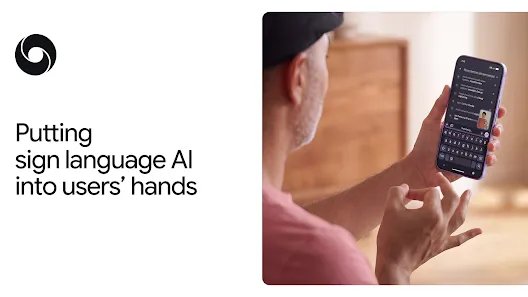
Today, we’re introducing a massively multilingual sign-language-to-text (SL2T) translation model that marks a breakthrough in quality and generality. With it, we are bringing sign language AI out of the lab and into consumer products for the first time: SL2T powers sign-to-text dictation in Gboard and Live Transcribe on Pixel 11, starting with American Sign Language (ASL) to English. More devices are coming soon, and additional languages will follow.
Similarly to how hearing users can use dictation to speak instead of typing, this feature enables Deaf users to sign to their phone anywhere they’d normally type. You can sign to search the web, draft messages or documents, and ask Gemini to solve queries or execute tasks. In Live Transcribe, you can sign responses in conversations instead of having to type back and forth. According to our testers, signing in ASL is faster, more natural, and more delightful than typing in English.
Sign-to-text, powered by SL2T, enables users to sign to their phone anywhere they’d normally type.
Why sign languages matter
Sign languages are the primary languages of Deaf communities around the world and the cornerstone of Deaf cultural identity. There is great diversity among deaf people in terms of their level of proficiency in signing, speaking, reading, and writing, so it is important to support access in all modalities. Deaf people can benefit from sign language processing in the same way that hearing people benefit from spoken language processing, plus the technology opens new possibilities for bridging the communication gap between Deaf and hearing communities. Despite this opportunity for positive social impact, progress in sign language AI has been slow — both because building AI for sign languages presents complex challenges and because widespread misconceptions exist about how the languages themselves work.
Compared to spoken language transcription, sign language translation presents two core challenges. First, transcribing speech is a matter of performing a sequential mapping from sound to text in the same language, whereas sign languages are independent, natural languages with their own distinct grammars and lexicons. As a result, they require true machine translation rather than a sequential process of sign-to-word transformations. Second, the model must learn to “see” and understand physical movement. Sign languages convey meaning through simultaneous movements of the hands, arms, torso, head, and face. Accurately tracking these at high frame rates is a difficult and computationally demanding computer vision task.
Given this background, it is easy to understand why some early attempts at sign language technology, like sign language gloves, were fundamentally limited: sign languages aren’t simply “English on the hands.” They require complex visual perception of fine-grained whole-body movements and full-fledged language translation. SL2T is designed to deliver both.
SL2T sees sign language inputs as points on the signer’s body and translates them into streaming text outputs. Example from the FLEURS-ASL benchmark.
How SL2T works
We built SL2T by combining a user-centric, culturally informed approach with massive data scaling. The model is trained on over 100,000 hours of data across more than 50 sign languages — with roughly a quarter of the data in ASL. Training jointly on diverse languages, dialects, and proficiency levels causes the model to learn shared underlying structures, outperforming single-language models in our experiments.
To protect user privacy, SL2T sees sign language as a sequence of pose landmark locations rather than a raw camera feed. An on-device model (MediaPipe Holistic) tracks the location of points on the signer, and only these geometric coordinates are sent to the server for translation, allowing the original video to be discarded immediately.
SL2T translates this coordinate sequence directly into text, bypassing intermediate annotations known as “glosses” that are widely used in prior work on sign language translation. Glosses fail to capture rich, non-linear aspects of sign languages such as non-manual markers and spatial constructions. Translating directly from landmarks removes artificial vocabulary limits and allows translation quality to scale directly with data.
SL2T is the most capable sign language translation model to date according to key benchmarks like FLEURS-ASL (sd-test), which assesses ASL to English translation quality. SL2T achieves a remarkable zero-shot score of 70 BLEURT, which is significantly higher than any previously reported score. But optimizing academic benchmarks alone doesn’t guarantee usability in real-world applications, so we worked hard on practical issues like minimizing streaming latency, preventing hallucination on non-signing inputs, ensuring fairness for the 10% of signers who are left-handed, and improving performance for one-handed signing, which is used while holding a smartphone in the other hand.
Original English
SL2T’s ASL → English output
The Cook Islands do not have any cities but are composed of 15 different islands. The main ones are Rarotonga and Aitutaki.
The Cook Islands have no cities and consist of 15 islands. The two main islands are Rarotonga and Aitutaki.
The games kicked off at 10:00am with great weather and apart from mid morning drizzle which quickly cleared up, it was a perfect day for 7’s rugby.
Games start at 10 a.m. in great weather. There is a light rain in the morning that clears up. It’s a perfect day for 7v7 rugby.
In some federal countries, such as the United States and Canada, income tax is levied both at the federal level and at the local level, so the rates and brackets can vary from region to region.
In some federal countries, like the US and Canada, income tax is collected at both the federal and local levels. This means that the rates and brackets vary depending on your region.
This fully feathered, warm blooded bird of prey was believed to have walked upright on two legs with claws like the Velociraptor.
This creature is warm-blooded, eats grey, and is covered in feathers. It is believed that it walks on two legs like a velociraptor.
Maybe one day, your great grandchildren will be standing atop an alien world wondering about their ancient ancestors?
Maybe one day your great-grandchildren will stand on an alien world and reflect on their ancestors.
Examples from the FLEURS-ASL benchmark. SL2T accurately translates complex ASL into fluent English. Occasional errors remain in rare signs, rapid fingerspelling (“prey” → “grey”), passive constructions, classifier depictions (dropping “claws”), and tense without context (“kicked off” → “start”).
Building with the community
We believe in building with the Deaf community, not just for it. Deaf perspectives have shaped every stage of this project — from conceptualization by Sam Sepah, a Deaf Googler, to data collection with Deaf partners, evaluation in Deaf user studies, and impact assessment of the technology with Deaf experts.
To guide responsible real-world deployment, we established the AI Sign Language Advisory Committee (AISLAC), bringing together many global Deaf organizations and subject-matter experts. Through this participatory governance model, the communities most impacted by our technology directly influence our development priorities. We co-authored a joint impact report for the release of SL2T 1.0 in Gboard and Live Transcribe, transparently detailing the technology’s capabilities and current limitations — a collaborative approach we plan to continue for all major sign language releases.
Looking ahead
SL2T builds upon decades of foundational research across academia and industry, but bringing ASL input to users’ phones is only the beginning. Google’s mission is to organize the world’s information and make it universally accessible and useful. Achieving universal accessibility means reaching full parity with spoken and written languages. Our team is working to expand this technology into additional sign languages, sign language generation, and frontier AI capabilities. We look forward to sharing our progress responsibly in order to make access through sign languages standard across the digital landscape.
You can experience SL2T in Gboard and Live Transcribe first on Pixel 11, with more devices coming soon — all at no additional cost.
Acknowledgements
This work was done jointly by teams from Google DeepMind and Android. The core team who developed the SL2T model is: Garrett Tanzer, Benoit Brard, Elizabeth Clark, Tim Dozat, Sebastian Ebert, Dan Garrette, Manfred Georg, Vicky Holgate, Shankar Kumar, Mohammad Saboorian, Miloš Stanojević, Megh Umekar, John Wieting, Andy Zhang, and Chris Dyer.
The Android team who integrated the model into Gboard and Live Transcribe is: Ausmus Chang, Sai Aditya Chitturu, Dayle Chiu, Anna Chou, Ajay Dudani, Angana Ghosh, Alex Huang, Joanne Kim, Ed Lee, Thomas Lin, James Su, Yanchao Su, and Sharlene Yuan.
We are grateful for additional support from Anelia Angelova, Abhishek Bapna, Sara Basson, Glenn Cameron, Scott Crowell, Trevor Cohn, Noah Fiedel, Zoubin Ghahramani, Raia Hadsell, Tom Hudson, Alexander Hauerslev Jensen, Kazuya Kawakami, Phoebe Kirk, Peike Li, Liam McCafferty, Caroline Pantofaru, Abhinav Parashar, Christopher Patnoe, Laura Rimell, Sagar Savla, Sam Sepah, Thad Starner, Dave Uthus, and Biao Zhang.
We would also like to acknowledge the MediaPipe Holistic (Google AI Edge) team: Ivan Grishchenko, Artsiom Ablavatski, Valentin Bazarevsky, Esha Uboweja, George Sung, Jonathan Baccash, Gregory Karpiak, Sebastian Schmidt, Suril Shah, Raman Sarokin and Juhyun Lee.
Many thanks also go to those who participated in early stage testing of our models.
WeatherNext enables accurate cyclone forecasts that can give an extra day of warning. Now we are open sourcing the model.
Predicting how dangerous cyclones develop is a longstanding challenge where every hour counts. Tropical cyclones — also known as hurricanes or typhoons — are among the most destructive weather phenomena on Earth, responsible for more than 700,000 deaths and $1.4 trillion in economic losses globally over the past 50 years. For forecasters, issuing timely, accurate warnings is a constant race against time.
Today, in a paper published in Nature, we show that our WeatherNext AI model achieved state-of-the-art accuracy in predicting a cyclone’s track, intensity, and wind structure. On average, our model gives forecasters an extra day’s worth of predictive accuracy: our three-day forecasts are as good as what prior models were able to provide for only the next two days. This scale of improvement corresponds roughly to a decade’s worth of meteorological progress.
Our research has already had real-world impact. During the 2025 hurricane season, our model helped the NHC to make a historic forecast for Hurricane Melissa by predicting the storm’s rapid intensification and landfall in Jamaica. This enabled the NHC to issue an advance warning, giving teams on the ground critical time to prepare. This year, we continue to work together and are now predicting 1,000 possible scenarios for each cyclone to help support forecasters in their decision-making.
Weather affects everyone. Given this broad impact, we are now open sourcing our WeatherNext 2 and WeatherNext Cyclones models used during the hurricane season. By making this technology openly available, we hope to empower the research community and amplify AI’s impact in building more resilient communities – whether that be providing local forecasters with the tools they need to prepare for natural disasters, supporting the growth of renewable energy, or anticipating extreme weather.
How WeatherNext predicts weather and cyclones
Starting from global atmospheric conditions during Hurricane Milton (October 2024), WeatherNext Cyclones iteratively predicts both global weather patterns and fine-scale cyclone tracks up to 15 days in advance. Running a 1,000-member ensemble generates localised probability maps of tropical storm to hurricane-force winds.
Predicting cyclones has typically forced a trade-off requiring two distinct modeling techniques. A cyclone’s track (where it goes) is steered by massive, global atmospheric currents, which before now have been best modeled by coarser global models. However, a cyclone’s intensity (how strong it gets) is driven by highly localized, fine-scale thermodynamic physical processes around its core, which are best modeled by specialized, higher resolution, local models.
Our WeatherNext model bridges this gap by improving forecasting for global weather overall as well as cyclones. It is a single AI model that predicts a tropical cyclone’s track, intensity, and wind structure with state-of-the-art accuracy. It achieves this breakthrough through a unique combination of its training, architecture and approach to low resolution inputs.
We evaluated WeatherNext Cyclones on historical cyclones from 2023 to 2024, benchmarking its deterministic and probabilistic performance against other top weather models. On average, WeatherNext Cyclones gains more than a full day (24 hours) of lead time advantage for predicting cyclone tracks, intensity, and wind structure.
The model was co-trained on two distinct data modalities: global weather dynamics and expert-curated historical cyclone observations. By training end-to-end on nearly 20 terabytes of global atmospheric data and the historical IBTrACS database spanning nearly 5,000 historical storms, the model learns complex atmospheric patterns and how to model extreme weather.
Cyclone forecast accuracy has been steadily advancing over recent decades. The plots show the 3-day accuracy of ECMWF-ENS track forecasts (a) and HWRF intensity forecasts (b) over the years, and how WeatherNext Cyclones contributes a step change in accuracy for both track and intensity. This improvement is the equivalent to a one-decade progress according to trends over the last 20 years.
Our model uses Functional Generative Networks (FGNs) to efficiently produce ensembles of different predictions, which captures the inherent uncertainty of the weather. We can now generate a single 15-day forecast in less than a minute on a TPU, empowering forecasters to quickly evaluate the probability distribution of potentially devastating tail-risks. Last year, our system produced 50 predictions at a time, matching global physics models. This year we scaled our ensemble size to 1,000 members, capturing rare but consequential scenarios like rapid intensification events, as occurred during Hurricane Melissa in 2025.
Up until now, operating at very high spatial resolution has been considered the main driver for making accurate intensity forecasts. However, WeatherNext Cyclones only needs data with a resolution of 28x28km, 100x coarser than traditional models. A smaller version of the model, WeatherNext 2-mini, which operates at a coarser 111x111km resolution, also shows great performance. This has surprised scientists, and it remains an open research question to fully understand how our models produce such accurate predictions at this resolution. We hope that, together with the research community, we can find out.
Opening up WeatherNext to the research community
Alongside our Nature paper, we are open sourcing the code and model weights, making them freely available for anyone to build on. This includes academic research, operational forecasting, or developing more specialized, localized models. We hope to accelerate progress across the global weather community and empower meteorological agencies, researchers, and nonprofits to better predict weather events of all kinds and make key decisions to protect lives and infrastructure.
We are also releasing two sets of similar models: WeatherNext Cyclones, which ran during the hurricane season (results can be seen in the paper); and WeatherNext 2, a later update that we operationalized in October. Additionally, we are releasing WeatherNext 2-mini, a compact version of the model that can run on a single TPU in a free public Colab notebook.
You can explore our latest cyclone forecasts on Weather Lab, which we recently refreshed with a new interface and expanded to include global weather forecasts alongside cyclone tracks. Weather Lab now lets you visualize WeatherNext predictions for temperature, precipitation, wind speed, and more, all in a single view. Both Weather Lab and WeatherNext models are a part of Google Earth AI.
Pushing the frontiers of AI for weather forecasting
We have achieved a historic breakthrough by gaining more than a full day of lead time for predicting cyclones — delivering an advance equivalent to a decade of meteorological progress. As we prepare for future storm seasons, we invite researchers, meteorological agencies, and experts to partner with us, build on our open source models, and explore our forecasts on Weather Lab. By combining advanced machine learning with the indispensable real-world expertise of human forecasters, we aim to create a collaborative weather forecasting ecosystem that can save lives and help communities adapt to a changing climate.
Note: For official weather forecasts and warnings, refer to your local meteorological agency or national weather service.
Acknowledgements
This research was co-developed by Google DeepMind and Google Research teams.
We’d like to thank our collaborators NOAA/NWS/NCEP National Hurricane Center, Cooperative Institute for Research in the Atmosphere (CIRA) and the UK Met Office for their partnership and contributions to the paper.
This work reflects the contributions of the paper’s co-authors: Ferran Alet, Tom Andersson, Ilan Price, Stratis Markou, Andrew El-Kadi, Dominic Masters, Amy Li, Samier Merchant, Natalie Williams,Gregory Thornton, Ken MacKay, Olivia Graham, Akib Uddin, Ben Gaiarin, Devaja Shah, Elinor Kruse, Wallace Hogsett, David Zelinsky, John Cangialosi, Jonathan Martinez, James Franklin, Mark DeMaria, Kate Musgrave, Caroline L. Bain, Helen Titley, Jacklynn Stott, Remi Lam, Aaron Bell, Paul Komarek, Matthew Willson, Alvaro Sanchez-Gonzalez, and Peter Battaglia.
WeatherNext 3
How WeatherNext helped the National Hurricane Center better predict Hurricane Melissa’s historic landfall in Jamaica
GenCast predicts weather and the risks of extreme conditions with state-of-the-art accuracy
GraphCast: AI model for faster and more accurate global weather forecasting
Gemini Robotics ER 2 represents a step change in powering robots with video understanding, task orchestration, and multi-robot collaboration — making it possible for robots to be more helpful in the physical world.
Steven Hansen
Senior Staff Software Engineer
Peng Xu
Staff Software Engineer
For robots to assist humans in everyday environments, accurate spatial reasoning is not enough. Robots must also think fast, timing their decisions and reasoning with the real-time speed of the physical world.
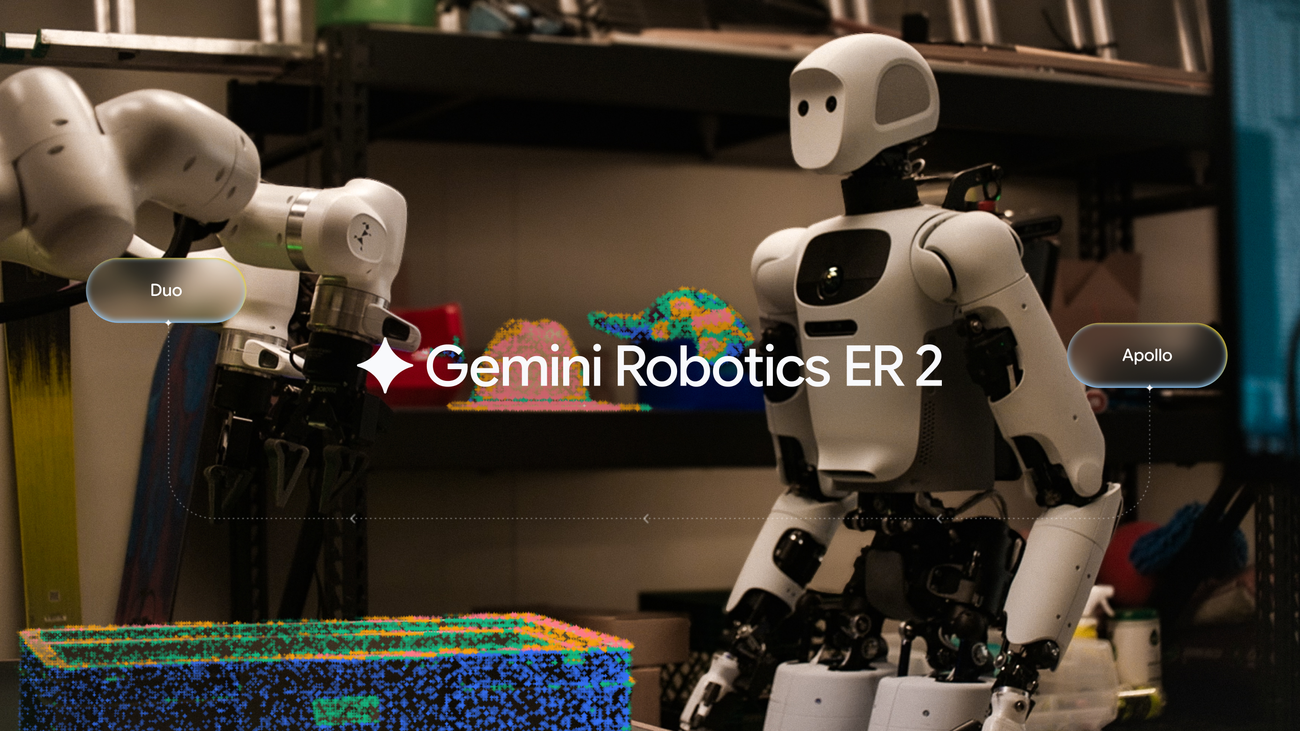
That’s why today we’re launching Gemini Robotics ER 2, our most capable “embodied reasoning” model for robotics. Think of Gemini Robotics ER 2 as a high-level brain for robots. It allows robots to chat with humans, understand the physical world, and plan multi-step tasks. It then hands off motor execution to any given lower level vision-language-action (VLA) model. Gemini Robotics ER 2 can also natively call tools like Google Search to find information, or any other user-defined function. The design of Gemini Robotics ER 2 allows the robot to “think” about what comes next while simultaneously performing its actions.
Gemini Robotics ER 2 represents a significant upgrade over Gemini Robotics ER 1.6. By watching continuous video feeds, robots can now track their own progress, adapt if something goes wrong, and know exactly when to move on to the next step. We are also introducing multi-robot collaboration, enabling robots to work together in shared spaces and complete complex workflows a single robot could not do alone.
Gemini Robotics ER 2 is now publicly available to developers via the Gemini API, Google AI Studio, and in private preview on Gemini Enterprise Agent Platform. To help you get started, we’re sharing examples of how to configure the model and prompt it to power more useful physical AI tasks.
Advancing physical agentic capabilities
Most tasks in the physical world are complex and require multiple steps to complete. Gemini Robotics ER 2 is a physical agent, orchestrating steps for the robot and enabling it to self-correct, and generalize to more novel situations. To build an agentic setup, developers can declare low-level control interfaces — like Vision-Language-Action (VLA) models or navigation APIs — as tools, and stream multimodal video, audio, or text directly into the model.
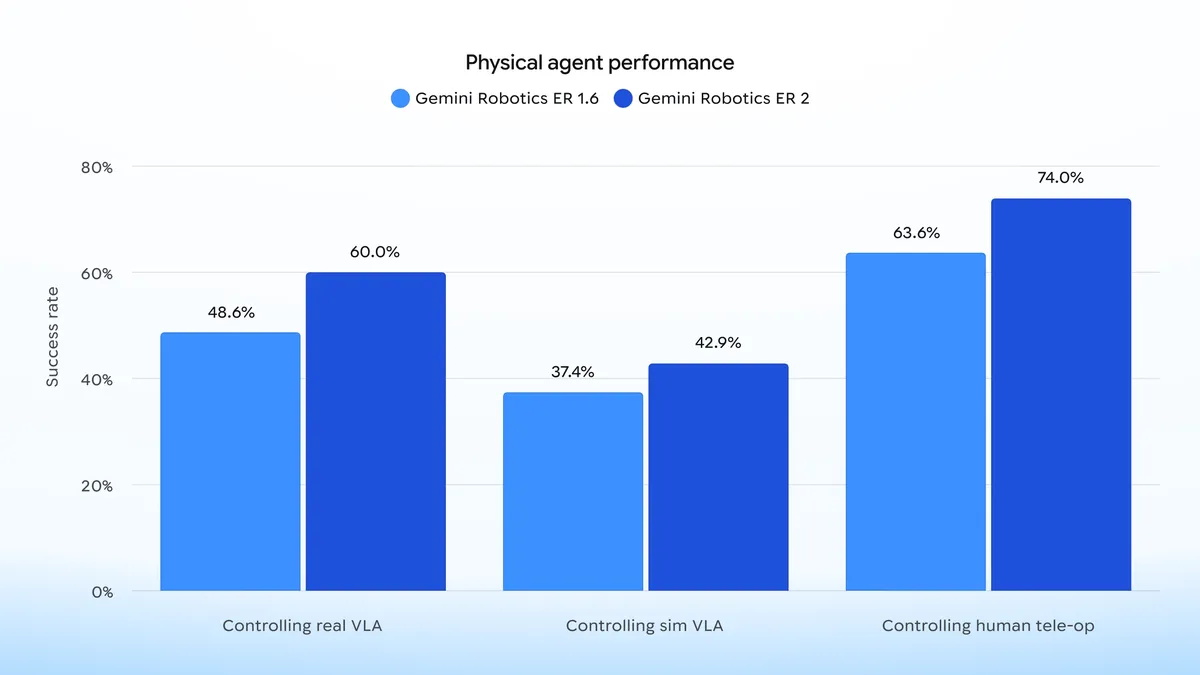
Gemini Robotics ER 2 improves this tool orchestration workflow. We can evaluate its performance with robots in simulation, using real-world robot control, and even pair it with a human controlling the robot remotely.
Gemini Robotics ER 2 consistently outperforms ER 1.6 for tool orchestration across three control modes: real VLA, sim VLA, and human tele-op.
In robotics, high-level reasoning depends on execution speed. Gemini Robotics ER 2 integrates into the Gemini Live API, using a bidirectional streaming endpoint optimized for latency-sensitive tasks. The result is fluid orchestration: Gemini Robotics ER 2 commands action models and robotics APIs to complete multi-step tasks without the jarring “stop-and-think” pauses.
To illustrate this, we’ve built a demo with Spot from our partners at Boston Dynamics. We use Gemini Robotics ER 2 to orchestrate Spot APIs, such as navigation and manipulator movement, creating an interactive robot that fetches objects for you.
Gemini Robotics ER 2 powered Boston Dynamic Spot fetches a popcorn snack up on a natural language command.
The code is available on Github with other examples.
Unlocking temporal intelligence for robust task completion
One of robotics’ hardest challenges is knowing when a task is done. Gemini Robotics ER 2 brings a step-change in video understanding and progress tracking to verify that complex tasks — such as tightening a light bulb or tying a trash bag — are complete to specification before switching to the next task.
In this update, we’ve made progress on two foundational capabilities for task progress understanding: progress classification and moment finding.
Continuous progress classification
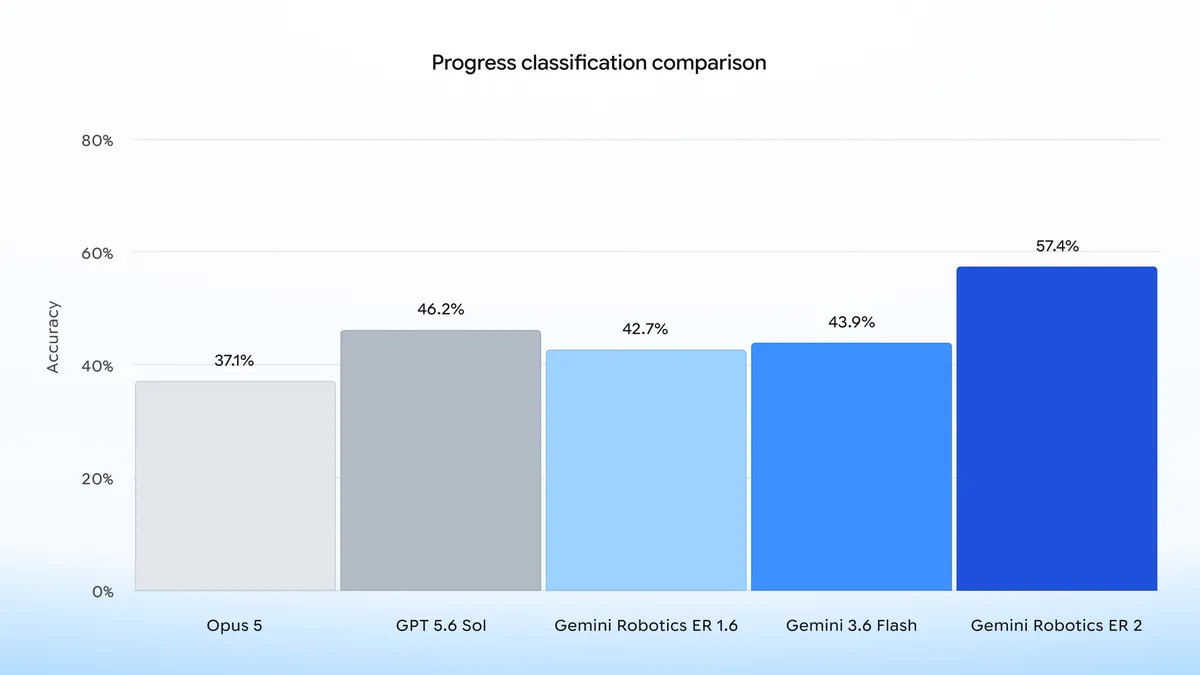
Progress classification refers to a robot’s ability to track progress towards task completion. In our evaluations, we assign each frame in a video feed into five levels of progress (0-20%, 20-40%, 40-60%, 60-80%, 80-100%). By quantifying task progress, Gemini Robotics ER 2 provides robots with real-time situational awareness, and allows them to adjust actions on the fly or retry failed steps without restarting an entire workflow.
Gemini Robotics ER 2 achieves 57.4% accuracy on progress classification tasks, outperforming previous generation models and competing frontier models.
Precision moment-finding
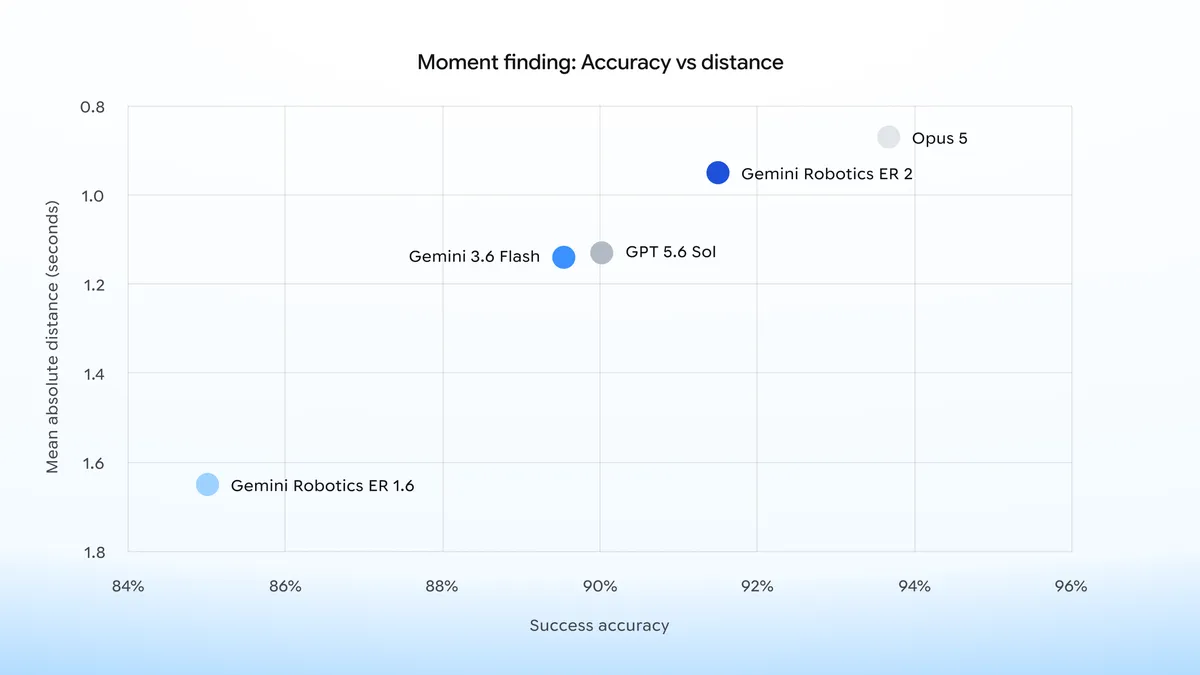
Moment-finding measures a model’s ability to identify the exact video frame where a critical event takes place (i.e. when to stop pouring coffee into a cup). Gemini Robotics ER 2 achieves significant gains in performance on moment finding, enabling robots to precisely switch between tasks, verify success and suggest corrections.
For moment-finding tasks, Gemini Robotics ER 2 achieves 91.3% accuracy and a 0.96s mean absolute distance. It competes closely with much larger model categories, but delivers this precision at a fraction of the compute cost and 4x the execution speed—the sub-second latency actually required to safely operate physical robotics in the real world.
Multi-robot collaboration
No single robot fits every task — a wheeled rover excels indoors, while a humanoid robot may excel at uneven terrain. Gemini Robotics 2 enables multi-robot collaboration, allowing diverse machines to communicate via a shared semantic understanding to handoff and complete complex tasks. See how Gemini Robotics ER 2 enables Apptronik’s Apollo 2 and Franka F3 Duo to collaborate here.
Improving general spatial intelligence
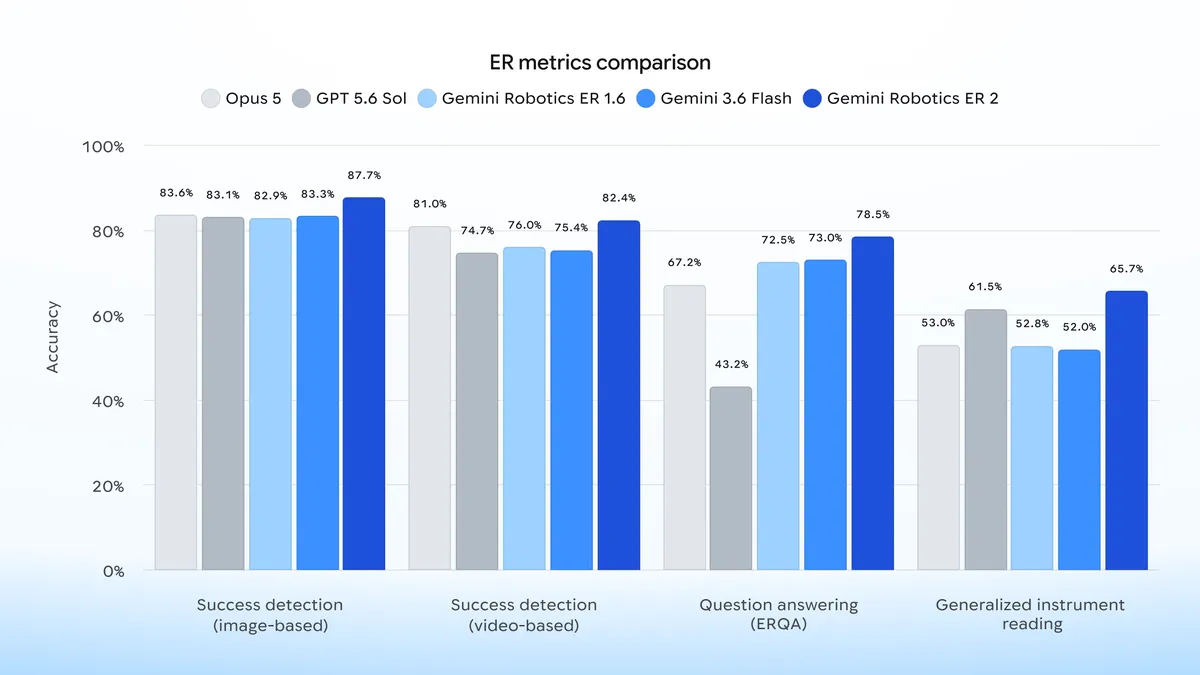
Gemini Robotics ER 2 advances our core spatial reasoning capability, as measured by three benchmarks:
Success/failure detection: Now operates on raw video feeds rather than static snapshots to catch mid-execution failures like spills, slips, or misalignments.
General instrument reading: Extends beyond circular dials and sight glasses to include digital displays, linear scales, rulers, and liquid thermometers. We tested it across 10 different types of instruments.
Gemini Robotics ER 2 consistently achieves the highest accuracy across all core capabilities, with highlights including success detection (image/video), Question Answering (ERQA), and generalized instrument reading.
Advancing safety for embodied intelligence
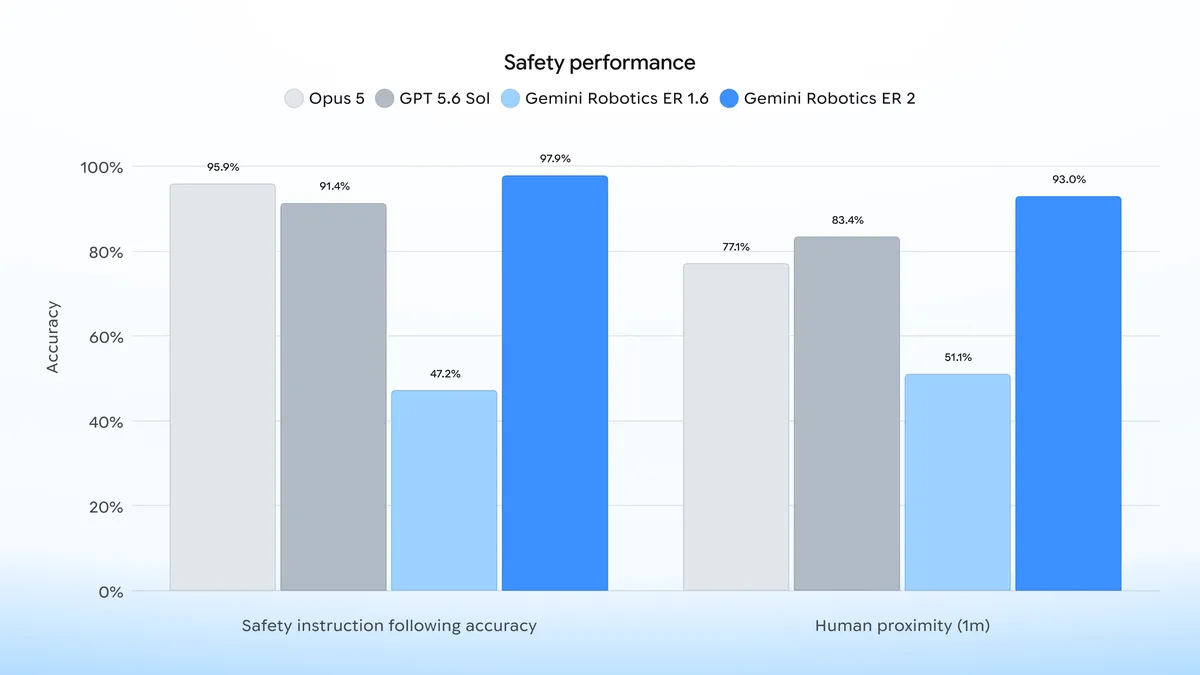
Gemini Robotics ER 2 is our safest model, achieving significant gains on Safety Instruction Following and Human Proximity benchmarks, which evaluate how a model adheres to physical constraints during reasoning tasks and spatial awareness for detecting humans. We found that Gemini Robotics ER 2 successfully halts a humanoid robot when a person is nearby and autonomously resumes work only once the area is clear. To advance safety for physical agents, we’re introducing a benchmark that evaluates a foundation model’s ability to act as a safe VLA orchestrator by testing its capacity to enforce safety constraints, monitor the environment, assess physical feasibility, and seek human clarification. For details, see our safety technical report.
Gemini Robotics ER 2 outperforms ER 1.6 and other frontier models on Safety Instruction Following and Human Proximity benchmarks.
Looking ahead, our plans are to push these models towards even more complex tasks to accelerate the development of helpful robots and support the robotics community.
Get the latest news from Google in your inbox
Sign up for our newsletters with product updates, event information, special offers, and more.
Your information will be used in accordance with Google’s privacy policy. You may opt out at any time.