Author: admin

  • Proactive cyber defense for governments and enterprises

    Proactive cyber defense for governments and enterprises

    Today, we’re launching our Fairwind Program, a limited access program for governments and trusted partners to use our most advanced cyber defense capabilities.


    Four Flynn

    Vice President – Security and Privacy

    Introducing Fairwind Program

    Your browser does not support the audio element.

    Listen to article

    [[duration]] minutes

    This content is generated by Google AI. Generative AI is experimental

    Defenders wanting to use advanced AI have faced a difficult dilemma: adopt enormous frontier models that could be expensive to deploy and difficult to control across enterprise codebases, or turn to smaller open-weight models that might struggle with complex vulnerability remediation and require teams to build their own tooling and infrastructure from scratch. Until now.

    Today, we’re launching our Fairwind Program to bring the best of Google’s AI and cyber defense capabilities to a trusted group of Google Cloud customers, government agencies, and cybersecurity partners, to help them proactively solve cyber risks at scale. As a first step, the Fairwind Program will give defenders access to powerful and advanced Gemini models to help them autonomously find and fix vulnerabilities, protecting critical infrastructure, public services, and national security.

    Finding and autonomously fixing vulnerabilities

    The Fairwind Program offerings bring together our most advanced cyber model, Gemini 3.8 Flash Cyber, with our CodeMender harness, to help defenders find, verify, and fix vulnerabilities at agentic scale. Spotting weaknesses creates awareness and fear; autonomously finding and fixing vulnerabilities delivers security.

    CodeMender with Gemini 3.8 Flash Cyber delivers the specialized reasoning to write and validate code fixes, at a fraction of the operating cost of traditional frontier models. Instead of taking weeks to manually fix vulnerabilities, defenders can now generate verified, deployment-ready patches in minutes — within an organization’s secure cloud environment.

    Scaling frontline defense

    Providing early access to these powerful cyber capabilities gives trusted defenders a vital adaptation window to harden their systems before bad actors have a chance to exploit new capabilities. We’re staging initial access to government and enterprise partners most critical to society’s resilience:

    • Governments and national cyber authorities: Hardening public-sector networks and citizen services against targeted intrusions.
    • Critical infrastructure operators: Protecting essential services across healthcare, telecommunications, energy, and financial networks from operational disruption.
    • Core technology platforms: Securing widespread software foundations to uplift digital security for millions of downstream users at once.

    To ensure these powerful AI capabilities are used responsibly, participating organizations agree to strict operational standards, including limiting access to employees within their internal cybersecurity, incident response, or penetration testing teams and deploying protections like multi-factor authentication.

    We have more than 650 participating partners globally, including:
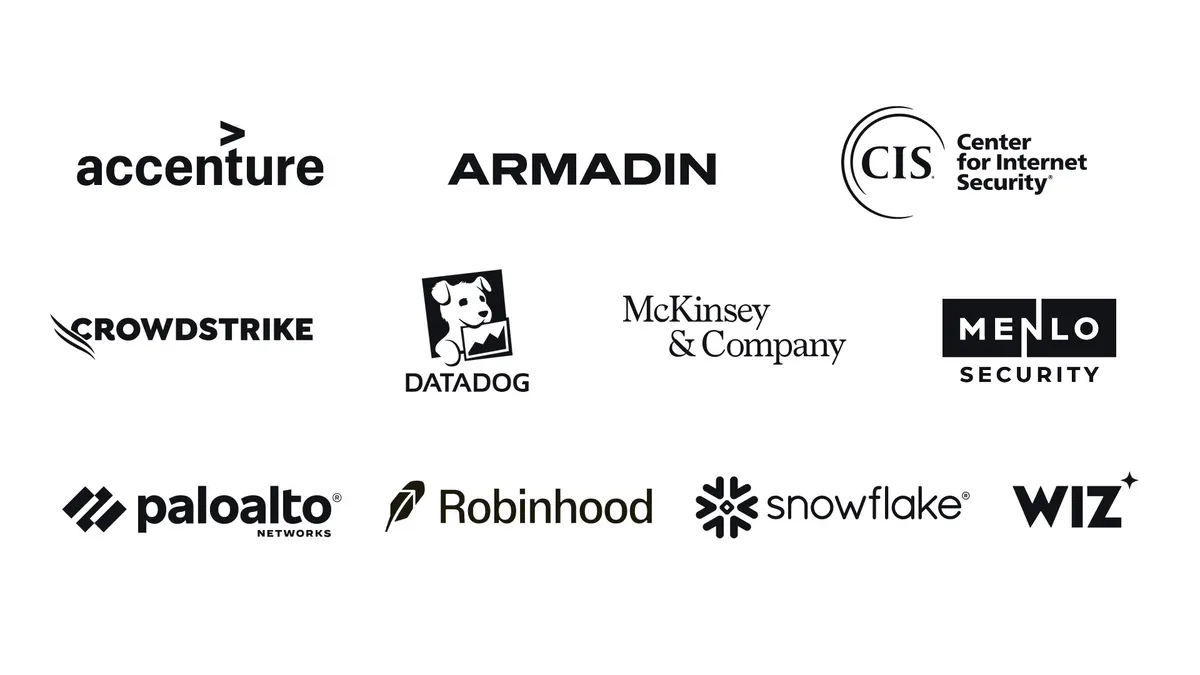
    Logos of partner companies working with the Fairwind program

    What our Fairwind Program partners are saying

    Trusted defenders and industry leaders are already putting Gemini 3.8 Flash Cyber into practice:
    Armadin testimonial

    Crowdstrike testimonial

    Testimonial quote from Palo Alto

    Snowflake testimonial

    Wiz testimonial

    The Fairwind Program will evolve alongside our partners and users’ needs. We will adapt our product offerings and expand partner access, collaborating closely with industry, governments, and open-weight community leaders to strike the right balance between open access and robust security.

    While we are prioritizing Gemini 3.8 Flash Cyber access for customers in the Fairwind Program, any Google Cloud customer can proactively secure their code by using CodeMender with publicly available models hosted on Gemini Enterprise Agent Platform, in combination with industry-leading solutions offered through AI Threat Defense.

    Making an ecosystem-scale impact on cyber defense

    Years of Google’s pioneering zero-trust architecture, advanced AI defenses, and built-in security allow us to protect billions of accounts daily – keeping more people and organizations safe online than anyone else. The Fairwind Program builds on this experience and is part of our broader commitment to global cyber resilience across the entire digital ecosystem, including helping to fortify grassroots cyber defense.

    Through Google.org, our latest commitment brings our total cybersecurity funding to more than $100 million globally. We’re pleased to release our 2026 Google.org US Cybersecurity Impact Report, which details $36 million in funding for 35 cyber clinics to date, providing free, hands-on security support to over 1,250 hospitals, public school districts, and municipal utilities in the U.S.

    Providing a security advantage

    The defender’s edge comes from shrinking the time between detecting a flaw and patching it. Through Google’s Fairwind Program, government and enterprise partners gain autonomous tools to repair systems faster and at scale, keeping them one step ahead of agentic-speed threats.
  • Introducing Gemini 3.8 Flash and 3.8 Flash Cyber

    Introducing Gemini 3.8 Flash and 3.8 Flash Cyber

    Our newest Gemini models deliver next-generation intelligence for agentic workflows and cybersecurity.


    Raluca Ada Popa

    Gemini Security Lead, Google DeepMind


    a hero image reading

    Building on the momentum of 3.7 Flash from three weeks ago and marking our third Flash release in only six weeks, today we’re introducing Gemini 3.8, our best reasoning and coding model yet, at the same speed and low cost of 3.7. Gemini 3.8 introduces 2 variants:

    • Gemini 3.8 Flash: our most intelligent workhorse model, delivering significant improvements from 3.7 Flash across software engineering, agentic tasks, and critical, multi-step reasoning in specialized domains. It is available at the same introductory price 1 as 3.7 Flash at $0.75 per million input tokens and $3.75 per million output tokens.
    • Gemini 3.8 Flash Cyber: our most capable cybersecurity model with frontier-level performance in vulnerability detection and automated patching, available to trusted defenders through our new Fairwind Program.

    While tailored for different deployment environments, both of today’s releases are powered by the same foundational intelligence, and further accelerated by long-running agentic loops designed to recursively evaluate and refine the underlying models. The significant coding and reasoning gains across this shared core were driven by a number of innovations, including rigorous training in the highly demanding domain of cybersecurity.

    Gemini 3.8 Flash: built for long-horizon coding and autonomous agents

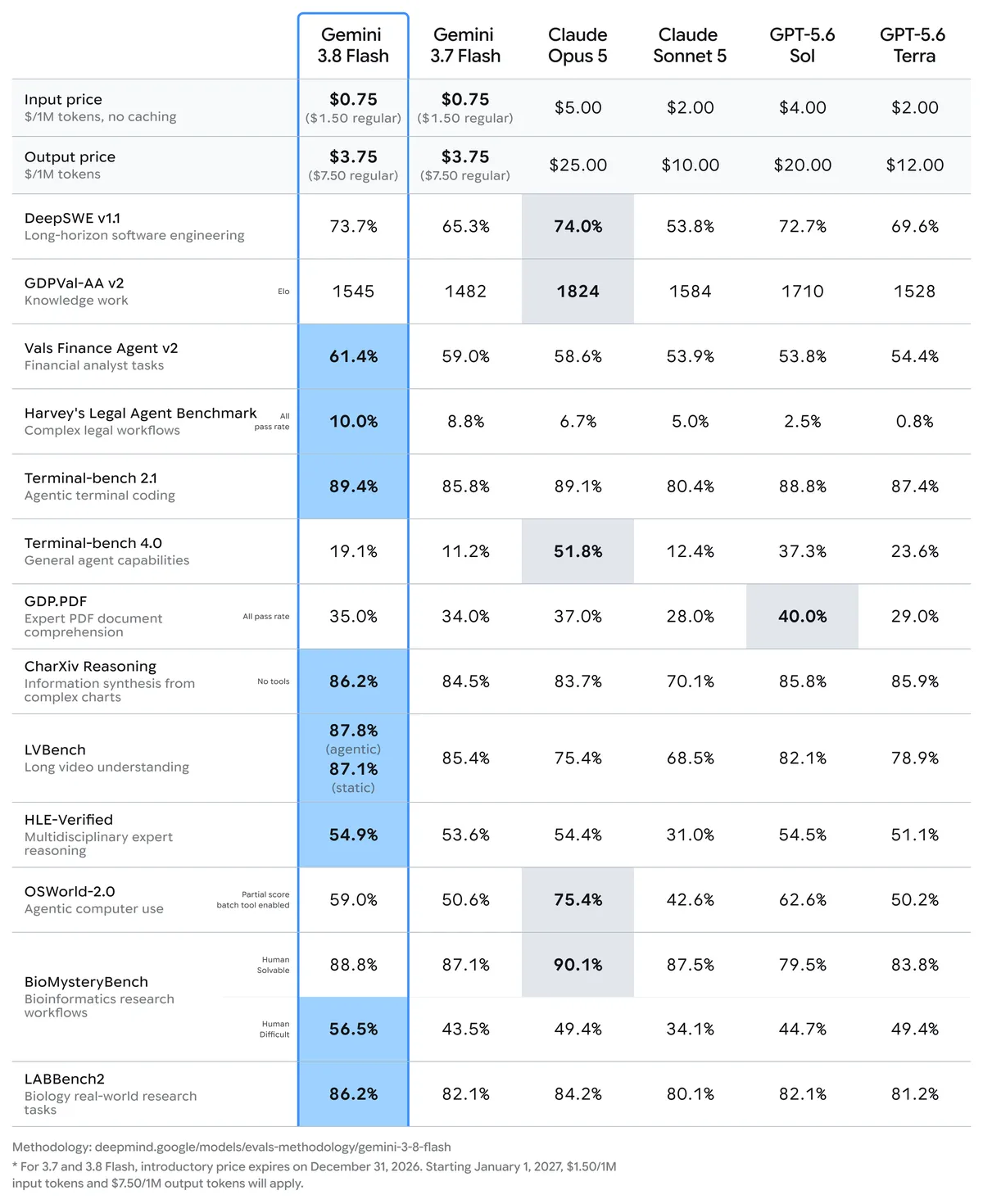
    Gemini 3.8 Flash delivers substantial gains from 3.7 Flash, often approaching the performance of higher-cost frontier models.

    comparison chart showing Gemini 3.8 Flash and other models

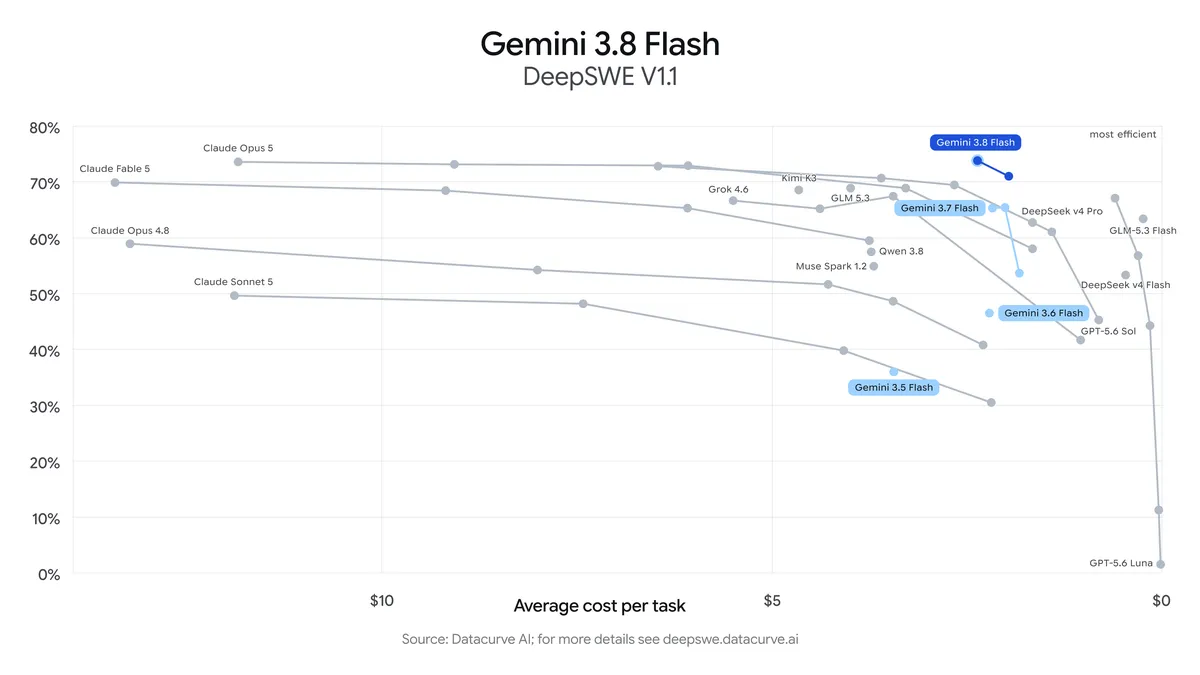
    On DeepSWE v1.1 (Long-Horizon Software Engineering) 3.8 Flash outperforms most larger frontier models in autonomously solving complex engineering problems end to end, only at a fraction of the cost.

    chart showing Gemini 3.8 Flash DeepSWE v1.1

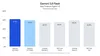
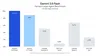
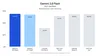
    Additionally, 3.8 Flash exhibits the dependability required for critical enterprise autonomy, across specialized knowledge domains. In quantitative and professional fields that require advanced analysis and reporting, 3.8 Flash outperforms 3.7 Flash and other frontier models in benchmarks like Vals Finance Agent V2 and Harvey’s Legal Agent Benchmark. 3.8 Flash also achieves a 54.9% on HLE-Verified, demonstrating its ability to handle multi-step reasoning across STEM, humanities, and professional fields.

    chart showing Gemini 3.8 Flash Vals Finance Agent v2

    a chart showing Gemini 3.8 Flash Harvey's Legal Agent Benchmark

    a chart showing Gemini 3.8 Flash HLE-Verified

    These performance gains stem from a core design choice: 3.8 Flash works harder. On complex tasks, it exhibits greater diligence — executing extra reasoning steps, and calling tools iteratively. At times, the model might use more tokens to maximize performance, especially at higher effort levels.

    For applications where compute efficiency is the primary constraint, developers can utilize lower effort levels to minimize token overhead or continue to rely on Gemini 3.7 Flash, which remains fully supported for efficiency-first workloads.

    Gemini 3.8 Flash Cyber: expert cyber performance

    Gemini 3.8 Flash Cyber, available to a set of trusted defenders via the Fairwind Program, provides a decisive advantage in today’s complex cybersecurity landscape, with the Flash speed and cost that enables quick iteration.

    Autonomous vulnerability discovery

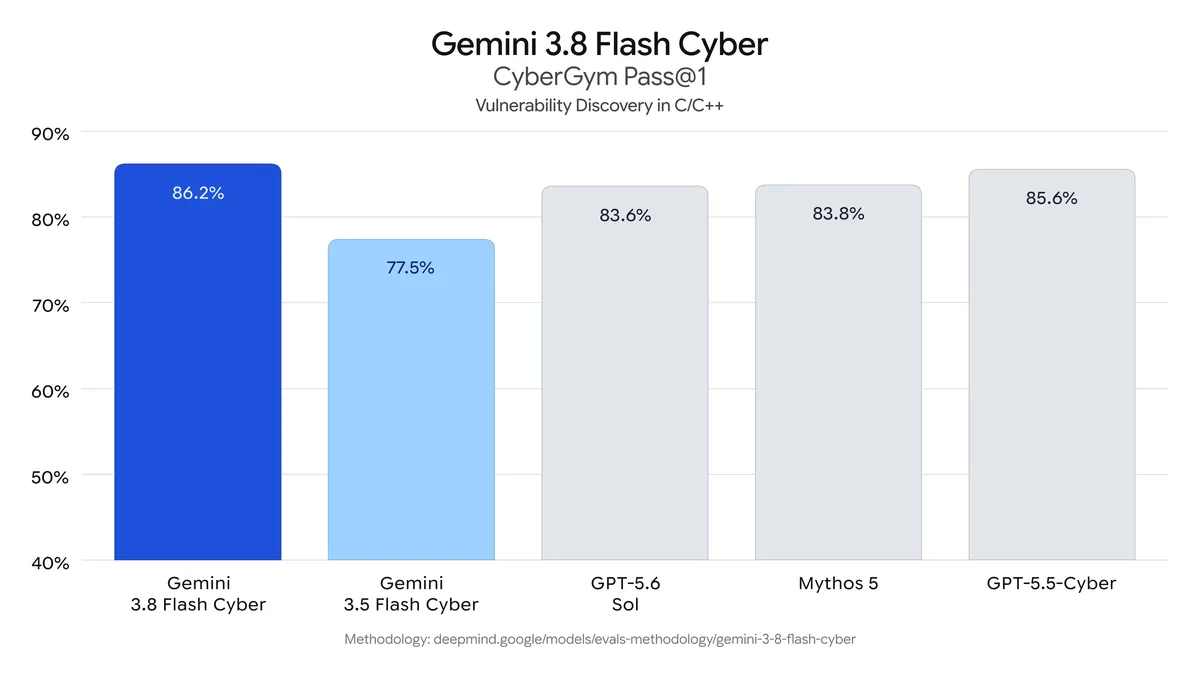
    On the standard industry benchmark for finding vulnerabilities, CyberGym, Gemini 3.8 Flash Cyber demonstrates frontier-level performance in autonomous vulnerability discovery. It surpasses both 3.5 Flash Cyber as well as significantly larger frontier models.

    a chart showing Gemini 3.8 Flash Cyber CyberGym Pass@1

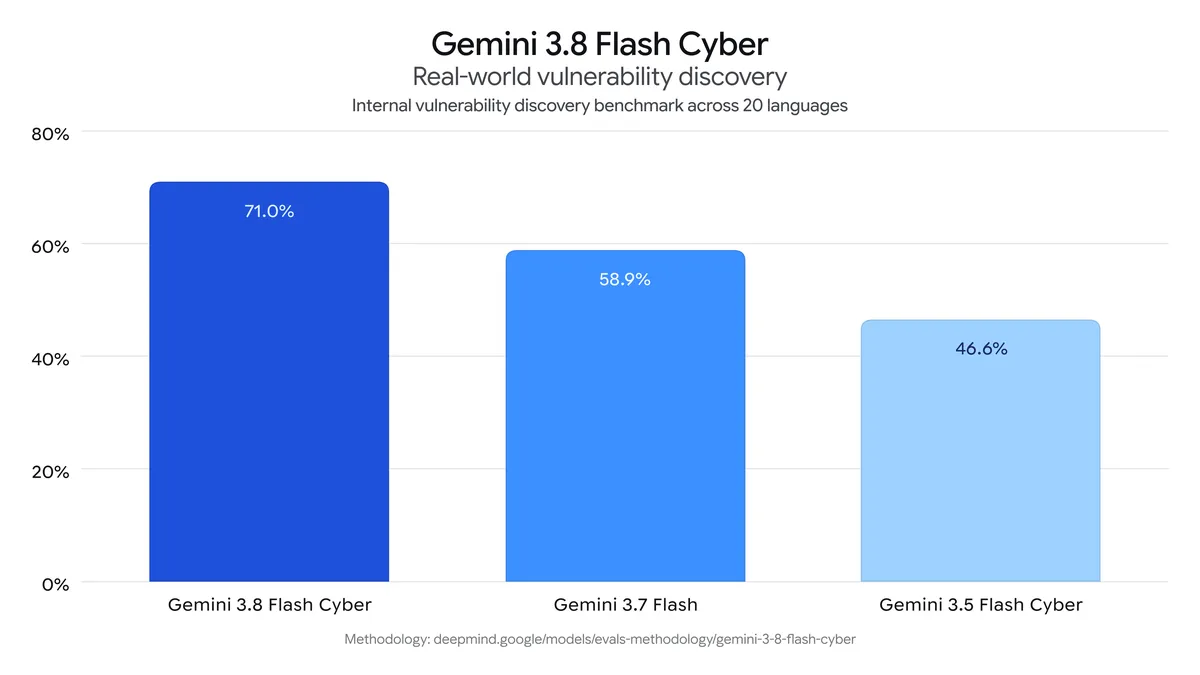
    To better capture real-world defensive needs which are not limited to just C/C++ codebases like in CyberGym, we also evaluated Gemini 3.8 Flash Cyber against a comprehensive internal benchmark in which the model has to discover a wide range of vulnerabilities across complex codebases spanning 20 programming languages. Here, the model showcases an impressive leap over our previous models and reaches a success rate exceeding 70%.

    Chart showing Gemini 3.8 Flash Cyber real world vulnerability discovery

    Automated patching

    With Gemini 3.8 Flash Cyber, we focused specifically on equipping defenders with expert capabilities that give them an advantage over attackers. This is why we have invested in vulnerability fixing from the start, and prioritized it over offensive capabilities like exploitation.

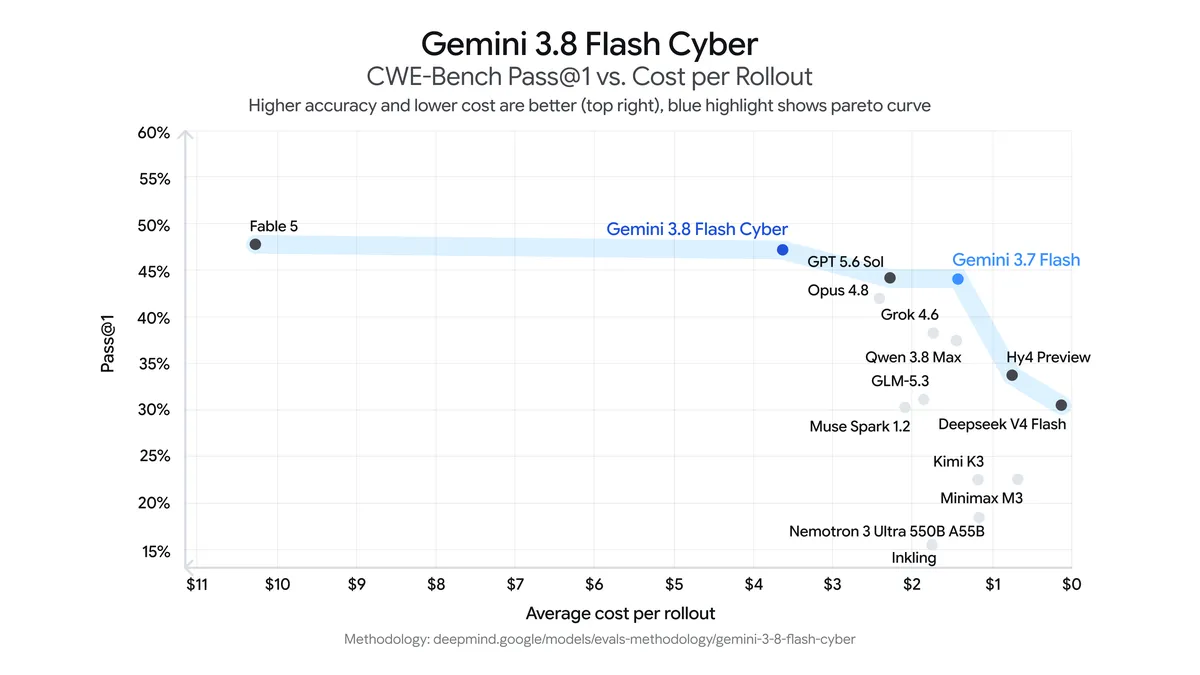
    CWE-Bench, run by Collinear, is a challenging external benchmark for patching capabilities. On this benchmark, Gemini 3.8 Flash Cyber is on the Pareto frontier: with a pass@1 of 47.2% compared to a leading frontier model at 47.8%, yet offered at a significantly lower cost.

    Chart showing Gemini 3.8 Flash Cyber StaticBench Pass@1 vs Cost Per Rollout

    Real-world impact: securing Google’s code

    We’re already using Gemini 3.8 Flash Cyber to secure code across Google. For example:

    • The Chrome Security team found that 3.8 Flash Cyber produced 2.6 times more correct patches to vulnerabilities in Chrome than the best commercial models that are much larger.
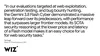
    • Wiz found that Gemini 3.8 Flash Cyber achieves +7.5-9.7% higher recall on their internal penetration testing benchmark for a 2.3-5.2x lower cost compared to other leading frontier models.
    • Google’s Cloud Vulnerability Research team leveraged the 3.8 Flash Cyber model to find a critical foundational vulnerability in less than 2 hours, a vulnerability for which research and discovery usually takes months.

    What our Fairwind Program partners are saying

    quote from David Slater, Founder and Chief Architect, Armadin

    quote from Charlie Sestito, Director, Office of the CTO, Palo Alto Networks

    quote from Mayank Upadhyay, CSTO, Snowflake

    quote from Gal Nagli, Head of Threat Exposure, Wiz

    Built with safety in mind

    3.8 Flash ships with safeguards against misuse in the domains of Chemical, Biological, Radiological, and Nuclear (CBRN) and cyber offense, while enabling beneficial use cases, as per our Frontier Safety Framework. 3.8 Flash Cyber ships with a more permissive set of mitigations for cybersecurity, and as such, is only available to trusted defenders who require a more comprehensive set of cyber capabilities.

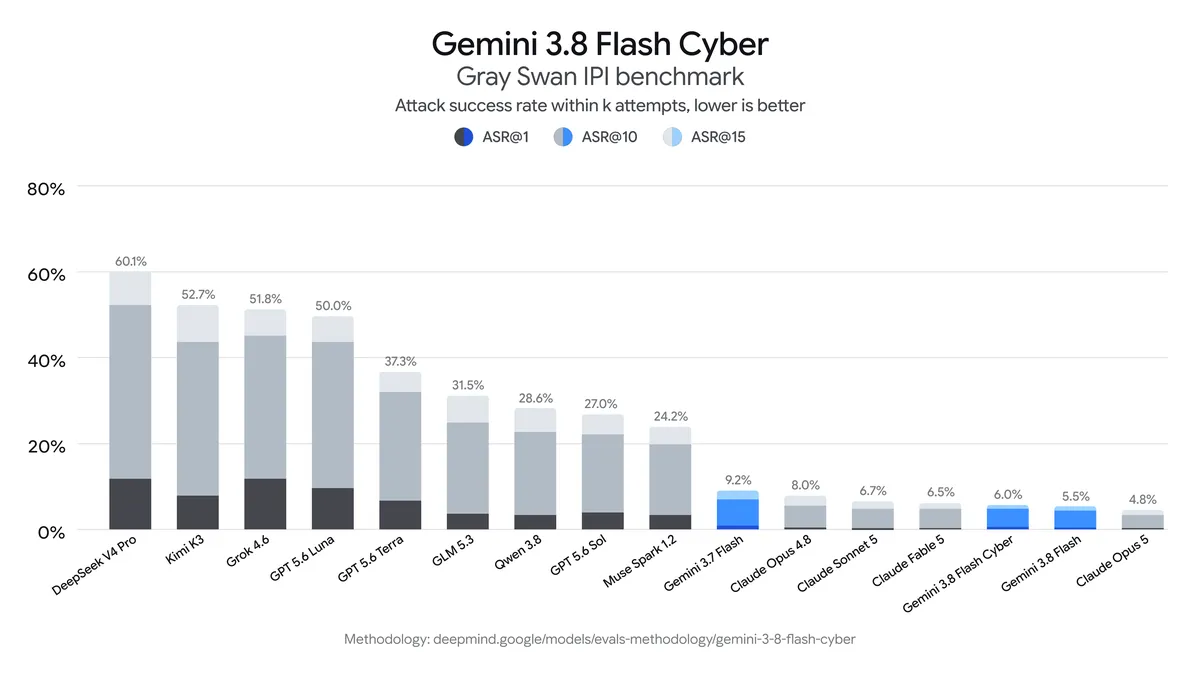
    Gemini 3.8 models have also made a significant leap in prompt injection robustness as measured by Gray Swan, protecting Gemini model users from prompt-injection related malicious attacks.

    a chart showing Gemini 3.8 Flash Cyber Gray Swan IPI Benchmark

    Gemini 3.8 Flash and Cyber: get started today

  • Research: How Curveball Questions Can Surface the Insight You’re Looking For

    Research: How Curveball Questions Can Surface the Insight You’re Looking For

    Harvard Business Review Logo

    Paul Taylor/Getty Images

    Summary.   

    Traditional “tough” questions often elicit polished talking points rather than candid answers. A more revealing approach is the curveball: a question that is closely tied to what

    We’re all taught to ask tough questions. Interviewers are coached to use open-ended prompts to get beyond rehearsed answers. Managers press for specifics when employees speak in generalities. Journalists and negotiators follow up when someone evades the point. The aim is the same: to uncover information the other person may be reluctant to reveal.

  • What Happens When AI Starts Doing Business with AI?

    What Happens When AI Starts Doing Business with AI?

    Harvard Business Review Logo

    Pardina Studio x Katya D/Stocksy

    As AI agents increasingly interact with one another on commercial platforms, firms need new rules governing what those agents can see, decide, and do. In a controlled AI-to-AI simulation covering

    In late 2025, Perplexity’s Comet browser began logging into shoppers’ Amazon accounts and buying on their behalf. Amazon treated it as an intruder. It blocked the agent and when Perplexity slipped past the block within a day, Amazon took the dispute to federal court. WeChat drew the line differently. After shutting out ByteDance’s Doubao assistant, which used system-level access to navigate WeChat without permission, Tencent later opened what it describes as an agent-to-agent channel to selected assistants from Huawei, Xiaomi, and others to send messages and place calls. Under this arrangement, an external agent translates a user’s request into a structured instruction and passes it through a Tencent-controlled interface to WeChat, which executes the action inside its own environment. Tencent controls which agents can connect, which functions they can invoke, and what data and execution remain inside WeChat. In other words, one platform shut the door to AI agents outright; the other unlocked it on its own terms.

  • Is the European Market Ready for Air Conditioning? Inside Midea’s Blue Ocean Strategy.

    Is the European Market Ready for Air Conditioning? Inside Midea’s Blue Ocean Strategy.

    Patrícia de Melo Moreira/Getty Images

    Summary.   

    Europe’s household air-conditioning market has remained stubbornly small despite increasingly severe heatwaves. The window units prevalent in much of the word are typically incompatible with

    Every summer, Europe gets hotter. Heatwaves arrive earlier, last longer, and grow more intense. Keeping homes cool is increasingly becoming a necessity. The U.N. World Health Organization estimates that 200,000 people have died from heat-related illness across the Europe over the past four years alone.

  • ATV Big Air Tour turned 3 days of work into 3 hours with ChatGPT

    ATV Big Air Tour uses ChatGPT Work to speed up marketing, merchandising, and more. It even turned merchandise photos into an inventory website in 15 minutes.

  • Tidy

    Fix grammar in any Mac app with free on-device AI

    Discussion
    |
    Link

  • CleanShot 5.0 with Studio Mode

    Mac-native app for screenshots, recordings and collaboration

    Discussion
    |
    Link

  • Introducing agentic video understanding with Gemini

    Introducing agentic video understanding with Gemini

    Our new agentic feature for video analysis cuts token consumption by up to 88%, reduces costs by up to 66%, and boosts quality by up to 7%.


    Rohan Doshi

    Senior Product Manager, Google DeepMind

    Mario Lučić

    Research Director, Google DeepMind


    Text

    Your browser does not support the audio element.

    Listen to article

    [[duration]] minutes

    This content is generated by Google AI. Generative AI is experimental

    Today, we’re launching agentic video understanding across our latest models: Gemini 3.7 Flash, 3.6 Flash and 3.5 Flash-Lite. This new capability improves accuracy while dramatically reducing token usage and costs for video analysis. Similar to agentic vision, which combines code execution with Gemini models’ native image understanding, agentic video understanding uses Gemini’s native video tools to improve performance and unlock new capabilities for video processing like sub-second moment retrieval, more accurate anomaly detection, precise counting and more.

    The feature is available today for video uploads and YouTube videos via the Gemini API in Google AI Studio and the Gemini Enterprise Agent Platform.

    Benchmarks

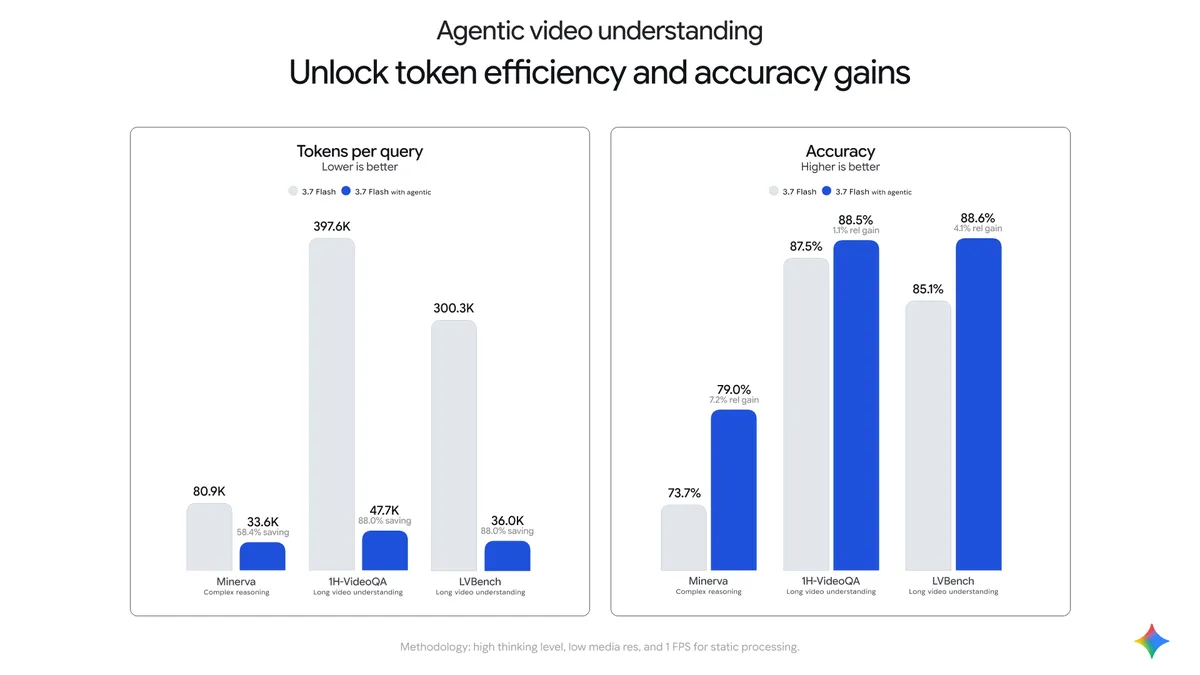
    Unlike current ‘static’ processing, where the model ingests the video at a fixed frames-per-second rate (default 1 FPS, adjustable via API), agentic video understanding pairs the model’s core reasoning with native video tools to dynamically search, scan, and inspect target video segments across visual frames, audio, and transcripts. Across standard video analysis benchmarks, Gemini models with agentic video understanding reduce analysis costs by up to 66% and token consumption by up to 88%, while improving accuracy by up to 7%.

    These efficiency gains are especially pronounced on long-form video (from 10-minute how-to guides to 90-minute lectures and multi-hour recordings), where static processing forces developers to choose between high token costs or techniques that drop critical details.

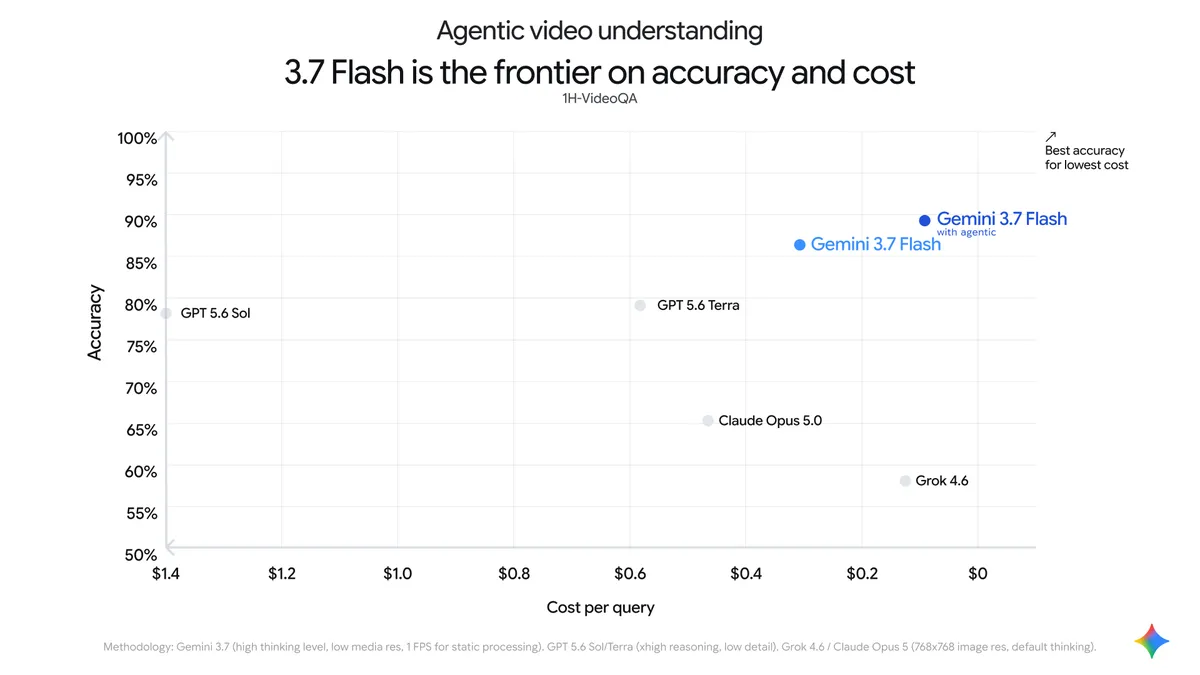
    Activating agentic video understanding drops token consumption by up to 88% and boosts accuracy by up to 7% with Gemini 3.7 Flash.

    Graphs analyzing token efficiency and accuracy gains

    While these gains span all three supported models, Gemini 3.7 Flash with agentic understanding offers the best possible quality overall and the best combination of quality and cost efficiency, putting it at the accuracy-to-cost pareto frontier among tested models for video understanding.

    Using agentic video understanding places Gemini 3.7 Flash at the accuracy-to-cost pareto frontier for video analysis.

    Graph with

    How it works

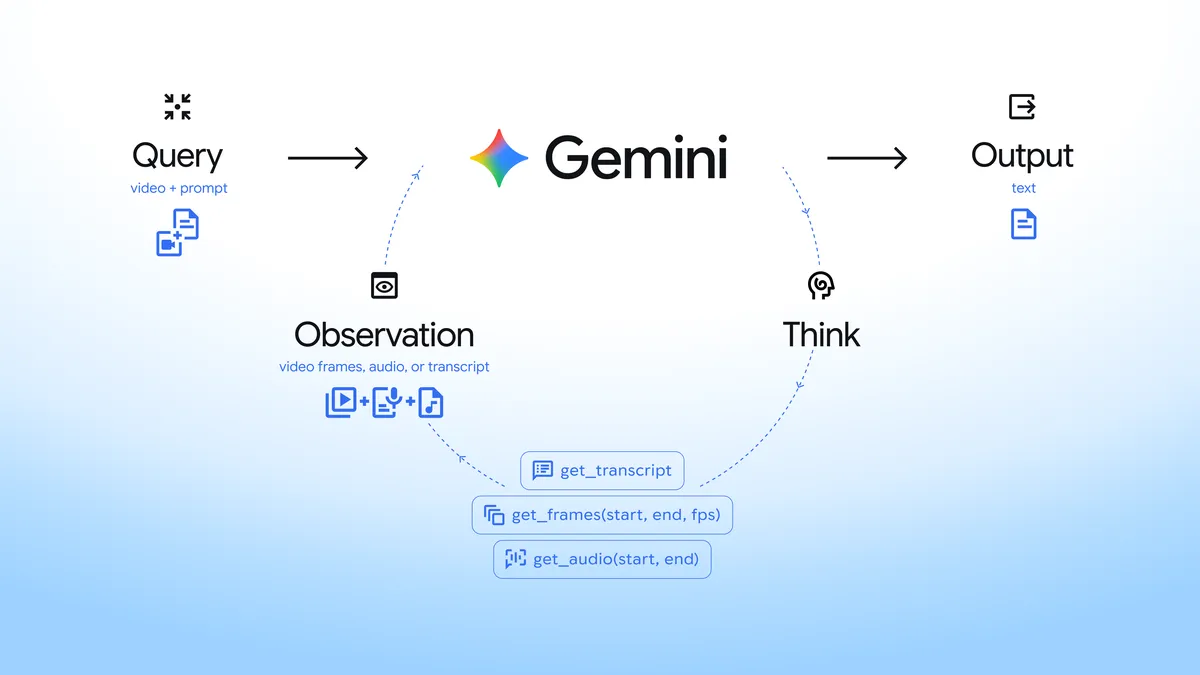
    Instead of static processing where the model ingests media streams at a fixed frame rate, agentic video understanding enables Gemini to take an active, goal-directed role in determining what to watch, at what speed, and through which modality (frames, audio, or transcript), fetching only the moments and signals needed. While developers could previously do this manually, with agentic video understanding, Gemini can accomplish it through an agentic loop, invoking an internal tool to load the relevant part of the video file, significantly reducing development overheads.

    Diagram of the process from Query to Output

    Capabilities and use cases

    Agentic video understanding transforms how developers can process long-form video content across a variety of demanding applications.

    • Sub-second moment retrieval: Pinpoint split-second state changes and tight cut boundaries that are easily missed at 1 FPS, making precise automated video editing possible.
    • Long-form needle-in-a-haystack search: Answer complex queries across multi-hour videos without consuming millions of tokens.
    • Anomaly detection: Resample interesting time windows at higher FPS to inspect rapid motion and subtle visual artifacts.
    • Counting action & object: Accurately track repeated physical movements and distinct objects over time.

    Real-world results

    Many of our early access partners saw strong performance while testing with agentic video understanding. Here’s what they have to say:

    Quote from Ponder

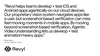
    Quote from Revyl

    Quote from Mosaic

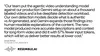
    Quote from Resemble.AI

    Getting started

    Agentic video understanding is available via the Gemini API in Google AI Studio and Gemini Enterprise Agent Platform, launching across Gemini 3.7 Flash, 3.6 Flash, and 3.5 Flash-Lite. It uses standard Gemini API token pricing with no additional feature fee.

    To enable it, simply set processing to “agentic” in the API configuration. Read our developer guide to get more insights into the feature and how to get started.

    from google import genai    client = genai.Client()    interaction = client.interactions.create(      model="gemini-3.7-flash",      input=[          {              "type": "video",              "uri": "https://youtu.be/7Z5Vy9JBANs",              "processing": "agentic"          },          {              "type": "text",              "text": "What are the 3 most important announcements in this keynote?",          },      ],  )    print(interaction.output_text)

    We are also bringing the efficiency and quality improvements of agentic video understanding to billions of users across Google products. The feature will roll out to all users in the Gemini app across Flash and Flash-Lite models soon. And in the coming months, agentic video understanding will also power YouTube’s ‘Ask YouTube’ feature on the video watch page, leveraging Gemini to deliver higher-quality answers grounded in the visuals.

    Acknowledgement for their contribution to this work: Sergi Caelles, Filip Pavetić, Ahmet Iscen, Suhas Yogin, and the Agentic Vision team.

    Get the latest news from Google in your inbox

    Sign up for our newsletters with product updates, event information, special offers, and more.

    Your information will be used in accordance with Google’s privacy policy. You may opt out at any time.

  • How AI-native companies turn workflows into operating capability

    Basis, Clay, and Exa Labs use AI agents to improve onboarding, account management, and developer integrations. See what enterprise leaders can apply.