Tom’s Guide Verdict
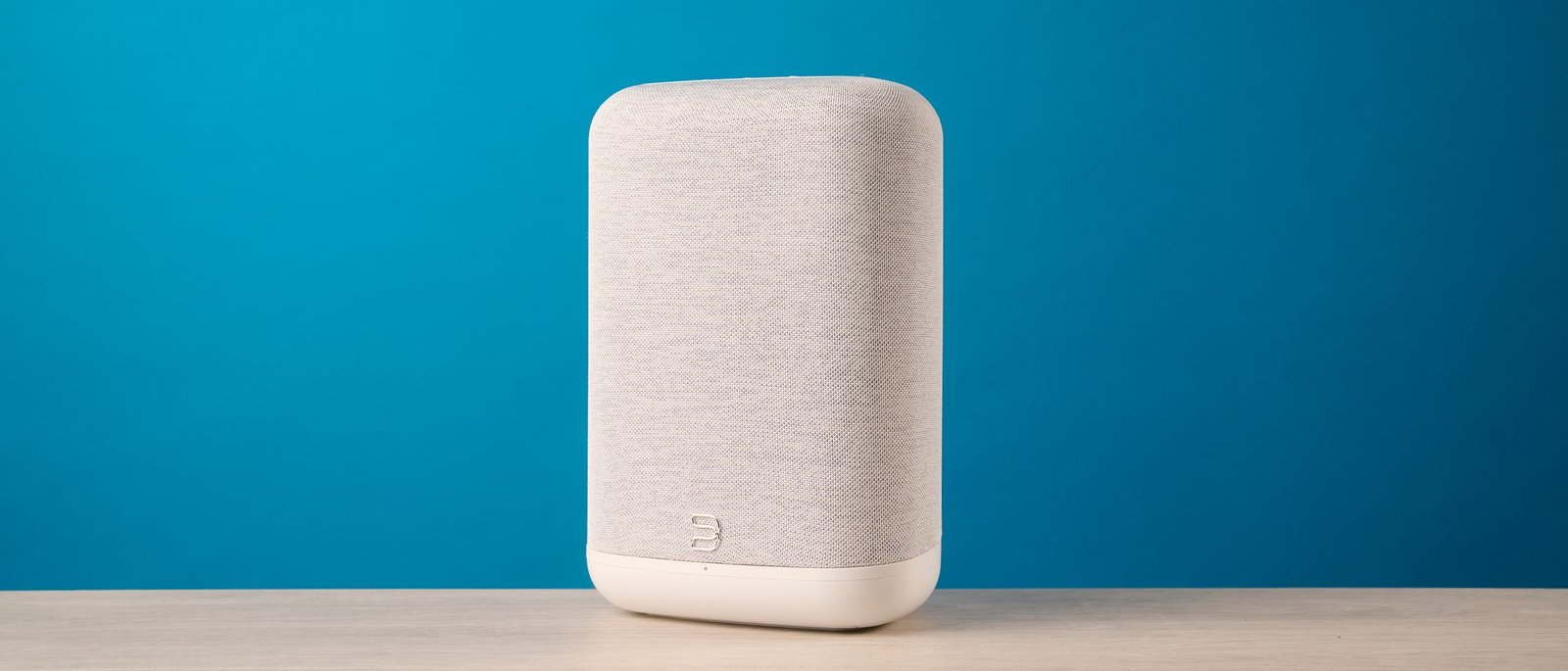
If you value excellent sound quality, the Bluesound Pulse Flex could be the Wi-Fi speaker for you. Bass is tight and controlled yet powerful and rich. While treble and vocals tend to take center stage, the bass response and lower mids never suffer for it. On top of that, the speaker looks divine. I just wish it was a little cheaper and had a more appealing app.
Reasons to buy
- +
Easy setup
- +
Looks gorgeous
- +
Excellent sound quality
Reasons to avoid
- –
Feels quite overpriced
- –
BluOS app leaves something to be desired
Why you can trust Tom’s Guide Our writers and editors spend hours analyzing and reviewing products, services, and apps to help find what’s best for you. Find out more about how we test, analyze, and rate.
Bluesound Pulse Flex review: Cheat sheet
Price: 3/5
Sound quality: 4.5/5
Design: 4/5
Features: 3/5
Overall score: 3.5/5
Best for: Space-conscious music lovers
I don’t know what I’d do without my Wi-Fi speakers. It’s such an underrated product category — one I can definitely see blowing up in the next few years. Zero wires, play music straight from your phone, and it’s hi-res? Yes, please.
So of course I leapt at the chance to test out the Bluesound Pulse Flex. I tested the 2025 model, which is an upgraded version of the 2018 original Pulse Flex 2i. Seven years later, we’ve got some new features: double the power (25W to 50W), a gorgeous new design, and more streaming integrations.
Is all this newfangled tech enough to make it one of the best speakers? Argh, it came so close to an instant recommendation. While the sound quality is almost perfect and the rounded oblong-style design would look at home in any well-designed space, BluOS issues and a well-priced JBL competitor make it a little hard to recommend. Find out the full story in this Bluesound Pulse Flex review.
Latest Videos FromTom’s Guide
Bluesound Pulse Flex review: Specs
Swipe to scroll horizontally
Bluesound Pulse Flex review: What I like
As a home speaker, you’d hope the Bluesound Pulse Flex looks and sounds premium — and this is true in both cases.
Fantastic sound quality
As you might expect for $379, the Bluesound Pulse Flex sounds incredible. I listened to a variety of genres on Qobuz, our best music streaming service for audiophiles, but I’ll just discuss three standouts here.
“flight fm” by Joy Orbison is an energetic electronic track with a heavy bassline and bright synths at the top of the soundstage. Despite its compact size and 50W power, the Pulse Flex delivered the bass with gusto. The floorboards were literally shaking — I felt the vibrations through my desk chair. Even though the low-end took most of the power, the higher-frequency sounds weren’t softened. Each sibilant snare synth held its own, a bite of brightness over top of the propulsive bassline.
Rock and grunge fared well, too. “Violet” by Hole sounded remarkably expansive — Courtney Love’s vocals carried reverb well, isolated even over the guitar-heavy soundscape. Each textured growl of Love’s voice thrashed its way out of the speaker. When I closed my eyes, I could almost convince myself I was at a Hole gig in the ‘90s. The vocals didn’t overpower the instrumentation, though. Cymbals crashed, and the snare drums pounded through the tiny speaker. Speaking of closing your eyes and pretending — you could easily believe this speaker was triple, quadruple, quintuple its size. It’s seriously powerful.
Lastly, I went for a softer track. Hayley Williams’ vocals were the sure-fire standout in “Kill Me.” This track is built over acoustic bass guitars and a prominent snare rhythm. I noticed some struggling in the coda, as if the speaker couldn’t isolate the over-processed guitar sections and Williams’ distorted vocals, so it pushed both layers together. In the second verse, I couldn’t hear Williams’ low harmony as well as through the Denon Home 400, but that’s a much bigger speaker.
While I was a touch disappointed by this performance, for 99/100 songs, the Pulse Flex still does a fantastic job. Treble is bright without erring on the side of tinniness, just as bass is energetic yet controlled. There’s a lovely U-shaped sound curve built into the speaker.
Of course, some genres are handled better than others. If you tend to listen to rock, pop, electronic, hip-hop rather than acoustic singer-songwriter or classical, you’ll likely never even notice that a quiet harmony isn’t as audible as it should be.
Design
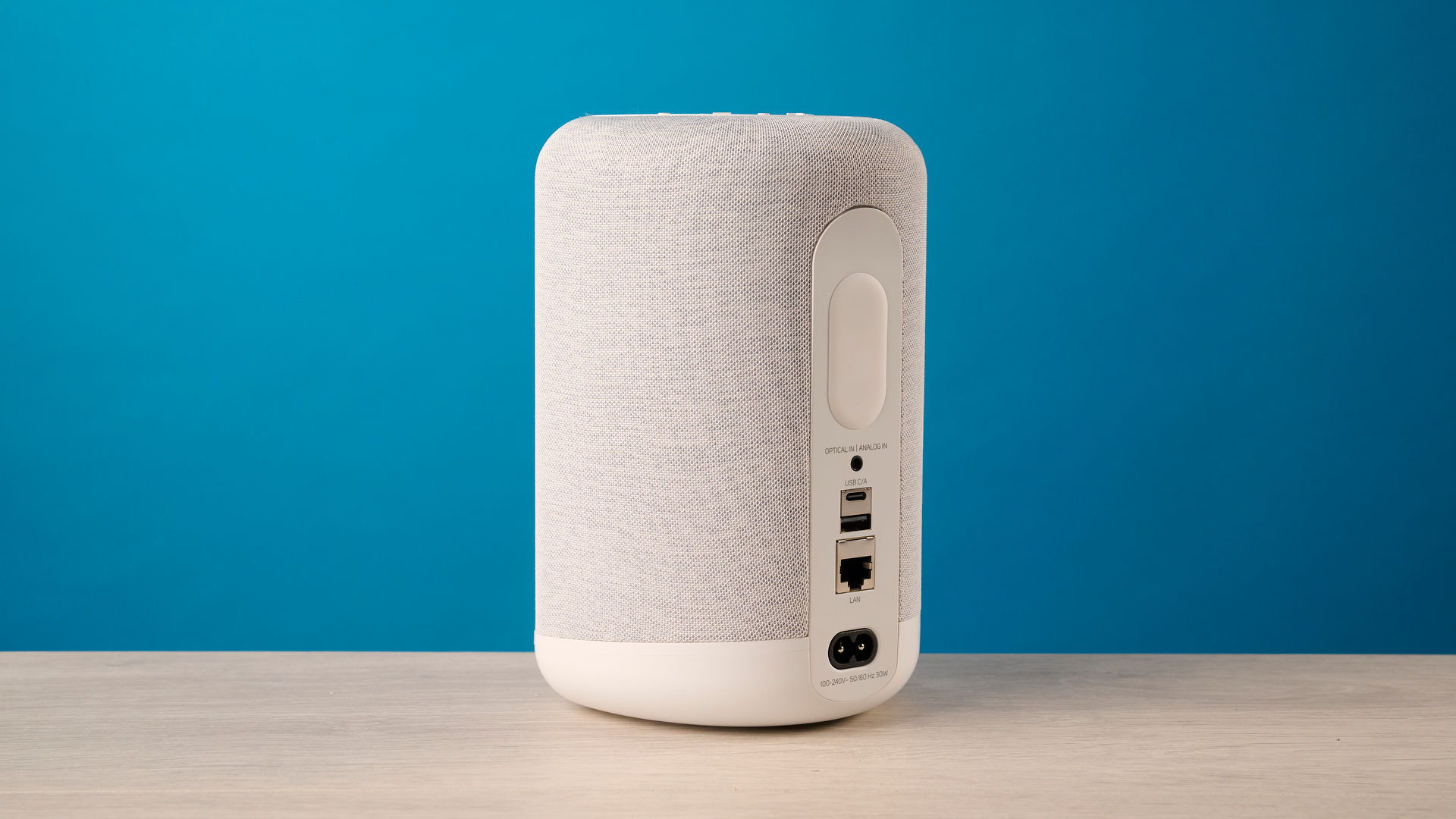
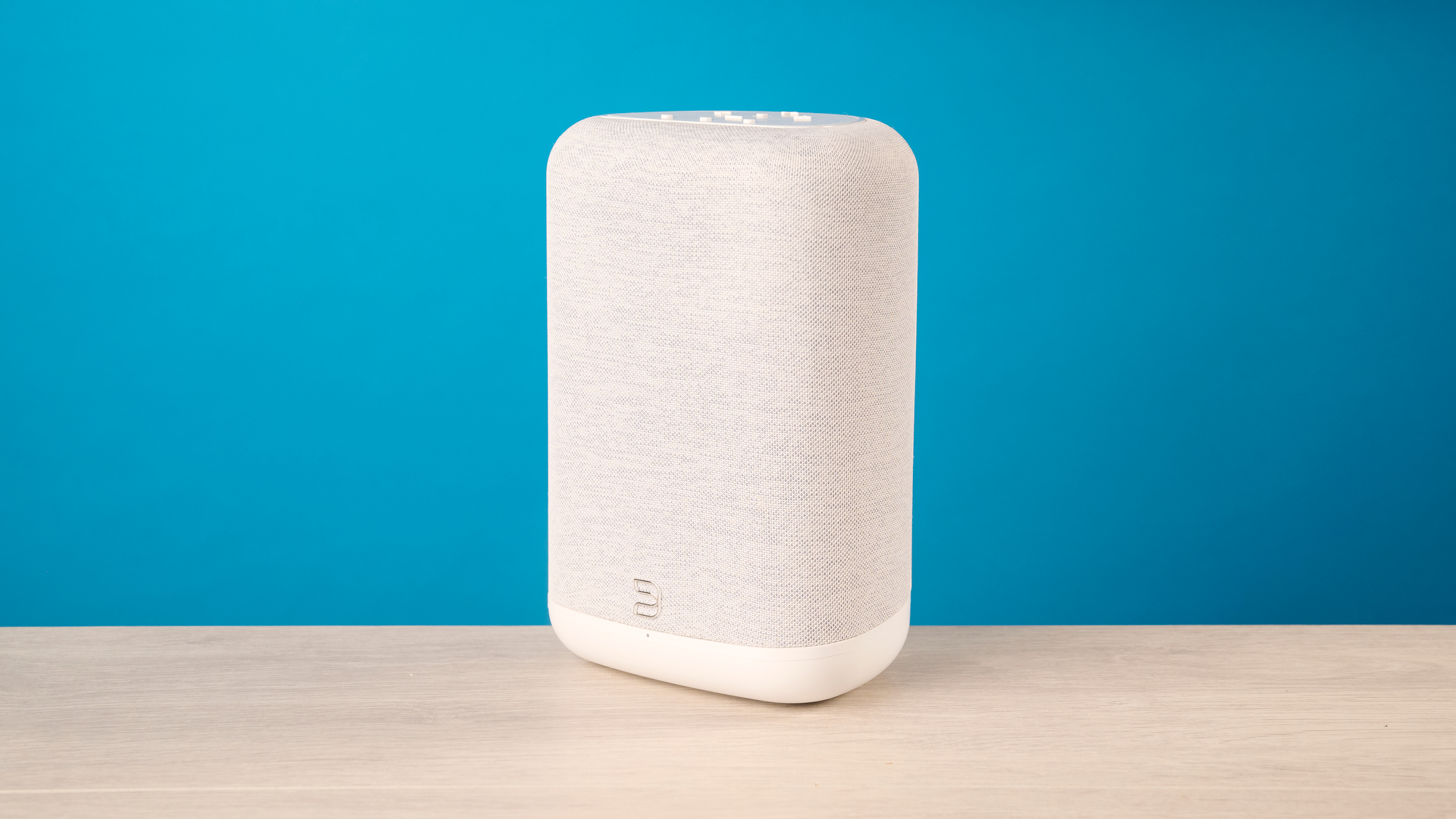
You’d never be able to guess the Bluesound Pulse Flex’s size from listening to it. At just 5 inches wide and 7 inches tall, it’s positively adorable, but it packs a major punch.
In terms of appearance, the Pulse Flex is relatively inconspicuous, ideal for nestling on mantlepieces or the corner of a coffee table. I put mine on my TV stand, and its sound filled the living room while taking up just a few inches of space.
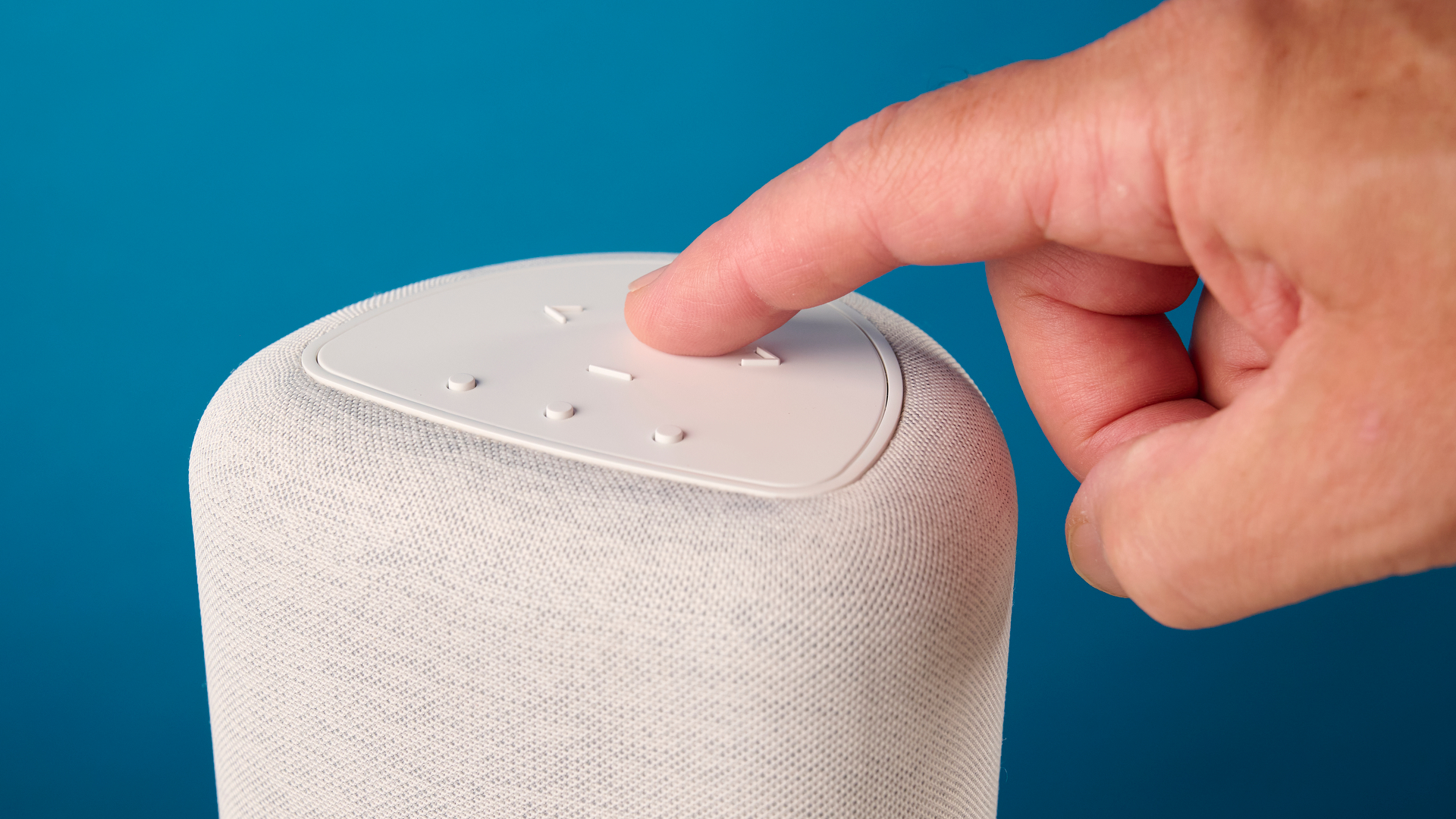
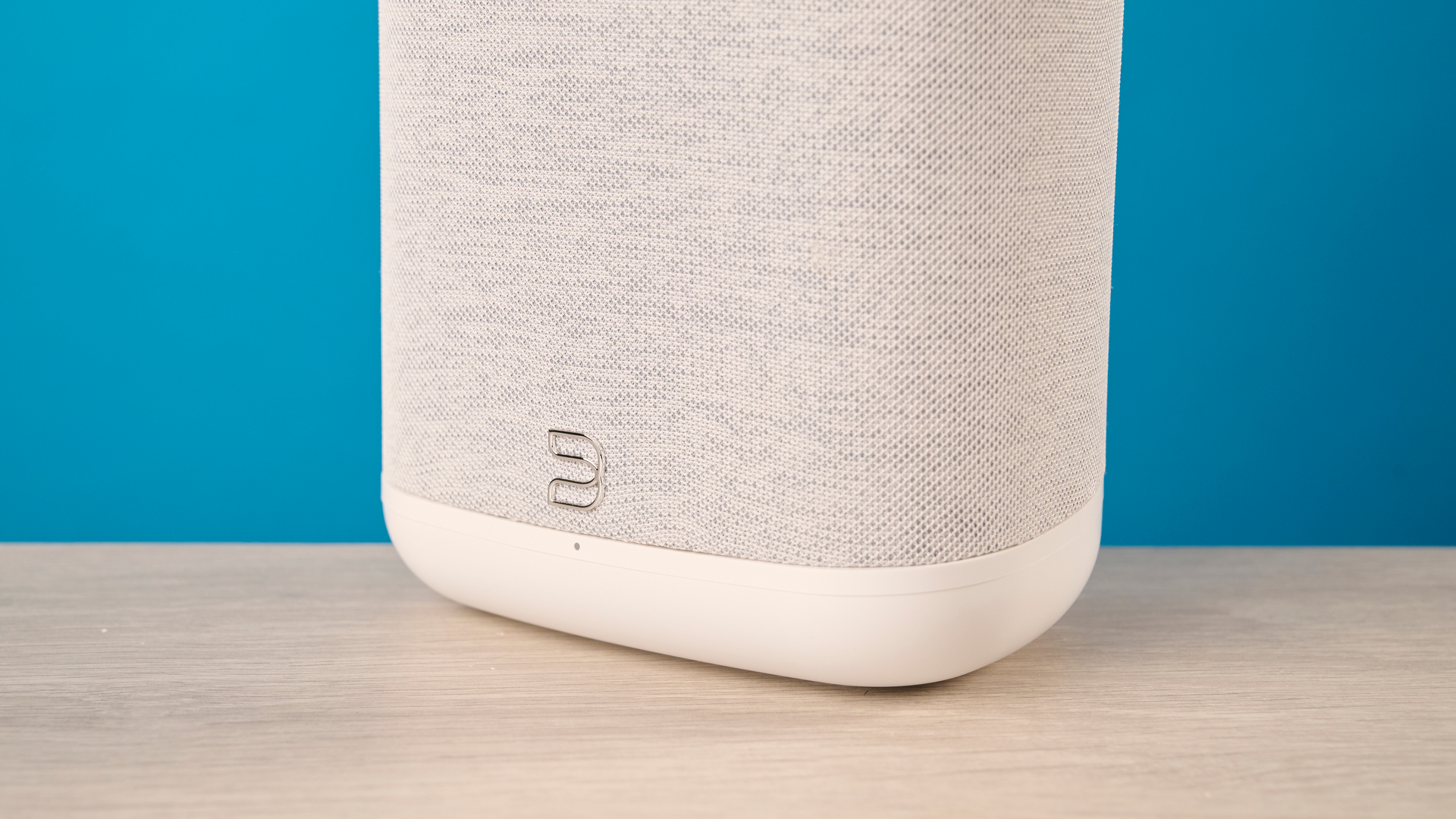
Build quality is decent, too. The fabric mesh casing looks sleek, just like the Denon Home 200, and the shiny Bluesound logo is a surprisingly pleasant touch. Buttons on top of the speaker control volume, play/pause, and presets, which you have to configure in the BluOS app — which I’m not a massive fan of, but more on that later.
Bluesound Pulse Flex review: What I don’t like
Even though I love the sound quality, I’m not going to pretend the Bluesound Pulse Cinema is flawless.
Price
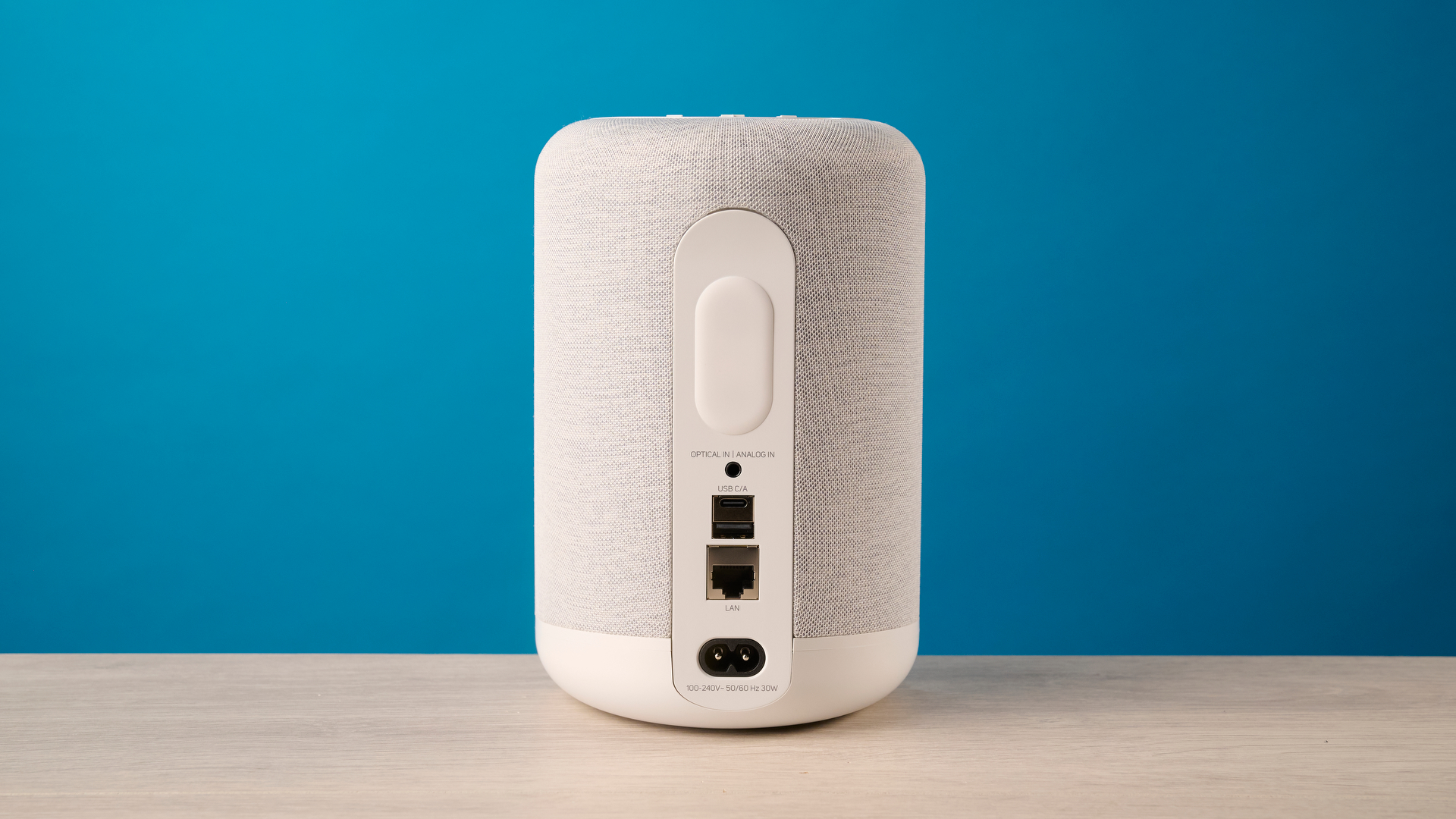
At $379 (Amazon U.S.) and £299 (Amazon U.K.), the Bluesound Pulse Flex is not a budget-friendly speaker. While this price is, unfortunately, par for the course in the Wi-Fi category, you can still get much better value for money with a traditional Bluetooth speaker. Of course, these products have different use-cases and mostly different audiences, but if you’re short on cash, I’d wholeheartedly recommend a Bluetooth speaker, like the JBL Flip 7, or bookshelf speakers instead.
Naturally, Bluetooth speakers aren’t capable of playing music at 24-bit 192kHz, but bookshelf speakers are. If you only want to listen at home, I’d recommend saving your money and grabbing something like the Edifier R1280T. These speakers sound much better than their $120 price tag might suggest — and while you need a wired connection for hi-res playback, this is fine if you’re listening in your living room.
There are some Wi-Fi speakers at a more appealing price point. While I’ve not fully tested it yet, I’m working on reviewing the new JBL Cove M1, $229, which sounds awesome for the price. I’d recommend this model for the budget-conscious. The closest competitor, Denon Home 200, is $399, which is even more outrageous than the Bluesound.
Needs some quality-of-life improvements
I’m still waiting for a Wi-Fi speaker that can do it all. The Bluesound Pulse Flex isn’t quite there yet. Most of its issues reside in the BluOS app, like the Denon Home system’s problems are all HEOS-shaped. Sound-quality-wise, the Pulse Flex is awesome.
But when 99.9% of using the speaker is done through BluOS, it’s impossible to overlook. It’s simply not user-friendly at all.
I could only add one music streaming service to the homepage, despite me using both Spotify and Qobuz. Spotify and Qobuz both popped up in the “music sources” tab, but I want both on the homepage, too!
Furthermore, while playing music through the BluOS app, you can’t control it through your phone. You have to go into the app and fiddle with settings like volume manually. This isn’t the case with my Denon Home speaker system — if I’m listening via Qobuz either on the Qobuz app or the BluOS app, the song doesn’t show up on my lock screen. I have to open the respective apps to play/pause, change the song, or adjust the volume.
This was also an issue when I listened to the radio from the BluOS app. I couldn’t control the volume — or even see what I was listening to — from my homescreen. On top of that, I added players to my “Favorites”, but this tab always failed to load.
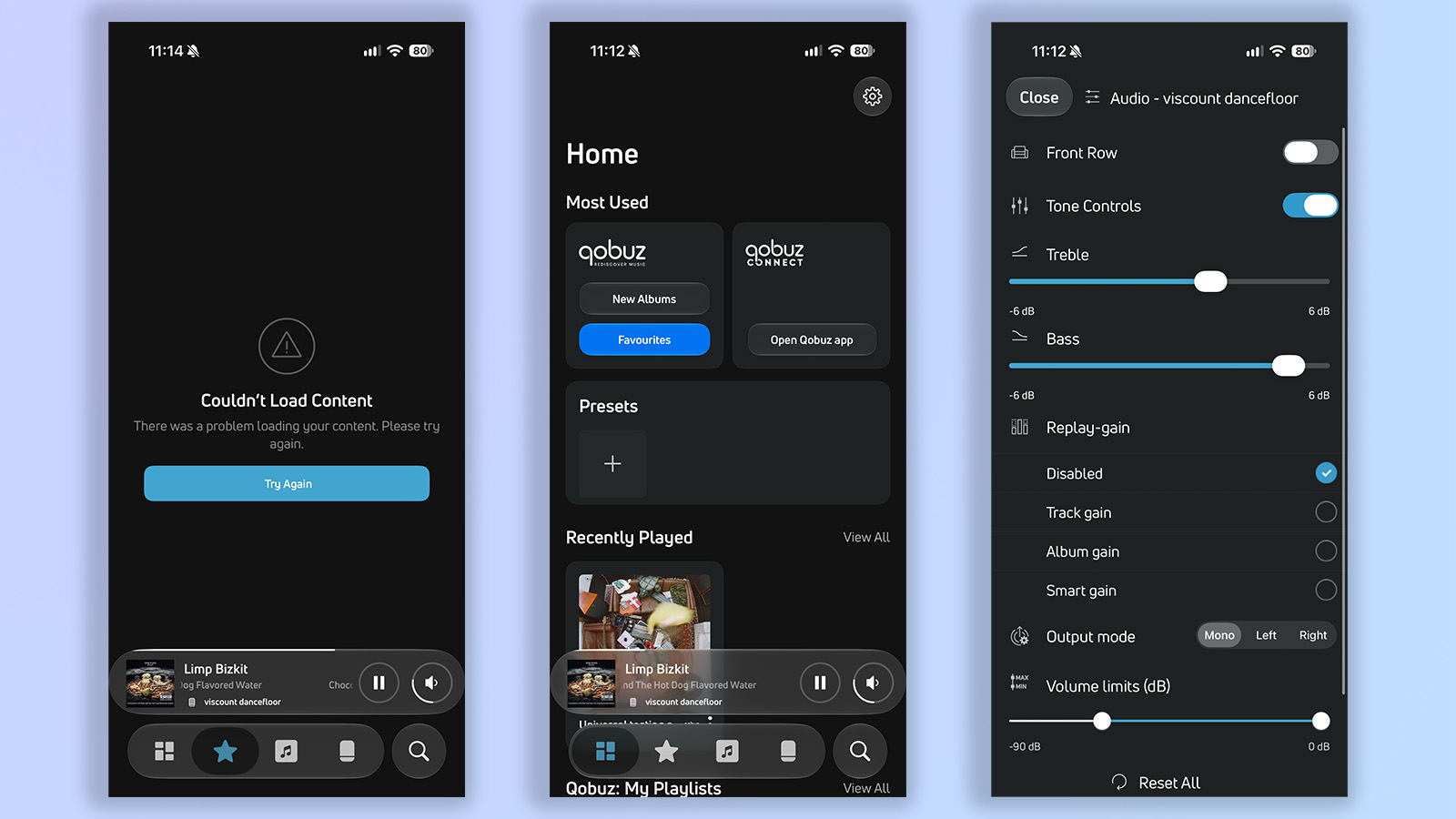
However, when I listened via Spotify, I could control this from my home screen. I would just skip playing through the app and instead play directly from your streaming service’s app using AirPlay or Google Cast.
If this is a Spotify/Qobuz/TuneIn issue rather than a BluOS issue, then I’m not sure what Bluesound can do about this. However, it does detract from the overall user experience, so it’s still worth noting.
Bluesound Pulse Flex review: How does it compare?
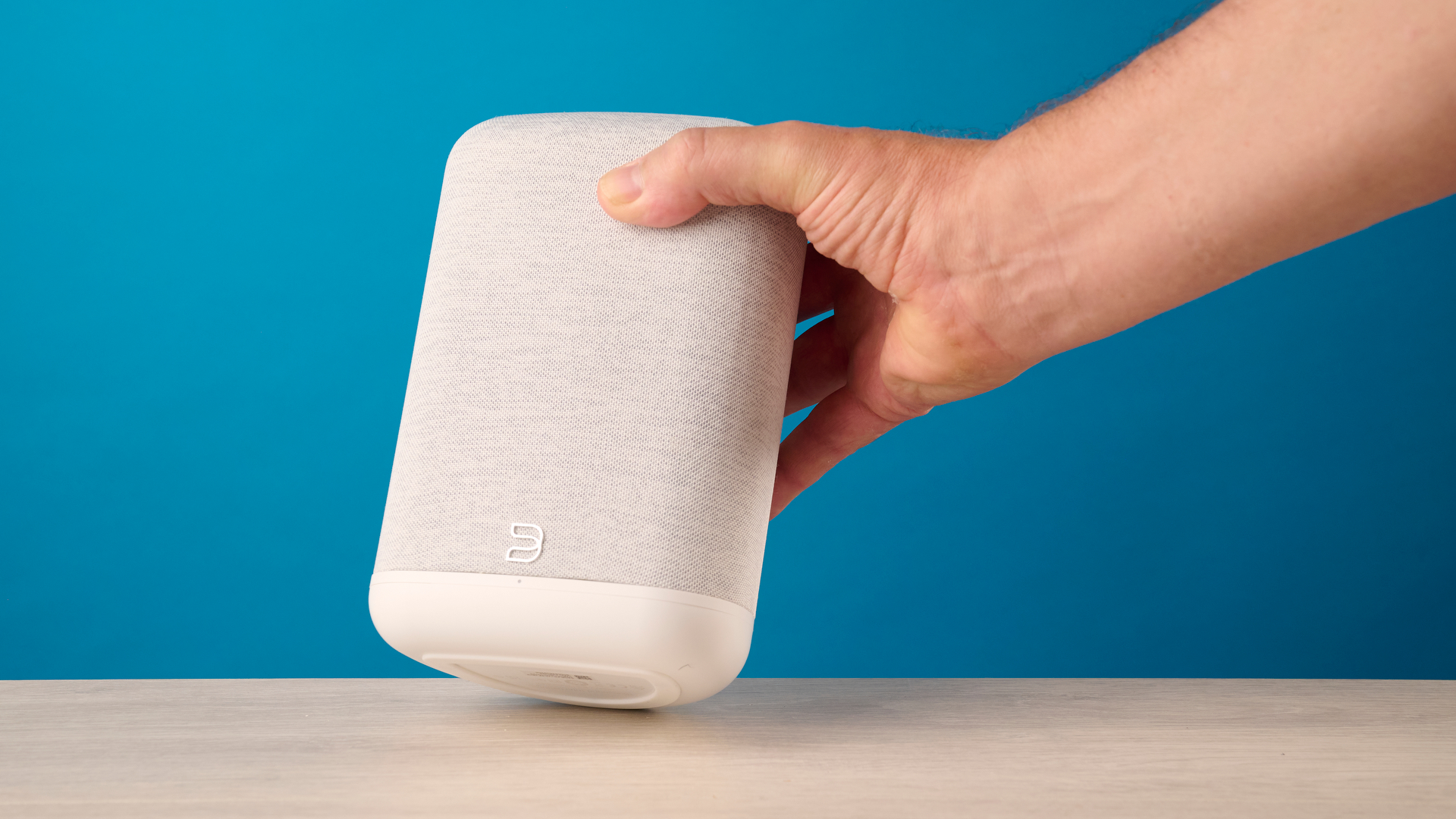
The Bluesound Pulse Flex’s biggest competition here is the Denon Home 200 and the JBL Cove M1. I’ve unfortunately not tested the Home 200, but I have thoroughly tested both the Home 400 and Home 600. And, while I’ve not published my review of the JBL Cove M1 yet, I have listened to it.
Neither the Denon Home line nor the JBL Cove have a proprietary on-board smart assistant — Denon utilizes Siri (when used in tandem with a HomePod) and JBL offers Alexa+. Obviously, none of these brands can hold a candle to Sonos, which has its own on-board smart assistant “Hey Sonos”. Like the Denon and JBL offerings, the Bluesound offers only a third-party smart assistant — Alexa.
I, unfortunately, do not have a HomePod nor Alexa, so I was unable to test this feature. However, if you have Alexa, great!
Just like the Denon Home 200 and the JBL Cove M1 can work as rear speakers for the Denon Home 550 and the JBL Bar 300MK2/500MK2, respectively, the Pulse Flex can be used as rears for the Bluesound Pulse Cinema.
In terms of sound quality, the Bluesound Pulse Flex is closer to the Denon line than the JBL. Again, I’ve not tested the Denon Home 200, but I do use the Home 400 and 600 every day. The Bluesound and Denon are more your hi-res Wi-Fi speakers with more control and finesse across the frequency range. Even so, the JBL M1 doesn’t sound bad — quite the opposite. It’s just a little bassier. If that’s what you want, then I’d recommend saving $$$ for the JBL.
Should you buy the Bluesound Pulse Flex?
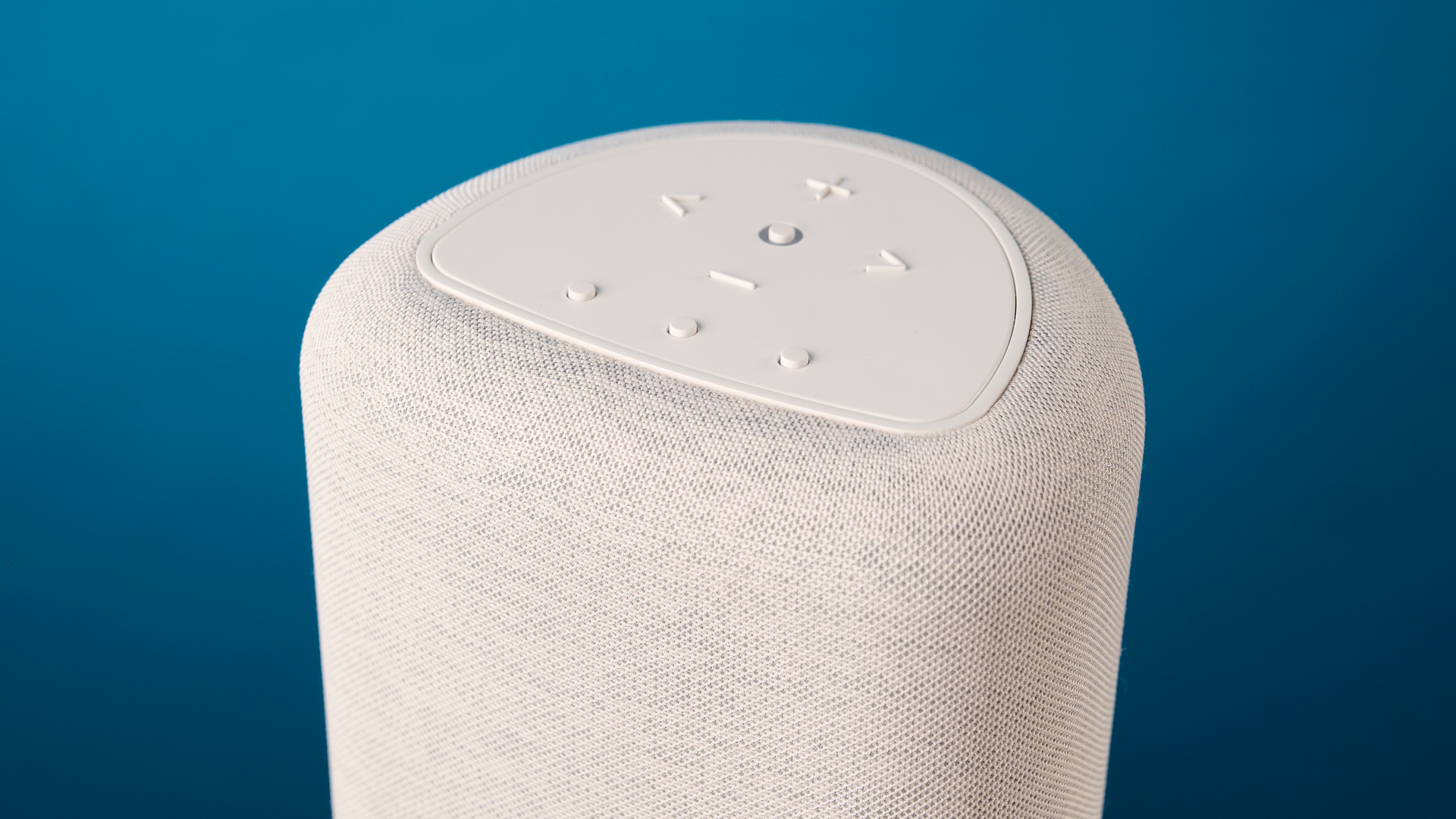
If, for whatever reason, you don’t want to buy the $229 JBL Cove M1, the Bluesound Pulse Flex is a decent step up. I’d definitely recommend it over the $399 Denon Home 200. However, because the JBL option is so much cheaper with relatively similar performance, I’m more inclined to recommend that one wholeheartedly for people on a budget.
And $379 doesn’t give you a lot of wiggle room for substandard quality-of-life functionality, hence the 3.5-star rating. I’m sick of brands releasing fantastic audio products with subpar apps, because it makes me feel like Satan himself — marking down frankly excellent speakers for some misfiring 1s and 0s.
However, if you love the premium appearance of the Bluesound Pulse Flex, I can see reasons for buying it. Most importantly, it sounds incredible. Bass is tight yet powerful, and while treble and vocals tend to take center stage, nothing else is pushed back because of it. On top of that, it’s supremely easy to set up.

Erin Bashford is a senior writer at Tom’s Guide, focusing on reviews. She has a Masters in Broadcast and Digital Journalism from the University of East Anglia. As an ex-barista, she knows her way around a coffee machine, and as a music lover, she’s constantly chipping away at her dream of having a multi-room home sound system. In her spare time you can find her reading, practising yoga, writing, or stressing over today’s NYT Games.
Next Badge:
More Comments/Likes Until Your Next Badge
” data-join-the-conversation-text=”Join the Conversation”>
You must confirm your public display name before commenting
Please logout and then login again, you will then be prompted to enter your display name.