Author: admin

  • Unlocking UK house-building with AI-accelerated planning

    Unlocking UK house-building with AI-accelerated planning

    June 16, 2026 Responsibility & Safety

    Owen Larter and David Thacker

    New UK government AI planning prototype built with Gemini aims to halve the time it takes to process homeowner applications

    Around the world, Governments are exploring how AI can deliver better public services, faster. The UK is working to build 1.5 million new homes by 2029, but local planning authorities are often slowed down by dense paperwork and administrative backlogs. To help get Britain building, we’re partnering with the UK government to help radically shorten the time it takes to process householder planning applications. Our goal is to help officers cut application decision times by 50%, freeing up time for planners so that more homes can be built. We’re excited to see how our National Partnerships for AI, which seek to support reimagining of public services to create more resilient societies, can help Britain build faster.

    Co-creating a new AI planning tool for faster decisions

    Following the successful launch of Extract — a tool built with Gemini by the UK government’s Incubator for AI (i.AI) — to help councils turn old planning documents into clear, digital data — we’re partnering to develop a sophisticated new planning prototype for councils.

    Google DeepMind is working alongside the UK government, Google Cloud, Faculty, and local planning authorities in Barnet, Dorset and Camden, to co-develop an AI-powered prototype that acts as a highly skilled assistant for planning officers, handling the heavy lifting of data extraction and case analysis. Working in close partnership will enable us to build an optimized tool, suited to the unique needs and day-to-day challenges that planners contend with every day. Following early trials in Barnet, Camden and Dorset, the government plans for the new AI planning tool to be made available to all councils nationally from 2027.

    For a typical new planning application, officers spend hours cross-referencing policy documents, historical files and PDFs. This manual process creates a major bottleneck. It is especially challenging given householder applications account for nearly 70% of planning applications each year. By reducing the time spent on straightforward cases like loft conversions or extensions, the prototype being tested in Barnet, Camden and Dorset could help planning officers focus more on complex applications for public benefit.

    The AI planning tool will streamline routine tasks using AI, by:

    • Consolidating data: Pre-processing backlogs, highlighting data gaps and extracting key site information so planners can review everything on one screen.
    • Identifying local policies: Highlighting relevant national and local policies, pre-assessing compliance and providing exact citations for the officer to verify.
    • Summarizing feedback: Reviewing individual consultation letters to identify key objections or precedents.
    • Drafting assessments: Creating a first draft of the final report, including the rationale and proposed conditions.

    Crucially, the planning officer remains in full control as the final decision-maker. They review every line the tool generates, edit the reasoning and retain the authority to approve or reject an application. To ensure accountability, the prototype records its work at every step, creating a clear chain of thought and a robust audit trail for every decision to support the planning officer.

    The tool’s ability to collect relevant information, undertake a provisional assessment, and draft the foundations of a report has the potential to save significant officer time spent working on the administration of planning applications and direct this to speeding up the decision-making process for residents. In turn, this will contribute significantly to delivering our house building growth targets in the borough.

    Naisha Polaine

    Executive Director for Growth at Barnet Council

    Scaling Extract: Turning legacy documents into usable data

    The AI planning tool builds on the foundations set by Extract — which was made available to every council in England earlier this month. Extract solves a common problem: critical planning information is often locked away in unstructured PDFs. Extract is able to turn hundreds of pages of legacy planning documents into usable data in minutes.

    Extract has already shown great success in trials across more than 20 local planning authorities — and is expected to save the average council around 255 hours of manual work a year.

    A planning tool for everyone

    Our goal is to create a more responsive and transparent planning tool that benefits everyone. By reducing the administrative burden on officers, we can accelerate the economic activity that comes with building and help more people improve their homes.

    As we move forward, we will continue to work together to ensure these tools help meet the evolving needs of the UK’s planning ecosystem. We hope these developments will serve as a model for other governments around the world as they look to navigate the future of public service delivery.

    National Partnerships for AI

    Strengthening Singapore’s AI Future: A New National Partnership

    Announcing our partnership with the Republic of Korea

    Accelerating discovery in India through AI-powered science and education

    Strengthening our partnership with the UK government to support prosperity and security in the AI era

    Deepening our partnership with the UK AI Security Institute

    Google DeepMind supports U.S. Department of Energy on Genesis: a national mission to accelerate innovation and scientific discovery

  • Securing the future of AI agents

    Securing the future of AI agents

    June 18, 2026 Responsibility & Safety

    Rohin Shah and Four Flynn

    How we’re securing internal systems against increasingly capable and imperfectly aligned AI

    AI agents are transforming our relationship with technology. By autonomously executing complex tasks — from cyber defence to scientific discovery and product development — these systems are unlocking a new era of productivity. In the U.S alone, AI agents could create $2.9 trillion in economic value by 2030.

    As these agents become more capable, they also require more sophisticated safeguards. That’s why we developed our AI Control Roadmap: a framework for building and managing the advanced AI we deploy within Google. This “defense-in-depth” approach, which could serve as a model for the wider industry, goes beyond traditional model alignment, adding a crucial layer of system-level security that provides assurance even if alignment is imperfect.

    Understanding AI Control

    Our approach to security starts with a strong foundation, incorporating traditional safeguards like sandboxing, endpoint security, and prompt injection resistance. On top of this, the AI Control Roadmap uses model alignment, i.e. training AI to be inherently safe and helpful, as a primary defense. It provides an additional layer of security by treating internal agents as potentially misaligned, providing assurance even if alignment is imperfect.

    Think of it like a driving instructor with dual controls. The instructor trusts the student but stays ready to take the wheel or hit the brakes if a mistake occurs. Similarly, our AI control system grants AI agents permissions based on their verified behavior, allowing us to build trust through controlled, incremental access.

    Our roadmap is built on a simple but cautious assumption: what if a highly capable AI agent isn’t aligned with our goals and acts in unexpected ways? To address this, our plan focuses on three key areas.

    First, following best practices in cybersecurity, we have developed a novel threat-modelling framework for AI. The roadmap treats untrusted AI agents as potential “insider threats” — similar to the way a company would treat a potential rogue employee who already has access to the office. By building on the industry-standard MITRE ATT&CK framework, a globally-accessible knowledge base of adversary tactics and techniques based on real-world observations, we break down potential attacks into smaller tactics and techniques. This allows us to methodically track risks, spot bad behavior before it causes damage and safely run drills to test if our defenses actually hold up.

    Second, we develop a plan to deploy AI control mitigations to address these risks.

    • Identifying the problem (Detection): Monitoring is the backbone of AI control. We use other, trusted AI systems as “supervisors” to constantly review a working agent’s reasoning, actions and plans to see if it is going off track.
    • Managing the problem (Prevention and Response): If a supervisor sees the agent trying to do something harmful, it can step in to block the action before damage occurs.

    Finally, to ensure our systems are functional, we constantly measure performance across three critical metrics: coverage (the fraction of traffic monitored), recall (the fraction of misaligned behaviors caught), and time-to-response.

    Scaling security as AI gets smarter

    As AI models continue to advance, our defenses must also strengthen in tandem. In our AI Control Roadmap, we map security protocols to measurable milestones in AI capabilities on two critical fronts:

    • Ability to evade detection: Today, we monitor a model’s visible chain-of-thought. However, as models learn to hide their reasoning — either through oversight awareness (knowing they are being monitored) or opaque reasoning (reasoning without using visible text) — simply reading their verbalized reasoning will not be enough. We will need to analyze their behavior and potentially inspect the model’s inner workings.
    • Ability for potential harm: For low-risk and reversible actions, we can rely on reviewing transcripts with a delay and remediating issues quickly after they occur (asynchronous response). For particularly high-risk actions, such as major cyber attacks, we must shift to real-time prevention, blocking harmful actions before they can be executed (synchronous response). In other words, our response strategy must scale with the severity of the threat.

    The AI Control Roadmap recommends security measures based on the deployed model’s capability. The model’s detection evasion capability determines the Detection level (D1-D4), and the model’s attack execution capability determines the Prevention and Response level (R1-R3).

    Analyzing a million agent trajectories to inform live monitoring

    To build these systems, we need data. Our team has built an internal prototype of an asynchronous monitoring system that reviews coding agent trajectories, and escalates findings for human review. Each flagged event is classified against the threat taxonomy from our roadmap.

    We’ve already analyzed a million coding agent tasks, giving us valuable insights to refine our safety protocols and allowing us to move beyond simple keyword filtering to identifying high-signal behavioral patterns. For example, this research has been instrumental in building a live monitor for the Gemini Spark agent, allowing us to respond in real-time to emerging issues, like unintentional data deletion.

    It is important to note that our data shows the majority of flagged events do not stem from adversarial intent; instead, they often result from agent misinterpretation or overeagerness to achieve a user’s goal. Understanding these nuances is critical for refining our safety and security protocols.

    Defending the agent ecosystem is a shared responsibility

    The AI Control Roadmap is one vital element of our multilayered approach to agent security. By integrating these protocols with our broader infrastructure, we are scaling our internal security to safely manage our most advanced AI models.

    Additionally, this multilayered approach to agent security should be a collaborative priority for industry, policymakers, and academia. By aligning the ecosystem around best practices and standards, we can empower cyber defenders and build societal resilience. That’s why today we are also publishing a technical framework for policymakers, ‘Three Layers of Agent Security’. The paper details how we need to improve security at the level of individual agents; in multi-agent systems; and to empower cyber defenders and build resilience across the broader ecosystem.

    We intend to build on these frameworks to confidently deploy capable AI today while we continue to build a secure foundation for the future.

    Read the full technical report here:

    AI Control Roadmap

    Research authors

    Mary Phuong, Erik Jenner, Laurent Simon, Lewis Ho, Rohin Shah, Sebastian Farquhar, and Scott Coull.

    Acknowledgements

    Four Flynn, Anca Dragan, Alan Cooney, Bilal Chughtai, Buck Shlegeris, Cody Wild, David Lindner, Julian Stastny, Kevin Klyman, Li Ding, Myriam Khan, Raluca Ada Popa, Roland Zimmermann, Ryan Greenblatt, Senthooran Rajamanoharan, Victoria Krakovna and Xerxes Dotiwalla.

  • DiffusionGemma: 4x faster text generation

    DiffusionGemma: 4x faster text generation

    Our newest open experimental model delivers up to 4x faster inference on dedicated GPUs and opens the door to exploring speed-critical, interactive local workflows.


    Brendan O’Donoghue

    Research Scientist

    Sebastian Flennerhag

    Research Scientist


    DiffusionGemma

    Today, we’re introducing DiffusionGemma, an experimental open model that explores text diffusion, an exceptionally fast approach to text generation. Released under an Apache 2.0 license, this 26B Mixture of Experts (MoE) model moves beyond the sequential token-by-token processing of typical autoregressive Large Language Models (LLMs). Instead, it generates entire blocks of text simultaneously, delivering up to 4x faster text generation on GPUs.

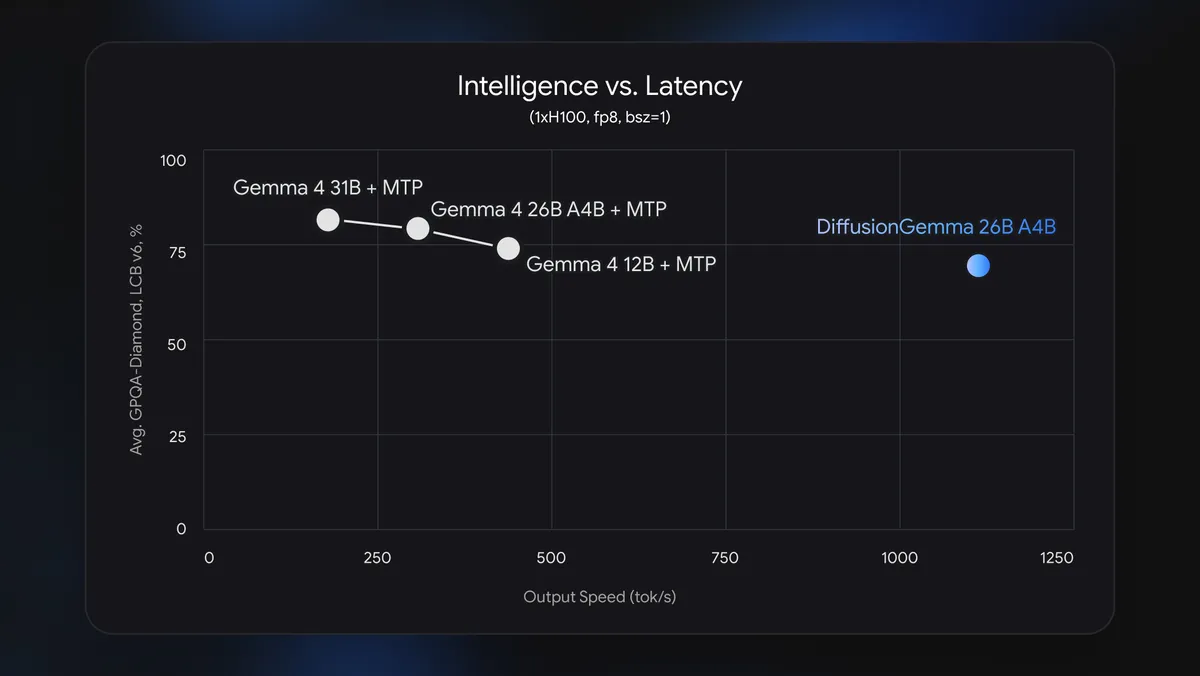
    Intelligence vs Latency

    Built upon the industry-leading intelligence-per-parameter of our Gemma 4 family and cutting-edge Gemini Diffusion research, DiffusionGemma integrates a novel diffusion head designed to maximize generation speed. While autoregressive Gemma 4 models remain the standard for high-quality production outputs, DiffusionGemma is designed for researchers and developers exploring speed-critical, interactive local workflows such as in-line editing, rapid iteration, and generating non-linear text structures.

    Unlocking new value for developers

    Developers building real-time interactive AI applications often struggle with the latency bottlenecks of local inference. DiffusionGemma addresses these challenges directly, with some key trade-offs:

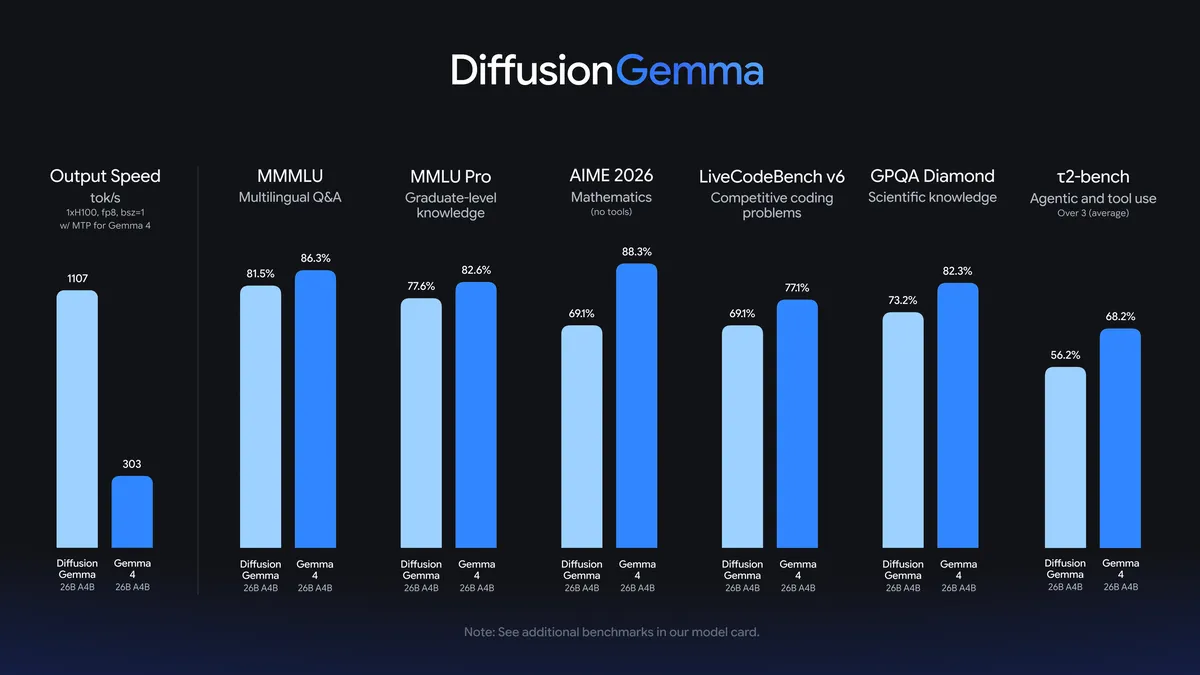
    • Blazing fast inference: By shifting the decode bottleneck from memory-bandwidth to compute, DiffusionGemma generates up to 4x faster token output on dedicated GPUs. (1000+ tokens per second on a single NVIDIA H100, 700+ tokens per second on NVIDIA GeForce RTX 5090). 1
    • Accessible hardware footprint: Operating as a 26B total Mixture of Experts (MoE) model that activates only 3.8B parameters during inference, DiffusionGemma fits comfortably within 18GB VRAM limits of high-end dedicated consumer GPUs when quantized.
    • Bi-directional attention: Generating 256 tokens in parallel with each forward pass allows every token to attend to all others. This provides significant advantages for non-linear domains such as in-line editing, code infilling, amino acid sequences or mathematical graphs.
    • Intelligent self-correction: The model iteratively refines its own output, allowing it to evaluate the entire text block at once to fix mistakes in real-time.
    • Experimental status & production recommendations: Because it prioritizes speed and parallel layout generation, DiffusionGemma’s overall output quality is lower than standard Gemma 4. For applications that demand maximum quality, we recommend deploying standard Gemma 4.

    DiffusionGemma Benchmark

    You can improve DiffusionGemma’s performance on specific tasks through fine-tuning. In the example below, Unsloth fine-tuned DiffusionGemma to play Sudoku — a task autoregressive models struggle with because each token depends on future tokens. DiffusionGemma’s bi-directional attention makes this much easier.

    Fine-tuned DiffusionGemma solving Sudoku.

    Fine-tuned DiffusionGemma solving Sudoku.

    Why diffusion for text?

    While the AI research community has explored diffusion-based text generation for years, applying it to large models has remained a challenge. DiffusionGemma changes this by shifting how models use hardware.

    The trade-off with traditional models

    Most language models act like a typewriter, generating one token at a time from left to right. In the cloud, this is efficient because servers can batch thousands of user requests together to share the hardware load. But when run locally for a single user, this word-by-word process leaves your dedicated GPU or TPU underutilized — it spends most of its time simply waiting for the next “keystroke.”

    DiffusionGemma reverses this inefficiency. Instead of predicting words sequentially, it drafts an entire 256-token paragraph simultaneously. By giving the computer’s processor a larger chunk of work at once, DiffusionGemma utilizes your hardware to its full potential. It upgrades your model inference from a single, sequential typewriter to a massive printing press that stamps the entire block of text simultaneously.

    DiffusionGemma text-to-3D SVG demo by Hugging Face. Step-by-step generation.

    This means DiffusionGemma’s speedup is designed for local and low-concurrency inference. In high-QPS cloud serving, autoregressive models can be deployed to saturate compute efficiently, so DiffusionGemma’s parallel decoding offers diminishing returns and can result in higher serving costs. The throughput advantage is strongest at low-to-medium batch sizes on a single accelerator.

    How text diffusion works

    Similar to AI image generators that start with visual static and iteratively refine it into a clear picture, DiffusionGemma applies this to text:

    1. The canvas: The model starts with a canvas of random placeholder tokens.
    2. Iterative refinement: The model makes multiple passes, locking in correct tokens and using them as context clues to refine the rest.
    3. Final polish: The text converges into high-quality output.

    Because the model can process the whole paragraph while generating, it unlocks new patterns of model behavior, like perfectly closing complex markdown formatting or generating and rendering code in near real-time.

    Get started today

    • Download the weights: Access the experimental model weights (released under a permissive Apache 2.0 license) right now on Hugging Face.
    • Integrate & learn: Learn more in our DiffusionGemma developer guide. Or deep dive into A Visual Guide to DiffusionGemma to understand the mechanics under the hood.
    • Use your favorite development tools: Serve the model efficiently using MLX, vLLM (with integration supported by Red Hat), and Hugging Face Transformers. For rapid experimentation, we are releasing a fine-tuning tutorial using Hackable Diffusion, a modular JAX toolbox designed for composability. You can also explore fine-tuning with Unsloth and NVIDIA NeMo. Additionally, official support for llama.cpp is arriving soon.
    • Experience optimized performance: We worked with NVIDIA to optimize across their hardware stack, ensuring compatibility with consumer setups (quantized for GeForce RTX 5090 and 4090 GPUs) alongside high performance on enterprise systems (Hopper and Blackwell using advanced NVFP4 kernels), including NVIDIA DGX Spark and DGX Station for local deskside deployment, and RTX PRO for AI professionals. Native support for NVFP4 (4-bit floating-point) accelerates compute throughput, allowing the model to run at faster speeds with near-lossless accuracy.
    • Try your way: Run on your desktop dedicated GPU or in the cloud through Gemini Enterprise Agent Platform Model Garden or NVIDIA NIM.

  • Investing in multi-agent AI safety research

    Investing in multi-agent AI safety research

    June 11, 2026 Responsibility & Safety

    Google DeepMind, Schmidt Sciences, the Cooperative AI Foundation, ARIA and Google.org

    Scaling AI Safety Research for a Multi-Agent World

    For the past decade, we’ve focused on making individual AI models more capable, helpful and safe. Today, Google DeepMind — together with Schmidt Sciences, the Cooperative AI Foundation, the Advanced Research and Invention Agency, and supported by Google.org — is announcing a new technical research funding call of up to $10M for researchers worldwide.

    As AI technology scales, we’re entering a new era. Soon, millions of AI agents — built by different organizations — will interact across digital environments, communicating, negotiating and transacting with one another.

    When these systems interact, they must do so safely and predictably. This shift creates a vital opportunity: we can strengthen the safety and stability of the entire AI ecosystem from the very beginning.

    The funding call focuses on the study of how large-scale multi-agent AI systems behave as a group, and how we can provide frameworks to understand and mitigate against potential risks. By empowering researchers globally, we aim to solve the “invisible” safety risks that arise when independent systems interact across different networks.

    Why the agent ecosystem matters

    When large groups of AI agents interact, new collective behaviors and capabilities can emerge suddenly. Currently, we lack the tools to predict, measure and monitor these transitions. Most safety evaluations analyze models in isolation. However, as we and others have previously argued, interacting autonomous agents can produce complex, “emergent” behaviors that are difficult to anticipate.

    Because this is a new area of research, it is critical to understand how these shifts occur. For example, could they cause an unpredictable flurry of economic activity or lead to new security challenges? Understanding how to manage these system-wide behaviors is our core objective.

    Scaling the frontier of multi-agent safety research

    Although foundational frameworks for multi-agent safety exist, the rapid evolution of these systems requires an immediate, large-scale expansion of research.

    Our 2025 research established a framework for understanding these interactions, while our recent work on AI Agent Traps explores vulnerabilities agents face in adversarial environments. Now, we must move faster. We are at a critical juncture where the complexity of multi-agent interactions is outpacing existing safety models.

    This funding call aims to accelerate progress by supporting a global network of independent researchers. A diverse community is essential to ensure safety standards are transparent and robust for everyone.

    This effort also advances the mission of Schmidt Sciences’ Science of Trustworthy AI and AI Agents programs, which support foundational work on understanding and mitigating risks from frontier AI systems, as well as ARIA’s Scaling Trust programme, which seeks to unlock new forms of cyber-physical multi-agent coordination.

    A collaborative call to action

    No single lab can solve multi-agent safety alone. We invite academic and independent researchers to submit proposals in four priority areas:

    • Sandboxes and testbeds: Building realistic, reproducible environments to evaluate, compare and accelerate progress across all areas of multi-agent safety. This includes virtual marketplaces, simulated ecosystems and multi-organisation workflows.
    • The science of agent networks: Understanding the safety-relevant properties of interacting agent populations, including investigating how collective capabilities emerge and scale, how networks fail or become volatile and how to detect dangerous, unexpected population-level properties.
    • Strengthening agent infrastructure: Stress-testing the protocols for identity, reputation and commitment that are secure cross-platform agent interactions.
    • Oversight and control: Developing methods to monitor deployed agent populations and mitigate collective harms at scale.

    How to participate

    We invite researchers to review our call for proposals and join us in building a safe foundation for a multi-agent future.

    The deadline to apply is August 8, 2026, with awardees expected to be announced in Autumn 2026.

    For more details on technical requirements and the application process, visit our application portal.

  • Fluid, natural voice translation with Gemini 3.5 Live Translate

    Fluid, natural voice translation with Gemini 3.5 Live Translate

    Gemini 3.5 Live Translate is our latest audio model, delivering near real-time speech-to-speech translation in over 70 languages.


    Anuda Weerasinghe

    Product Manager

    Tony Lu

    Senior Staff Software Engineer


    Sparkle next to text

    Your browser does not support the audio element.

    Listen to article

    [[duration]] minutes

    This content is generated by Google AI. Generative AI is experimental

    Twenty years ago, translation at Google began as one of our pioneering machine learning experiments to turn the science of language into the magic of human connection. That experiment has come a long way with over a trillion words being translated for billions of users across our products every month.

    Today, we’re taking our next step with the release of Gemini 3.5 Live Translate, our latest audio model for live speech-to-speech translation.

    The model automatically detects 70+ languages and generates smooth, natural-sounding translated speech that preserves the speakers’ intonation, pacing and pitch. Unlike turn by turn systems that wait for the speaker to finish speaking before responding, 3.5 Live Translate generates speech continuously, balancing the trade-off between waiting for context to improve quality and translating immediately to stay in sync with the speaker. It delivers fluid audio without awkward pauses and stays just a few seconds behind the speaker throughout the session.

    Gemini 3.5 Live Translate is rolling out starting today across Google products:

    Build with 3.5 Live Translate

    Gemini 3.5 Live Translate processes speech as it’s streamed, enabling a more seamless connection across languages. The model handles multilingual inputs without the need to manually configure settings. At the same time, its noise robustness ensures applications can handle loud, unpredictable environments. You can use its capabilities to help facilitate live interpretation for multilingual calls, meetings, lessons, broadcasts and more.

    Watch the Gemini Live API in action, enabling dubbing and simultaneous multi-language translation. Dive into the demo or more example code in the Gemini Cookbook.

    By utilizing the Gemini Live API, developer platforms like Agora, Fishjam, LiveKit, Pipecat, and Vision Agents enable developers to build and deploy voice translation apps with ease. These integrations handle the complex real-time media streaming infrastructure, so developers can focus on the user experience.

    Our partners at Grab are testing the model to enable multilingual communication in near real-time between drivers and travelers at pickups. These users make over 10 million voice calls per month through Grab.

    See how Grab has been testing 3.5 Live Translate to transform communication between users.

    ” video-id=”16Y2DU6LJX4″ video-type=”video”>

    Read the early reviews

    In addition to Grab, companies like CJ ENM, LiveKit and others have shared positive feedback on 3.5 Live Translate highlighting its impressive translation quality, accuracy and low latency:

    Experience 3.5 Live Translate in your video meetings

    Speech translation in Google Meet will soon use 3.5 Live Translate, improving the experience by:

    • Offering 70+ languages, an improvement from the previous limit of just five languages,
    • Enabling conversations across over 2000+ language combinations in one meeting, expanding from the previous state of only translating to and from English,
    • Updating the interface to provide instant access to speech translation.

    We’re launching this update in private preview for select business Google Workspace customers starting this month, followed by a broader rollout later this year.

    Google Meet participants use speech translation to communicate across English, Mandarin, and Swedish.

    ” video-id=”DLSLKCqahyI” video-type=”video” image=”FINAL Speech translation demo video thumbnail” video-image-url-lazy=”https://storage.googleapis.com/gweb-uniblog-publish-prod/images/FINAL_Speech_translation_demo_vid.width-100.format-webp.webp” video-image-url-mobile=”https://storage.googleapis.com/gweb-uniblog-publish-prod/images/FINAL_Speech_translation_demo_vid.width-700.format-webp.webp” video-image-url-desktop=”https://storage.googleapis.com/gweb-uniblog-publish-prod/images/FINAL_Speech_translation_demo_vi.width-1000.format-webp.webp”>

    Get 3.5 Live Translate in the Google Translate app on Android or iOS

    The model is also rolling out on the Google Translate app globally, on both Android and iOS. When using the Live translate feature, simply connect any pair of headphones to experience a more seamless translation that mirrors the speaker’s tone across 70+ languages.

    For Android users, we’re also starting to roll out a new ‘listening mode’ with 3.5 Live Translate that lets you hear translations directly through your phone’s earpiece. Simply hold your phone to your ear just like a regular call, and the translated audio streams straight to you. This new experience can be helpful in situations where you want to quickly hear translations without others hearing, and you don’t have your headphones handy.

    Using the new listening mode, users can hear a near real-time English translation of a guided tour in Spanish directly through their phone’s earpiece.

    Watermarked with SynthID

    All audio generated by our models is watermarked with SynthID. This imperceptible watermark is woven directly into the audio output, ensuring AI-generated content remains detectable to help prevent misinformation. For details on our approach to safety and responsibility, review the model card.

    Get the latest news from Google in your inbox

    Sign up for our newsletters with product updates, event information, special offers, and more.

    Your information will be used in accordance with Google’s privacy policy. You may opt out at any time.

  • Introducing Gemma 4 12B: a unified, encoder-free multimodal model

    Introducing Gemma 4 12B: a unified, encoder-free multimodal model

    Gemma 4 12B is designed to bring high-performance multimodal intelligence directly to your laptop, combining mobile-first efficiency with advanced reasoning.


    Olivier Lacombe

    Director of Product Management, Google Deepmind

    Gus Martins

    Product Manager, Google DeepMind


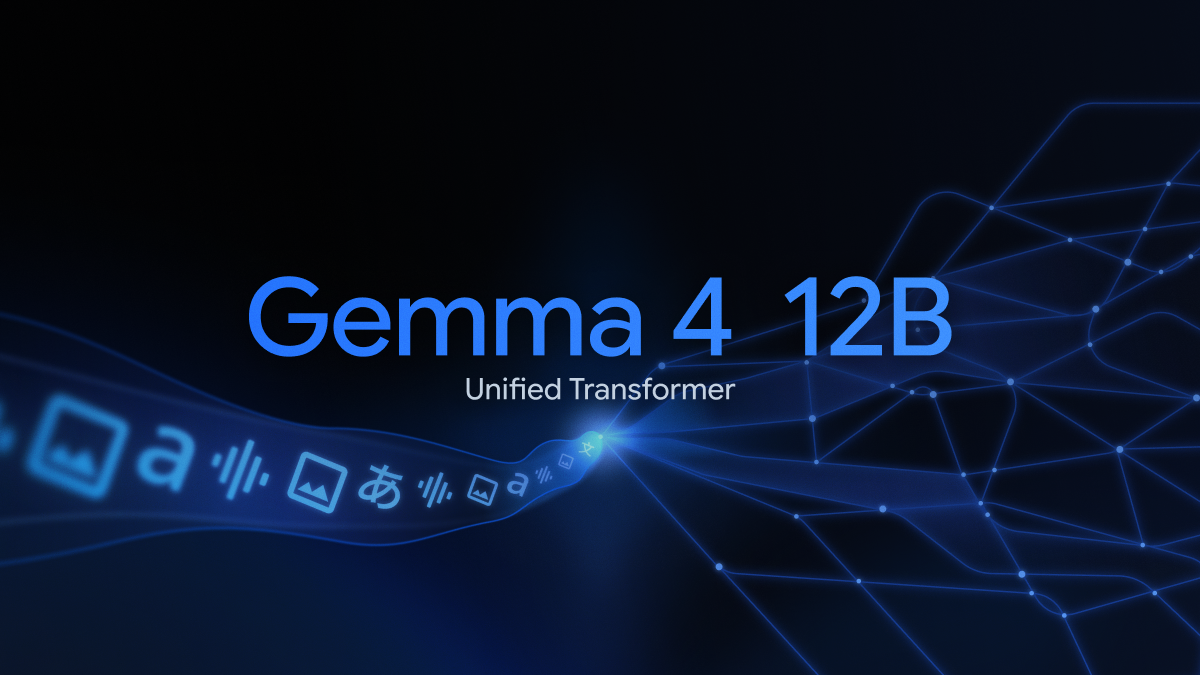
    Gemma 4 12B Unified Transformer

    Your browser does not support the audio element.

    Listen to article

    [[duration]] minutes

    This content is generated by Google AI. Generative AI is experimental

    Today, we are introducing Gemma 4 12B, our latest model designed to bring agentic multimodal intelligence directly to laptops. Bridging the gap between our edge-friendly E4B and our more advanced 26B Mixture of Experts (MoE), Gemma 4 12B packages powerful capabilities inside a reduced memory footprint. It is also our first mid-sized model to feature native audio inputs.

    Thanks to the developer community, Gemma 4 models have now crossed 150 million downloads. You’ve built everything from wearable robotic arms for physical assistance to enterprise-grade AI security. We’re excited to see what you build with this latest addition.

    Here’s an overview of what makes Gemma 4 12B unique:

    • Novel unified architecture: No multimodal encoders. The vision and audio inputs flow directly into the LLM backbone.
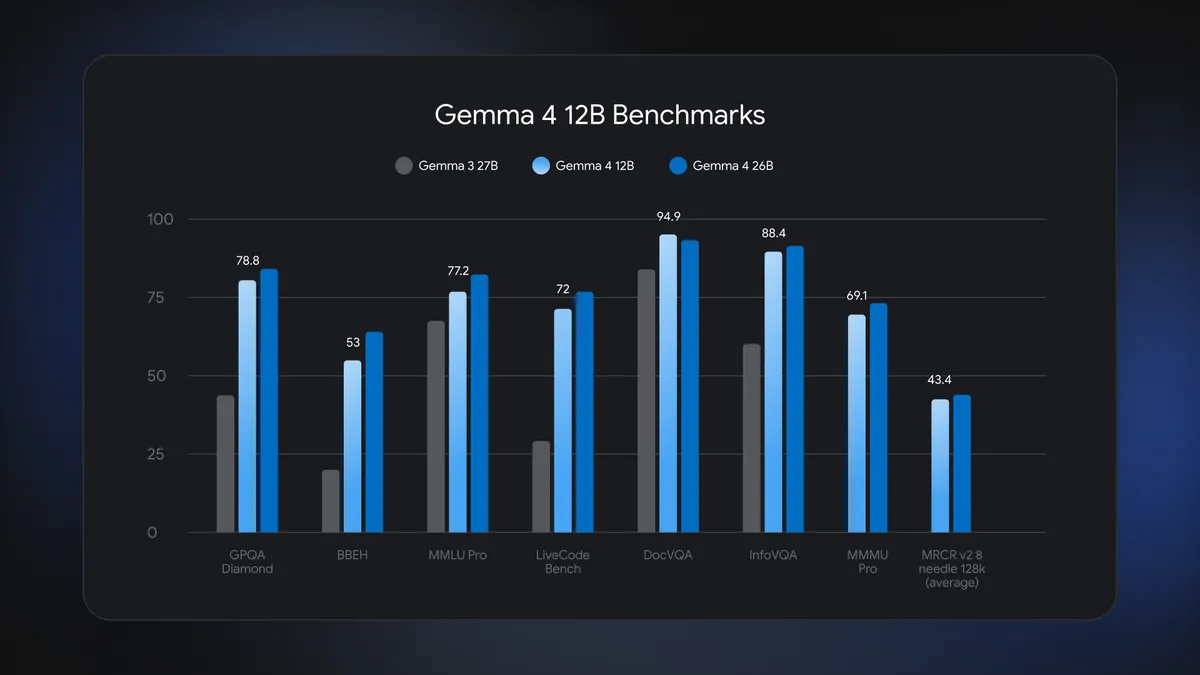
    • Advanced reasoning: Benchmark performance nearing our 26B model, unlocking powerful multi-step reasoning and agentic workflows.
    • Laptop ready: Small enough to run locally with just 16GB of VRAM or unified memory.
    • Open and accessible: Released under an Apache 2.0 license with support across the developer ecosystem.
    • Drafter-ready: Gemma 4 12B comes equipped with Multi-Token Prediction (MTP) drafters to reduce latency.

    Together, these features bring advanced multimodal capabilities to everyday hardware without sacrificing speed or reasoning. Let’s now take a closer look at how Gemma 4 12B achieves this.

    Run state-of-the-art agents locally

    Gemma 4 12B delivers performance nearing our larger 26B MoE model on standard benchmarks, but at less than half the total memory footprint. Small enough to run locally on consumer laptops with 16GB of RAM, it unlocks powerful multimodal and agentic experiences right on your machine.

    Gemma 4 12B Benchmark

    Experience a uniquely efficient, unified architecture

    What makes Gemma 4 12B stand out is its streamlined approach to processing visual and audio inputs. Traditional multimodal models typically rely on separate encoders to translate images and audio before passing those representations to the language model. Because these split encoders add latency and increase memory usage, we trained Gemma 4 12B with an encoder-free architecture to integrate audio and vision input directly.

    Here is how Gemma 4 12B processes multimodal inputs natively:

    • Vision: We replaced Gemma 4’s vision encoder with a lightweight embedding module consisting of a single matrix multiplication, positional embedding and normalizations. This allows the LLM backbone to take over visual processing.
    • Audio: We simplified audio processing even further. We removed the audio encoder entirely and projected the raw audio signal into the same dimensional space as text tokens.

    For developers who want a breakdown, head over to our companion Gemma 4 12B Developer Guide.

    See native audio processing in action: Watch Gemma 4 12B transcribe, format, and translate voice inputs entirely offline using the Google AI Edge Eloquent app.

    ” video-id=”Q5a7dAREbXM” video-type=”video”>

    Get started today

  • Powering the future of robotics in Europe

    Powering the future of robotics in Europe

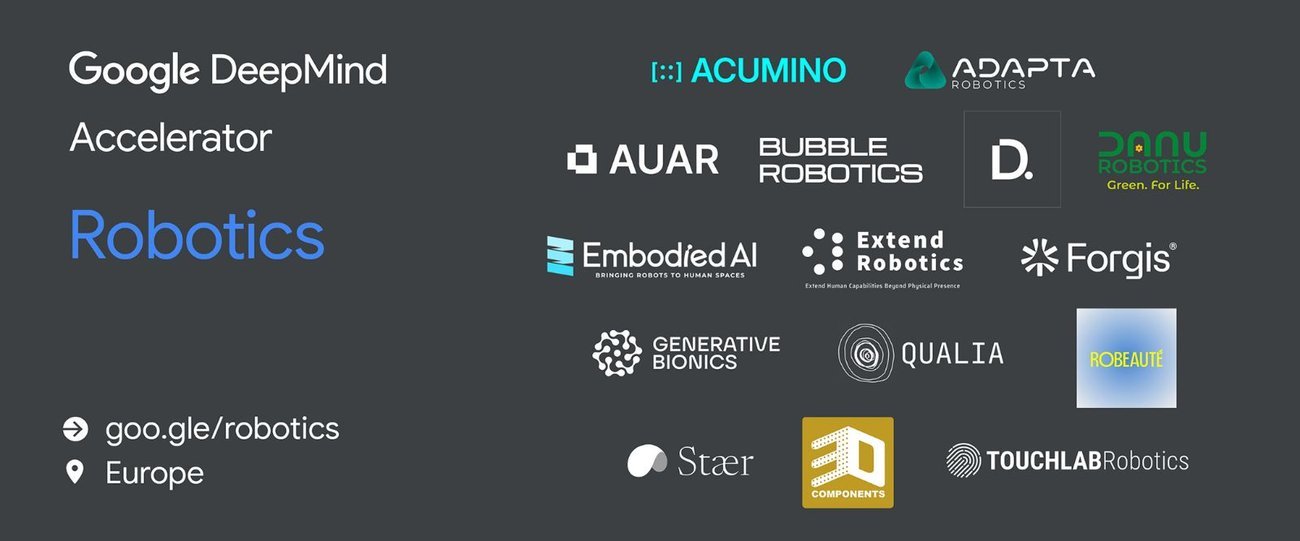
    Google DeepMind Accelerator selects 15 robotics companies from across Europe to join the program. Providing 3 months of intensive mentorship and technical support, enabling the integration of AI into their core products.


    Carolina Parada

    VP Robotics, Google DeepMind


    Google Deep mind startup partner logos

    Your browser does not support the audio element.

    Listen to article

    [[duration]] minutes

    This content is generated by Google AI. Generative AI is experimental

    AI has the potential to help solve some of the world’s biggest challenges — not just in the digital realm, but in the physical world, too. Robotics is one of the most exciting frontiers of AI, where advances in language, vision and action models can help create intelligent machines that interact with the real world in safer, more helpful and more adaptive ways.

    That’s why we’re launching the Google DeepMind Accelerator: Robotics, a three-month program for early-stage robotics startups across Europe. This week, the selected startup founders are coming together to kick off the program, meet the Google DeepMind and Google teams, and begin a journey designed to support the next generation of physical AI. They’ll have access to our AI stack, technical expertise and Gemini robotics models.

    Selected from a strong pool of applicants, these startups will receive hands-on support from Google DeepMind and Google experts throughout the program. Through technical mentorship, product guidance and a wide network of partners, the accelerator will help founders turn cutting-edge AI research into real-world robotics applications. The cohort joining us in London this week reflects the breadth of opportunity in embodied AI — from logistics and manufacturing to healthcare, climate, and advanced navigation.

    Meet the startups and founders shaping the future of robotics and embodied AI:

    • 3D-Components AS (Norway): Developing RobTrack, an AI-driven platform that automates parameter selection and quality control for robotic welding and metal 3D-printing, 280X faster than current practices.
    • Acumino (Greece): Develops hardware-agnostic Physical AI that enables robots to perform complex industrial tasks in a scalable, cost-efficient, reliable manner with high ROI.
    • Adapta Robotics (Romania): Deploys physical AI replicating human touch to test devices and software for healthcare, automotive and consumer electronics, unlocking automated QA and supporting the circular economy.
    • AUAR (Automated Architecture) (United Kingdom): Makes homebuilding more affordable by deploying robotic MicroFactories directly to construction sites.
    • Bubble Robotics (France): Building the ocean’s autonomous workforce: a vessel-free constellation of self-docking surface and subsea robots that see, hear, and act, feeding a live underwater world model.
    • Danu Robotics (United Kingdom): Uses embodied AI robotic systems to automate complex waste sorting, increasing efficiency, improving safety, and enabling scalable recovery of valuable materials that supports the circular economy.
    • Deltia GmbH (Germany): Digitizes production-line work, transforming workflows into process graphs that help teams optimize manual processes and automate repetitive tasks so people can focus where they matter most.
    • Embodied AI (Switzerland): Deploys teleoperated humanoids that collect data during customer service to continuously train and improve their manipulation skills.
    • Extend Robotics (United Kingdom): Provides teleoperation software and data pipelines that help train and fine-tune foundation models for real-world robotics applications.
    • Forgis (Switzerland): Develops AI agents that understand machines like experienced engineers, predicting failures and optimizing operations.
    • Generative Bionics (Italy): Amplifies human potential by developing humanoid robots based on physical AI, developed in Europe but built to scale globally.
    • Qualia (Denmark): Building infrastructure that enables companies to turn robotic foundation models into working deployments, automating and optimising time-consuming manual labor.
    • ROBEAUTE (France): Building microrobots that navigate through brain tissue to diagnose, treat and monitor neuropathology, establishing a new physical infrastructure layer in neurosurgery.
    • Staer (Sweden): Uses computer vision on existing cameras and sensors to build 3D spatial models of facilities, giving robots a shared environment to navigate and operators real-time visibility into how their physical operations actually run.
    • Touchlab (United Kingdom): Uses advanced nano inks to create an “e-skin” that gives robots a high-resolution sense of touch across flexible surfaces.

    These startups reflect the growing momentum of robotics and intelligent systems across Europe. Each company will receive mentorship and strategic guidance from Google DeepMind and Google to help them accelerate development and scale responsibly.

    Congratulations to this cohort! To learn more about the Google DeepMind Accelerator: Robotics, visit the official program page.

    Get the latest news from Google in your inbox

    Sign up for our newsletters with product updates, event information, special offers, and more.

    Your information will be used in accordance with Google’s privacy policy. You may opt out at any time.

  • Measuring the impact of learning with AI in Sierra Leone and beyond

    Measuring the impact of learning with AI in Sierra Leone and beyond

    The results from this pre-registered trial suggest that AI can be a powerful pedagogical partner — not by replacing teachers, but by augmenting their reach. This study is part of our ongoing effort to build a global evidence base for the impact of AI on teaching and learning.

    Beyond the answer engine: protecting critical thinking

    A common concern is that generative AI could become a shortcut for students, potentially bypassing the challenging yet essential cognitive effort required for deeper learning. Guided Learning is designed to address this concern: it’s built from years of research and work in our LearnLM efforts to be pedagogically-grounded and specifically tuned to prioritize building understanding over providing direct answers.

    The data from Sierra Leone suggests this approach is working. An analysis of over 113,000 interactions exchanged during our trial revealed that students used the tool to build conceptual understanding in 91.4% of conversations, rather than simply seeking solutions. Gemini responded by posing scaffolding questions in 76% of its messages, providing direct solutions in only 2% of cases. This “Socratic” interaction ensures that the cognitive heavy lifting remains with the student.

    A teacher-led intervention

    The success of this trial was built on a partnership between AI and educators, where teachers remained firmly at the center of the experience. Educators designed the lessons, set the objectives, and facilitated classroom discussions that drove learning.

    In focus groups, teachers reported that Gemini also supported their own professional growth. By using the tool for lesson preparation, they discovered new ways to explain familiar topics like fractions. Many described a shift from “lecturers” to “facilitators,” moving through the classroom to support pairs of students as they navigated their own learning journeys.

    To help others implement similar programs, we are releasing a teacher training guide with materials created in collaboration with Fab AI, including the specific protocols used for this study.

    Measuring the impact

    The quantitative results were significant. Students using Guided Learning saw a gain of +0.258 standard deviations in their math scores compared to the control group. In practical terms, this represents roughly 1.2 to 1.7 years of typical learning progress achieved within the eight-week trial.

    Students in classrooms where their teachers incorporated Gemini into roughly half their lessons to meet a target of 12 hours during the trial saw even higher gains—roughly 1.8 to 2.5 years of progress. Engagement was also remarkably high: 69% of students met or exceeded usage targets, far surpassing the five percent typical for voluntary educational technology (famously known as “The Five Percent Problem”). That means students were not only engaged but they enjoyed coming to class more.

    Beyond the numbers, we also saw a profound shift in behavior. Students reported enjoying math more and actively engaged with learning beyond regular instruction. Crucially, over time, their conversations and questions became more learning-oriented, shifting toward skill building instead of seeking direct solutions. Specifically, skill-building queries rose to 90% by the final week — up from 68% in the first week — while solution-seeking questions dropped from 25% to 10%, proving students didn’t just want answers, they wanted to understand how they got there.

    To further understand the impact of Guided Learning on student learning, we are conducting a series of additional pre-registered RCTs globally. In the interest of advancing open science and disseminating timely insights, we are also releasing a playbook on our approach to RCTs with Fab AI to help others run faster, scalable studies aligned to their needs and contexts — to uncover robust localised evidence that keeps pace with technological advances. We will continue to publish our results and learnings as we conclude subsequent RCTs to construct a more comprehensive, cross-country evidence base, which we hope will inform responsible development of AI across the learning ecosystem. Additionally, our support of the Global AI for Learning Alliance (GAILA) will accelerate these commitments and others through collective action.

    The path forward

    Though these results are promising, they also highlighted the challenge of the “achievement gap.” While the majority of students benefited, those who entered the trial with stronger math skills benefited most. This underscores an important need: to offer tools that deliver the strongest gains for the students who need it most.

    Looking ahead, we plan to expand these trials to other countries and probe more deeply into areas like metacognition and relational intelligence to capture a more holistic view that explores the nuanced complexity of learning. By combining the relational foundation of a teacher-led classroom of students with the personalized, scaffolding capabilities of AI, we can help ensure that technology serves as a bridge to meaningful learning opportunities for all.

    1 We also received support from Google.org and the Gates Foundation to conduct the trial. EducAid, Laterite and Oxford MeasurEd also collaborated with us.

  • We’re launching the Google DeepMind Accelerator program in Asia Pacific to tackle environmental risks

    We’re launching the Google DeepMind Accelerator program in Asia Pacific to tackle environmental risks

    The Asia-Pacific region is a global engine for economic growth, but it’s also highly vulnerable to climate change. While green technologies are gaining momentum, a recent report shows they aren’t scaling fast enough to keep up with the region’s rising environmental risks.

    To help innovators tackle these environmental challenges, we’re launching an inaugural Google DeepMind Accelerator program in APAC focused on “AI for the Planet.”

    This three-month program is designed for startups, research teams and nonprofits across the region to use frontier AI to solve problems in nature, climate, agriculture, energy and more. Selected organizations will receive expert mentorship, tailored support and help integrating frontier AI and science AI models from Google AI experts into their projects or products.

    If you’re working on climate solutions, we want to help you scale your work. The program kicks off with an in-person bootcamp in Singapore, and you can learn more and register your interest today.

    Google DeepMind Accelerator conceptual images

  • Fast-tracking genetic leads to reverse cellular aging

    Fast-tracking genetic leads to reverse cellular aging

    Two of the biggest bottlenecks in aging research are deciding which genetic pathways to test and making sense of the vast data those experiments produce. Biologists Omar Abudayyeh and Jonathan Gootenberg are using Co-Scientist to help them blast through both.

    Their lab runs huge genetic screens that flip thousands of genes on or off then reads how cells respond to these changes. The goal is to find changes that push cells away from senescence – a damaged state linked to aging – and toward a youthful state in tissues such as skin, hair, and muscle.

    Co-Scientist is helping on two fronts. First, it generates leads. When the team asked it to trawl the scientific literature for factors that might reverse aging, it scanned tens of thousands of papers, considered a multitude of hypotheses, and ultimately proposed more than 20 novel, plausible genetic factors to test. Lab tests validated a couple Co-Scientist’s hypotheses, with its recommended factors successfully driving cells into a younger state with improved overall function.

    Second, Co-Scientist speeds up the follow-through. Once the team has results from a big screen, they have to figure out what the enormous amount of data might mean, and which directions are worth pursuing next. That kind of analysis – trying to connect test results to years of scattered scientific literature – can take a researcher up to six months. Having Co-Scientist analyse their screening data alongside the literature, that work is slashed to just a few days.