Author: admin

  • Uncovering repurposed medicines to fight liver fibrosis

    Uncovering repurposed medicines to fight liver fibrosis

    Liver fibrosis is a scarring process that can lead to cirrhosis, which causes more than 1.4 million deaths each year. Geneticist Gary Peltz at Stanford University School of Medicine is using Co-Scientist to accelerate the hunt for medicines that can slow, stop, or reverse it.

    In research published in Advanced Science, Peltz’s team explored whether Co-Scientist could support efforts to identify drugs from the vast literature of existing medicines that could be repurposed to treat fibrosis. Peltz asked Co-Scientist to propose three candidates and explain its reasoning. He also identified two candidate drugs himself, based on their notable presence in the liver fibrosis literature.

    Then Peltz put all five drugs through his lab’s fibrosis testbed, which consists of live human liver cells. His two drug picks showed no benefit against fibrosis. By contrast, of the three drug candidates selected by Co-Scientist, two blocked fibrosis and promoted the regeneration of liver cells. One of these drugs had only been linked to liver fibrosis in a handful of papers – a needle in the haystack of scientific literature.

    Co-Scientist’s standout pick was the cancer drug vorinostat. In Peltz’s experiments, it blocked 91% of a damage response that can drive liver scarring. Co-Scientist’s suggestions pointed toward drugs that reshape gene activity, rather than targeting a single fibrosis pathway. Peltz argues that such drugs deserve serious consideration as treatments for liver fibrosis, and could ultimately help launch a new generation of anti-fibrotic medicines.

  • How WeatherNext helped the National Hurricane Center better predict Hurricane Melissa’s historic landfall in Jamaica

    How WeatherNext helped the National Hurricane Center better predict Hurricane Melissa’s historic landfall in Jamaica

    May 19, 2026 Science

    WeatherNext team

    The National Hurricane Center was able to issue advanced weather warnings to give communities in Jamaica additional lead time to prepare, evacuate, and help protect livelihoods

    In October 2025, Hurricane Melissa made history. It was the strongest hurricane on record to land in Jamaica and tied for the strongest hurricane in the Atlantic.

    The National Hurricane Center’s (NHC) forecast also marked a historic milestone. For the first time, they predicted a storm would reach Category 5 intensity starting from Category 1 wind speed. Our AI model WeatherNext helped the NHC make this decision by predicting the storm’s rapid intensification and landfall in Jamaica with high confidence—and most critically, this prediction came five days in advance.

    Predicting dangerous storms earlier and more accurately helps teams on the ground to better mobilize resources and coordinate evacuations effectively.

    Watch how WeatherNext provided accurate, early forecasting for 2025’s Hurricane Melissa and its Category 5 landfall in Jamaica.

    The challenge of rapid intensification

    Predicting a storm’s path is difficult, but predicting a sudden jump in strength – known as “rapid intensification” – is even harder. This occurs when a hurricane’s winds increase by at least 35 mph in just 24 hours. These events are very difficult to predict and also exceedingly dangerous because a weak system can transform into a major hurricane overnight, leaving little time to prepare.

    Tropical storms and hurricanes can change very quickly in terms of their structure and their intensity, which makes them more challenging to predict than other types of weather systems.

    Michael Brennan

    Director, National Hurricane Center

    Historically, meteorologists faced a trade-off: larger global models were excellent at predicting a storm’s path, but often lacked the resolution to see the small-scale thunderstorms that drove its “engine”. Conversely, high-resolution local models could better see intensity, but lacked global context for accurate track forecasting. This meant that models either excelled at predicting a tropical cyclone’s track, or its intensity, but not both.

    A scientific breakthrough with WeatherNext

    An ensemble of predicted tracks for Hurricane Melissa from seven days before landfall down to October 28th 2025, when Hurricane Melissa made landfall in Jamaica as a Category 5 storm.

    Developed by Google DeepMind and Google Research, our AI weather model WeatherNext bridges this historical gap by excelling at predicting both track and intensity. As part of Google’s Earth AI initiative, the model achieves this dual capability by training on decades of global weather patterns alongside specialized datasets of extreme tropical cyclones.

    Rather than providing a single “best guess,” WeatherNext can run ensembles of 50 different “what-if” scenarios, giving experts a broader range of possibilities to inform decision-making. We made this data available to everyone as an experimental showcase through Weather Lab.

    When Hurricane Melissa was first identified as a weak tropical depression, traditional models wavered on whether it would strike Haiti as a weak system or intensify toward Jamaica. WeatherNext, however, predicted a Category 5 strength landfall in Jamaica five days in advance with 80% confidence, which increased to near 100% three days in advance. This was the first time a storm was successfully predicted to reach Category 5 strength starting from such a low initial wind speed. Identifying a top-tier hurricane from such modest beginnings marks a historic turning point in the ability to anticipate extreme intensification events.

    Striking late in the Atlantic hurricane season, Melissa arrived after NHC forecasters had already spent months validating and gaining confidence in WeatherNext. On average, WeatherNext consistently performed exceptionally well for both track and intensity. This performance gave forecasters confidence in situations like Melissa, where both intensity and landfall prediction were critical.

    WeatherNext achieves exceptional performance in predicting tropical cyclone tracks and intensities. Chart shows 2025 individual operational models weighted average data for merged Atlantic and North Pacific regions. Plot compiled based on data in the NHC’s annual verification report.

    Helping protect communities on the ground

    Evan Thompson is the Principal Director, Meteorological Service Jamaica based in Kingston, Jamaica.

    The NHC serves as the World Meteorological Organization’s (WMO) Regional Specialized Meteorological Center for tropical cyclones for the Atlantic and Eastern Pacific, providing forecasts and warnings for nearly 30 countries.

    Supported by WeatherNext’s predictions, along with physics-based models like HAFS, and real-time data from satellites and hurricane hunters, the NHC was able to provide the Meteorological Service Jamaica with unprecedented lead time. This allowed local officials to mobilize resources and coordinate evacuations effectively.

    With early evacuation and better preparation, that reduction in harm really does make a difference to our people. […] It does actually save their lives, and it saves the livelihoods that they want to secure.

    Evan Thompson

    Principal Director, Meteorological Service Jamaica

    Scaling global safety

    The impact of WeatherNext’s use during Hurricane Melissa is the result of a multi-year collaboration between Google and the NHC. Across the 2025 hurricane season the NHC’s annual verification report found that WeatherNext was the top-performing individual model for track and intensity supporting expert decision-making. As the upcoming hurricane season begins, we will continue to work alongside the NHC. We will remain an integral part of the NHC track and intensity guidance suite and hope our models can be useful in supporting their critical life-saving work.

    We are also actively bringing these research capabilities to other critically affected regions, including the Philippines (PAGASA), Taiwan (CWA), Indonesia (BMKG) and Vietnam (VNMHA). Future priorities will also include collaborations with local agencies in Japan, Australia, and India where we want to continue this research in partnership with local experts. In all of these research efforts, all official weather alerts and warnings are issued solely by the respective national meteorological authorities.

    By combining the speed and accuracy of AI with the irreplaceable experience of expert forecasters, we aim to reduce the human and economic toll of natural disasters.

    We’ve already integrated this technology into forecasts on Search in geographic areas covered by NOAA and are working to expand access to other regions.

    Note: For official weather forecasts and warnings, refer to your local meteorological agency or national weather service.

    Acknowledgements

    We thank Ferran Alet, Tom Andersson, Ilan Price, Stratis Markou, Andrew El-Kadi , Dominic Masters, Amy Li, Samier Merchant, Natalie Williams, Gregory Thornton, Ken MacKay, Olivia Graham, Ben Gaiarin, Elinor Kruse, Akib Uddin, Juanita Bawagan, Armin Senoner, Devaja Shah, Jacklynn Stott, Remi Lam, Aaron Bell, Paul Komarek, Matthew Willson, Alvaro Sanchez-Gonzalez and Peter Battaglia.

    We also thank the teams at the National Hurricane Center, UK Met Office and the Cooperative Institute for Research in the Atmosphere.

    Finally, we thank Raia Hadsell, Zoubin Ghahramani, Yossi Matias, Demis Hassabis for their support of this work.

    WeatherNext 3

    How we’re supporting better tropical cyclone prediction with AI

    WeatherNext 2: Our most advanced weather forecasting model

    GenCast predicts weather and the risks of extreme conditions with state-of-the-art accuracy

  • Gemini 3.5: frontier intelligence with action

    Gemini 3.5: frontier intelligence with action

    Gemini 3.5 is built to help you execute complex, agentic workflows.


    Oriol Vinyals

    Vice President, Google DeepMind

    Noam Shazeer

    Vice President, Google DeepMind


    Gemini 3.5 text and multi-colored star icon on an abstract blue background.

    Today, we’re introducing Gemini 3.5, our latest family of models combining frontier intelligence with action. This represents a major leap forward in building more capable, intelligent agents. We’re kicking off the series by releasing 3.5 Flash. It delivers frontier performance for agents and coding, excelling at complex long-horizon tasks that deliver real-world utility.

    3.5 Flash is available today to billions of people globally:

    • For everyone via the Gemini app and AI Mode in Google Search
    • For developers in our agent-first development platform Google Antigravity and Gemini API in Google AI Studio and Android Studio
    • For enterprises in Gemini Enterprise Agent Platform and Gemini Enterprise.

    We’re also hard at work on 3.5 Pro. It’s already being used internally, and we look forward to rolling it out next month.

    3.5 Flash: frontier performance for agents and coding

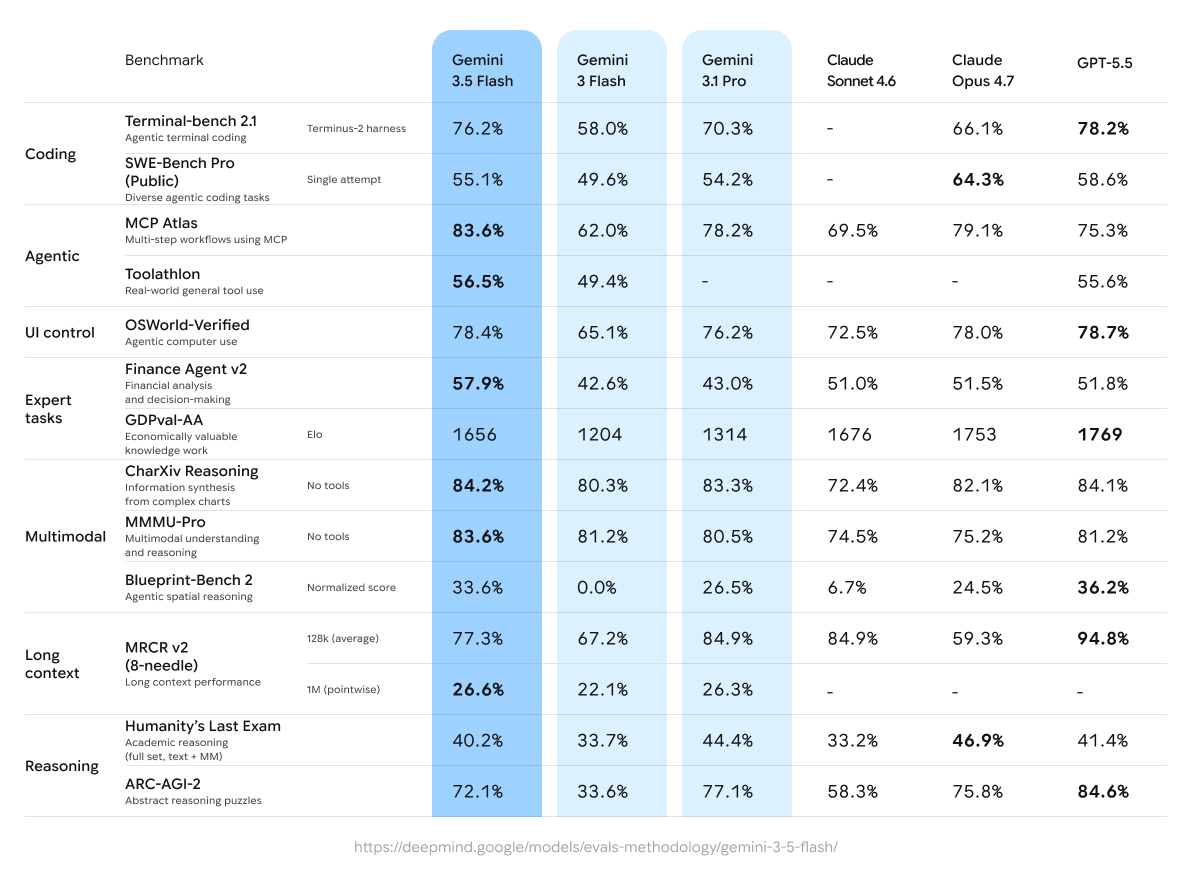
    Gemini 3.5 Flash delivers intelligence that rivals large flagship models on multiple dimensions, at the speeds you have come to expect from the Flash series. It’s our strongest agentic and coding model yet, outperforming Gemini 3.1 Pro on challenging coding and agentic benchmarks like Terminal-Bench 2.1 (76.2%), GDPval-AA (1656 Elo) and MCP Atlas (83.6%), and leading in multimodal understanding (84.2% on CharXiv Reasoning). When looking at output tokens per second, it is 4 times faster than other frontier models.

    Performance comparison table of Gemini, Claude, and GPT models across various benchmarks, highlighting Gemini 3.5 Flash.

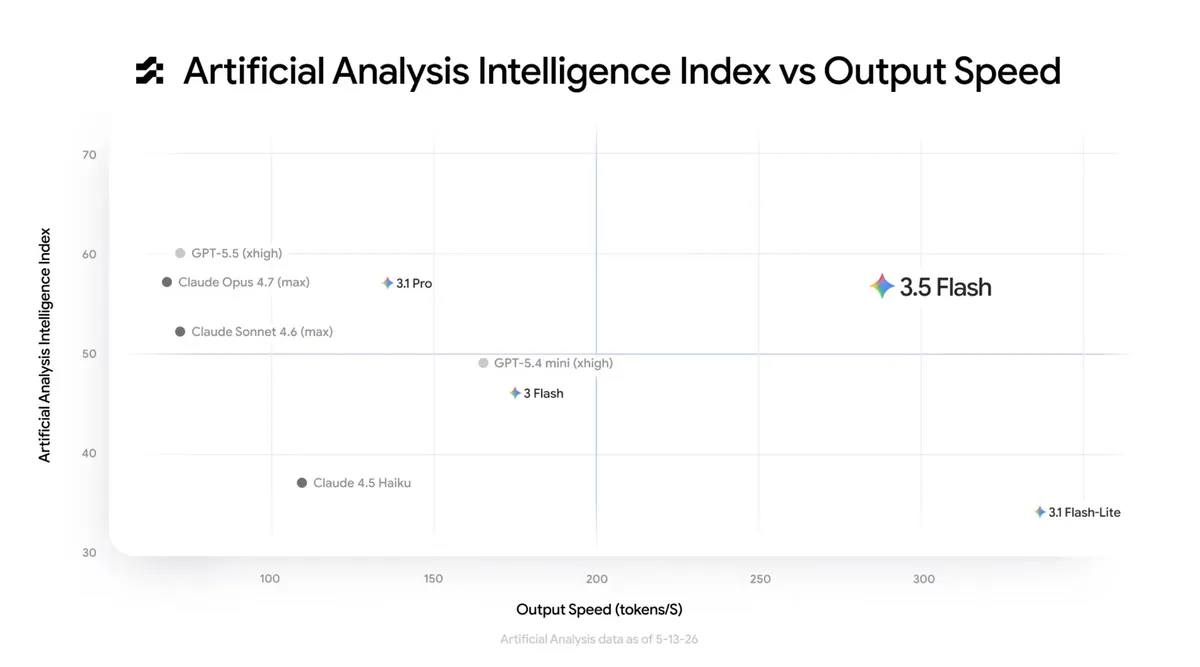
    Landing in the top-right quadrant of the Artificial Analysis index, 3.5 Flash delivers frontier-level intelligence at exceptional speed — proving you no longer have to trade quality for latency.

    an image showing

    3.5 Flash: agentic tasks at scale

    This balance of speed and performance makes 3.5 Flash ideal for tackling long-horizon agentic tasks. What used to take a developer days or an auditor weeks, 3.5 Flash can now help complete in a fraction of the time, often at less than half the cost of other frontier models. It rapidly plans, builds and iterates to solve real-world problems, whether it’s developing new applications, maintaining codebases or helping to prepare financial documents.

    When coupled with the updated Antigravity harness, 3.5 Flash becomes a powerful engine for deploying collaborative subagents to tackle problems at scale for the most demanding use cases. Under supervision, it can reliably execute multi-step workflows and coding tasks while sustaining frontier performance.

    Building on the strong multimodal foundation of Gemini 3, 3.5 Flash generates richer, more interactive web UIs and graphics.

    3.5 Flash: real-world impact

    3.5 Flash’s real-world agentic capabilities are already driving meaningful progress for our developers and enterprises alike. In developing the 3.5 model series, we worked closely with industry partners to understand where toil and complexity arose in their workflows. Partners are seeing meaningful impact — from banks and fintechs automating multi-week workflows to data science teams unearthing insights amidst complex data environments.

    Personal AI agents: built with 3.5 Flash

    3.5 Flash is now the default model for the Gemini app and AI Mode in Search globally. At I/O today, we showed how its agentic capabilities are powering new features to bring frontier-level intelligence to your daily life.

    The new Gemini Spark, your personal AI agent, uses 3.5 Flash. It runs 24/7, helping you navigate your digital life, taking action on your behalf while under your direction. We’re starting to roll out Gemini Spark to trusted testers today, and we’re planning on bringing the Beta to Google AI Ultra subscribers in the US next week.

    an image of Gemini Spark

    an image of Gemini Spark

    an image of Gemini Spark

    an image of Gemini Spark

    an image of Gemini Spark

    The enhanced agentic coding capabilities of 3.5 Flash are also delivering even more intelligent experiences across Search, from introducing new information agents that work for you 24/7 to unlocking more dynamic generative UI experiences. Learn more in our blog post.

    Search leverages 3.5 Flash to build an interactive visual explaining Gyroid patterns.

    Gemini 3.5: built with frontier safeguards

    Gemini 3.5 was developed in accordance with our Frontier Safety Framework. We have strengthened our cyber and CBRN safeguards, which means it’s less likely to generate harmful content, and to mistakenly refuse to answer safe queries. We achieve this with new, more advanced safety training and mitigations, including interpretability tools that help check and understand the AI’s inner reasoning before it provides a response.

    3.5 Flash is available today

    Gemini 3.5 Flash is generally available via Google Antigravity, the Gemini API in Google AI Studio and Android Studio, Gemini Enterprise Agent Platform and Gemini Enterprise. It’s also now available to everyone in the Gemini app and AI Mode in Search. On behalf of the entire Gemini team, we can’t wait to see what you build.

    Collection

    I/O 2026

    Here’s a look at everything we announced at Google I/O 2026.

    See more

    The image shows a colorful abstract design with the Google I/O 2026 logo.

    Get the latest news from Google in your inbox

    Sign up for our newsletters with product updates, event information, special offers, and more.

    Your information will be used in accordance with Google’s privacy policy. You may opt out at any time.

  • Pactto

    The room where creative teams align and AI takes action

    Discussion
    |
    Link

  • Co-Scientist: A multi-agent AI partner to accelerate research

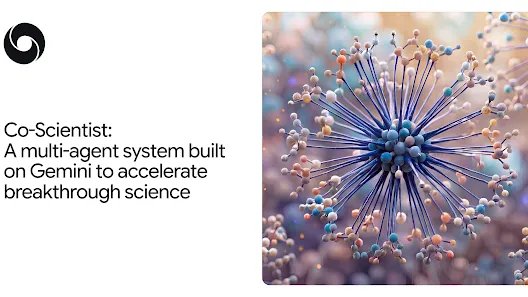
    Co-Scientist: A multi-agent AI partner to accelerate research

    May 19, 2026 Science

    Co-Scientist team

    Introducing a collaborative AI partner for researchers to develop new hypotheses in life sciences and beyond.

    Every great scientific breakthrough begins with a single, transformative idea. The spark of discovery relies on a researcher’s ability to connect disparate facts and formulate the right hypothesis to test. But in an era of information overload and increasingly complex challenges, the search for these needle-in-a-haystack ideas has become a significant bottleneck for progress.

    We believe AI can help dramatically accelerate the pace of breakthroughs by serving as a dedicated partner in the generation and refinement of breakthrough scientific hypotheses.

    Today, in Nature we published our latest Co-Scientist research, introducing a new multi-agent AI system built with Gemini that iteratively generates, debates, and evolves novel hypotheses for complex scientific problems.

    We are making the Co-Scientist system available to individual researchers through Hypothesis Generation, a new experimental tool jointly developed across Google DeepMind, Google Research, Google Cloud and Google Labs. We’ll begin rolling out in the coming weeks and researchers can register their interest at labs.google/science.

    Since sharing our early research last year, we’ve been developing and testing Co-Scientist together with teams who are leveraging it to tackle challenging problems – from antimicrobial resistance and plant immunity to liver fibrosis. We’re excited to share some of the ways it is already being applied across fundamental biology, the natural sciences, and engineering.

    How Co-Scientist works: A multi-agent system built with Gemini

    Scientific discovery is rarely a straight line; it is a cycle of ideation and hypothesis generation, critique, and refinement. Scientists often reach their most profound insights only after wrestling with a complex problem for days, months, or even years. The core research question behind Co-Scientist was: How can an AI system engage in this rigorous structured thinking for scientific discovery?

    The Co-Scientist AI system is made of a collaborative coalition of specialized agents based on the Gemini model, which we can group into three different phases:

    Generate ideas:

    • Generation agent – Proposes initial focus areas and novel hypotheses grounded in scientific literature and data.
    • Proximity agent – Maps and clusters generated hypotheses to help ensure a diverse, comprehensive exploration of the research space.

    Debate ideas:

    • Reflection agent – Acts as a “virtual peer reviewer,” critically evaluating hypotheses for correctness, quality, and novelty.
    • Ranking agent – Orchestrates an “idea tournament”, using pairwise comparisons and simulated scientific debates to prioritize the most promising paths and hypotheses.

    Evolve ideas:

    • Evolution agent – Continuously refines, combines, and builds upon the top-ranked hypotheses in the tournament to help iteratively improve their quality.
    • Meta-review agent – Synthesizes insights from the debates and idea tournament to continuously optimize the system and generates the final research proposal for the scientist to review.

    Orchestrating the agent coalition is a supervisor agent acting as an adaptive planner. Unlike AI models that think linearly, this freeform planner breaks down high-level research goals into executable steps, coordinating agents to run in parallel and explore multiple avenues simultaneously.

    Generated ideas are iteratively refined, critiqued and evolved into new hypotheses, forming a virtuous cycle of scientific reasoning and hypothesis generation.

    Tournament of ideas: How our system verifies, refines, and ranks hypotheses

    Co-Scientist can explore thousands of research directions. To help find the most impactful ones, we developed the ‘tournament of ideas’. The approach draws from principles used in AlphaGo and AlphaStar – but instead of playing a game, our AI agents hold scientific debates to generate, refine and rank ideas.

    To push the boundaries of novelty while ensuring the hypotheses are robust and testable, the majority of the system’s computation is dedicated to verifying these hypotheses. By deeply cross-checking claims against scientific literature and data, the system ensures that claims remain grounded, factually accurate, and logically coherent. The system currently integrates web search and specialized databases like ChEMBL and UniProt to incorporate additional knowledge. It can also leverage advanced specialized models as tools like AlphaFold, which we are testing in select research collaborations.

    This combination of these capabilities helps make Co-Scientist one of the first examples of a reliable multi-agent system for structured scientific thinking, enabling it to deliver tangible results in novel hypothesis generation for complex scientific problems .

    The idea tournament is iteratively ranking hypotheses via an Elo-based tournament while also injecting fresh knowledge to expand its exploration of the hypothesis space.

    Uncovering repurposed medicines to fight liver fibrosis

    Co-Scientist helped accelerate Gary Peltz’s search for liver fibrosis treatments. The multi-agent system highlighted overlooked drug-repurposing candidates, including one that successfully blocked 91% of a scarring-linked response in lab tests. The results, published in Advanced Science, point toward new gene-regulating approaches to treat chronic liver disease.

    “Co-Scientist feels like a collaborator that’s read everything available about biomedical science, with the reasoning capabilities to find the connections that we’re currently missing.”

    Professor Gary Peltz, Stanford University School of Medicine

    Uniting biological toolkits for a new approach to ALS

    Co-Scientist helped unite Ritu Raman and Ryan Flynn’s labs around the degenerative disease, ALS. The system helped Ritu quickly digest complex literature, propose testable ideas, and spot where complementary expertise could strengthen the best leads, sparking collaboration with Ryan on potential RNA-based approaches to ALS.

    “Science is a team sport. Co-Scientist can’t do science by itself, and I can’t do it all by myself either. It helps me structure my thoughts, so I know what to ask of other experts and collaborators.”

    Associate Professor Ritu Raman, Massachusetts Institute of Technology

    Fast-tracking genetic leads to reverse cellular aging

    Biologists Omar Abudayyeh and Jonathan Gootenberg are using Co‑Scientist to speed up research on reversing cellular aging. The system synthesises decades of literature to propose novel genetic leads that in lab tests have been shown to rejuvenate cells. It also slashes the time needed to analyse huge screening datasets, from months to days.

    “Using Co-Scientist feels like having a team of 50 people at your disposal, doing all the work within a day, which isn’t something we can otherwise do with our lab.”

    Omar Abudayyeh, Principal Investigator, The Abudayyeh–Gootenberg Lab

    Accelerating discovery of liver disease mechanisms

    For Filippo Menolascina, Co-Scientist helped turn biomedical literature overload into high-quality hypotheses for metabolic liver disease. The system highlighted promising disease mechanisms and drug combinations, and helped explain why an existing drug benefits only some patients – an idea later supported by Menolascina’s lab tests.

    “Co‑Scientist feels like a jetpack for scientists, powering up our ability to identify promising mechanisms. I think we’re on the brink of a scientific revolution that will significantly shorten the iteration cycles needed to achieve breakthroughs.”

    Filippo Menolascina, Professor of Engineering Biology, University of Edinburgh

    Finding the molecular switches behind new infectious diseases

    Clare Bryant is using Co-Scientist to help identify the proteins that cause severe disease when pathogens like flu and COVID-19 leap from animals to humans. Iterating with the AI system, she rapidly narrowed the hunt to specific amino acids her lab will test — potentially cutting years of experimental work down to months.

    “Co-Scientist pulls together the entire published literature and online resources to help me ask better questions. It catches what I’d miss in a data-rich field and helps me prioritise, so my team can focus on answering the right questions in the lab.“

    Clare Bryant, Professor of Innate Immunity, University of Cambridge

    Opening new paths in aging research

    At Calico Life Sciences, Matt Onsum and Katherine Labbé are using Co-Scientist to tackle one of medicine’s hardest problems: the biology of aging. The AI system has impressed Calico’s experts with its scientific discernment, including by generating an exciting novel hypothesis about the integrated stress response that was later confirmed in the lab.

    “What I found both exciting and surprising about using Co-Scientist is how much it thinks like a scientist. It really works naturally with how a scientist already thinks and behaves.”

    Dr Matt Onsum, Head of AI/ML, Calico Life Sciences

    Developing agentic tools with the scientific community

    Co-Scientist was developed in collaboration with researchers from over 100 institutions to test its capabilities and ensure it is a high-quality, useful tool for the scientific community.

    As part of our responsible AI approach, Co-Scientist underwent extensive internal and external safety evaluations. Given Co-Scientist’s demonstrated proficiency in life and physical sciences, we also conducted independent evaluations for misuse in Chemical, Biological, Radiological and Nuclear (CBRN) domains. From these findings, we developed custom safety classifiers to flag unethical research goals and mitigate the surfacing of unsafe information.

    We will continue to iterate and develop the tool alongside feedback and collaboration with the scientific community and are excited to be making Co-Scientist available to individual researchers through Gemini for Science. We also look forward to expanding access to more Google Cloud enterprise partners soon.

    We have been deeply inspired by the scientists who have built up our understanding of the world today. And we hope that AI can help researchers to usher in and accelerate a new era of scientific progress.

    Note: Co-Scientist is intended to be a partner in research, not a replacement for scientific or clinical expertise, and users are responsible for any decisions they make using the outputs as they continue their scientific journey.

    Acknowledgements

    This research project was led by Juraj Gottweis and Vivek Natarajan, as well as Alan Karthikesalingam, Annalisa Pawlosky, and Yunhan Xu, and with key contributions from: Wei-Hung Weng, Adam Marsh, Alexander Daryin, Alessio Orlandi, Andrew Carroll, Anil Palepu, Antonia Mould, Artiom Myaskovsky, Ash Otter, Avinatan Hassidim, Ben Feinstein, Burak Gokturk, Byron Lee, Dan Popovici, Dina Zverinski, Eeshit Dhaval Vaishnav, Elahe Vedadi, Fan Zhang, Felix Weissenberger, Florian Hasler, Frankie Garcia, Gary Peltz, Grzegorz Glowaty, Ivor Rendulic, Ivan Budiselic, Jacob Blum, James Stevenson, Jan Freyberg, Jeremy Ratcliff, Joel Fenster, José R Penadés, Katherine Chou, Kavita Kulkarni, Keran Rong, Khaled Saab, Luka Rimanic, Marina Boia, Mathias Voges, Matthias Bellaiche, Nenad Tomašev, Ottavia Bertolli, Paige Kunkle, Petar Sirkovic, Ryutaro Tanno, Suzy Pickering, Tao Tu, Tiago R D Costa, Tom Sheffer, Victoria Langston, Vikram Dhillon, Yuan Guan, Ziyue Wang, Amin Vahdat, James Manyika, Demis Hassabis, Yossi Matias and Pushmeet Kohli.

    We thank our teammates Ali-Cowen Rivers, Anna Trostanetski, Barnaby James, Bill Byrne, Boon Panichprecha, Charlie Taylor, Diego Ballesteros, Hussein Hassan Harrirou, Ieva Grublyte, Ivan Lee, Jakob Oesignhaus, James Walker, Jorge Barrios, Laurynas Tamulevičius, Luka Važić, Meet Shah, Mihai Ciorobea, Natasha Latysheva, Nicolas Stroppa, Nir Kerem, Saz Basu, Sebastian Nowozin, Taylor Applebaum, Team Rakket and, Thomas Wagner and Yaniv Carmel for their technical support.

    We also want to thank Carmela Sidrauski, Clare Bryant, Filippo Menolascina, Jonathan Gootenberg, Katherine Labbé, Matthew Onsum, Omar Abudayyeh, Ritu Raman, Ryan Flynn, Velia Siciliano for their collaboration.

    Finally, we thank Ali Eslami, Andy Berndt, Ankur Jain, Anna Koivuniemi, Clemens Mayer, Dale Webster, Greg Corrado, Jason Freidenfelds, Jeff Dean, Joelle Barral, John Jumper, John Platt, Josh Woodward, Karen DeSalvo, Koray Kavukcuoglu, Michael Brenner, Michael Howell, Noam Shazeer, Oriol Vinyals, Parthasarathy Ranganathan, Ronit Levavi Morad, Royal Hansen, Scott Huffman, Srini Narayanan, Susan Thomas, Thomas Kurian, Zoubin Ghahramani and Sundar Pichai for their support of this work.

  • AlphaEvolve: How our Gemini-powered coding agent is scaling impact across fields

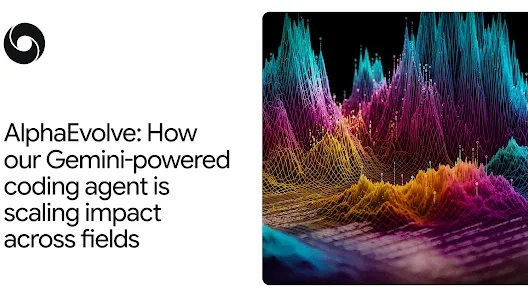
    AlphaEvolve: How our Gemini-powered coding agent is scaling impact across fields

    May 7, 2026 Science

    AlphaEvolve team

    A year ago, we introduced AlphaEvolve, a Gemini-powered coding agent for designing advanced algorithms. We showed that AlphaEvolve can help make new discoveries on open problems across mathematics and computer science, and optimize algorithms that have since been deployed across critical parts of Google’s infrastructure.

    Today, because algorithms are part of nearly every aspect of life, the landscape of what AlphaEvolve can achieve is even broader. From helping explain the physics of the natural world to powering electricity grids and computing infrastructure, there are countless ways AlphaEvolve can help accelerate progress for scientists and businesses across a variety of fields.

    We’re excited to share a collection of AlphaEvolve’s most significant impact to date.

    Driving social impact and sustainability

    AlphaEvolve has helped uncover key connections in health and sustainability research.

    In genomics, AlphaEvolve was used to improve DeepConsensus—a model developed by Google Research for correcting DNA sequencing errors— achieving a 30% reduction in variant detection errors. These improvements are helping scientists at PacBio analyze genetic data more accurately and at a lower cost.

    “The solution the Google team discovered using AlphaEvolve unlocks meaningfully higher accuracy rates for our sequencing instruments. For researchers, this higher-quality data might enable the discovery of previously hidden disease causing mutations.” — Aaron Wenger, Senior Director at PacBio

    In grid optimization, AlphaEvolve was applied to the AC Optimal Power Flow problem. It helped increase the ability of our trained Graph Neural Network (GNN) model to find feasible solutions for the problem from 14% to over 88%, significantly reducing the need for other costly post-processing steps for electricity grids.

    In earth sciences, AlphaEvolve translated complex geospatial data into more reliable, actionable insights. By helping automate the optimization of Earth AI models, the overall accuracy of predicting the risk of natural disaster—aggregated across 20 categories such as wildfires, floods, and tornadoes—was increased by 5%.

    Advancing the frontiers of research

    AlphaEvolve is serving as a powerful research partner, accelerating discovery across the sciences.

    In quantum physics, AlphaEvolve’s optimizations have made it possible to run complex molecular simulations on Google’s Willow quantum processor by suggesting quantum circuits with 10x lower error than previous conventionally optimized baselines. This has enabled immediate impactful contributions to first-of-a-kind experimental demonstrations of quantum computing — and it points toward a future where AlphaEvolve helps find algorithms that exceed the capabilities of classical computers.

    Working with world-renowned mathematicians like Terence Tao, the system has helped solve Erdős problems.

    “Tools such as AlphaEvolve are giving mathematicians very useful new capabilities. For optimization problems in particular, we can now quickly test potential inequalities for counterexamples, or to confirm our beliefs in what the extremizers are, which greatly improves our intuition about these problems and allows us to find rigorous proofs more readily.” — Terence Tao, Professor of Mathematics at UCLA

    AlphaEvolve has also broken records for classic mathematical challenges, including improving lower bounds for the Traveling Salesman Problem and Ramsey Numbers.

    AlphaEvolve optimizing an instance of the “Tammes problem“. You can explore a selection of additional problems for which AlphaEvolve generated potential solutions in the public Gallery.

    Improving AI infrastructure

    AlphaEvolve has graduated from pilot testing to becoming a core component of our infrastructure. AlphaEvolve has been used as a regular tool to optimize the design of the next generation of TPUs. It also helped discover more efficient cache replacement policies, achieving in two days what previously required a concerted, human-intensive effort spanning months.

    “AlphaEvolve began optimizing the lowest levels of hardware powering our AI stacks. It proposed a circuit design so counterintuitive yet efficient that it was integrated directly into the silicon of our next-generation TPUs. This is the latest example of TPU brains helping design next-generation TPU bodies.” — Jeff Dean, Chief Scientist, Google DeepMind and Google Research

    AlphaEvolve improved the efficiency of Google Spanner by refining its Log-Structured Merge-tree compaction heuristics. This optimization reduced ‘write amplification’—the ratio of data written to storage versus the original request—by 20%. It also provided insights for new compiler optimization strategies that reduced the storage footprint of software by nearly 9%.

    Scaling commercial applications

    Together with Google Cloud, we are now bringing the power of AlphaEvolve to a variety of commercial enterprises across industries.

    • In financial services, Klarna used the system to optimize one of its largest transformer models — doubling its training speed whilst improving model quality.
    • In semiconductor manufacturing, Substrate applied AlphaEvolve to its computational lithography framework, achieving a multi-fold increase in runtime speed, enabling them to run significantly larger simulations of advanced semiconductors.
    • In logistics, FM Logistic used the technology to optimize complex routing challenges like the Traveling Salesman Problem, finding 10.4% improvement in routing efficiency over the previous heavily optimized solutions — saving over 15,000 kilometers of distance travelled annually.
    • In advertising and marketing, WPP used AlphaEvolve to refine AI model components, navigating complex, high-dimensional campaign data and achieving 10% accuracy gains over their competitive manual model optimizations.
    • In computational material and life sciences, Schrödinger applied AlphaEvolve to achieve a roughly 4x speedup in both Machine Learned Force Fields (MLFF) training and inference.

    “AlphaEvolve allows us to explore larger chemical spaces faster and more efficiently than ever before. Faster MLFF inference carries real business impact, shortening R&D cycles in drug discovery, catalyst design, and materials development, and enabling companies to screen molecular candidates in days rather than months.” — Gabriel Marques, Technical Lead of Machine Learning at Schrödinger.

    The future of AlphaEvolve

    The past year shows how AlphaEvolve is rapidly becoming a versatile, general-purpose system. It is demonstrating that the next breakthroughs will be driven by algorithms that can learn, evolve and optimize themselves. As we look ahead, we are excited to expand these capabilities, and bring the power of this technology to an even broader set of external challenges.

    Acknowledgements

    AlphaEvolve was developed by Matej Balog, Alexander Novikov, Ngân Vũ, Marvin Eisenberger, Emilien Dupont, Po-Sen Huang, Adam Zsolt Wagner, Sergey Shirobokov, Borislav Kozlovskii, Francisco J. R. Ruiz, Abbas Mehrabian, M. Pawan Kumar, Abigail See, Swarat Chaudhuri, George Holland, Alex Davies, Sebastian Nowozin, and Pushmeet Kohli. This research was developed as part of a broader initiative focused on using AI for algorithm discovery. Following the initial development, Aja Huang, Anton Kovsharov, Alexey Cherepanov, Anindya Basu, Becky Evangelakos, Jamie Smith, and Mario Pinto joined the team and contributed to scaling AlphaEvolve’s impact.

    Adam Connors, Alex Bäuerle, Anna Trostanetski, Fernanda Viegas, Gabi Cardoso, Jonathan Caton, Lucas Dixon, Mariana Felix, Martin Wattenberg, Matin Akhlaghinia, Richard Green, Yosuke Ushigome, and Yunhan Xu collaborated with our team to develop the AlphaEvolve UI, with support from many others.

    Anant Nawalgaria, Diego Ballesteros, Gemma Jennings, Jakob Oesinghaus, Kartik Sanu, Laurynas Tamulevičius, Nicolas Stroppa, Nishta Dhawan, Oliver Hilsenbeck, Puneet Jagralapudi, Reah Miyara, Skander Hannachi, Tom Beyer, and Vishal Agarwal collaborated with our team to develop the AlphaEvolve API and engage with Google Cloud customers, with support from many others.

    We gratefully acknowledge our collaborators for leading applications of AlphaEvolve on critical problems and contributing to this report: Aaron Wenger, Abhradeep Guha Thakurta, Akanksha Jain, Alex Vitvitskyi, Amir Yazdan Bakhsh, Andrew Carroll, Aranyak Mehta, Arthur Conmy, Ansh Nagda, Davide Paglieri, Eric Perim Martins, Gabriella Marfani, Hassler Thurston, Hongzheng Chen, Jack Mason, János Kramár, Jasper Xian, Jeremy Ratcliff, Jessica Sapick, Johannes Bausch, Jonathan Katz, Kevin Miller, Kim Stachenfeld, Mark Kurzeja, Mircea Trofin, Myriam Khan, Nero Geng, Pablo Samuel Castro, Petar Veličković, Pi-Chuan Chang, Prabhakar Raghavan, Raghav Gupta, Rohin Shah, Sasha Vezhnevets, Sébastien Lahaie, Sergio Guadarrama, Shravya Shetty, Shruthi Gorantala, Terence Tao, Todd Lipcon, Tom O’Brien, Vinod Nair, Ziyue Wang, Zun Li, among many other users of AlphaEvolve.

    Finally, we thank our leadership for their guidance and support: Amin Vahdat, Ankur Jain, Demis Hassabis, Jeff Dean, Parthasarathy Ranganathan, Pushmeet Kohli, Saurabh Tiwary, and Sundar Pichai. We also extend our gratitude to our partner teams across Google DeepMind, Google Cloud, Google Labs, Google Research, and other product areas for enabling the applications and products powered by AlphaEvolve.
    AlphaEvolve: A Gemini-powered coding agent for designing advanced algorithms

  • Enabling a new model for healthcare with AI co-clinician

    Enabling a new model for healthcare with AI co-clinician

    April 30, 2026 Science

    Alan Karthikesalingam, Vivek Natarajan and Pushmeet Kohli

    Health systems worldwide are striving for better outcomes, lower costs, and an improved experience for both patients and clinicians. However, progress is constrained by a global shortage of clinical experts, with the World Health Organization predicting a shortfall of more than 10 million health workers by 2030.

    While AI is often seen as the key to bridging this gap, it has not yet been able to fully meet the needs of clinicians and patients. That’s why, today, we are announcing our AI co-clinician research initiative, to explore how AI could better amplify doctors’ expertise and deliver higher quality care to patients.

    At Google DeepMind, our journey in medical AI has evolved from mastering examination-style tests of medical knowledge with MedPaLM, to matching physician performance in text-based simulated medical consultations with AMIE, including in real-world feasibility trial settings. We also have a long history of studying how clinicians and AI systems might work together.

    We hypothesize that the next evolution of healthcare delivery will entail “triadic care” where AI agents can help patients in their care journeys under the clinical authority of their physician. Medicine has always been a team sport, and AI agents can bring more teammates onto the field: extending clinicians’ reach while ensuring they retain judgment and control.

    This serves as the foundation of our AI co-clinician research initiative: AI designed to function as a collaborative member of the care team that interacts with patients under expert clinical supervision. We designed and evaluated AI co-clinician in both clinician and patient-facing settings. Addressing both perspectives is key for AI to enhance the quality, cost, availability and experience of care delivery.

    Advancements in research into medical AI so that they might be more trustworthy and helpful for clinicians in assisting patients.

    Augmenting clinicians with AI co-clinician

    For a physician, a tool is useful only if it is trustworthy and factually grounded. We therefore researched how well AI co-clinician might support clinicians by surfacing high-quality evidence.

    In collaboration with academic physicians, we adapted the “NOHARM” framework to test our AI for “errors of commission” (incorrect information) and “errors of omission” (failure to surface critical information).

    In head-to-head blind evaluations, physicians consistently preferred AI co-clinician’s responses to leading evidence synthesis tools. In objective analysis of 98 realistic primary care queries, our system recorded zero critical errors in 97 cases, improving over two AI systems widely used by physicians.

    The study used a blind comparison of 98 realistic primary care queries, which were curated from a diverse range of sources and subsequently refined by a panel of attending physicians. This multi-step iterative process involved comprehensive background research and the development of query-specific answer metrics to enable a rigorous professional assessment of clinical accuracy and compliance with best practice guidance. By leveraging this expert-led refinement phase, the methodology allowed for a precise characterization of consensus scenario-specific errors of omission and commission, ensuring that the evaluation reflected the complexities of real-world clinical decision-making.

    Beyond reliable synthesis of clinical evidence, AI systems should answer queries about medications and therapeutic interventions with the precision that doctors demand. This is a difficult task for AI yet remains underexplored. To address this gap, we evaluated AI co-clinician on the OpenFDA set of RxQA questions, a challenging benchmark designed to assess complex medication knowledge and reasoning. We saw significant progress in navigating these tests, surpassing other frontier AI systems especially when questions were posed in the open-ended way they’re asked in real care. The findings underscore the potential for advanced AI to provide helpful assistance as clinicians navigate the increasingly data-intensive requirements of care planning and management.

    RxQA was originally posed as a multiple-choice question (MCQ) test in which even primary care physicians scored modestly. While our results show significant improvements for AI systems’ MCQ performance in the openly available (OpenFDA) set of RxQA, clinicians’ needs in the real-world present as open-ended questions rather than a need to identify the correct answer from pre-determined options. On this more realistic clinical task of open-ended question-answering about medications, AI co-clinician outperforms available frontier models. Taken together, these results show that AI can mirror human physician proficiency in such aspects of clinical reasoning with opportunities for further improvement.

    Researching AI co-clinician’s real time multimodal capabilities in telemedical settings

    Beyond assistive clinician-facing settings, we are also investigating how AI co-clinician performs within patient-facing research contexts. Expert clinical assessment traditionally includes subtle visual and auditory cues, such as observing a patient’s gait, the nuances of respiratory patterns, or the appearance of skin changes. While prior studies (including our work with Beth Israel Deaconess Medical Center) demonstrated value in AI text-chats before a doctor’s appointment, restricting interactions to text fundamentally constrains the clinical value of AI. Medicine isn’t just text; it requires eyes, ears and a voice.

    This is why we are exploring the potential for real-time multimodal AI as an assistive component of the care team. Building on the capabilities of Gemini and Project Astra, we tested the capabilities of AI co-clinician to use live audio and video to engage with patients, simulating telemedical calls where capable AI could one day support better diagnosis and management under expert supervision. Further details regarding our methodology and results are available in our technical report: “Towards Conversational Medical AI with Eyes, Ears and a Voice”

    Working with academic physicians at Harvard and Stanford, we designed a randomized simulation study with 20 synthetic clinical scenarios and 10 physician “patient-actors”. The agent demonstrated new capabilities beyond text-only systems, such as guiding patients through complex physical examinations in real time. For example, it successfully corrected a patient’s inhaler technique and guided shoulder maneuvers to identify a rotator cuff injury.

    While there is frequent discussion regarding AI’s potential to match or exceed human clinical performance, these high-fidelity simulations more rigorously evaluate that premise. We assessed over 140 aspects of consultation skill and found that expert physicians performed better than the AI system overall, particularly in identifying “red flags” and guiding critical physical examinations. This finding suggests these systems are currently best used as supportive tools for practitioners rather than replacements for clinical judgment. At the same time, our work highlights the significant progress in AI’s capabilities: AI co-clinician performed at a level comparable to or exceeding primary care physicians (PCPs) in 68 of the 140 assessed areas. The results underscore extensive promise and flag specific areas where further research can most impactfully advance medical AI.

    Results from a randomized, interface-blinded, crossover simulation study involving 120 hypothetical telemedical encounters performed by real primary care physicians, the AI co-clinician or GPT-realtime. For the evaluation a pool of internal medicine residents served as patient actors, enacting 20 standardized outpatient scenarios. These scenarios, spanning a range of clinical conditions, were specifically designed to require proactive auditory and visual reasoning. Scenario-tailored criteria assessed seven domains of consultation quality, with each item using anchored 0–2 scoring to distinguish omissions, partial completion, and fully appropriate performance. Error bars correspond to 95% confidence intervals.

    Below you can see the research team role-playing as hypothetical patients in this telemedical setting with the AI co-clinician, highlighting the system’s potential capabilities and limitations.

    Engineering trust with safeguards for clinical-grade AI

    The transition and deployment of AI into clinical environments requires uncompromising architectural and operational safeguards. In our research on simulations of patient-facing telemedical conversations, AI co-clinician uses a dual-agent architecture: a “Planner” module continuously monitors the conversation, verifying that the “Talker” agent stays within safe clinical boundaries.

    Similarly, to meet doctors’ needs AI co-clinician prioritizes clinical-grade evidence, performing verification and citation checking for retrieval. The evaluations we report above were constructed by physicians to mirror a range of their real-world evidence needs, formulating questions from hypothetical scenarios for rigorously evaluating AI’s capabilities.

    Research collaborations for rigorous real-world evaluation of AI co-clinician

    To further develop and assess AI co-clinician, we are currently advancing a phased approach with academic and research collaborators across globally diverse healthcare settings including in the US, India, Australia, New Zealand, Singapore and UAE.

    As we progress through these evaluation phases, we will further our research in more geos including mission-aligned healthcare organizations and academic medical centers. Our goal is to ensure that medical AI is developed and deployed responsibly in line with applicable standards, supporting better health worldwide.

    Note: Our research collaborations are not, at this stage, intended for use in the diagnosis, cure, mitigation, treatment, or prevention of disease, or to provide medical advice.

    Acknowledgements

    We are grateful to our research partners at Harvard Medical School and Stanford Medicine and the many medical centers and care organizations engaging in further trusted tester evaluations with our team. This project involved collaborations with many teams at Google DeepMind, Google Research, Google Cloud and Google for Health and we thank our team mates for insightful discussions and contributions.

    In particular, AI co-clinician would not have been possible without the core research and engineering efforts of Aniruddh Raghu, Arthur Chen, Charlie Taylor, CJ Park, David Stutz, Devora Berlowitz, Doug Fritz, Dylan Slack, Eliseo Papa, Jack Chen, JD Velasquez, Jing Rong Lim, Katya Tregubova, Kelvin Guu, Meet Shah, Richard Green, Ryutaro Tanno, Sukhdeep Singh, Victoria Johnston, Adam Rodman.

    We thank our many collaborators for their invaluable contributions, including Ali Eslami, Aliya Rysbeck, Andy Song, Anil Palepu, Anna Cupani, Bakul Patel, Bibo Xu, Brett Hatfield, David Wu, Ed Chi, Emma Cooney, Erica Oppenheimer, Erwan Rolland, Euan A. Ashley, Francesca Pietra, Rebeca Santamaria-Fernadez, Gordon Turner, Gregory Wayne, Hannah Gladman, Irene Teinemaa, Jack O’Sullivan, Jacob Koshy, Jan Freyberg, Jason Gusdorf, Joelle Wilson, Katherine Tong, Juraj Gottweis, Michael Howell, Mili Sanwalka, Pavel Dubov, Pete Clardy, Peter Brodeur, Rachelle Sico, SiWai Man, Sumanth Dahathri, Taylan Cemgil, Tim Strother, Uchechi Okereke, Valentin Lievin, Vishnu Ravi, Yana Lunts, Yun Liu, Simon Staffell, Rachel Teo, Adriana Fernandez Lara, Armin Senoner, Danielle Breen, Paula Tesch, Leen Verburgh, Dimple Vijaykumar, Juanita Bawagan, Muinat Abdul, Mariana Montes and Rob Ashley. Feature videos were produced by Christopher Godfree, Matt Mager, Emma Moxhay and Simon Waldron.

    Thanks to James Manyika and Demis Hassabis for their insightful guidance and support throughout the research process.

    Developing reliable AI tools for healthcare

  • AirJelly

    Your Proactive, Self-Organizing Second Brain

    Discussion
    |
    Link

  • Announcing our partnership with the Republic of Korea

    Announcing our partnership with the Republic of Korea

    April 27, 2026 Responsibility & Safety

    Google DeepMind team

    Using frontier AI to accelerate scientific breakthroughs, push the boundaries of innovation and support local talent.

    Ten years ago, the historic AlphaGo match in Seoul captured the world’s imagination and showcased the profound potential of artificial intelligence. Alongside this milestone anniversary, we are taking a significant step forward by announcing a new partnership between Google DeepMind and the Republic of Korea’s Ministry of Science and ICT (MSIT).

    We share a vision that AI will play a pivotal role in national economic development. Korea is uniquely positioned for this transformation, reaching a point where AI capabilities are becoming the foundation for future employment and innovation. The nation currently leads the world in AI innovation density and boasts the fastest-growing AI adoption rate among the world’s top 30 economies.

    Part of Google DeepMind’s National Partnerships for AI initiative, this collaboration is designed to support Korea’s AI strategy, cultivate a thriving AI ecosystem, and accelerate groundbreaking discoveries in critical fields like life sciences, weather and climate.

    Co-founder & CEO of Google DeepMind, Demis Hassabis, meets with Lee Jae-myung, the President of the Republic of Korea, in Seoul today.

    Bringing frontier AI models to Korea’s scientific community

    Korea’s Ministry of Science and ICT (MSIT) has recently launched the K-Moonshot Missions, an initiative aimed at unlocking step-change improvements in research productivity and addressing national grand challenges.

    Helping make this vision a reality, Google will establish an AI Campus in the Republic of Korea — an AI-focused facility within its Seoul offices.

    The AI Campus will be a hub for Korean academia and research institutions to collaborate with Google’s world-leading AI experts to accelerate scientific breakthroughs through research and access to our most advanced AI for Science models, programs and events. We will begin by exploring collaborations with research-oriented institutions including Seoul National University (SNU), Korea Advanced Institute of Science and Technology (KAIST) and the Ministry’s three AI Bio Innovation Hubs, leveraging our models in fields such as life sciences, energy, weather and climate, for example:

    • AlphaEvolve – a Gemini-powered coding agent for designing and optimising advanced algorithms. This has shown beneficial impact across many areas in computing and math, and we are seeing similar examples emerge in drug discovery and energy.
    • AlphaGenome – an AI model to help scientists better understand how mutations in human DNA sequences impact a wide range of gene functions, speeding up research on genome biology and helping to improve disease understanding.
    • AlphaFold – already used by more than 85,000 researchers in Korea, we will explore accelerating AI-enabled predictions for proteins, DNA and RNA.
    • AI co-scientist – a multi-agent AI system that acts as a virtual scientific collaborator to help researchers brainstorm and verify hypotheses. This is showing promising benefits in a range of biomedical applications and we look forward to collaborating through joint research exploration and technical advisory to support the Ministry’s AI Scientist Project on ways to best integrate the system.
    • WeatherNext – we will explore collaborations to support Korea’s energy and sustainability goals in predicting and analyzing the impacts of extreme weather events and optimizing renewable energy on grids.

    Cultivating AI talent and partnering on safety

    Realizing the full potential of AI requires investing in people and building responsibly. To support the next generation of Korean AI talent, we are opening doors to forge connections with Google DeepMind, including exploring internship opportunities for Korean students. This builds on Google’s broader commitment to the region, including the recent milestone of providing 50,000 AI Essentials scholarships to help job seekers gain foundational skills.

    Finally, following our Frontier AI Safety Commitments made at the AI Seoul Summit, we will collaborate with the Korean AI Safety Institute (AISI) on research and best practices.

    Building on the AlphaGo legacy

    As we look back on the legacy of AlphaGo, we are incredibly excited for what lies ahead. We look forward to collaborating with the government as they invest in important local AI infrastructure, such as a new National AI for Science Center (NAIS), due to open in May.

    By combining Google DeepMind’s frontier AI models with the brilliant scientific minds in Korea, we believe we can unlock scientific discoveries that will benefit society for generations to come.

    National Partnerships for AI

    Accelerating discovery in India through AI-powered science and education

    Deepening our partnership with the UK AI Security Institute

    Strengthening our partnership with the UK government to support prosperity and security in the AI era

    Google DeepMind supports U.S. Department of Energy on Genesis: a national mission to accelerate innovation and scientific discovery

  • Decoupled DiLoCo: A new frontier for resilient, distributed AI training

    Decoupled DiLoCo: A new frontier for resilient, distributed AI training

    April 23, 2026 Research

    Arthur Douillard and the DiLoCo team

    Our new distributed architecture helps to train LLMs across distant data centers – with lower bandwidth and more hardware resiliency.

    Training a frontier AI model traditionally depends on a large, tightly coupled system in which identical chips must stay in near-perfect synchronization. This approach is highly effective for today’s state-of-the-art models, but as we look toward future generations of scale, maintaining this level of synchronization across thousands of chips becomes a significant logistical challenge.

    Today, in a new paper we are excited to share a new approach to this problem, called Decoupled DiLoCo (Distributed Low-Communication). By dividing large training runs across decoupled “islands” of compute, with asynchronous data flowing between them, this architecture isolates local disruptions so that other parts of the system can keep learning efficiently.

    The result is a more resilient and flexible way to train advanced models across globally distributed data centers. And crucially, Decoupled DiLoCo does not suffer the communication delays that made previous distributed methods like Data-Parallel impractical at global scale.

    As frontier models continue to grow in scale and complexity, we’re exploring diverse approaches to train models across more compute, locations and varied hardware.

    Figure 1: Decoupling training runs into separate “islands” of compute (learner units) allows largely uninterrupted training despite the same level of hardware failures, because the effects of those failures are isolated.

    Developing more fault-tolerant asynchronous training at scale

    Decoupled DiLoCo builds on two earlier advances: Pathways, which introduced a distributed AI system based on asynchronous data flow, and DiLoCo, which dramatically reduced the bandwidth required between distributed data centers, making it practical to train large language models across distant locations.

    Decoupled DiLoCo brings those ideas together to train AI models more flexibly at scale. Built on top of Pathways, it enables asynchronous training across separate islands of compute (known as learner units) so that a chip failure in one area doesn’t interrupt the progress of the others.

    This infrastructure is also self-healing. In testing, we used a method called “chaos engineering” to introduce artificial hardware failures during training runs. Decoupled DiLoCo continued the training process after the loss of entire learner units, and then seamlessly reintegrated them when they came back online.

    Testing Decoupled DiLoCo with Gemma 4 models demonstrated that, when hardware fails, the system maintains greater availability of learning clusters than more traditional training methods — while ultimately delivering the same benchmarked level of machine learning (ML) performance.

    Figure 2: Left: The Decoupled DiLoCo approach requires orders of magnitude less bandwidth than conventional training methods, making it very efficient. Middle: With increasing levels of hardware failure, Decoupled DiLoCo continues to deliver a high level of “goodput”, or useful training, while that of other approaches nosedives. (The first two charts are based on simulated training runs). Right: In real-world experiments, the benchmarked ML performance of Gemma 4 models trained using Decoupled DiLoCo equalled the performance attained with conventional training approaches.

    Decoupled DiLoCo is not only more resilient to failures, but is also practical for executing production-level, fully distributed pre-training. We successfully trained a 12 billion parameter model across four separate U.S. regions using 2-5 Gbps of wide-area networking (a level relatively achievable using existing internet connectivity between datacenter facilities, rather than requiring new custom network infrastructure between facilities). Notably, the system achieved this training result more than 20 times faster than conventional synchronization methods. This is because our system incorporates required communication into longer periods of computation, avoiding the “blocking” bottlenecks where one part of the system must wait for another.

    Driving the evolution of AI training infrastructure

    At Google, we take a full-stack approach to AI training, spanning hardware, software infrastructure and research. Increasingly, gains are coming from rethinking how these layers fit together.

    Decoupled DiLoCo is one example. By enabling training jobs at internet-scale bandwidth, it can tap any unused compute wherever it sits, turning stranded resources into useful capacity.

    Beyond efficiency and resilience, this training paradigm also unlocks the ability to mix different hardware generations, such as TPU v6e and TPU v5p, in a single training run. This approach not only extends the useful life of existing hardware, but also increases the total compute available for model training. In our experiments, chips from different generations running at different speeds still matched the ML performance of single-chip-type training runs, ensuring that even older hardware can meaningfully accelerate AI training.

    What’s more, because new generations of hardware don’t arrive everywhere all at once, being able to train across generations can alleviate recurring logistical and capacity bottlenecks.

    As we push the frontiers of AI infrastructure today, we’re continuing to explore approaches to resilient systems needed to unlock the next generation of AI.

    Acknowledgements

    This work was done by a team of members across Google DeepMind and Google Research.

    The leads and core contributors behind Decoupled DiLoCo are Arthur Douillard, Keith Rush, Yani Donchev, Zachary Charles, Ayush Dubey, Blake Woodworth, Ionel Gog, Josef Dean, Nova Fallen, Zachary Garrett. Operational support was done by Nate Keating and Jenny Bishop.

    We are also grateful for the additional support and advising from Jeff Dean, Marc’Aurelio Ranzato, Raia Hadsell, Arthur Szlam, Edouard Yvinec, Henry Prior, Paul Barham, Michael Isard, Daniel Ramage, Brendan McMahan, Chase Hensel, and Zoltan Egyed.